Where, Oh Where is Dear Little Susie? (Answer: She’s Way Down Yonder in the Paw Paw Patch)
Where, Oh Where is Dear Little Susie? (Answer: She’s Way Down Yonder in the Paw Paw Patch)
Four years ago (Spring 2020) two small Paw Paw trees were planted in the Raincatcher’s Garden of Midway Hills Edible Landscape. As advised by the grower in Florida, we ordered two different varieties to ensure cross-pollination and fruit set; Collins Select and Eastern Seedling. At planting time, they were about 18” tall. Now, four years later our little trees are continuing to grow and have reached over 5 feet in height.
Paw Paw Tree ‘Collins Select’ Spring 2024‘Eastern Seedling’ September 2024
However, what we have yet to experience are those vibrant, maroon-colored spring blossoms.
Patience, according to the growth characteristics of paw paws, will need to be exercised for a few more years. In other words, if we consider the projected time frame for fruit production, a range of five to eight years is to be expected. Waiting will be a challenge but, hopefully, we’ve done all the right things to get our trees started on their journey to a delicious tropical harvest.
Hoping for a pleasant surprise in Spring 2025!
Paw paw Asimina triloba, is a species in the plant family Annonaceae, which is the largest family of the magnolia order and includes many tropical plants. They are the largest edible fruit trees native to the eastern United States.
Linda Alexander, Dallas County Master Gardener Class of 2008
For a fascinating article about paw paw trees, their characteristics and history, follow this link.
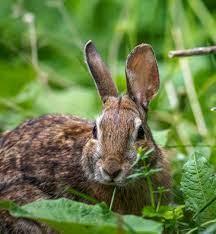
My history with wildlife eating my flowers is a long one. I once watched a wild turkey peck away at my johnny jump ups. Here in Dallas County, we are much more likely to encounter bunnies. Those little bundles of fluff that look so cute on a neighbor’s lawn may find your new pansies and their friends to be very attractive. Unfortunately, they may not limit themselves to enjoying only with their eyes and might proceed to dine on your new plants.
How to keep plants from being nibbled by rabbits is a challenge faced in most gardens sooner or later. A quick tour of the internet reveals many techniques that are reported to be successful for some gardeners but finding actual studies is another matter entirely.
Regardless of the source of the data, there are two primary techniques for saving your plants and they are like the ways we protect our skin from mosquitoes. We either exclude or we repel the pest. Shooing them away just isn’t effective. Like mosquitoes, most rabbits will return for a meal.
Fencing can be one of the most successful options. The addition of a chicken wire or hardware cloth fence 2-3 feet tall and buried 6 inches underground can keep a section of your garden off the menu. Wire cages can be constructed or purchased to protect your kales or chards. Planting in large, tall pots can keep your plant safer on your porch or patio.
Repellants can be purchased or made at home, and work via odor or taste. All will require repeated applications, especially after rain. Odors that rabbits avoid are associated with predators or spoiled, pungent foods. Blood meal is a commonly used odor deterrent and has the advantage of containing nitrogen. One reported downside is that it may attract other predators, leading to the trusty family dog to roll over your pansies. On the plus side, the presence of a dog may scare away rabbits.
Most rabbits dislike the taste of hot peppers, and capsaicin is included in many commercial products. Please read and follow the directions, as some products are not designed for or safe to use with edible plants. If you decide to surf the web for a home-grown repellant, do not use moth balls in your yard. This dangerous advice continues to haunt the internet. Regulated by the EPA, it is illegal, toxic, and counterproductive to use mothballs as deterrent for mammals in your garden. Using garlic spray or a sprinkle of red pepper might just work for you. It all depends on the rabbit and just how hungry it might be.
Whether we are dealing with wildlife that nibbles us or our gardens, what works for one person may not be appropriate for another. One deterrent I read about mentioned encouraging the presence of predators. I doubt the addition of a coyote here would be acceptable. I have found that my new fence seems to keep all the bunnies in the front yard… or is it the feral cat that now enjoys the safety of the back garden? Just like mosquitos, wildlife will find a way around our plans.
Mary Freede, Dallas County Master Gardener Class of 2005
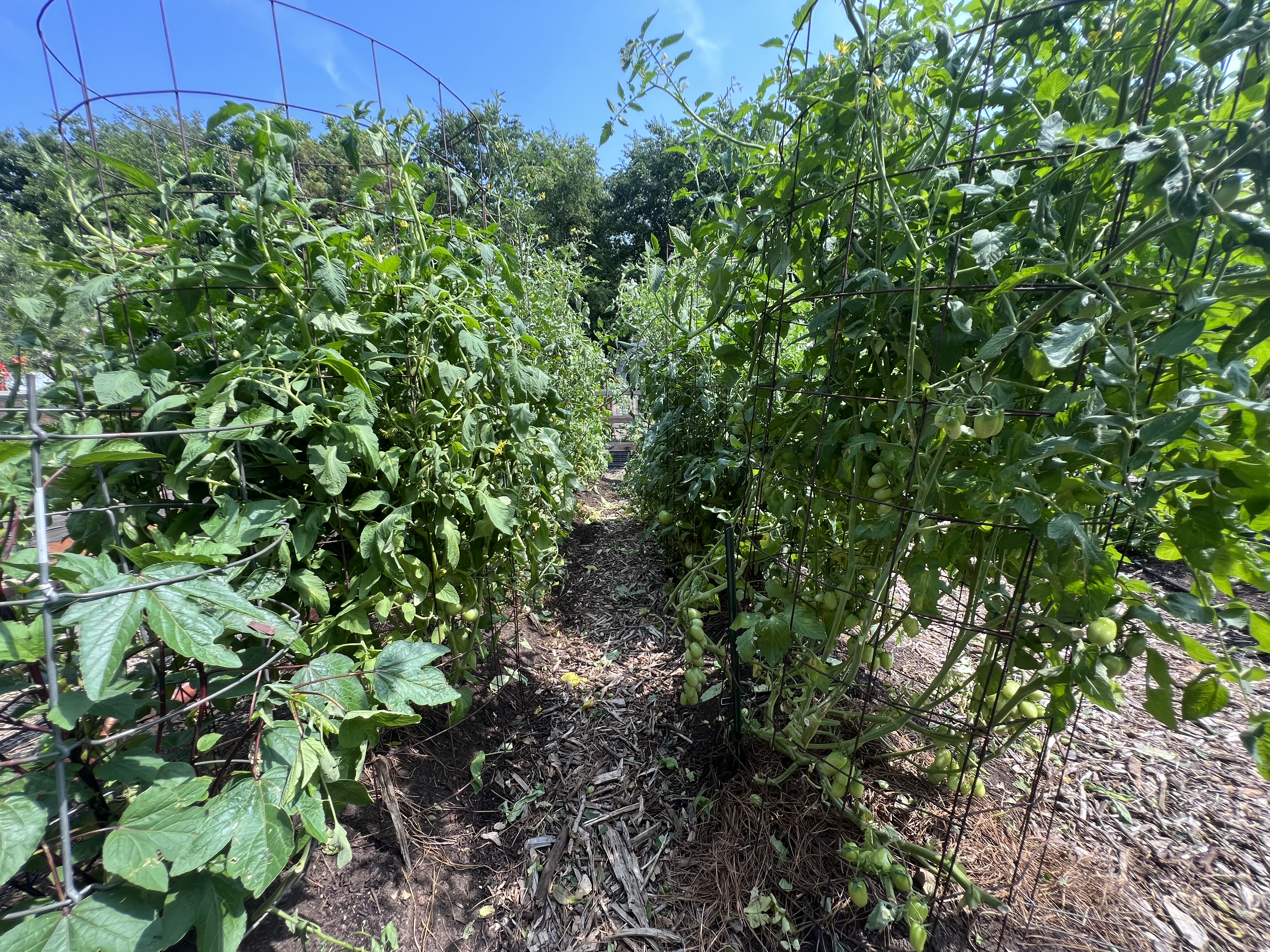
It’s tomato time at Raincatcher’s garden of Midway Hills. Over 84 pounds were donated and the plants are loaded down with more fruit to harvest this week. It looks to be a very good harvest and we wanted to share the story of our 2023 tomatoes.
Thirty tomato plants, determinate and indeterminate varieties, were started from seeds in January 2023 and put into the ground and in raised beds in early April. This was later than is recommended but the nighttime temperatures were too low in March. It is often difficult in Dallas to get the necessary time for a good crop to mature in between the last frost and the onset of temperatures above 92 degrees.
Prior to planting we amended the beds with compost and MicroLife Multi-purpose fertilizer. After two weeks, Tomato-tone fertilizer was applied and that schedule has continued. The lower leaves are trimmed up off the ground to help prevent fungal disease.
Our team decided that with our hot weather it would be best not to prune the suckers (new growth in the areas between the main stem and branches). Instead we allowed them to stay in place and protect the developing fruit from sunscald. There are many different opinions about this practice but it might be that those advocating for drastic removal of suckers live in areas with less extreme weather.
Harvest before they are ripe, but after color appears. Squirrels keep a keen eye on the ripening tomatoes and early on they ate on the larger varieties before we could take them off the vine. To combat that, tomatoes are harvested at the first sign of color change and ripened indoors. When ripe, fruit is then weighed and donated to the North Dallas Shared Ministries Food Pantry.
The indeterminate varieties, such as Celebrity, Cherokee Carbon, Early Girl, Juliet, and Sweet 100, are towering over 6 feet in the air in a fenced garden area and in tall, raised beds with supports.
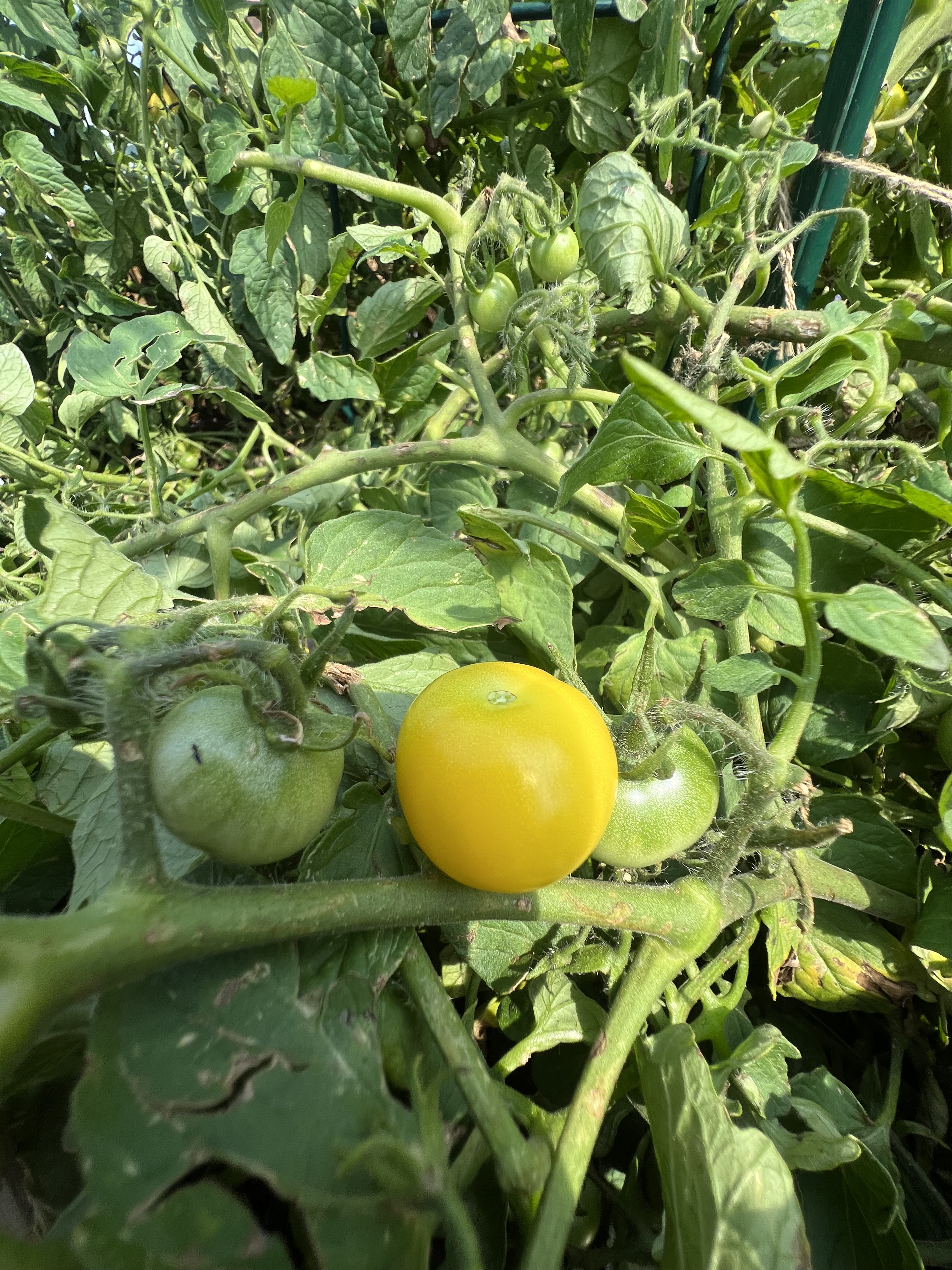
The determinate varieties are producing abundantly as well in raised beds. The variety, Patio Choice Yellow (AAS), has impressed our team with its prolific crop, disease resistance, and sweetness.
Patio Choice Yellow, one of our new favorites
While we are enjoying this season of abundance, we are aware that the blooms here in North Texas will soon slow to a crawl, due to the lack of cooler weather in the early morning. In general nighttime temperatures over 75 degrees will cause the plants to stop setting fruit. We are quickly approaching that season.
There are two ideas of thought about what to do –
Cut the tomatoes back severely so when it gets cooler they will begin producing again, or
2. Pull up the plants when the blooms stop coming and prepare to start new tomato plants in July for a fall harvest before the first frost. Smaller varieties with shorter days to maturity are recommended for fall due to the risk of an early frost.
Our dedicated and determined gardeners frequent Raincatcher’s most days, but our scheduled work times are Monday and Tuesday mornings.
Please leave a comment below if you have a favorite tomato variety for our area or tomato wisdom to share.
Starla Willis with input from Beverly Allen, Dallas County Master Gardeners
Mark Jones demonstrating how to dig under the potatoes and lift them out to minimize damage.
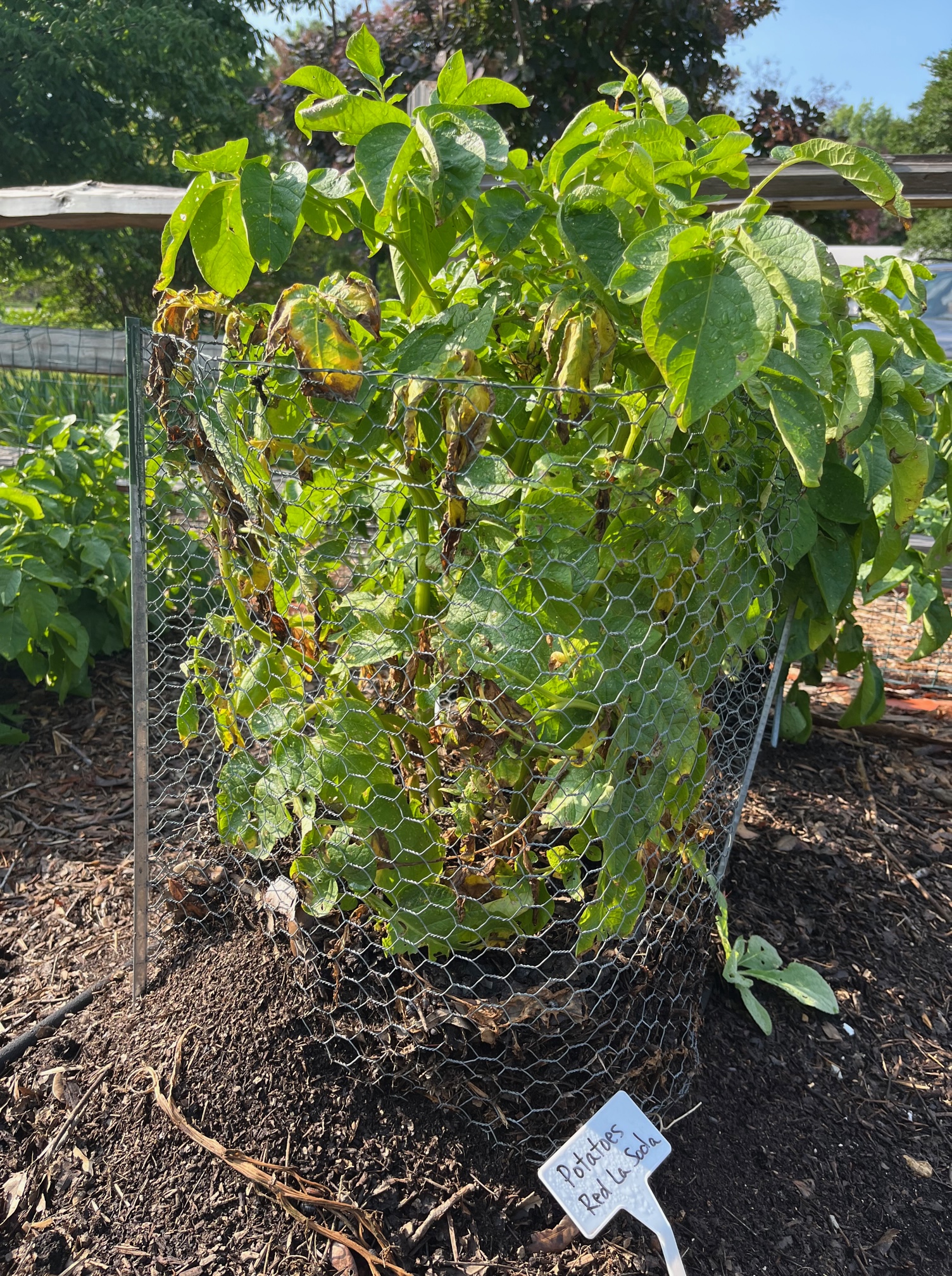
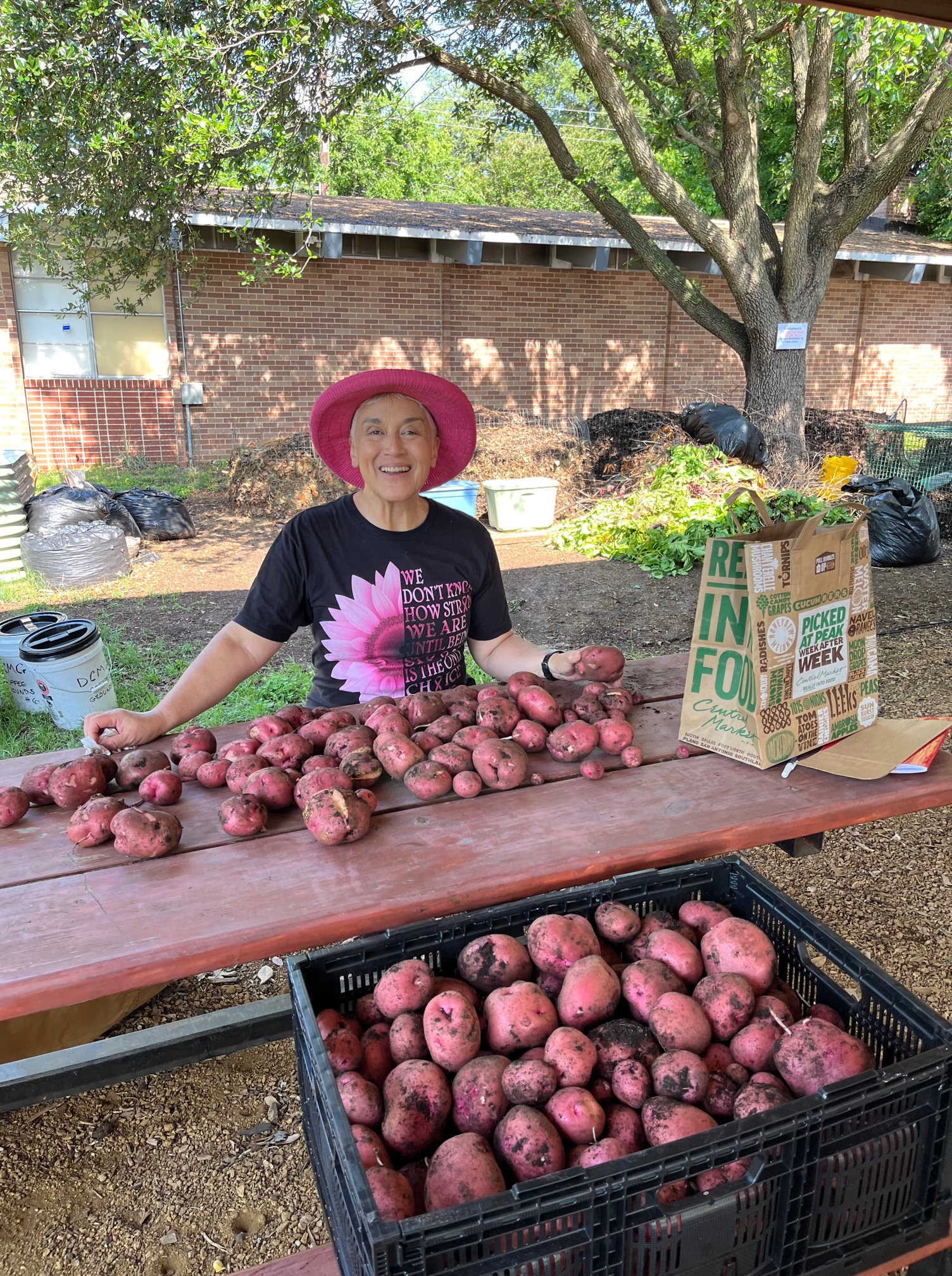
These potatoes were hilled up with compost but we did not add any support to keep the compost in place and they peeked out of the soil. The skin became scaly.
Ruth Klein with a gigantic red potato
Ruth Klein and Yuliana Rivas Garcia digging up potatoes
It is fun when the potatoes pop up out of the soil.
We improvised to keep the compost from sliding off after we hilled up the potatoes. The added layers of compost increase yield and keep the potatoes from being exposed to the sun.
Cynthia Jones preparing just over 68 pounds of Red La Soda potatoes for North Dallas Shared Ministries Food Pantry.
Beverly Allen, Dallas County Master Gardener Class of 2018
Red La Soda and Kennebec potatoes were planted in February
Working with our veggie team at Raincatcher’s last Monday, January 16th, spring was definitely in the air and now we have had over an inch of rain to further encourage our spring longings.
We sat at tables under our education pavilion planting tomato seeds with dreams of epic tomatoes. For a list of tomato varities we are seeding, see below.
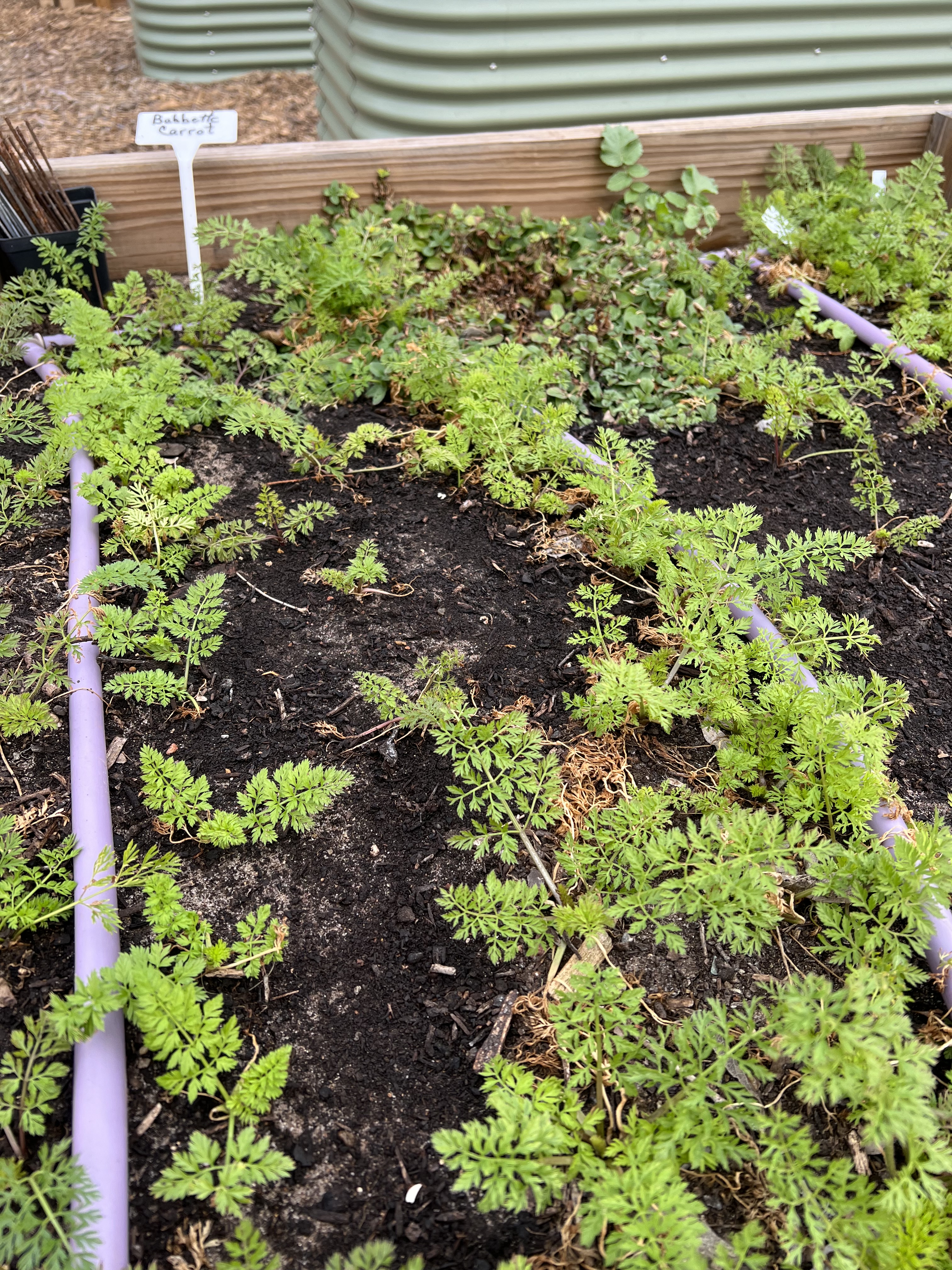
Elephant garlic planted in November, to be harvested in June, was examined. We considered the carrots that took a hit during the December low temperatures but have rebounded.
Last year the Raincatcher’s Garden delivered 700 pounds of fresh vegetables and fruit to North Dallas Shared Ministries Food Pantry. The goal for 2023 is 1,000 pounds of harvest. With the dedication of this band of Master Gardeners and expert leadership, I am sure they will succeed.
Ann Lamb, Dallas County Master Gardener Class of 2005
Tomato varieties and place purchased are as below.
Johnny’s Selected Seeds – Hybrid Cherry BHN-968, Early Girl, Five Star Grape, Tasmanian Chocolate and Juliet.
John Scheepers Kitchen Garden Seeds – Cherry Falls.
Botanical Interests – Patio Choice Yellow.
Tomato Growers Supply Company – Red Robin and Wild Cherry.









 DALLAS GARDEN BUZZ