Tag Archives: Pumkins

Pumpkins with Pizzazz

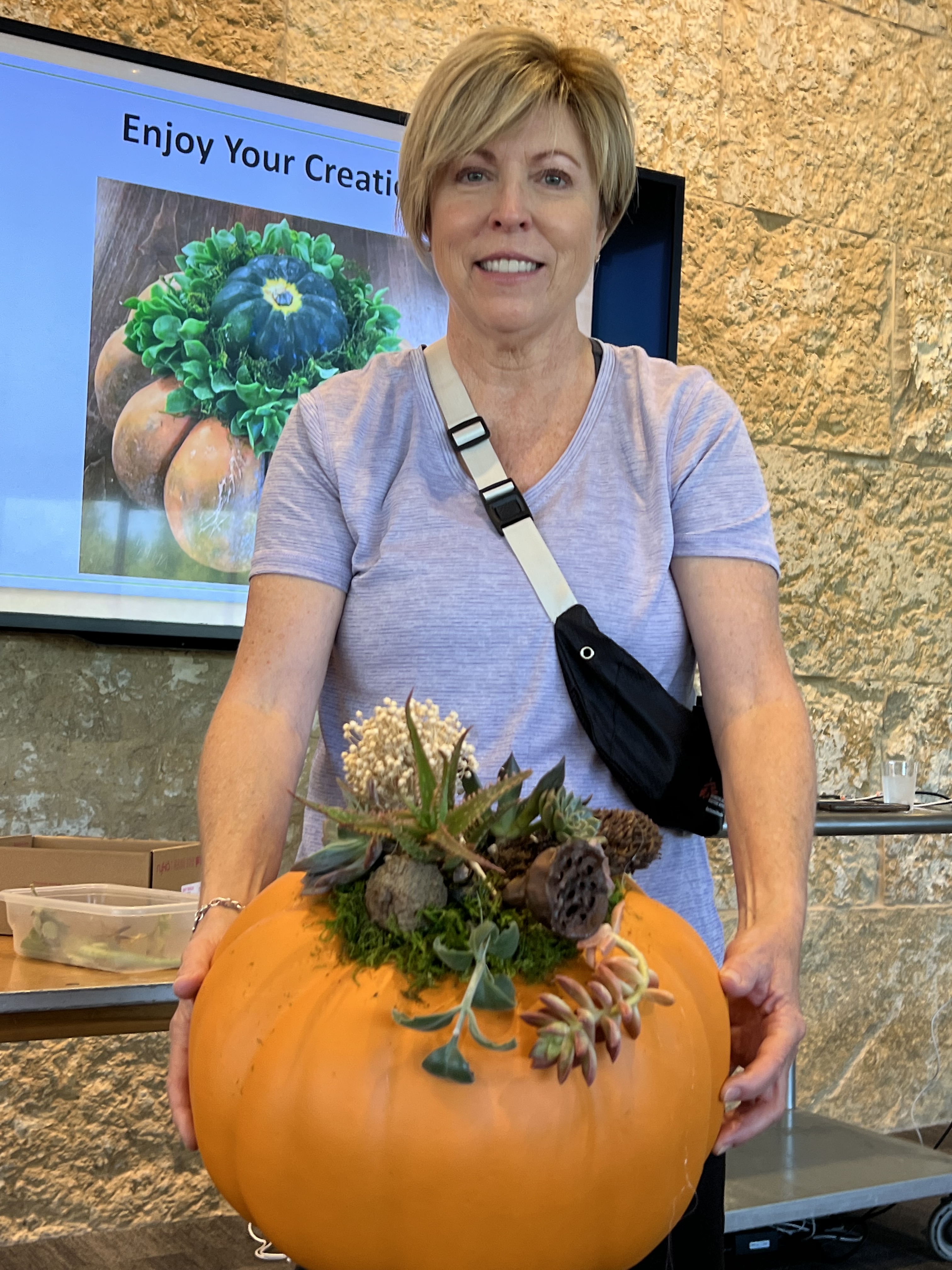
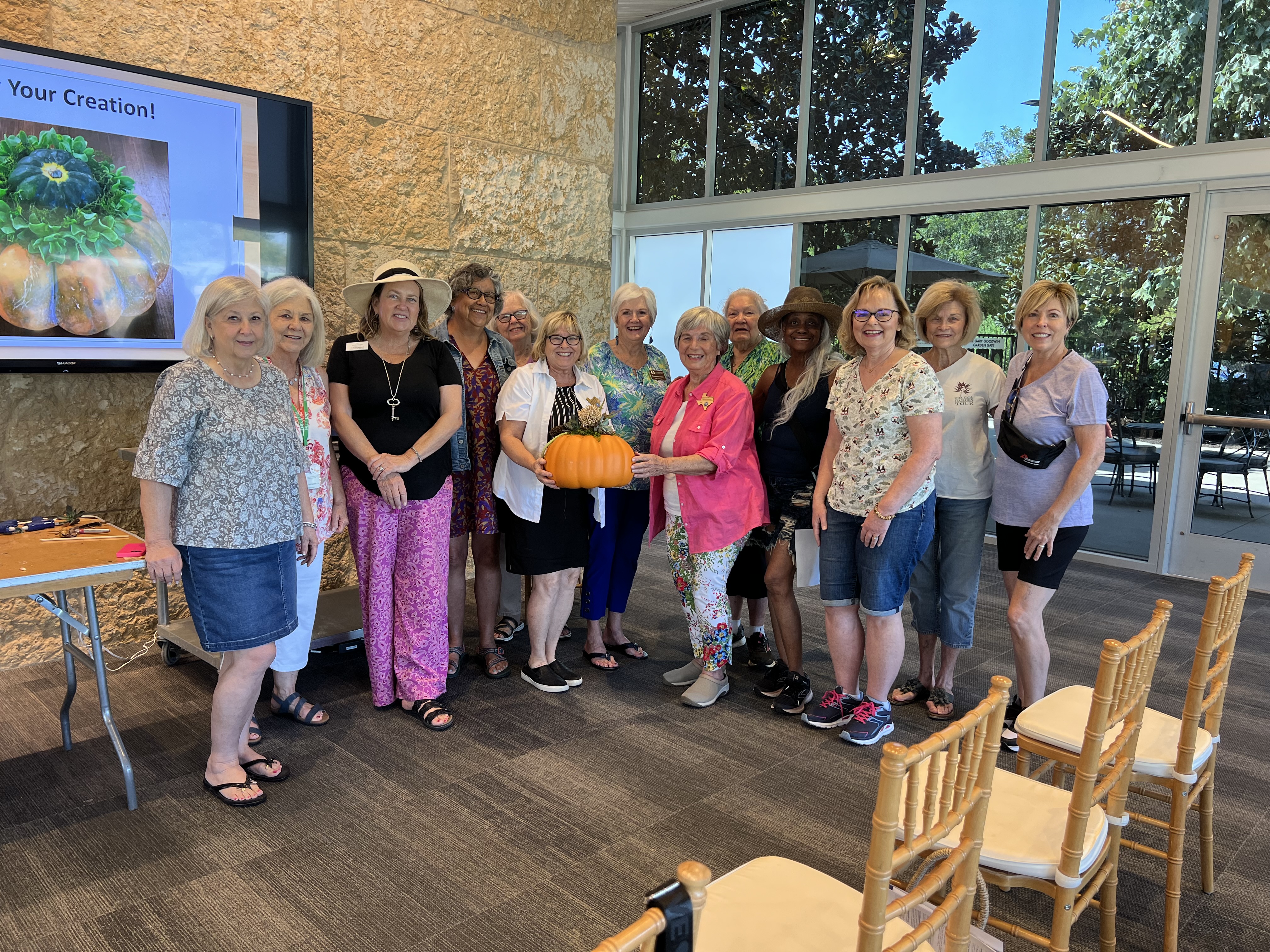
Dallas Arboretum class with Starla and Roseann in center surrounded by more Master Gardeners.

Even though our weather screams sweltering summer, the availability of pumpkin spice aroma is already permeating our neighborhoods. I hear you can get the flavored fall drink now. That must mean that Fall is around the corner, and then comes Halloween, pumpkins, Thanksgiving, and cooler weather (hopefully not in that order)!

Let’s talk pumpkins for a minute – they are a staple of fall decorating, carving for Halloween, cooking for Thanksgiving and Decorations to last through the Holidays. The Arboretum has its campus covered with about 100,000 pumpkins and gourds in all shapes and sizes from a farm in Floydada, Texas(near Lubbock) for its Fall Festival. The “stars” of Fall have not yet arrived but are soon to show.

A Tasteful Place at the Dallas Arboretum hosts “Learn to Grow” presentations on most Fridays from 11:00am -12 noon. These talks are informative, inspirational, and interesting. Roseanne Ferguson, DCMG class 0f 2008 shared a demonstration to all ages on how to make “Pumpkins with Pizzazz”, which is creating a unique decoration with succulents and other materials that symbolizes fall and lasts for months.
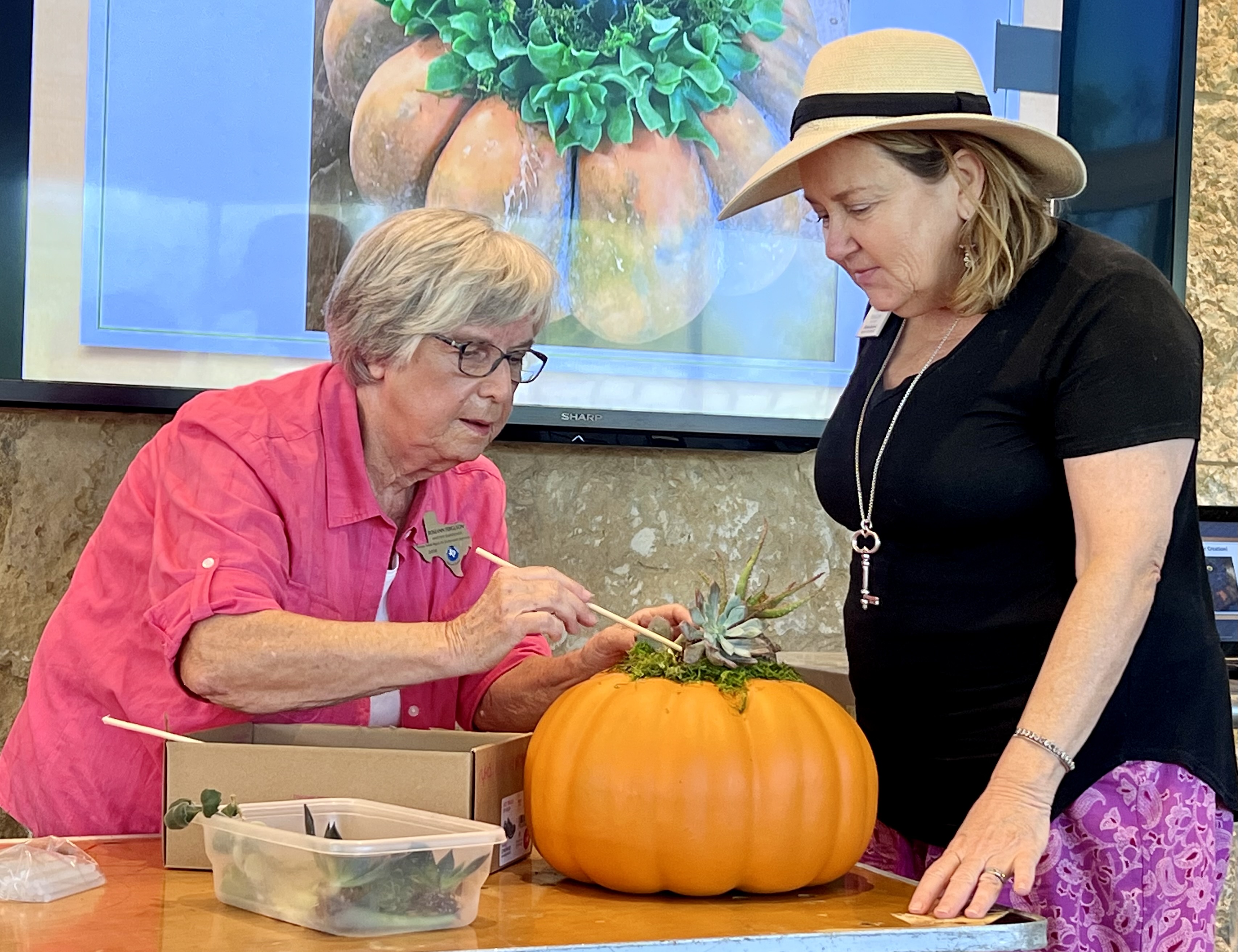
All sizes and shapes are available for this project, but some guidelines need to be followed:

  • A pumpkin with at flat top will be easier to work with and provide more surface for succulents.
  • The variety Cinderella is a good choice. Smaller pumpkins can also be used.
  • Keep the pumpkin whole – any puncture will cause it to decay quickly. Clean it before you start.
  • Cut a template out of posterboard or cardboard of the top surface where you will be adding succulents- so that the adhesive will only be on the area where you are working.
  • Assemble an assortment of succulents, moss, other nature materials, to use along with spray adhesives, a glue gun, some clippers for stems and a chop stick to work with the hot glue, but don’t stick it in the pumpkin!
  • Arrange and glue down the above items till you have the arrangement you desire.
  • The succulents may need to be misted when they look droopy, but not often. Keep it in a bright light, but not direct sun – not all succulents can handle our sun rays even in the Fall.

Check out your local libraries, garden clubs for opportunities to either see a demonstration, or to participate in making these decorations for your Fall décor. The costs will vary, but it’s a lot of fun!

Starla Willis, Dallas County Master Gardener Class of 2008

The Power of Pumpkin

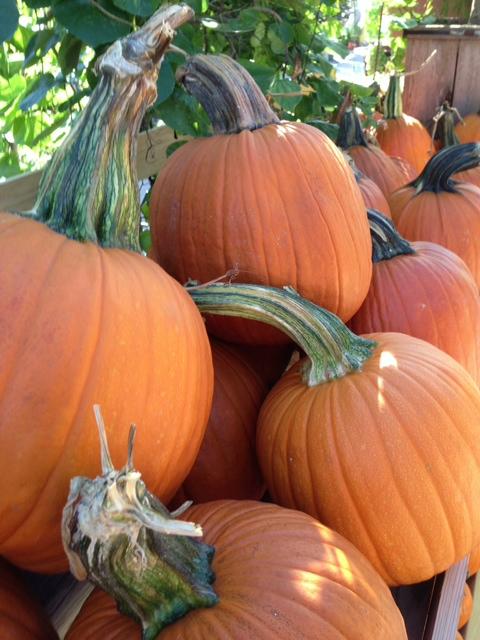
Pumkins at an Outdoor Market

“I would rather sit on a pumpkin, and have it all to myself, than be crowded on a velvet cushion.”–Henry David Thoreau

To some they are the “orbs” of autumn, the quintessential symbol of fall, making their graceful entry into hearts and homes.  The names, alone, captivate childlike feelings of giddiness; Aladdin, Baby Boo, Cinderella, Cotton Candy, Jack-Be-Little, Jack-Be-Quick, Full Moon and Wee-Be-Little.

Why, then, are we so fascinated with pumpkins?  Consider these facts: * The word pumpkin originated from the Greek word Pepon which means large melon.  The word gradually morphed by the French, English and then Americans into the word “pumpkin”.

Pumpkins and squash are believed to have originated in the ancient Americas. * Early Native Americans roasted pumpkins strips over campfires and used them as a food source, long before the arrival of European explorers.  Pumpkins helped The Native Americans make it through long cold winters.  They used the sweet flesh in numerous ways; roasted, baked parched, boiled and dried.  They ate pumpkin seed and also used them as a medicine.  The blossoms were added to stews.  Dried pumpkin could be stored and ground into flour * Columbus carried pumpkin seeds back with him to Europe. * Indians introduced pumpkins and squashes to the Pilgrims.

Pumpkins were an important food source for the pilgrims, as they stored well, which meant that they would have a nutritious food source during the winter months. *The Pilgrims were also known to make pumpkin beer.  They fermented a combination of persimmons, hops, maple sugar and pumpkin to make this early colonial brew. *In early colonies, pumpkin shells were used as a template for haircuts to ensure a round and uniform finished cut.  As a result of this practice, New Englanders were sometimes nicknamed “pumpkinheads”. An old Pilgrim poem gives testament to the Pilgrims dependence upon pumpkins for food:

“For pottage and puddings and custard and pies

Our pumpkins and parsnips are common supplies,

We have pumpkins at morning and pumpkins at noon,

If it were not for pumpkins we should be undoon”.

Pilgrim verse, circa 1633

During the month of October we will explore some fun and flavorful ways to use pumpkins.  To begin, here’s what Dr. Mercola, a leading health advocate, has to say about pumpkin seeds: 10 Health Benefits of Pumpkin Seeds “With a wide variety of nutrients ranging from magnesium and manganese to copper, protein and zinc, pumpkin seeds are nutritional powerhouses wrapped up in a very small package”. Pumpkins provide:

  •  Heart Healthy Magnesium
  •  Zinc for Immune Support
  •  Plant-Based Omega Fats
  • Prostate Health Cancer-Protective Properties
  •  Anti-Diabetic Effects
  •  Benefits for Postmenopausal Women
  •  Heart and Liver Health  Tryptophan for Restful Sleep
  •  Anti-Inflammatory Benefits

The best way to eat pumpkin seeds is raw – this preserves the healthy fats in the seeds.

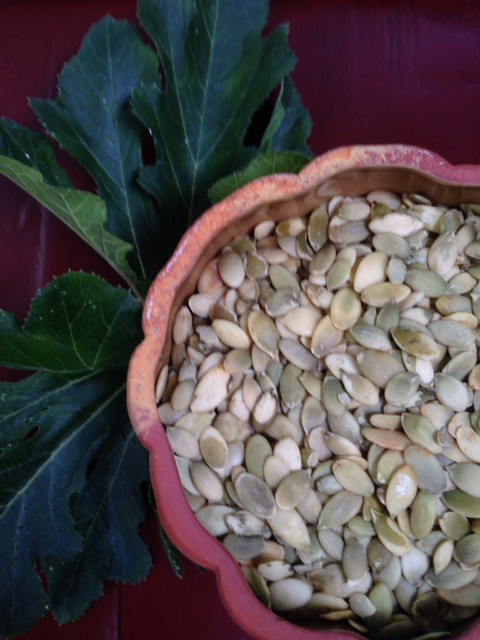
Roasted Pumkin Seeds in a Red Bowl If you prefer to eat the seeds roasted use this simple recipe: Roast raw pumpkin seeds on a low heat setting in your oven (no more than 175 degrees F), sprinkled with Himalayan or other natural salt, for about 15-20 minutes.

Sign up for our Harvest Lunch, Outstanding at the Field on October 29th. Instructions Here.

Next week:  Creamy Southwestern Pumpkin Soup

Linda