Tag Archives: Native Plants

A Wave of Purple Haze

October 16, 2025

If you’re like me, a baby boomer who graduated from high school in 1967, the title above might suggest something other than what I’m going to write about. Yes, the song “Purple Haze” written by Jimi Hendrix came to mind one hazy, overcast afternoon as I was taking photos and working in my garden. I don’t remember the words and really never fully understood the reason for the title but it wasn’t difficult to find the answer. 

Jimi Hendrix, a brilliant guitarist, wrote the song on December 26, 1966, while backstage at a club in London. The inspiration came from a vivid dream he had after reading a science fiction novel. In the dream, Hendrix finds himself walking under the sea when a purple haze surrounded and engulfed him. And from that experience his iconic song “Purple Haze” (later discovered to be to be about a woman he loved) changed rock music forever.

Putting this into perspective as it relates to that quite afternoon in the garden, my own sensory moment of feeling “engulfed” by the color purple had nothing to do with walking underwater. It was the sheer beauty of being surrounded by a sea of purple flowers in full bloom. Honeybees, by the hundreds, were so busy visiting the blossoms that I quietly paused just to listen to the familiar buzzing sound bees make when foraging for nectar and pollen. I was reminded, once again, how time spent in the garden brings unexpected joys.

Hopefully, you will appreciate my “Purple Haze” experience and the lovely flowers in varying shades of purple and blue that gave me the opportunity to share it with you!

Here are some of the flowers and plants featured in the video. You’ll see a selection of many within the purple/blue range that have been growing in my garden over the past five to six months:

Ageratum 

American Beauty Berry

Angelonia

Anise Hyssop

Aster

Basil (African Blue, Balsamic Blooms, Cardinal, Red Rubin)

Blue Borage (a favorite of honeybees)

Butterfly Bush

Celosia

Clary Sage

Eggplant Blossoms

Foxglove

Impatience

Lavender

Pentas

Perilla

Petunias

Periwinkles

Phlox

Rose of Sharon (Blue Satin)

Sage (in bloom)

Veronica

Wisteria

Zinnias

Why, you might ask, designate so much garden space for flowers in the blue/purple spectrum?

*I’ll offer a few answers, but, most importantly, is that honeybees are highly attracted to these colors and see them more clearly than other hues. Flowers in this range signal to the honeybees higher nectar production. For this reason alone, gardeners focused on pollinator-friendly flowers should try to include blue and purple flowers in the landscape whenever possible.

*Looking a little deeper into the psychology of color, studies have shown that blue lowers cortisol while purple stimulates creativity and inner calm. In our gardens, these colors not only provide beauty but help to nurture our mental well-being.

*And finally, from a landscaping perspective, click on the link to Longfield Gardens for an in-depth guide on using purple in your flower garden. You will be inspired to get started!

WE ARE THE PEOPLE WE’VE BEEN WAITING FOR

March 21, 2025

Music in shops–usually just more noise to be ignored—but then,  just every now and again a line from a song provides a useful and welcome bit of advice.   A helpful insight for the volunteer gardener.  

 It can happen that for this volunteer a sneaking feeling that all is not well–a creeping feeling of discontent appears and can grow and affect every hour in the garden.  A feeling that the task is too big just too much.  And the reward–where is it???  Why aren’t there more volunteers?  Does anyone see what I am doing–much less care or appreciate it??

Sadly once this happens –if nothing changes–the next step can be a vanished volunteer.

What needs to change?  

The basic situation isn’t going to change.  Garden work can be hard and it can be repetitive.  Weeds come back without fail.  Treasured flowers and veg can seemingly fail for no apparent reason.  Add in garden tours to be led, fundraisers, plant sales,and extra work days- all need volunteers and they seem to come around way too often.

So what to do.  Everyone has heard it but now its time to believe it.  The situation is the same–the response to it that’s different-it can change–a lot–and for the better.

Take a step back and think clearly don’t just react.  Remember respond don’t react.  

Maybe part of it is listening to a lot of talk of self care. One thing often mentioned is just saying no to requests for help.  And of course no one can say yes to everything.   

We must take time for ourselves and our own homes and gardens.

But don’t lose sight of the personal benefits of helping either.  There are friendships and connections–yes we may have to work on them but its valuable work.

We all want our communities to be better–greener–safer for plants wildlife –and ourselves.  

Plant sales and garden tours–well those aren’t just things to get through–they can make a difference.  If just a few people learn about plants that will grow and provide help for the bees and butterflies–isn’t that valuable..  If people learn that insects are the foundation of life on earth and they can help protect them,  that is your time well spent.  If you help a child develop a love for living things not a fear–well what could be better–that is the highest form of self care.  

Can you save the earth?  No you cannot–but can you make your part of the world a little better?  Yes, you can and you make yourself a little better with the time and effort.  

We can’t wait for all the others who should be there helping.. Those others that should be appreciating us more.  Give them time!!  But for now–

We ARE THE PEOPLE WE’VE BEEN WAITING FOR

Susan Thornbury, Dallas County Master Gardener Class of 2008

Join us at the garden, 11001 Midway Road, Dallas, Texas 75229 on the grounds of Midway Hills Christain Church. Our work days are Monday mornings and Tuesday mornings. This is a Dallas County Master Gardener approved project.

Water Wise Design at The Raincatcher’s Garden

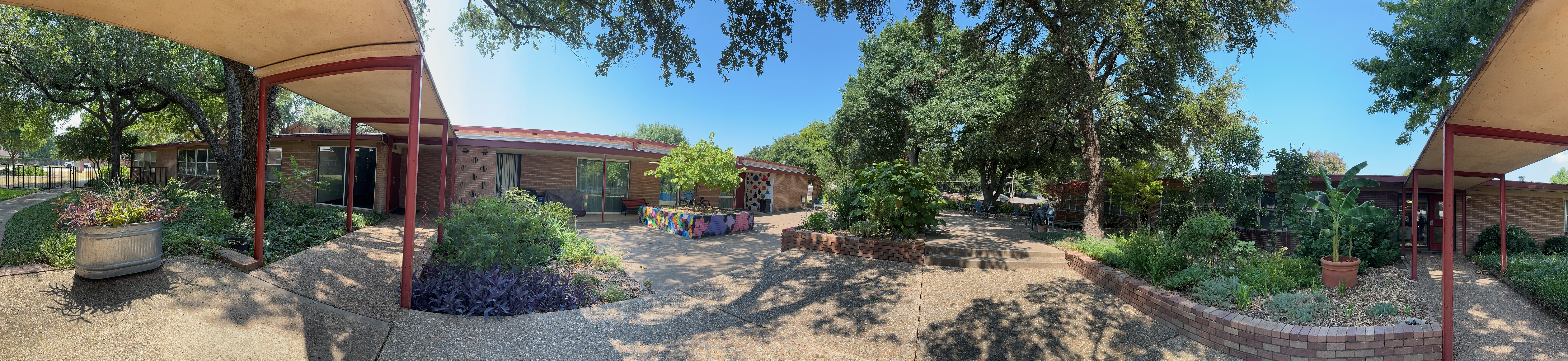
Panoramtic View of the Courtyard, Raincatcher’s Garden

Our garden has survived and even thrived this summer. The Raincatcher’s Garden was built using the 7 principles of Water Wise Landscaping:

  1. Planning and design
  2. Appropriate plant selection
  3. Practical turf areas
  4. Soil improvement
  5. Efficient irrigation
  6. Use of mulches
  7. Appropriate maintenance

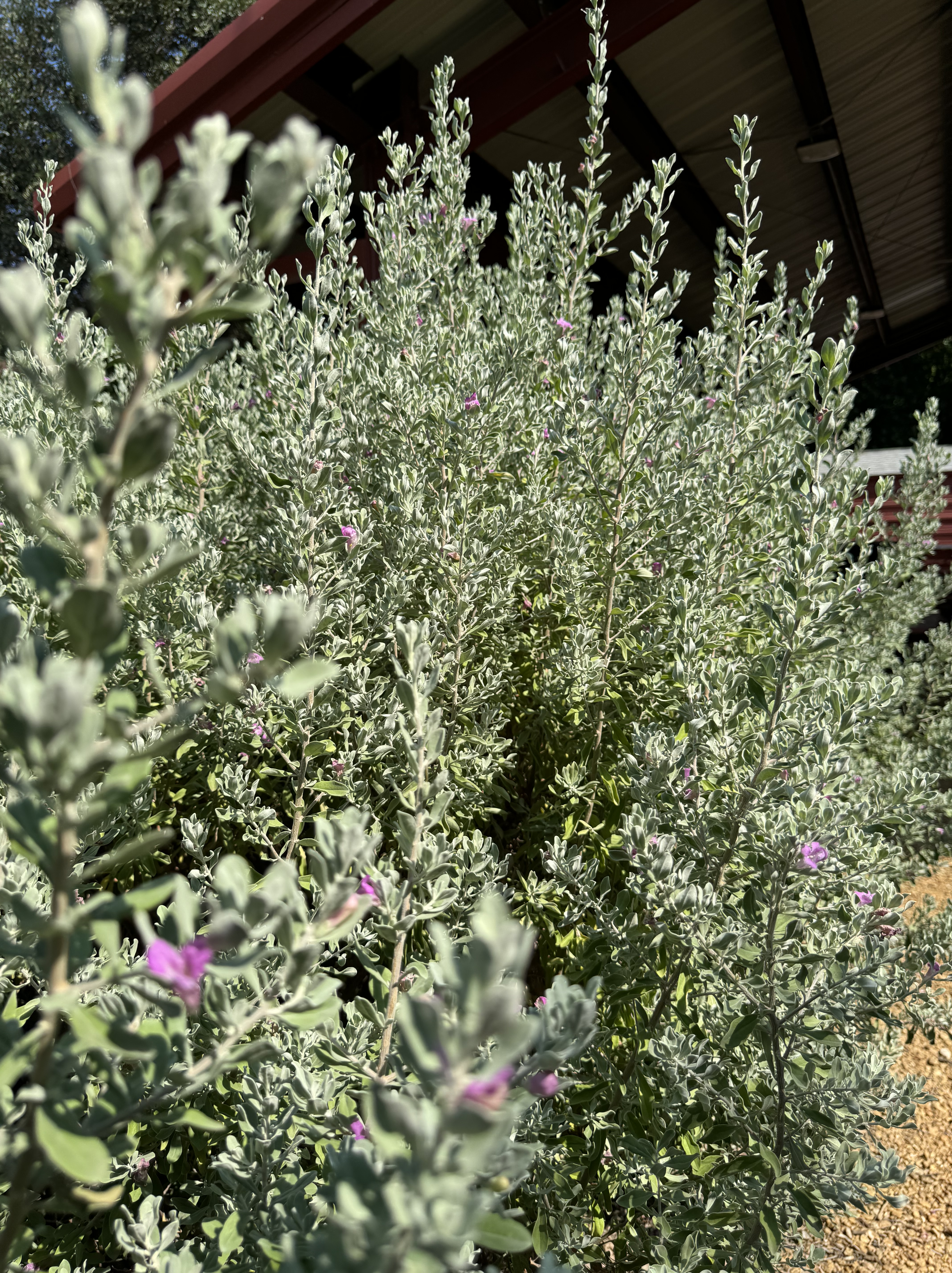
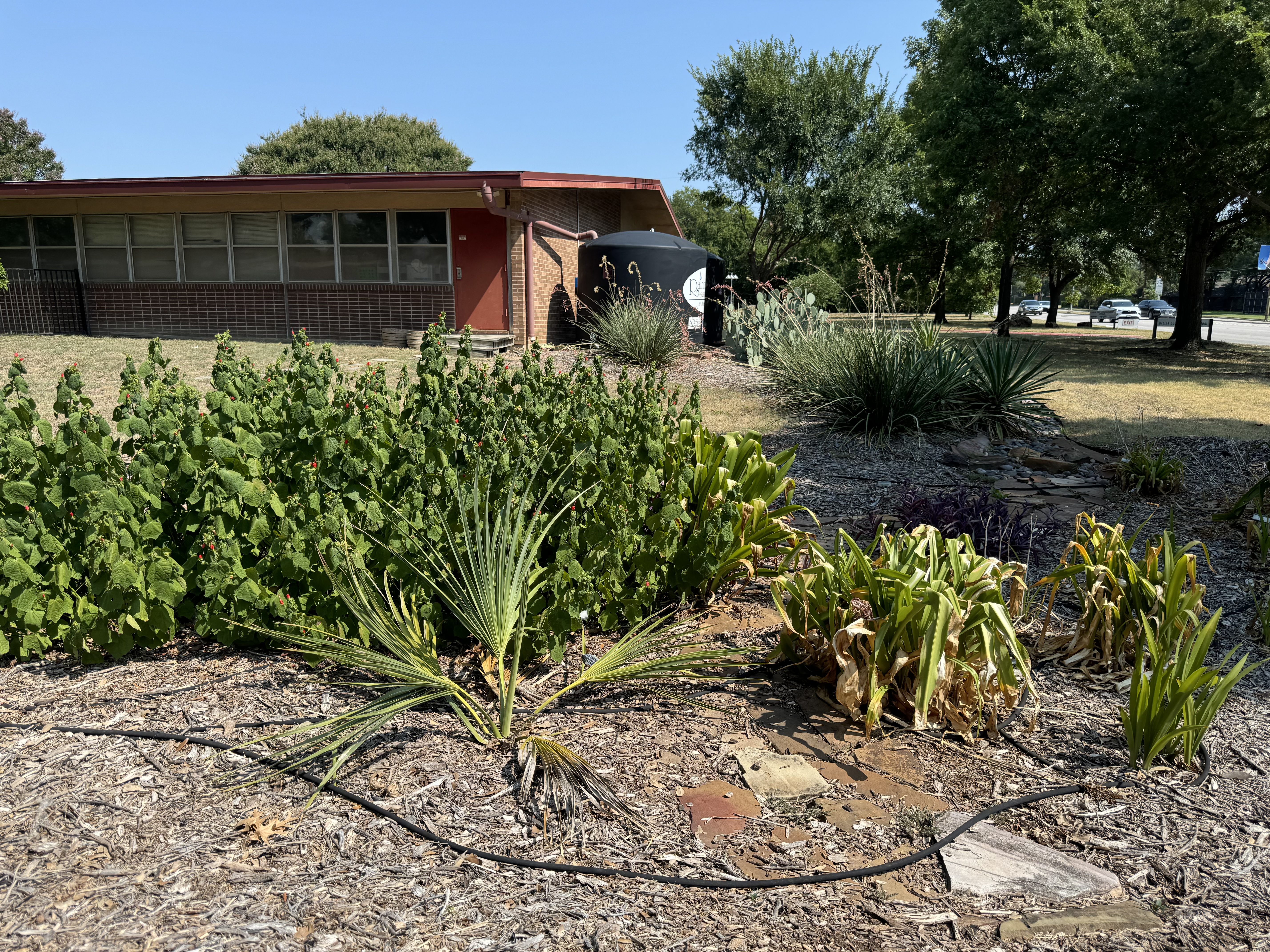
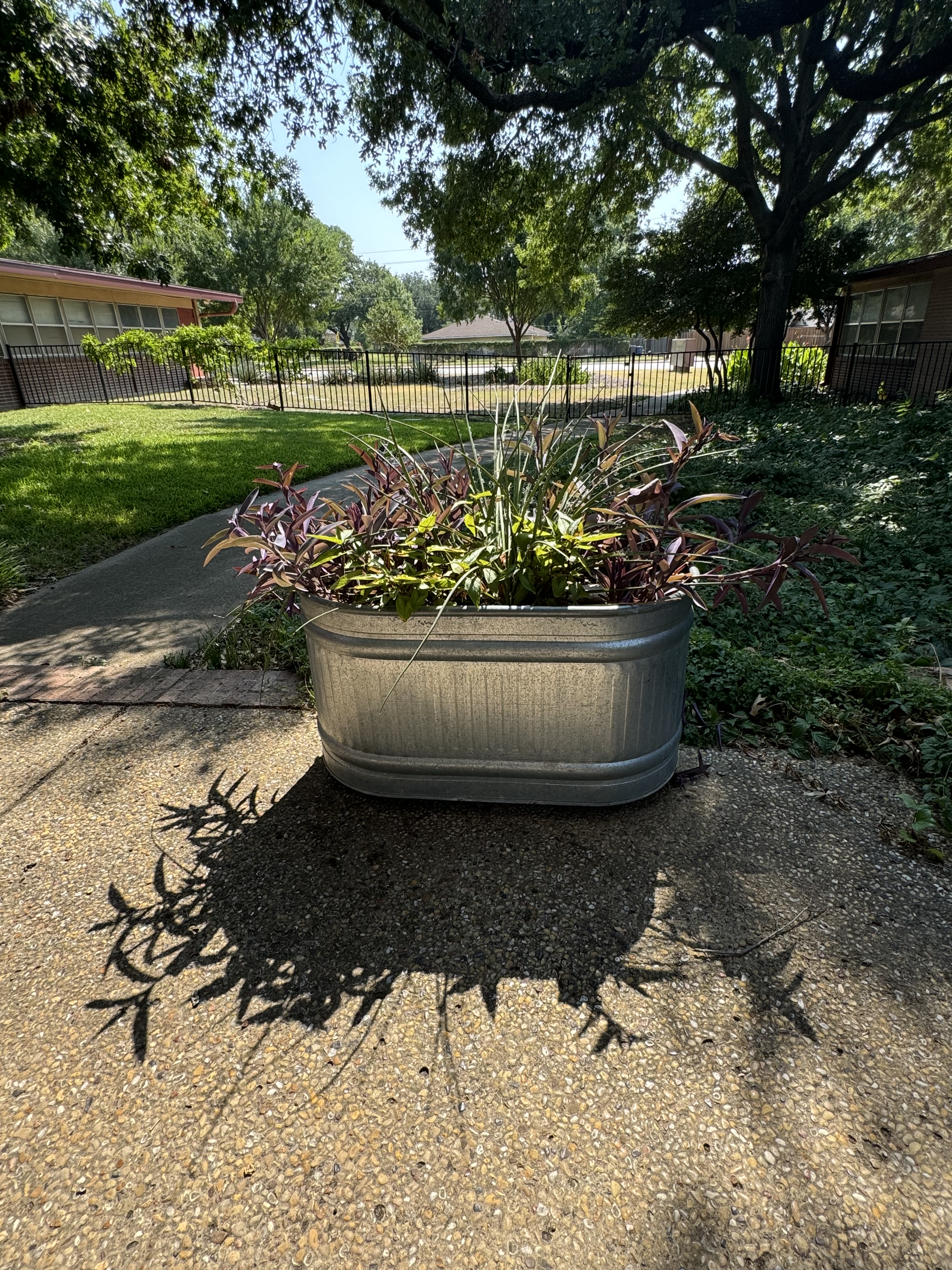
With fall temperatures giving us a respite, maybe you are looking for plants and practices that will endure our hot Texas summers. Take a look below at what worked for us and as always we would love to have you come for a vsit.

Ann Lamb, pictures by Starla Willis- class of 2005 and 2008

Water Wise Landscaping

May 20th is World Bee Day

May 20, 2024

The UN officially recognizes May 20th as World Bee Day. In their opening statement, we are reminded that “Nearly 90% of the world’s wild flowering plant species depend, entirely, or at least in part, on animal pollination, along with more than 75% of the world’s food crops and 35% of global agricultural land. Not only do pollinators contribute directly to food security, but they are key to conserving biodiversity.”

Here are some of their suggestions for ways that we can do more to help make pollinators a priority:

*planting a diverse set of native plants, which flower at different times of the year

*buying raw honey from local farmers

*buying products from sustainable agricultural practices

*avoiding pesticides, fungicides or herbicides in our gardens

*protecting wild bee colonies when possible

*sponsoring a hive

*making a bee water fountain by leaving a water bowl outside

In celebration of our local honeybees, please enjoy these recently captured photos of the bees busy at work gathering nectar and pollen for the hive!

Linda Alexander, Dallas County Master Gardener Class of 2008

Garden Bloggers Fling Day 1 and Stop 1

A rainy view of the entrance to Lady Bird Johnson Wildlife Center.”My special cause, the one that alerts my interest and quickens the pace of my life, is to preserve the wildflowers and native plants that define the regions of our land — to encourage and promote their use in appropriate areas, and thus help pass on to generations in waiting the quiet joys and satisfactions I have known since my childhood.”

Lady Bird Johnson Wildflower Center was our first stop on Friday. As we gathered for the group picture, they mentioned that rain was headed our way.  Being a native Texan, I should have heeded the warning when I heard “squall line”, but I was intent on seeing the treasures that awaited us.

Even in the rain, the cholla in the demonstration garden beckoned. It’s magenta blooms caught my eye through the stone window.

Cholla cactus blooms

  It began to sprinkle -colorful ponchos dotted the gardens and then it started to rain, then it began to go sideways, so we scurried to find shelter. It didn’t take long to realize that the elements were winning, but so was the garden – the much needed rain was a welcome sight, even though it came torrentially.

A caterpillar sighting lured some of us out of the stone alcove, but the elements were getting the upper hand –everything was soaked-our pictures were blurred , cameras were malfunctioning…

We retreated to the main entrance where we sought refuge under the eaves and ultimately in the gift shop. A beautiful bouquet of wildflowers brightened our dampened spirits (pun intended) in the restroom.

As we left, the sound of the stone cistern filling up was music to the ears. Even though it was a wash in some ways, it wasn’t all for naught.  It’s not often you get to see Lady Bird Wildflower Center through the rain.

Starla Willis

WHY SHOULD YOU CONISDER PLANTING NATIVE?

This slideshow requires JavaScript.

PLEASE READ THIS BOOK:   Bringing Nature Home-How Native Plants Sustain Wildlife in our Gardens by Douglas Tallamy PhD

Do you feel pretty good about your understanding of the importance of native plants in your landscape?  Or—do you think “the native plant thing”  is yet another fad and  you know red roses and nandinas form the framework for all “good” gardens?  It doesn’t matter at all—either way—this is the book for you.

This is not the perfect book for us here in Texas.  The author lives in the Northeast and any of the plants profiled are specific to that region.  However, that in no way diminishes its value.  The basic ideas remain the same whatever the location.  Dr. Tallamy, whose doctorate is in entomology, presents the wonderful, terrible idea that what we, as caretakers of our land, no matter the size, are making life or death decisions for a host of creatures simply by our plant choices.

The book effectively makes it clear that  Nature is “here” in our gardens now.  We cannot assume that plants and animals are fine somewhere “out there in the wild”  because  there just is so little of the wild left.

That’s upsetting—it means taking responsibility for our actions.  But it’s also an incredible opportunity to make a difference for ourselves, our family, our community—and beyond.

The introduction presents the major concepts to be considered.  The wild creatures we want in our world simply will not be able to live without food and places to live.  Things look grim,  for creatures are gone or greatly reduced in numbers.  But hope is there  it’s not too late to save many plants and animals—but to do it we must change our ways.

Alien plants have replaced native ones  to an alarming extent.  Now all plants capture the energy from the sun but most alien plants are not able to  provide support to native insects they cannot eat them.  Insects are the major way that energy is transferred to other creatures.  This is not just the author’s opinion—there is research to prove it.

Increased use of native plants can produce at least a simplified version of the diverse ecosystem that used to exist.  The charts that show the insect populations supported by native plants as opposed to alien ones are truly eye-opening.

All the chapters on insects are educational—but the one on aphids—do not miss it.  Aphids are amazing creatures—you will never think of them as disgusting little pests ever again.

If you read even a part of this book you will gain insight into the complex web of interactions between plants insects and other animals.

Susan

Pictures by Starla