Oh, I so enjoy the colors and flowers that bloom during the early summer and one that I’m enjoying of late is bee balm. Its magenta flowers atop a tall stalk are a feast for pollinators. In the wildflower area of Raincatchers, a purple rocket-like plant is putting on a show – Bee balm? It looks nothing like the other, but I recall it being bee balm too. Can it be? And then there’s Lemon Balm with its bushy habit and ability to travel readily. Looks like it’s time to clear up this mystery—
Upon further investigation, these similar names create a climate for confusion Bee balm, Lemon Balm, and Lemon Bee Balm -the looks of the plants are distinctively different but all are related to the mint family.
eBee balm, also called Wild bergamot, has several varieties – some perennial and others annual. Monarda is a genus of flowering, plants from the mint family. Lamiaceae didyma or fistulosa (zones 4-9) are perennials. Its cheery pink flowers are located near the Edible landscape greenhouse and stands 24-48 inches tall, and can spread 24 -36 inches. It blooms late spring into summer in full to part sun in well prepared beds with good drainage. Bee balm has magenta, pink, purple, red or white flowers that are 2-3-inch across with slender tubes looking flowers on a tall stalk.

If your garden needs a smaller specimen, pinch the stalks in early spring, or purchase a shorter variety. Deadheading and cutting makes way for more flower production. Cut the stalks close to the ground in late fall and they will return in the spring. Powdery mildew might make an appearance if it’s a wet spring, but it won’t harm the plant.
II was purchased at the DCMG Plant Sale at Fair Park and then a dear friend gifted some she started from seeds (Northaven Gardens). It spreads some, but not difficult to control. The bees, Butterflies and hummingbirds are delighted. Mark and Cynthia Jones captured this picture of a moth (white lined sphinx moth I think) feasting on the variety Peter’s Purple.
Lemon BEE Balm (Monarda citriodora) is a herbaceous annual of the mint family, native to Central, southern America and Mexico and is commonly found in pastures and prairies. It will thrive in full sun, and in poor, rocky, or sandy soils. Can you see where this gets confusing? It Blooms in late Spring early summer about the same time as the Bee balm is blooming. This was found in our wildflower area at the garden along with blanket flower, long after the bluebonnets, Indian paint brush, and Engelmann daisies have said their adieus (goodbyes) To confuse even more, Lemon Bee balm is also known as purple horsemint or lemon mint. It has lemon scented spiky clusters of varying shades of lavender. You can find this in seed packets and often in wildflower mixes.

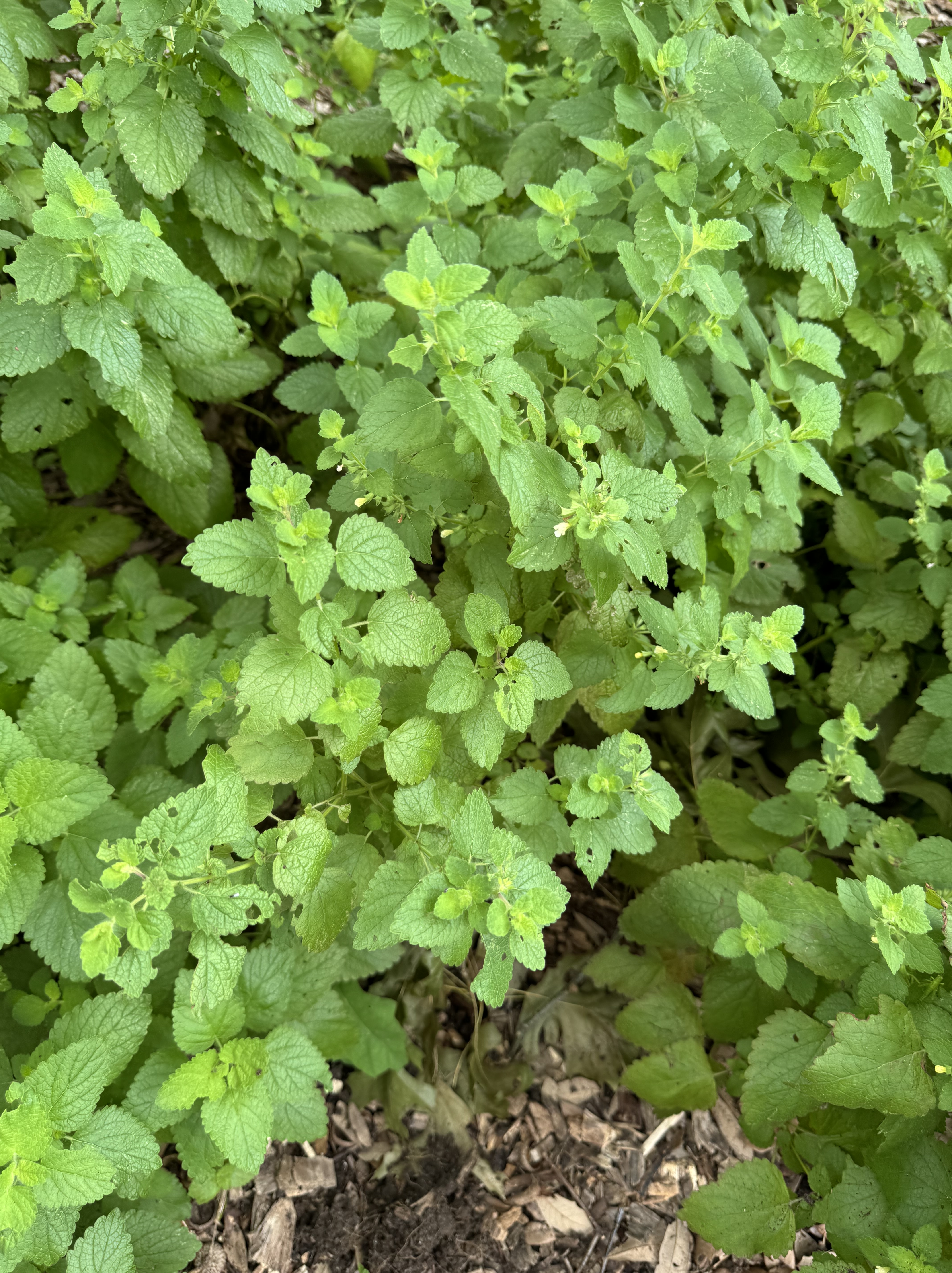
Lastly there is Lemon Balm, another member of the mint family, (Melissa officinalis). Native to Europe, It can be found in many places, but most recently has been thinned from the Hügelkultur in the Edible landscape. It grows in a clump, with wrinkled leaves that have a scent of Lemon. The flower is an insignificant spiky pale-yellow cluster. This herb is said to produce calming effects. It seeds and spreads readily and can get 3 feet by 2 feet. It consistently returns in the garden. It can be obtained in the herb section of garden centers or possibly a garden friend would gift you a start.
Now that that mystery is put to rest, figure out a way to use one or all of these beauties in your landscape.
Starla Willis, Dallas County Master Gardener Class of 2011
Video of sphinx moth, courtesy of Mark and Cynthia Jones, Dallas County Master Gardeners Class of 2013





 DALLAS GARDEN BUZZ