Tag Archives: Japanese Maples

November Flora Feature

And then it happened…
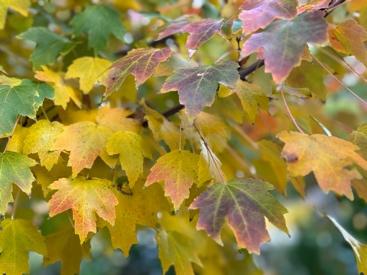
October ushered us into the colorful changes of fall. And then, November arrived with waves of crimson, yellow and orange. Mary Ann Evans, known by her pen name, George Eliot, gave us these endearing words from a letter written to Miss Lewis, October 1, 1841…

“Delicious autumn! My very soul is wedded to it, and if I were a bird I would fly about the earth seeking the successive autumns.” 

How eloquently her words capture the essence of autumn in this beautiful quote. Hopefully, you have taken notice of trees bursting with color, fall foliage ablaze with seasonal splendor and tables graced with a harvest of plenty. As the gathering of family and friends begins, let’s celebrate the abundance of blessings found in the natural world.

Japanese Maples: For the past few years, the Dallas County Master Gardener Association has hosted a fundraiser featuring countless varieties of Japanese maples. Trees are usually “sold out” within hours. This speaks to the popularity of Japanese maples found in landscapes throughout Dallas County and beyond. Everyone seems to have a favorite but for many homeowners, the options typically include several types. 

When we purchased our seventy-five-year-old house in 2006, previous owners (six total) had planted Japanese maples in various locations on the property. One maple, in particular, struggled to survive the below freezing temperatures of 2021, 2022 and 2023. As you can see from the photo, we chose to give it time to recover. After consulting with several arborists, the stately 30+ year-old tree is continuing to fight its way back. Still requiring some special attention, our tree is determined to overcome the odds. Its canopy provides wonderful afternoon shade in an area where we gather by the pool during the heat of the day.

Over the years we’ve added several dwarf Japanese maples and our new favorite variety, coral bark. It is a beautiful small tree with red-coral bark on its young branches with color that intensifies in the winter. 

You’ll find them growing somewhere in most yards, especially on older properties. Overlooked, undervalued, neglected and dismissed, why have they lost favor in the landscaping world? It’s time to revisit a plant with so much to offer but rarely considered for its dramatic effect. More commonly known as heavenly bamboo or sacred bamboo, we know it as Nandina Domestica.

Nandina is native to China, cultivated significantly in Japan, then intentionally introduced to the United States as an ornamental in 1804 for its year-round interest and beauty. As a native Texan who spent my K-College years in southeastern Oklahoma, l am very familiar with nandina. It was growing in yards throughout my small hometown of Durant. However, from what I remember, nandina shrubs were typically used as background plants and located where they didn’t offer much more than a lame effort for “filling in”.

Over the years it has proven to be a very reliable asset for homeowners. Especially desirable for its dependability in extreme temperatures and striking seasonal foliage, it ranks high on the performance scale. Landscapers seem to be taking a fresh, new approach to using it in more creative and eye-catching ways, even with modern architecture. Hopefully this trend will continue with nandina giving us the “heavenly” mention it deserves!

Follow these recommendations when considering nandina for your landscape:

*Nandina is still considered invasive in some areas so choose wisely. 

*Two sterile cultivars that might be a better option are ‘Firepower’ and ‘Blush Pink’.

*Nandina should not be sheared as it destroys the natural beauty of the plant. When nandina becomes too large, irregular in shape or leggy, carefully prune using the one-third rule. 

*Nandina thrives in USDA zones 6 to 9 and grows best in full sun or partial shade. Choose from the numerous cultivars available in most garden centers. ‘Firepower’, Gulfstream’, ‘Obsession’ and ‘Sienna Sunrise’ are strong recommendations.

We’ve just added three new ‘Obsession’ nandinas to a south facing area in our backyard. They are already starting to show those brilliant shades of red in their leaves.

November’s ever-changing tapestry is filled with botanical color. Take a few moments to experience some especially magnificent images of autumn’s brilliance. It may not be Vermont but our local landscapes really know how to take center stage!

Linda Alexander, Dallas County Master Gardener Class of 2008

Dallas County Master Gardener Japanese Maple Sale Coming Soon

The Joy of Japanese Maples

You may have noticed the brilliant reds and golds of Japanese Maples around town in recent months. The foliage colors and textures were more reminiscent of an autumn drive through New England than fall in North Texas!

The Dallas County Master Gardeners are hosting a sale of Japanese Maples in March. Many of us are familiar with the variety “Bloodgood,” however the Maples we are offering are varieties not often available at local nurseries. This is your opportunity to purchase these trees in one- and two-gallon sizes.

There is a place in every garden for a Japanese Maple. They thrive in afternoon shade (the perfect understory tree!) and will make that special spot in your garden a focal point year-round.  

Watch for  the sign-up genius link and additional information including varieties available, pricing, and contactless pick-up details, in February. 

Cindy Bolz Dallas County Master Gardener Class of 2013

Before shopping for your Japanese Maple, please read these two articles:

 The Japanese Maples at the Raincatcher’s Garden

Dallas County Master Gardeners and Japanese Maples

The Japanese Maples At The Raincatcher’s Garden

We are fortunate to have 5 Japanese Maples in our shady courtyard at The Raincatcher’s Garden.

Acer palmatum ‘Bloodgood’ is a classic upright red, the Japanese maple that made Japanese maples famous in America. Oddly enough the name ‘Bloodgood’ came from the family name of the owners of Bloodgood Nursery in New York and had nothing to do with its red color. Fortunately, the name fits this lovely red Japanese maple. It leafs out in the spring with bright red leaves which develop to deep maroon red, providing dynamic contrast throughout the spring, summer and especially in the autumn when the color intensifies displaying shades of oranges and reds which will grab anyone’s attention and make your yard look spectacular.

Acer palmatum ‘Bloodgood’ grows upright in habit to around 20-25 feet in thirty years. A very hardy and vigorous grower ‘Bloodgood’ does well in sun or filtered light. While this is typically the first Japanese maple tree for most people, it has also become a necessity in every garden and maple collection due to its amazing red color. Zones 5-9

Acer palmatum ‘Sango-kaku’ is an upright, slow-growing, vase-shaped form that typically grows over time to as much as 20-25’ tall. It is sometimes commonly called coral bark maple in reference to its distinctive and showy pink bark which provides excellent color and contrast to landscapes in winter. Pink coloration is less pronounced to almost absent in summer. Best pink coloration occurs on young twigs and branches. Palmate leaves with serrate margins emerge yellow- green with reddish margins in spring, mature to light green by summer and turn yellow-gold in fall. Cultivar name means coral tower (sango meaning sea coral and kaku meaning tower/upward growing) as if to suggest this pink-barked cultivar resembles coral rising upward from a reef.

Acer palmatum ‘Sango-kaku’  is a good sun-dappled understory tree and because of its excellent winter bark it should be sited where the pink bark in winter can be most appreciated. Zones 5-8

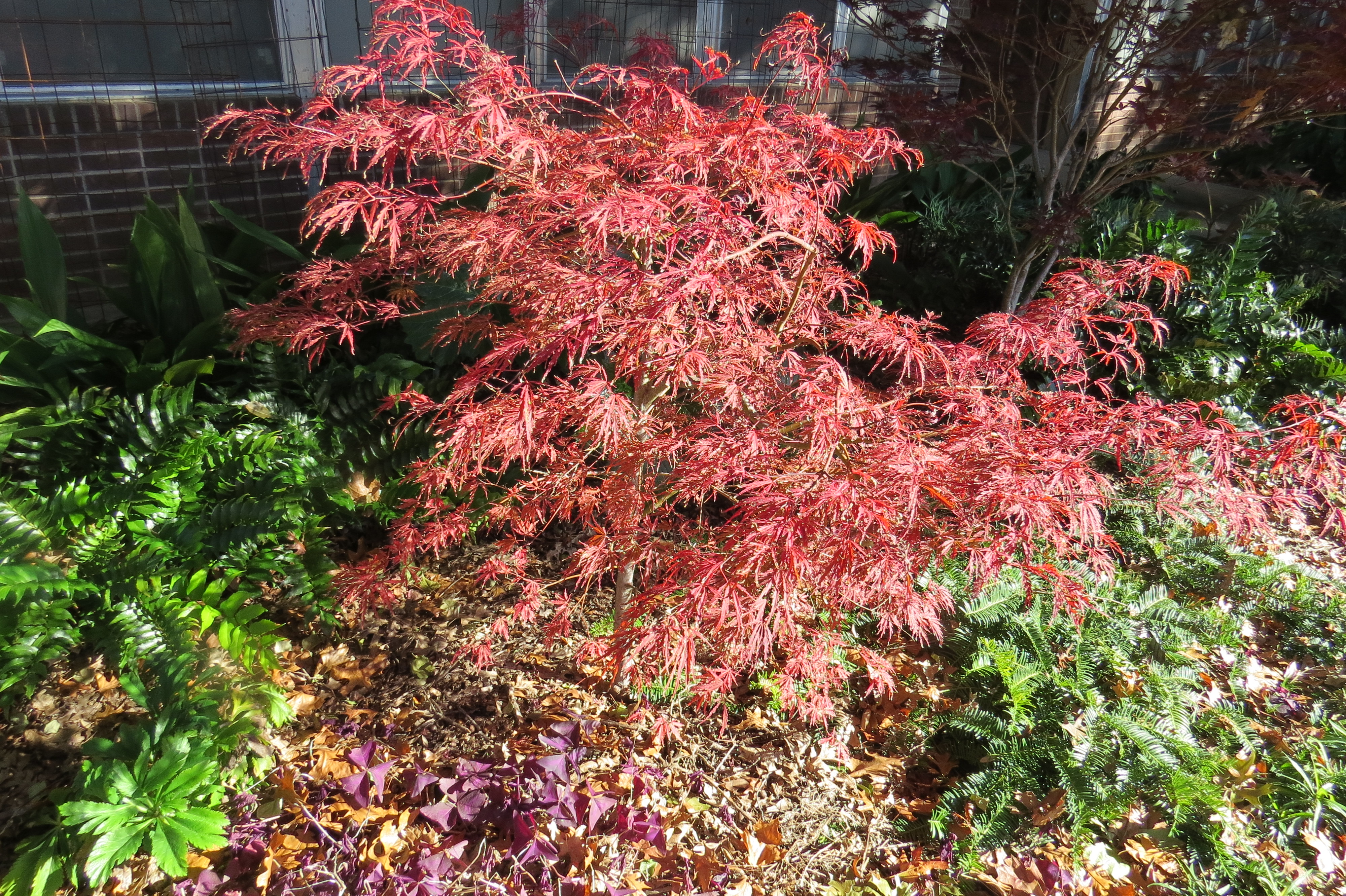
Acer palmatum ‘Crimson Queen’ is one of the finest Japanese maples, an outstanding dissectum cultivar with a deep-red foliage. Most dissectum cultivars that start out with excellent red color during spring and early summer turn green or bronze later in the season. Crimson Queen carries its deep red color throughout the entire growing season. Crimson Queen is sun, heat and humidity tolerant, but prefers protection from harsh direct sun. Fall color is an array of bright scarlet tones.

Acer palmatum ‘Crimson Queen’ grows in the classic mushroom shape and older trees develop a beautiful branching pattern. The mounding habit of ‘Crimson Queen’ makes for a specimen tree maturing to a maximum height of 8 to 10 feet, although some top out at about 5 feet due to their weeping characteristic, and a spread, depending on pruning, of 7 to 12 feet. Zones 5-8

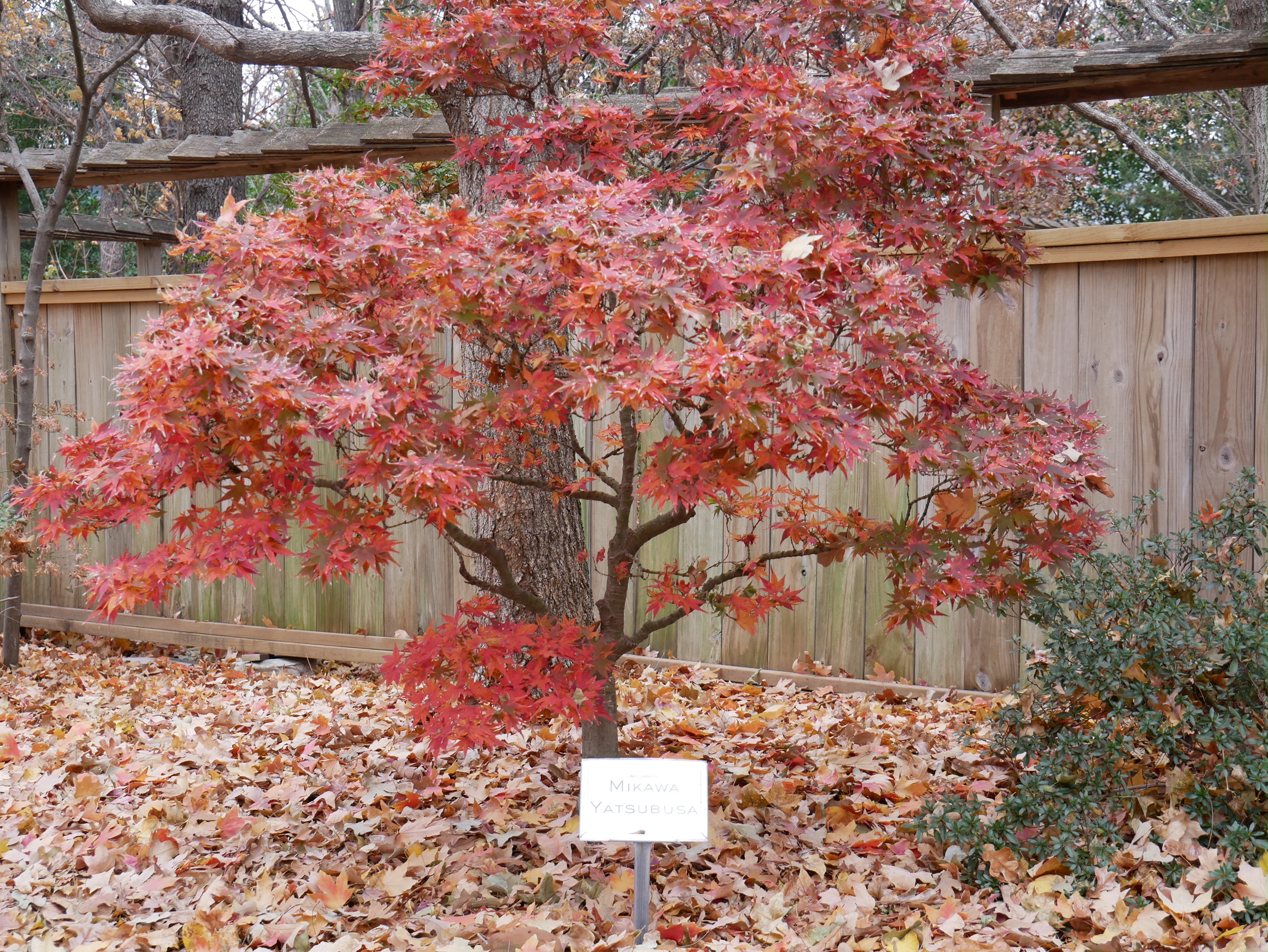
Acer palmatum ‘Mikawa Yatsubusa’ Considered one of the top 3 varieties in the world for bonsai, beautiful ‘Mikawa Yatsubusa’ is a naturally dwarf, layered tree with tight branching. If left alone, it will reach about 5 feet high and wide within a decade and stays much smaller if root-trimmed for bonsai. What makes ‘Mikawa Yatsubusa’ so distinctive is the way in which the leaves are held. Deeply lobed and quite elongated, they arise in tufts, overlapping one another, as if fanned out for display. This creates little canopies on every branch, a very striking effect.

Acer palmatum ‘Mikawa Yatsubusa’ In spring, the new foliage unfurls in shades of yellow- tinted green, very pale and eye-catching. As summer arrives, they darken to a rich mid-green and remain that way until the cooler temperatures of autumn, when they burnish brightest orange to scarlet. It is outstanding in containers or the garden. Zones 5-8.

Acer palmatum ‘Shishigashira’ is an older cultivar. A medium sized tree with a most unusual characteristic – the leaves are small and crinkled around upright branches. In Japanese the name translates to Lion’s Head or Lion’s Mane, based upon a mythical lion in Japanese drama because of its shape and growth habit. Bunched up, heavily curled leaves grow at the end of short stout shoots. The foliage is deep green and firm to the touch. The tree structure is stiff – branches and leaves do not wave in the wind, as with most maples. The dark green foliage turns to orange and finally scarlet red in the fall.

Shishigashira is considered a slow growing tree suitable for bonsai enthusiasts. Shishigashira like other Japanese maples, benefits from some pruning to shape the tree, as well as removing any dead branches. The estimated height in 10 years is 12′. Once established this cultivar is hardy to -20 degrees, Zones 5-8

Lisa Centala

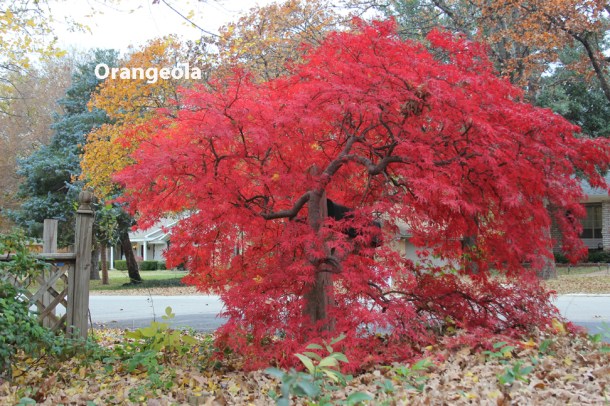
Photos show trees at Raincatcher’s in the fall except the last Maple which is new to our garden and photographed last week.

Photos by Starla Willis

My favorite Maple is the Coral Bark Maple because it was given so generously by the Master Gardeners at Raincatcher’s  in honor of my Mother, Betty Haughton.

More about Japanese Maples here.


Dallas County Master Gardeners and Japanese Maples

Everyone loves Japanese Maples! Dallas County Master Gardeners were able to learn about them from expert, Scott Hubble, at our September meeting last week.

Scott works at Metro Maples in Fort Worth  and shared a wealth of information about these trees which come in all shapes, sizes and many colors.

Our Texas sun is the most important factor to consider when picking a location for a Japanese Maple. Morning sun with shade in the afternoon is generally perfect.

Japanese Maples are well situated when they are under the canopy of larger trees receiving dappled light throughout the day.

Remember they do not like soggy roots so plant them in areas with drainage.

No more words, let’s gaze at these beauties.

Look carefully inside this Japanese Maple to see homeowner’s mailbox. This  25-30 year old tree grew around the mailbox.

Thank you Metro Maples for the presentation and pictures.

Ann Lamb

All Master Gardener meetings are  held the 4th Thursday of the month at varying locations are open to the public.

Tool Time and education for all Thursday, October 3rd at 10am at The Raincatcher’s Garden. Click here for details.

Don’t forget to visit the Red Maple Rill at the Dallas Arboretum with over 80 varieties of signature Red Maples.