Tag Archives: gardening

THE SPRING TO DO LIST—-REVISITED

March 10, 2026

This time of year is a busy one.  Its a time of new growth and new plans for the future.  

For gardeners it often involves visions of “THE BEST GARDEN EVER’.  

That tends to be a wonderful few minutes. The beauty and well yes the envy of all who see it may play a part too.  One can see the modest acceptance of complements and all quite clearly.

But then comes the realization that ‘THE BEST GARDEN EVER’  Will be a lot of work and the work has to start now.

So obviously the to do list must be started.  It can be simple but sadly can get complicated with systems of checks columns headings –must buy a new notebook of course–it can get out of control.

Now there is a lot of good in the list It helps to have a plan and a list of tasks and even a system of checks can be ok .

But remember it’s not helpful when it becomes a goal in itself and checking things off becomes the focus of the day.

Time for a rethink

First note–your old notebook is ok–really and you most likely do not need to draw lines and decide on what color ink would work best.

Next think small and simple. –if the task is Weed the garden–that is way too much and too vague to help  weed one bed or even half of one is doable and useful

Plant a tree in the middle of the garden–well maybe this needs breaking down into what to do today–maybe decide on exactly what tree would work in your space.

But more important by far is realizing that your list is for results in the future.  Now of course you can’t ignore them.  Weeds will ruin the garden if you don’t get them out.

There will never be a tree in the garden if it isn’t planted

However we must not ignore the present.  The tasks are endless and yes they must be done but don’t let them keep you from enjoying your garden now.

Gardeners just tend to be people who take the work hard now for results later as an absolute rule.  As we just said we have to do this –yes we must and its alot of time consuming work.  

But also we are not promised anything but the present–this very day and hour!  We must remember this and think about it and practice what it teaches us.  

So yes have a list move those sticks out of your garden.  Pull those weeds and plant something wonderful.

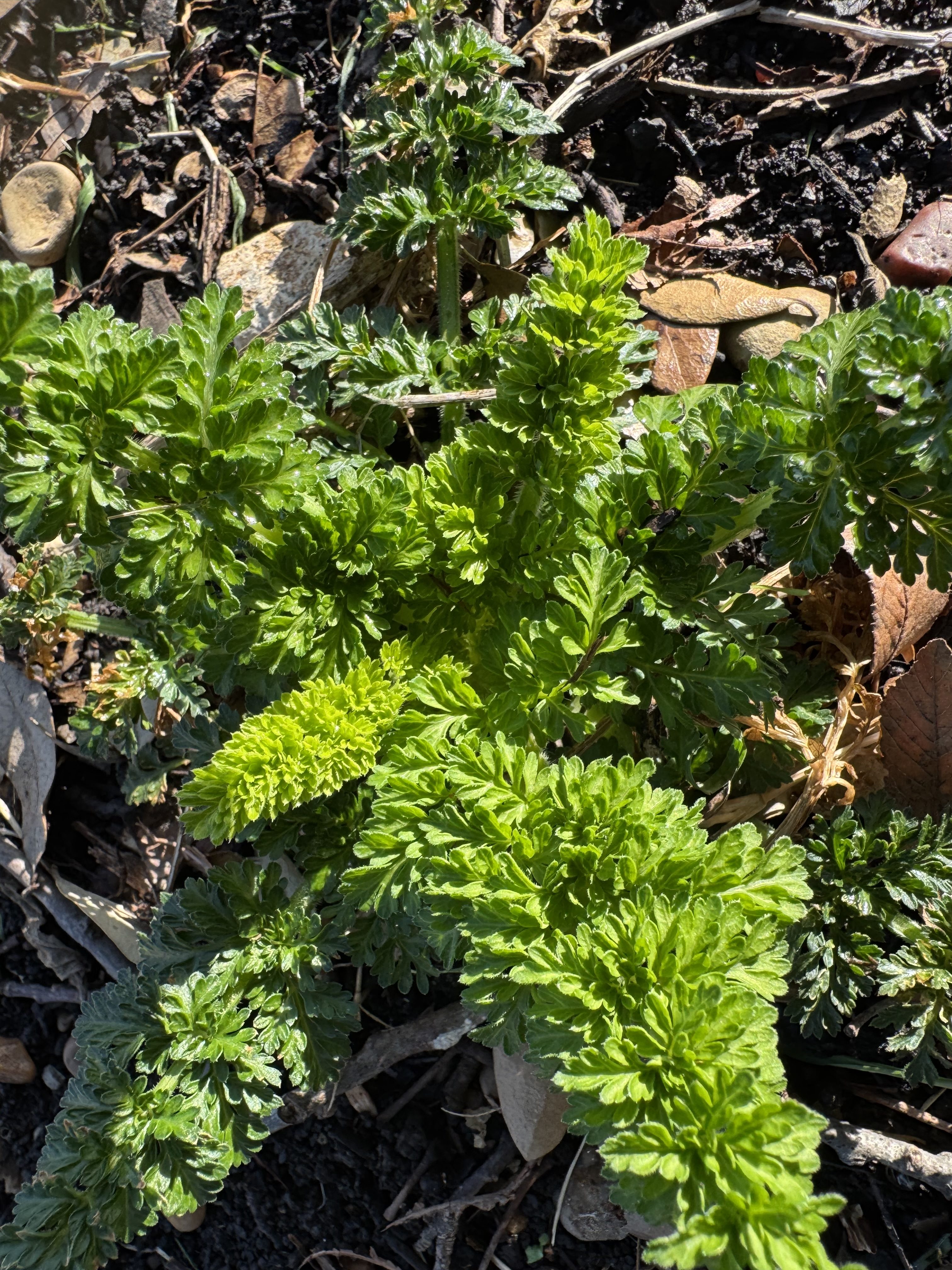
But take time to see the pale green of the new foliage as it emerges.  Look and take pictures of the early flowers–its ok to notice how lovely weed flowers are–right before you pull them up!!  Listen to bird song and the buzzing of the bees.

This is absolutely as important as the planting and pulling–PUT IT ON THE TO DO LIST —AT THE VERY TOP!!!
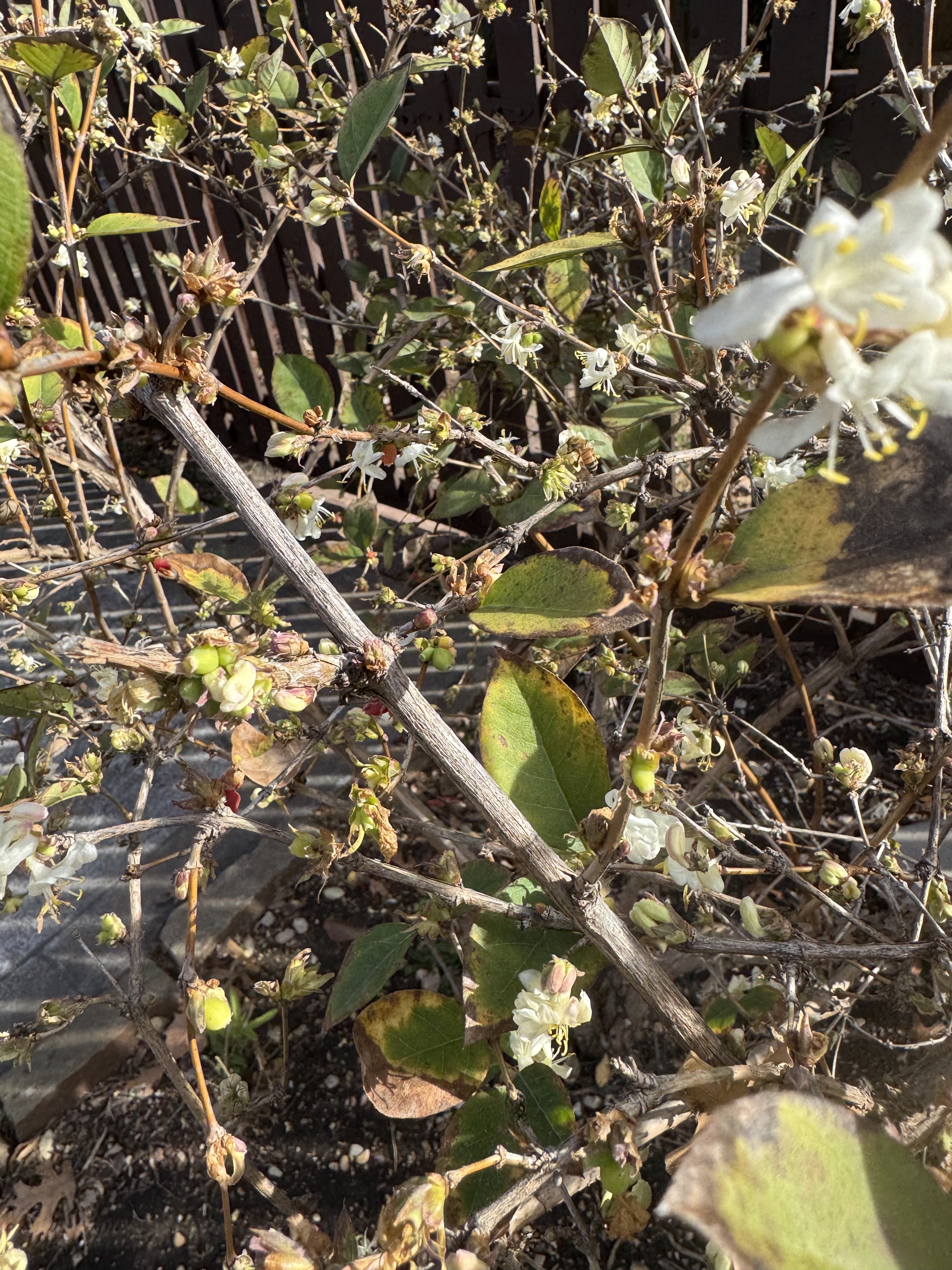
Susan Thornbury, Dallas County Master Gardener Class of 2008

Garden Chores for March

Save the date for the RAINCATCHERS’ ANNUAL PLANT SALE 2026 : SATURDAY, MAY 2nd

10:00 am – 3:00 pm

11001 Midway Road, Dallas, TX 75229
March Madness and Gardening

Are you experiencing a touch of March Madness around your house? Having played basketball in high school and college, my husband follows it with such a high level of intensity that I sometimes have to “leave the room”. Considering the frustration from a gardening perspective, I’m beginning to see some similarities. 

Let’s review the facts:

*The tournament features 68 NCAA Division 1 Men’s Basketball teams in an intense, single-elimination format culminating in a championship game that determines the national champion.

*It is a cultural phenomenon known for unpredictable upsets.

*It is one of the most anticipated events on the sports calendar, showcasing the amazing talents of collegiate athletes.

If you are wondering how that relates to gardening, smile first, then consider a gardener’s approach to spring planting:

*Beginning in early March, garden centers tempt us with an ocean of plants in every color, size, shape and texture imaginable. I’m sure the number far exceeds 68 participants.

*As seasoned gardeners, we understand the criteria for planting in Zone 8, and yet, we sometimes select material that either outperforms or overwhelming disappoints based on our very emotional decisions.

*Springtime for gardeners is our moment of anticipation. We’ve spent the cold, winter months studying seed packets, diligently reading instructions and carefully evaluating the possibilities. Why, because we hope to select the best performers in each “bracket”!

And so now, we have finally arrived at the most anticipated event on a gardener’s calendar; spring planting! Yes, some of our selections will have to be eliminated but, ultimately, the champions will reward us with their impressive performance. Wanna make a bet on that?

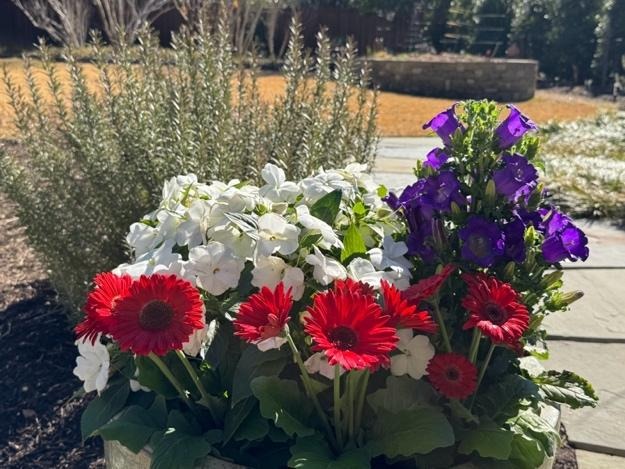
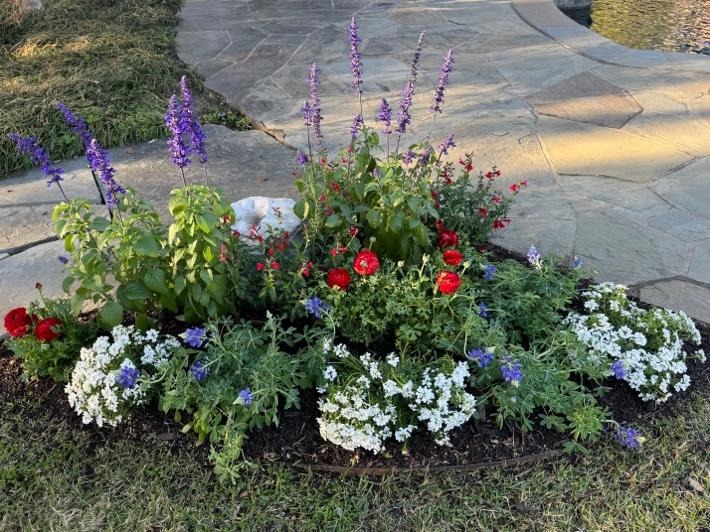
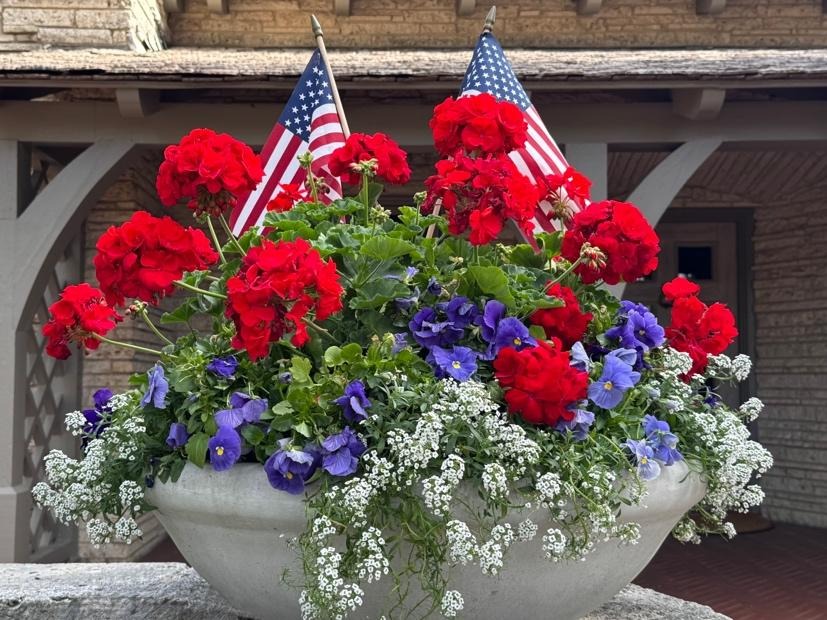
As we leave winter behind and begin the transition into spring, here are two red, white and blue flowerpot creations to welcome in some “March Gladness”!

Red: Geraniums ‘Santana’ (An interspecific, heat tolerant variety) White: Alyssum ‘Sweet White’ Blue: Pansies

Red: Gerbera Daisies White: Impatience Blue: Campanula ‘Bluebells’

In-ground Composition

Red: Ranunculus, Salvia ‘Radio Red’ White: Candytuft Blue: Mystic Blue Salvia and a salute to our state flower, Texas bluebonnets!

Throughout the next five months, look for fun ideas using some of the flowers listed below to create your own version of a patriotic garden display. (We would also like to include some of your own red, white and blue flower displays. Please send pictures no later than June 15th for the July 4th Grand Finale!)

Red Bloomers: Amaryllis, Azaleas, Bee Balm, Begonias, Camellias, Dianthus, Geraniums (Interspecific, Ivy and Zonal), Gerbera Daisies, Hibiscus (Hardy and Tropical), Hollyhocks, Nasturtiums (Alaska Red), Pentas, Peonies, Periwinkles, Petunias, Pineapple Sage, Roses, Salvia, Snapdragons, Turk’s Cap, Verbena, Yarrow (Firefly Red Pop), Zinnias

White Bloomers: Amaryllis, Alyssum, Angelonia, Azaleas, Bachelor’s Buttons, Bee Balm, Begonias, Campanulas, Camellias, Candytuft, Dianthus, Geraniums (Interspecific, Ivy and Zonal), Gerbera and Shasta Daisies, Hibiscus (Hardy and Tropical), Irises, Lilies, Moonflowers, Pentas, Peonies, Periwinkles, Roses, Salvia, Snapdragons, Verbena, Yarrow, Zinnias

Blue Bloomers: Agapanthus (Blue Globe), Ageratum, Angelonia, Bachelor’s Buttons, Blue Daze (Dwarf Morning Glory), Campanulas (Bluebells) Hydrangeas, Irises, Larkspur, Lavender, Morning Glory, Nepitella, Savia (Black and Blue, Mystic Spires), Veronica (Skyward Blue)

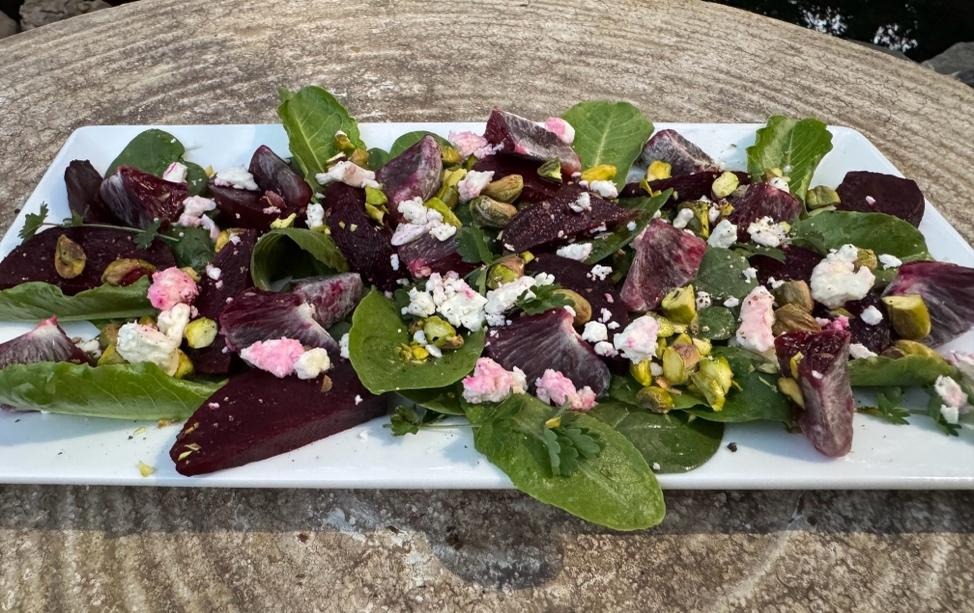
Our recipe for the month is a garden-inspired celebration of late winter to early spring selections. It’s easy to assemble and can be personalized according to your preferences. Substitutes might include grapefruit, navel oranges or mango as a fruit option. Walnuts, pecans or pumpkin seeds instead of pistachios. Goat cheese crumbles could replace the feta and, maybe, why not toss in some blueberries for a touch of blue!

Roasted Beet Salad with Blood Oranges and Crunchy Pistachios

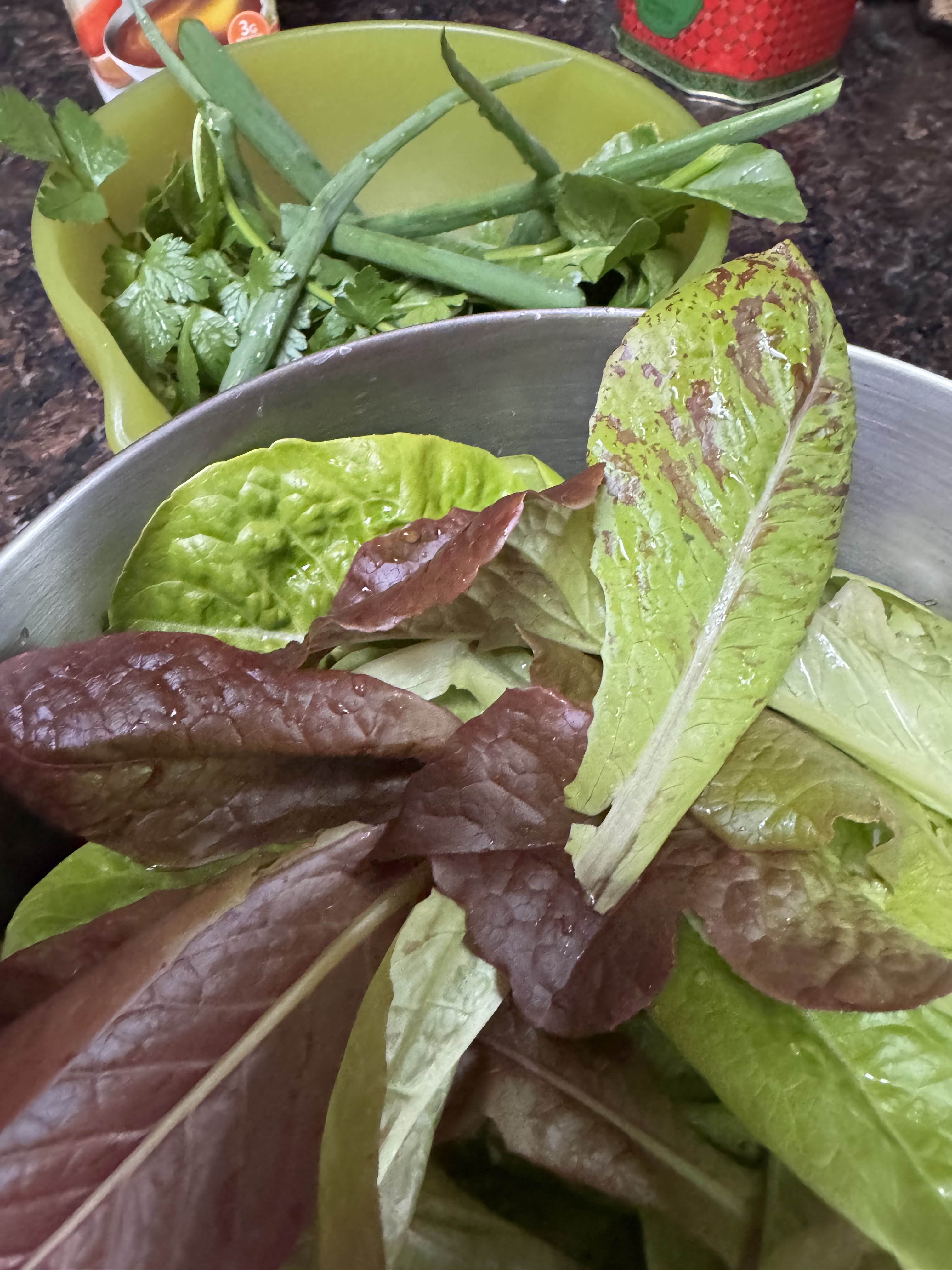
(Harvested from my garden: Lettuce ‘Romaine Green’, Spinach ‘Space’, Bull’s Blood Beets, Salad Burnet)

Linda Alexander, Dallas County Master Gardener Class of 2008

Texas Super Star Plants

Native Plant Society of Texas

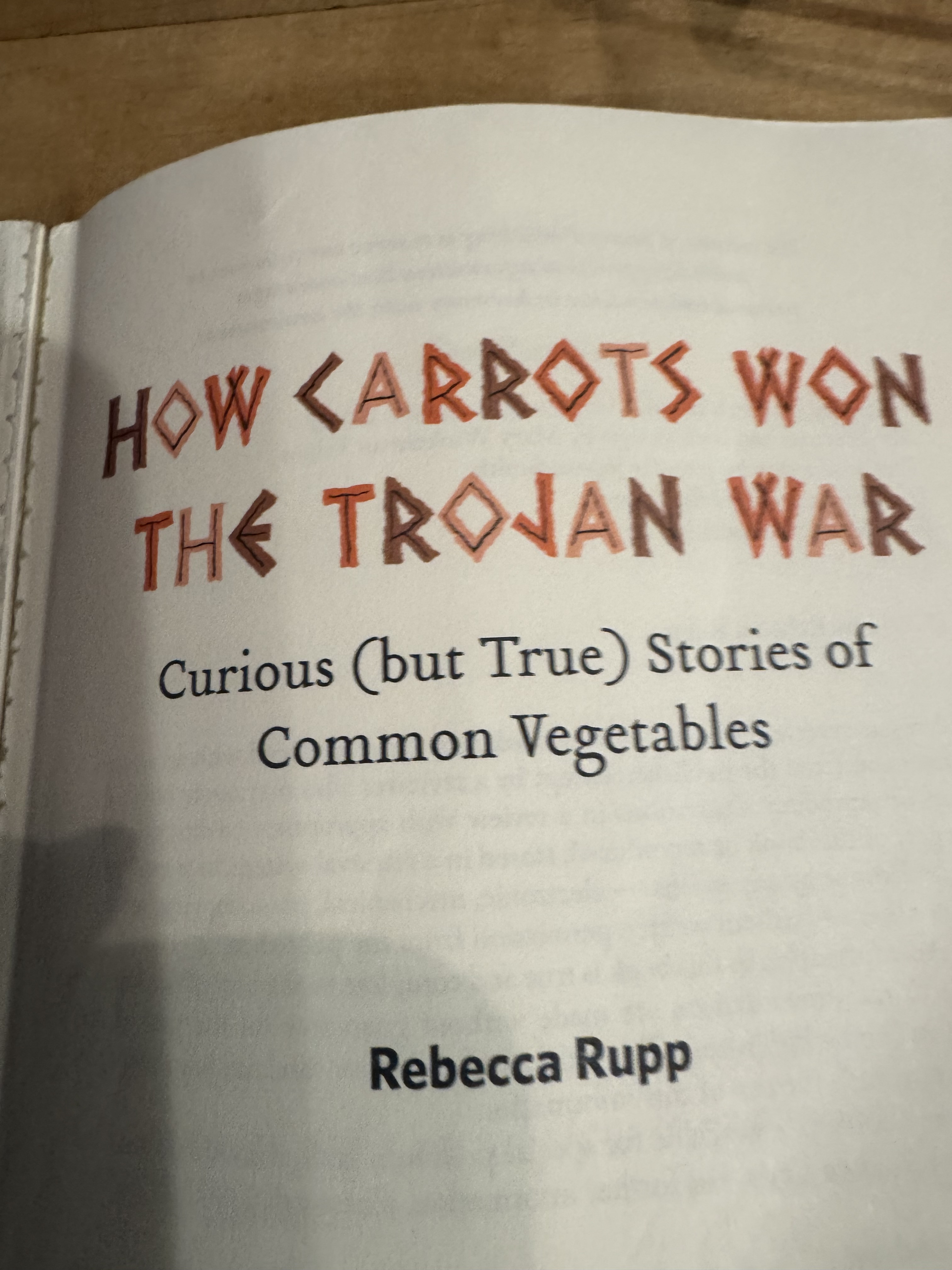
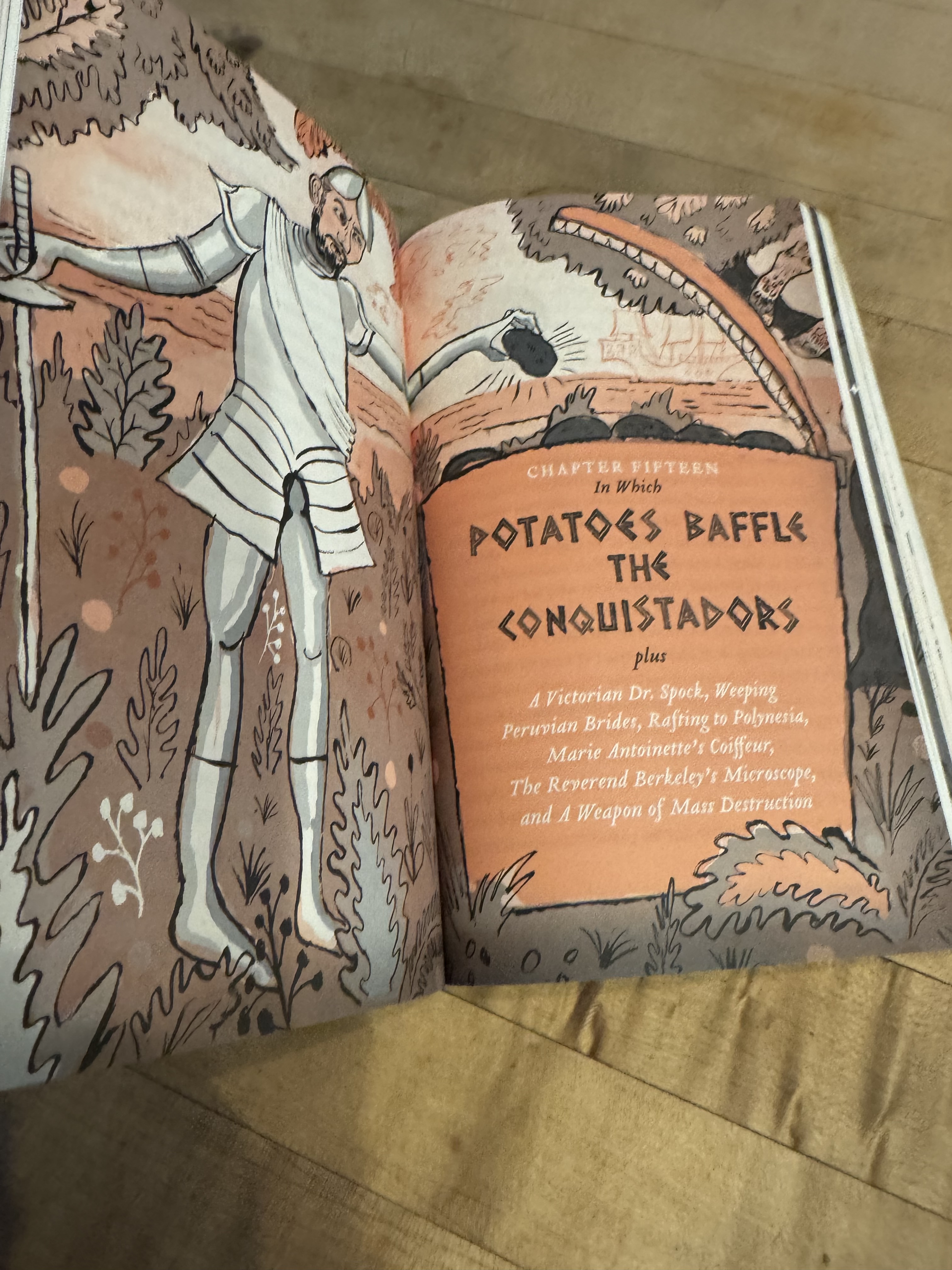
“How Carrots Won the Trojan War” by Rebecca Rupp

January 30, 2026

The sub title is Curious, but True-Stories of Common Vegetables

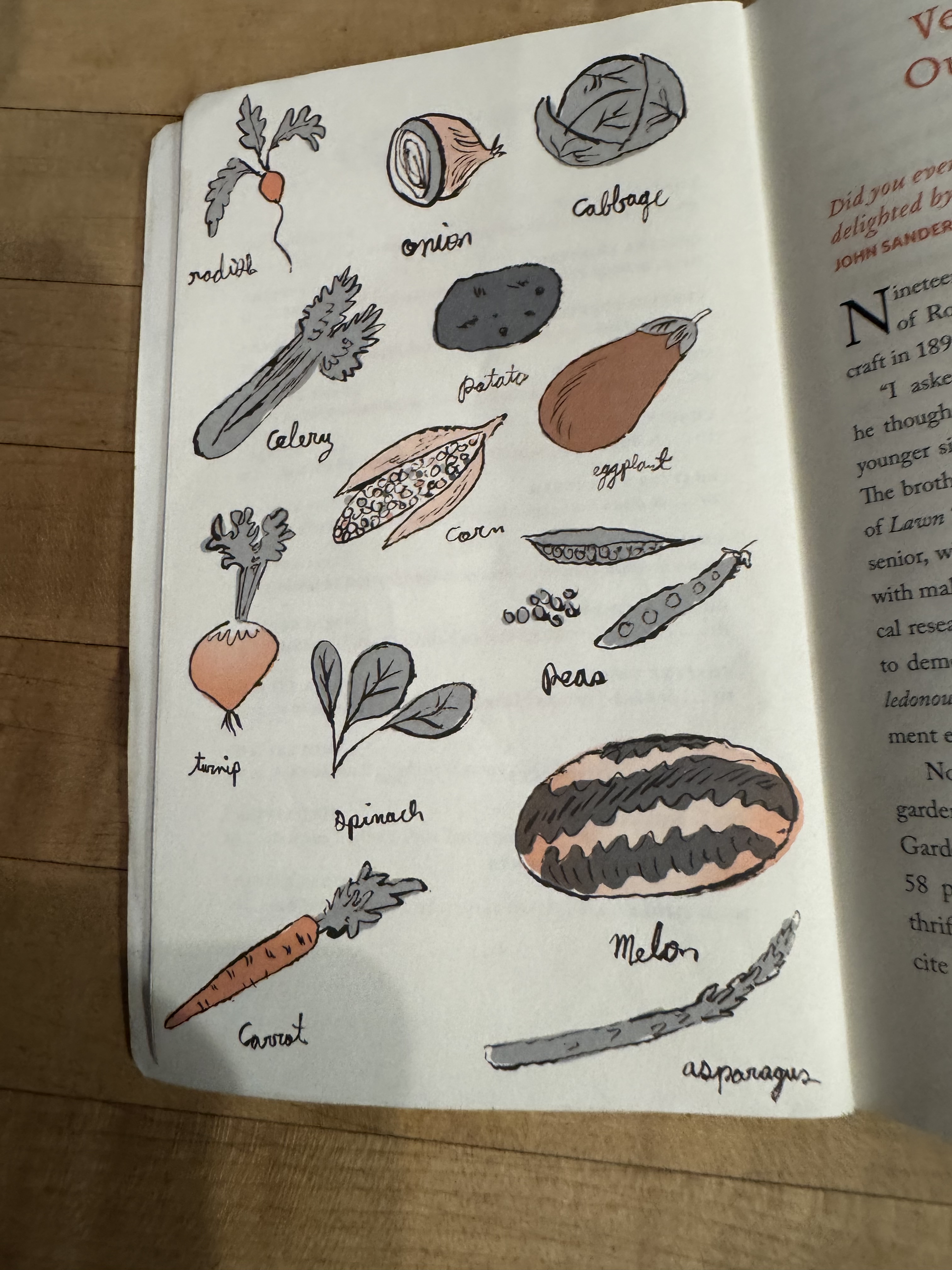
It’s not terribly long but its divided into  21 chapters each covering one vegetable that everyone will be familiar with. Honestly its hard to beat for a garden person’s reading list.

How often can you combine some basic botany facts–most of us could use a little review–right?–with  amazing historical information  on vegetables.  This is serious research but presented in such an interesting way.  Each chapter stands alone so you can read a little at a time –no need to feel you will forget the plot–since there isn’t one of course!

No way to cover the whole book really there is something new and interesting on every page.  But a tiny sample to give you the idea. 

We can start with carrots–how many kids have been told to eat their carrots so they can see in the dark?  Where did that come from?  Well during the Battle of Britian  radar was just installed in England  a fact that the war department would rat, carrots are not able to give anyone amazing night vision but they are for sure good for you and no harm done!  By the way raw carrots only release a tiny amount of beta carotene cooking allows them to release far more–in fact lots of vegetables are more nutritious cooked –should have known this I guess.


On to lettuce.  Do you have trouble sleeping now and again?  Lettuce to the rescue.  Lettuce has been prescribed for sleep problems since ancient times.  It turns out there is some truth to this.  The white  sap released from lettuce leaves was dried and used in sleeping potions in  Medieval times.  An extract made from wild lettuce leaves was used in hospitals  through the second world war.   

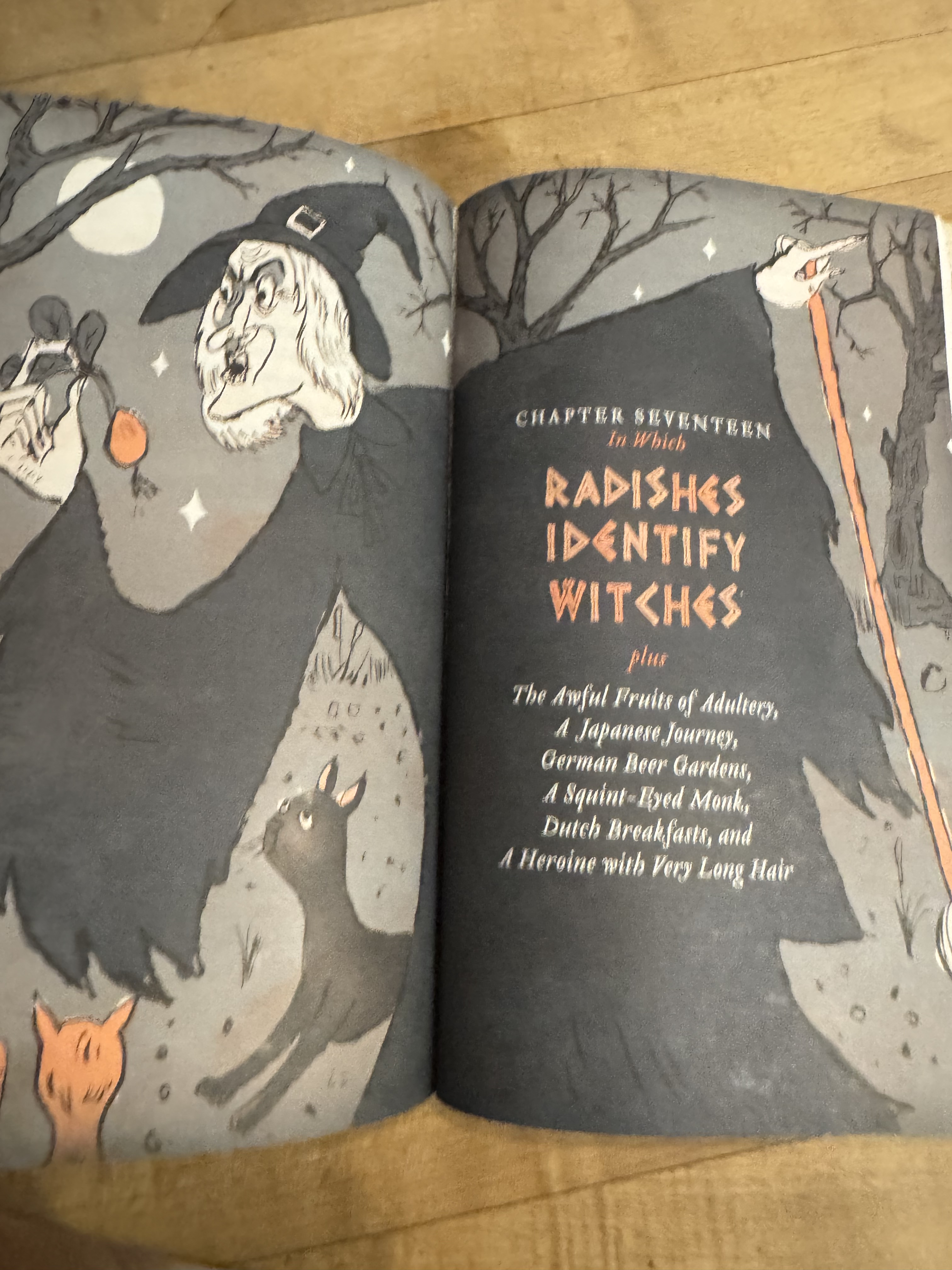
Now  we  must completely rethink radishes.  No one takes them seriously enough it seems.  There is lots to learn about the little radish.  In the 9th century they were considered a powerful treatment for coughs.   Before that  Romans used them to punish those found guilty of adultery–how?  Well that you must find out for yourselves!

Book reviews can’t go on too long–its hard to stop because there is so much covered in How Carrots Won the Trojan war.  You will be amazed as you read each of the 21 chapters–vegetables are clearly  amazing and how we come to have them is something rarely discussed–and it should be–we benefit from so much work and knowledge gained over in some cases thousands of years.

So–why read this book?  You will learn alot–and it won’t be hard either.  It’s an enjoyable–even fun experience.

But wait–there is more!  

We want others to grow their own food–which means of course growing vegetables.  So we are involved with formal and informal  education.  

A few fun facts can bring any interaction to life–throw in a few things you don’t hear everyday.  Your audience will wake up enjoy and remember what you said.  You need look no further –you will find all you  need in this little book.

Susan Thornbury, Dallas County Master Gardener Class of 2008

Winter Garden

January 1, 2026

 Winter is officially here! The winter solstice has come, leaves have finally turned and fallen, and the Frost Weed has frosted. Never mind that we are alternating between sweaters and shorts. It is winter in the garden. Many older gardening books speak of closing down or putting a garden to bed for this season, but like children waiting to see the New Year arrive at midnight, our landscapes are not truly snoozing. 

Our deciduous trees stopped producing chlorophyll. This let us see and enjoy their yellow carotene colors that were previously hidden, instead of just greens. The gorgeous reds and pinks seen across Dallas this year remind us that our autumn was dry, sunny, and certainly stayed above freezing, the conditions needed for the productions of anthocyanins. The mix of colors this year was constantly changing and quite stunning. 

But now these trees are bare (my sister refers to them as stick trees) and this slimmed down profile helps to protect them and their branches from wind, snow, and ice.  But those lovely leaves still have so much to offer, in one form or another across just about every landscape.

One use involves shredding leaves. This allows us to add that temperature modulating 3–6-inch layer of mulch around our trees and shrubs, or 2-3 for our flowers. That blanket is really appreciated by any newly planted perennials as they settle into their new homes. Extra shreds are perfect for composting. Whole leaves between rows in the vegetable garden keep our feet dry and relatively mud free, while they discourage pesky weeds.

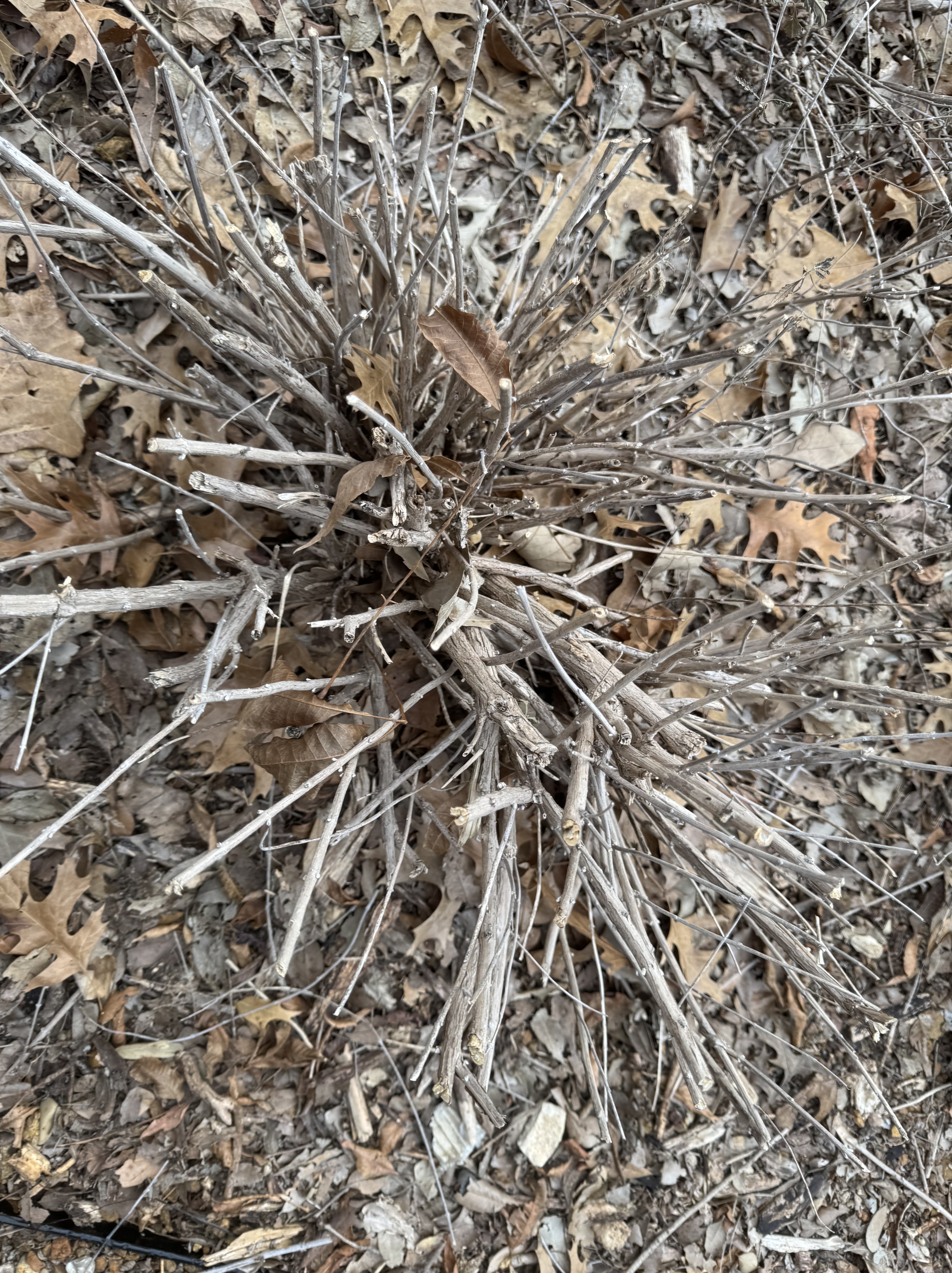
But consider the advantages of doing nothing at all in much of your flower beds and lawns, leaving even a small section of your landscape undisturbed, with plant stems untrimmed and fallen leaves where they fall this winter. Those stems and leaf litter house the insects that will populate, pollinate, and protect our plants next spring. Leaf blowers, rakes, snippers, shredders, and compost heat destroy the habitat our beneficials need this season.

Not all our garden friends headed further south with the monarchs and hummingbirds. They have deployed many clever techniques to survive until spring and summer. Some insects are sheltering in stems, others have headed underground, and some have taken the ‘get small’ approach by wintering as eggs.   Cleaver swallowtail butterflies produced their own antifreeze, turning sugars to glycol as an added layer of protection for chrysalis wintering in their cocoons. Despite appearances, life has not deserted our landscapes.

And in our pollinator gardens most especially, we want those insects to survive, to continue to play their garden roles.  A fascinating study of the effects of removing autumn leaves can be found here: https://www.sciencedirect.com/science/article/pii/S0048969725004565. To support our diminishing populations of butterflies, bees, beneficial of all kinds, please consider how you can support them as they winter in our yards and gardens. While I don’t want to offer my house as a winter vacation getaway for arthropods and arachnids, I do want them year-round in my landscape outside.  

Mary Freede, Dallas County Master Gardener Class of 2005

Jewels of Opar

November 3, 2025

My Jewels of Opar is in a mostly shady area. Next spring, as new plants emerge, they will be relocated to a place in my garden that receives full sun until late afternoon.

In May of 2021, we shared an article with our readers about Jewels of Opar, a lovely plant that is both edible and ornamental. Click here for the original article which includes helpful growing information.

This time, we’ve chosen to “drop in” for a quick autumn visit showcasing this adorable little beaded wonder in full bloom. You may remember that Jewels of Opar, sometimes referred to as Pink Baby-Breath, produces wands of tiny, pink star-shaped flowers followed by jewel-like fruits in shades of pink and orangish red.

Enjoy this photo of a simple arrangement filled with Roselle Hibiscus leaves gracefully surrounding Jewels of Opar in its colorful autumn wardrobe!


Linda Alexander, Dallas County Master Gardener Class of 2008

A Wave of Purple Haze

October 16, 2025

If you’re like me, a baby boomer who graduated from high school in 1967, the title above might suggest something other than what I’m going to write about. Yes, the song “Purple Haze” written by Jimi Hendrix came to mind one hazy, overcast afternoon as I was taking photos and working in my garden. I don’t remember the words and really never fully understood the reason for the title but it wasn’t difficult to find the answer. 

Jimi Hendrix, a brilliant guitarist, wrote the song on December 26, 1966, while backstage at a club in London. The inspiration came from a vivid dream he had after reading a science fiction novel. In the dream, Hendrix finds himself walking under the sea when a purple haze surrounded and engulfed him. And from that experience his iconic song “Purple Haze” (later discovered to be to be about a woman he loved) changed rock music forever.

Putting this into perspective as it relates to that quite afternoon in the garden, my own sensory moment of feeling “engulfed” by the color purple had nothing to do with walking underwater. It was the sheer beauty of being surrounded by a sea of purple flowers in full bloom. Honeybees, by the hundreds, were so busy visiting the blossoms that I quietly paused just to listen to the familiar buzzing sound bees make when foraging for nectar and pollen. I was reminded, once again, how time spent in the garden brings unexpected joys.

Hopefully, you will appreciate my “Purple Haze” experience and the lovely flowers in varying shades of purple and blue that gave me the opportunity to share it with you!

Here are some of the flowers and plants featured in the video. You’ll see a selection of many within the purple/blue range that have been growing in my garden over the past five to six months:

Ageratum 

American Beauty Berry

Angelonia

Anise Hyssop

Aster

Basil (African Blue, Balsamic Blooms, Cardinal, Red Rubin)

Blue Borage (a favorite of honeybees)

Butterfly Bush

Celosia

Clary Sage

Eggplant Blossoms

Foxglove

Impatience

Lavender

Pentas

Perilla

Petunias

Periwinkles

Phlox

Rose of Sharon (Blue Satin)

Sage (in bloom)

Veronica

Wisteria

Zinnias

Why, you might ask, designate so much garden space for flowers in the blue/purple spectrum?

*I’ll offer a few answers, but, most importantly, is that honeybees are highly attracted to these colors and see them more clearly than other hues. Flowers in this range signal to the honeybees higher nectar production. For this reason alone, gardeners focused on pollinator-friendly flowers should try to include blue and purple flowers in the landscape whenever possible.

*Looking a little deeper into the psychology of color, studies have shown that blue lowers cortisol while purple stimulates creativity and inner calm. In our gardens, these colors not only provide beauty but help to nurture our mental well-being.

*And finally, from a landscaping perspective, click on the link to Longfield Gardens for an in-depth guide on using purple in your flower garden. You will be inspired to get started!

DALLAS WATER UTILITIES 31st WATER WISE GARDEN TOUR OCTOBER 18, 2025 

October 14, 2025

Every fall, I look forward to one of my favorite  garden tours—The Water-wise Garden Tour hosted by Dallas Water Utilities and the city of Dallas.  There are several smaller organizations that participate, some giving lectures at the White Rock Pump Station (the traditional starting point of the tour). That’s where one picks up the map showing the location of the participating “winners” of this year’s tour.  I know in years past Dallas County Master Gardener’s Association has been both entrants and support staff. I’ve lost track of how many years Roger and I have wandered through Dallas, looking at peoples’ interpretation of what water-wise gardening entails.

Years ago, A&M Research Center on Coit Road had a program called Water University.  They had examples of homes with all sorts of saving water inside and outside the home.  We learned about Rainwater harvesting: how to build rain barrels for the home, rain gardens, etc.  All of which we demonstrated at our Joe Field location (thanks to County Commissioner M. Dickey).

When the county closed that location in 2014, we found a new home at Midway Hills Christian Church, located at 11101 Midway Road—thus our name “The Raincatcher’s Garden of Midway Hills.” This rain garden is located near the street on Midway Hills, next to the two cisterns that were put in place shortly after we started gardening there. This noncommercial rain garden would work in most home landscapes. It captures water from heavy rains and is also used to catch overflow from the cisterns.

2-2500 gallon water cisterns at The Raincatcher’s Garden

Although our garden is not on tour this year, feel free to visit us at 11101 Midway Road in Dallas, especially on Tuesday mornings when we are working in the garden. We love to share water saving tips.

Water Wise Garden Tour maps of the participating homes will be available at the White Rock Pump Station on Saturday and the information link can be found below.


Some yards or gardens use xeriscaping, while others have lush  lawns and gardens.  There are innovative uses of hardscaping. 

On the 18th, I am playing tourist to get more ideas about saving water and creating a beautiful yard at home.  I always find some new idea  to take home to try out.

Hope to see you on the tour.  Be sure to take notes or, better yet—pictures!

Cindy Bicking, Dallas County Master Gardener Class of 2006

Pictures by Starla Willis, Dallas County Master Gardener Class of 2011

Water Wise Tour Information

“How lovely yellow is! It stands for the sun.”-Vincent Van Gogh

September 29, 2025

Along with Van Gogh, who described yellow as “wonderful”, many people associate yellow with feelings of warmth, happiness and positivity. And still others say that yellow’s vibrant, cheerful color evokes feelings of joy, optimism and enthusiasm. 

Yellow is one of the oldest colors in history. Cave paintings over 17,000 years old reveal that the yellow pigment from ochre was readily available in prehistoric times. In ancient religions, yellow was considered a sacred color. Like gold, yellow was seen as eternal, imperishable and indestructible. Today, yellow flowers are used in gardens across the globe adding vibrancy and beauty to landscapes in a multitude of imaginative ways. 

 From the dainty blossoms of French marigolds to the dramatic trumpet-shaped beauty of squash blossoms, yellow flowers add brightness to the garden. And don’t overlook the decorative nature of edibles such as yellow pear tomatoes dangling in clusters like drops of sunshine clinging to the vine. 

Whether edible or just enjoyable, bright yellow flowers, fruits and vegetables have a magical way of lighting up our landscapes. Additionally, those radiant blooms attract a host of beneficial pollinators to the garden including bees, butterflies and hummingbirds. So, why not add some late September sunshine to your garden? Let the video photos inspire you to create a natural environment filled with yellow for all to enjoy!

Top Ten Yellow Flowers and Vegetables (Observed/Photographed) in the Metroplex:

  1. Echinacea and Rudbeckia/Black Eyed Susan (Both plants are sometime referred to as “coneflowers” but Rudbeckia is widely known as a “Black-Eyed Susan”)

Main Differences:

*Echinacea flower petals tend to droop and curve downwards. Echinacea features a spiky, prominent central cone that may be green, brown or orange. Leaves are typically smooth. 

*Rudbeckia petals usually extend straight out from a flattened or slightly raised central cone. Leaves are described as hairy or fuzzy.

(Rudbeckia ‘Sunbeckia’ Juliana)

  1. Zinnias
  2. Sunflowers
  3. Daylily
  4. Hibiscus
  5. Cannas
  6. Lantana
  7. Yellow Pear Tomatoes
  8. Cucumber and Yellow Squash Blossoms
  9. Marigolds and More (Day Lilies, Calendula, Canna, Dill, Fennel, Gerbera Daisy, Nasturtium, Yarrow)

*Overall, it seems there is an absence of marigolds and a profusion of coneflowers; flower beds once brimming with marigolds have transitioned to the daisy-like look of coneflowers.

*Coneflowers have become soldiers of the landscape. They have an authoritative presence with their strong, upright stems and dramatic, bold color.

*Generally, coneflowers are used as “pocket” flowers. Nestled against large boulders or in “waves” of color in a natural setting, they offer countless possibilities. 

*Yellow is an underused color in gardens throughout the metroplex.

*Purple is the most complimentary color to use with yellow flowers.

*The majority of yellow flowers need a minimum 6 to 8 hours of direct sun daily.

From the professionals, some tips for using yellow flowers in the garden:

Fine Gardening-Yellow blossoms carry farther, shine brighter, and remain visible longer in the evening than flowers of any other color except white.

Proven Winners-Yellow is an attention-grabbing color that makes a cheerful statement in the landscape.

Gardening Know How-Yellow flowers/plants as a single color scheme greatly enliven the garden, especially when the area is small or shaded, brightening and enlarging the garden space.

Linda Alexander, Dallas County Master Gardener Class of 2008

Remember fall is a good time to plant!

My Favorite Herb…And a Good Companion

September 18, 2025

Here’s a hint – with its strong lemony scent and flavor, you’ll find many uses for it in the kitchen. You may have already guessed just by looking at the photo but, yes, the answer is Lemon Verbena (Aloysia triphylla). For over 30 years it has been my very favorite herb. I’ve used it countless times for breads, cakes, cookies, puddings, in savory dishes and beverages. From early spring when it emerges from the ground and sends up those first “shoots”, a fresh sprig goes into my daily glass of green tea. The ritual continues until at least November or whenever our first freeze of the season arrives.

Lemon Verbena Tea Garnished With Freshly Cut Lemon Verbena

Why should lemon verbena be growing in your garden? To start, lemon verbena is considered by some to be the queen of aromatic herbs, myself included. One whiff of its sweet lemony aroma explains why Southern ladies suffering from the “vapors” mopped their brows with a decoction made from its leaves. For this reason, it is sometimes called the Scarlett O’Hara herbs. Growing in our Zone 8 climate, you can expect lemon verbena to easily reach 4 to 5 feet in height when planted in full sun and in good garden soil. Consider placing it toward the back of your garden bed where it will become a nice informal shrub. Also, keep in mind that it tends to ramble off in different directions but can easily be trimmed to the shape you desire. Lemon verbena is a woody perennial that will start losing its slender, elongated leaves in late fall. If heavily mulched, it will survive a moderate winter. However, in the northern part of Texas, it may succumb to temperatures lower than 25° F. Over the years, I’ve lost at least five or more lemon verbena plants during a hard freeze. But once spring arrives, most local garden centers have it in stock. And, thankfully, it is a relatively quick growing plant.

Lemon Verbena Growing Gracefully in My Garden

Recently, I discovered a recipe in one of my 1995 herbal cookbooks that gave me a new appreciation for using lemon verbena with another well-loved herb, Anise Hyssop (Agastache foeniculum). In the summer section of ‘Today’s Herbal Kitchen’ published by the Memphis, Tennessee Herb Society, the recipe that caught my eye was Anise Hyssop Lemon Cake with Lemon Sauce.

Anise Hyssop is a pollinator-friendly plant whose blossoms are filled with honeybees

Reading through the short list of ingredients, I learned that anise hyssop was called for in the cake along with lemon verbena leaves in the sauce. Hooray! With both herbs growing in my summer garden, it was time to start baking.

Freshly snipped anise hyssop flowers ready to be chopped and mixed into the cake batter

Once out of the oven, and allowed to cool, it was time to slowly pour the luscious, warm lemon sauce over the top. I tried to imagine how the minty, licorice flavors of the cake would blend with the citrusy, floral taste of the sauce. Should I wait for my husband to come home from work before tasting? After carefully slicing the cake for the “photo shoot”, I yielded to temptation and willfully gave in to that first bite. It was a divine experience. My taste buds were rejoicing at the thought of this wonderfully harmonious combination. A new discovery is usually very satisfying and, in the case of anise hyssop and lemon verbena, I’ve determined that for as long as herbs are growing in my garden, these two “companions” will be there.

Anise Hyssop Lemon Cake with Lemon Verbena Sauce

Linda Alexander, Dallas County Master Gardener Class of 2008

Growing Figs in Texas

September 6, 2025

Dig a hole through time and you will hit a fig tree’s roots. Figs are one of the oldest cultivated plants.

Figs are interesting little fruits but not in the traditional sense. The structure of the fig is a called a syconium, a fleshy sac lined with tiny flowers inside. When you eat a fig, you’re technically eating hundreds of tiny inverted flowers that bloomed inside the syconium.

  • The word “fig” comes from the Latin ficus
  • There are over 700 species of fig trees worldwide
  • Figs grown in the USA are self pollinating but in other countries pollination is provided by fig wasps which crawl into the fig, complete their mission and then die inside the fruit.
  • Figs conatin fiber, copper, potassium, maganese, vitamin K and other nutrients
  • Plant your fig tree in full sun in soil with good drainage, mulch regularly and monitor moisture needs

My experience with growing figs started with a fig tree propagated by Master Gardener, Jim Dempsey. It was planted in my backyard about 10 years ago. Every year I have looked up into my trees large, deeply lobed leaves longing for figs. The winter storm of 2021 nicknamed “Snowmagdeddon” caused the tree to die back and it would be several more years of waiting and hoping as it recuperated.

Finally this year my family tasted the fruit! About 12 pounds of figs were harvested from our Celeste fig tree. We let it grow to a height of over 20 feet. Rather than try to protect the tree from birds with a net or other artificial means, we let the birds eat the fruit in the branches way up high leaving the rest for us. There’s nothing like the taste of a fig eaten at peak ripeness from your own backyard tree.

Our Celeste Fig Tree, note the neighbor’s two story chimney for height comparison.

Another personal story: My son and wife and three little children moved to a new house last year. They have a “Texas Everbearing” fig tree. To my great delight, my grandchildren are eating figs from thier own tree. Imagine me walking into their kitchen and seeing figs on their high chair plates. Surely this is tender hearted beauty!

Ann Lamb, Dallas County Master Gardener Class of 2005


Extra figs were made into Fig Jam!

More Fig Facts here

Fig Fest