Many things connect us to our gardens.We have had a busy spring at The Raincatcher’s Garden.
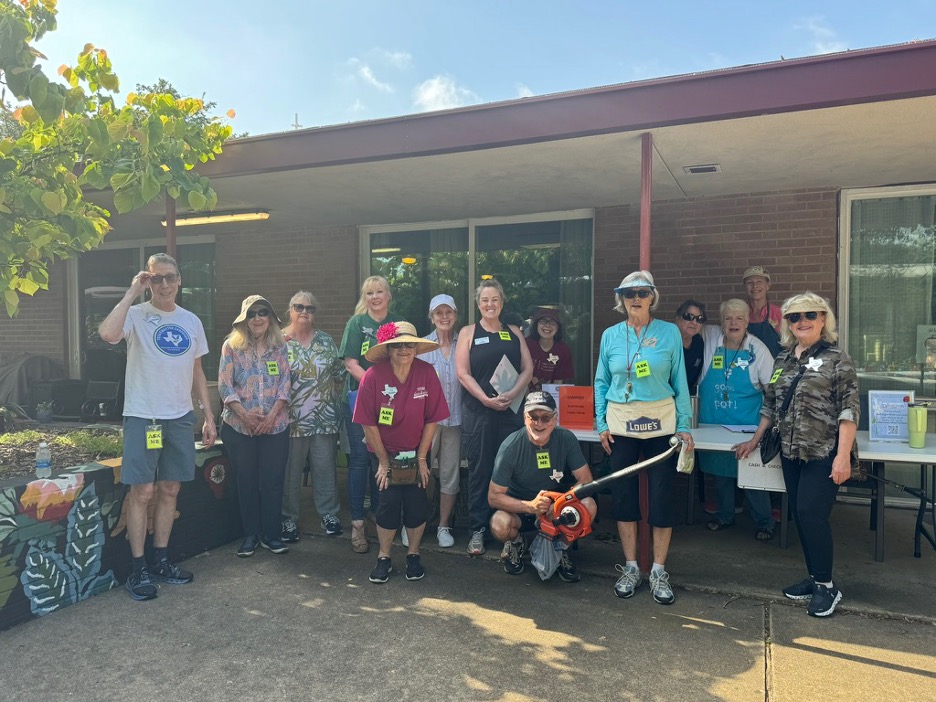
Garden chores become pleasure when we work together. Spring has consisted of weeding, seed collecting, watering and learning from each other and then sharing the fruit of that knowledge with all ages and also agencies that assist others
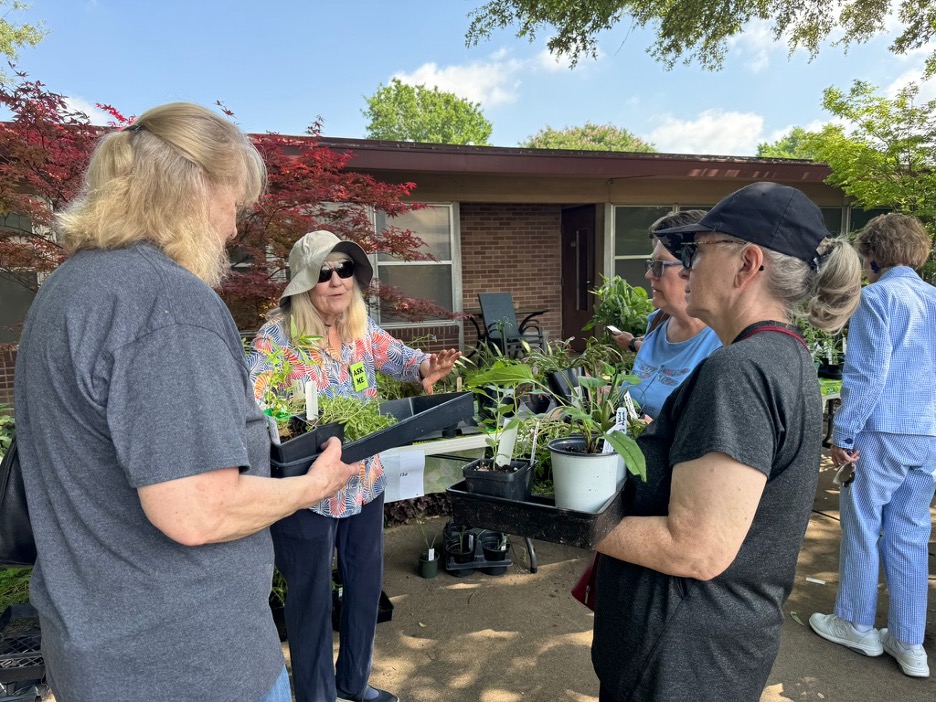
North Dallas Shared ministries received over 200 lbs of fresh vegetables to distribute from the Raincatcher’s Garden.Our compost crew hard at work. Combining efforts and resources for common goals. Here we are at our annual plant sale Jackie, Sue and Deborah at the Raincatcher’s Plant Sale
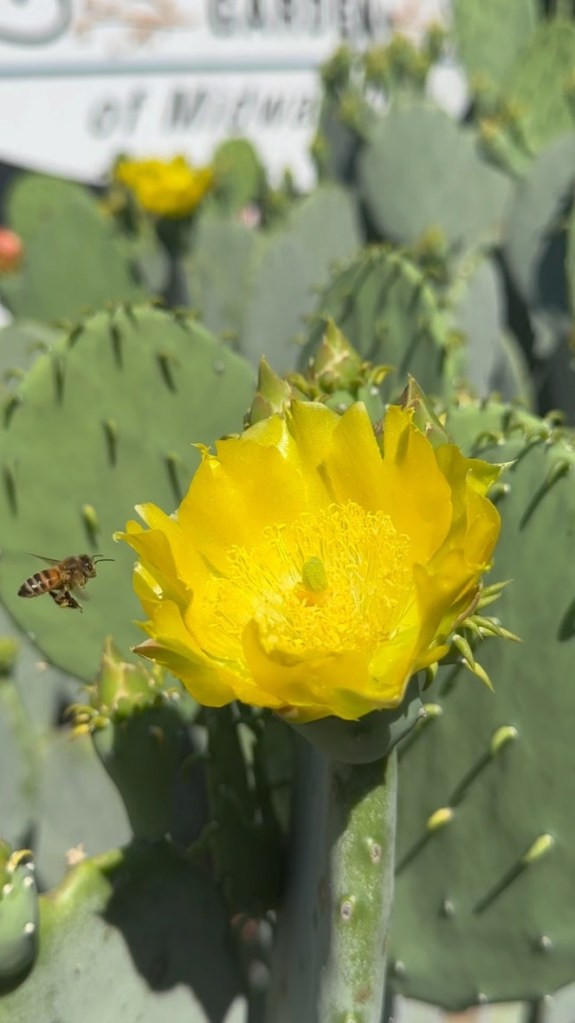
Nature unfolds before our very eyes. This honeybee is about to forage for nectar on a beautiful cactus flower at the Raincatcher’s Garden.
Garden love also includes sharing life, having fun, and learning through our garden work experiences.
Starla Willis, Dallas County Master Gardener Class of 2011
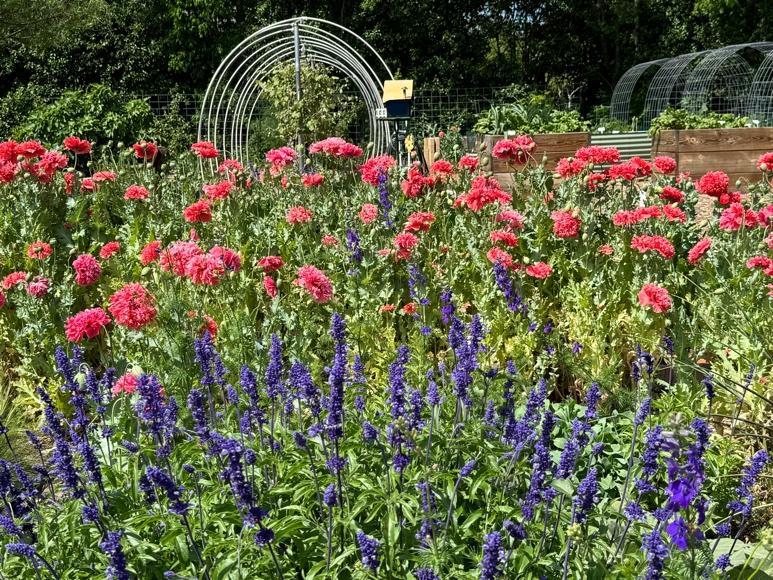
If you’ve been to Raincatcher’s Garden of Midway Hills anytime during the past two weeks, a seasonal spectacle may have caught your eye. Everywhere you look, from the Edible Landscape/Courtyard area extending out to the north garden, pathways are filled with the sight of spring blooming pink poppies.
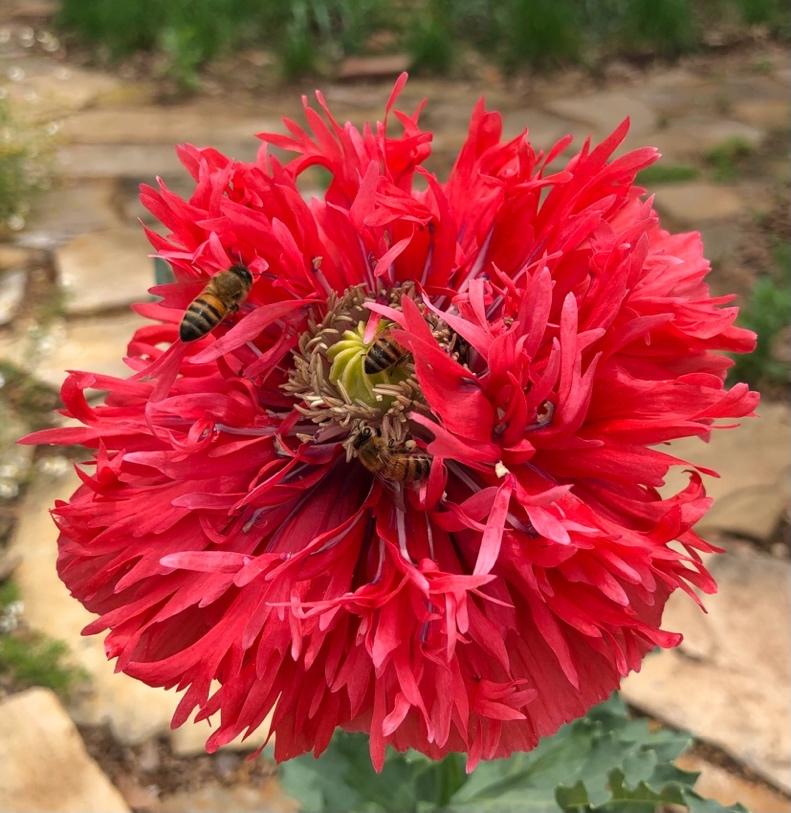
Move in a little closer and listen carefully for a soft humming sound. As you might have guessed, honeybees are busy at work foraging for pollen from the abundance of poppies that share these garden spaces with our herbs, vegetables and wildflowers.
Are you wondering…why are honeybees so attracted to poppies? As the late Robbin Thorp, native pollinator specialist for UC Davis in California so succinctly stated…” they’re not there for the nectar – they’re there for the pollen”.
Poppies should be considered as a quintessential plant for pollen production. And honeybees are one of the chief pollinating agents. A deeper dive into the world of poppies gives us some interesting information regarding pollen.
It is true that honeybees are attracted to poppies for pollen only. The reason why is that the inflorescences of all poppy species lack nectaries, thus no sugary nectar available to pollinators. Flowers, however, are packed with pollen-bearing anthers. Because pollen is the honeybee’s main source of protein, collecting it is a necessary task. Once collected, it is used for brood development and to feed the young larvae. And, fortunately for the bees, scientists have found that poppy pollen is remarkable clean, containing few fungi or mycotoxins.
Come visit our garden and take time to stroll the garden paths filled with poppies. Expect to be mesmerized by an eye-catching explosion of frills. Early morning and late afternoon seem to be the optimum time to experience the honeybees in action. Don’t be surprised to see as many as four or five honeybees foraging frenetically within a single flower.
(Raincatcher’s Garden of Midway Hills…Our “field of poppies!)
Linda Alexander, Dallas County Master Gardener Class of 2008
This is the time of the year when everyone wants something to change and improve advertisements that didn’t attract a bit of concern a while ago now seem tempting–the newest skin treatments that absolutely promise “younger brighter fresher” The poor child in the picture seems still a bit concerned but yet now doing better–well she should be concerned of course she is probably past Fourteen and knows its all downhill from here. Now if you want to buy thats fine after all it won’t hurt–although the price might be a real surprise and the bottle is so small and then there are two more things you absolutely must have if you really want “results” But we will go no further with this.
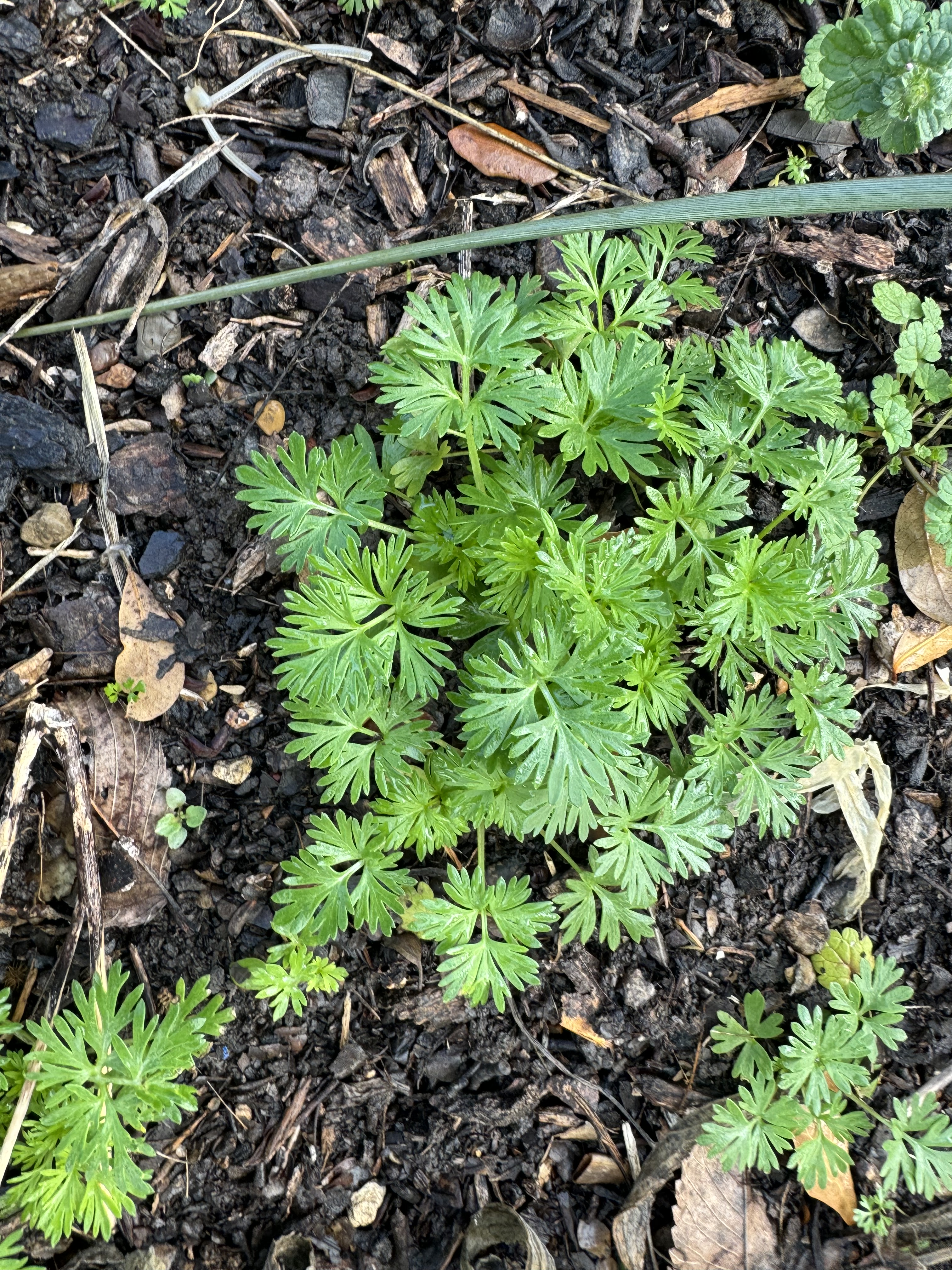
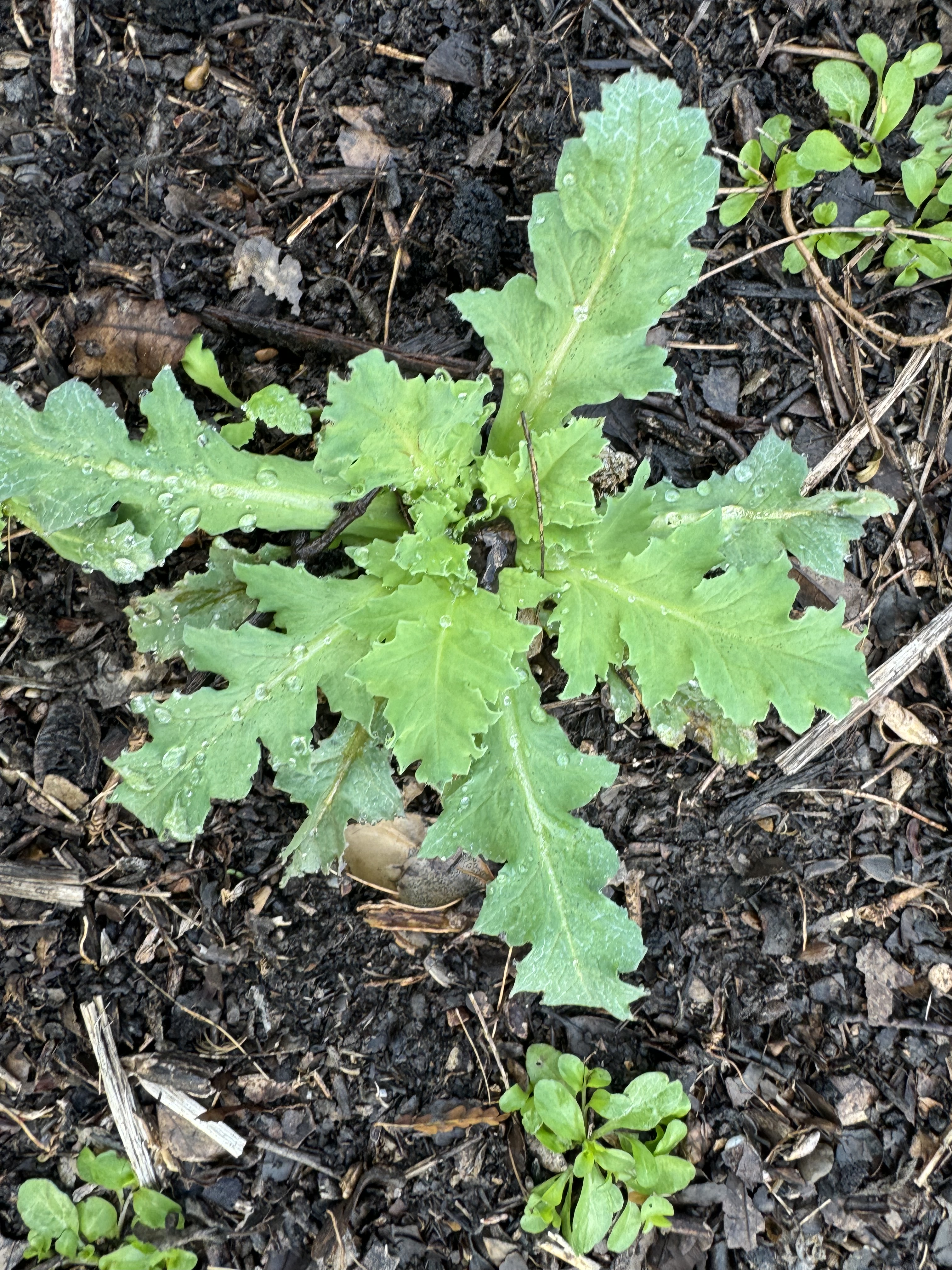
Baby Larkspur with maybe a weed-don’t worry about the weed.Baby poppy-same warning!Winter Honeysuckle does not give up.
No because YOUNG honestly is a state of mind more than anything and at this time of the year–well we may have to work at realizing that–and most importantly acting on our knowledge.
WE can’t let the season get us down. Its absolutely true that the leaves lying about have totally lost their charm –and how on earth did there get to be so many sticks and stalks everywhere. We have to look at things closely–after we clean up a bit of course. But take your time don’t be hasty, baby plants can be deceiving. The last thing you want to do is accidentally “weed” your precious spring flowers when in doubt don’t pull it up. Better to leave and weed than loose a poppy! Let your imagination take you to the blooms that will be here soon and you will be surprised at how much happier you will feel. Anticipating good things to come–well that is a receipt for real joy.
This is nothing but pure potential and hope!
Try to see bare patches as “Potential” not “Problems”. All the fresh seeds are here–stop and look . For some people this can be as much temptation as the five hundred dollar skin serum so do be careful. READ the labels and remember that if it says avoid heat you must avoid buying no matter how chilly and misty the day is right now. But maybe choose something new to try and go home and plant it–nothing worse than buying seeds and forgetting them–that doesn’t lead to happiness. But the choosing and preparing and planting–that can make a big difference for anyone. Feelings of accomplishment and planning for the future and feeling hopeful–well that makes anyone feel younger and fresher and its a feeling that lasts! Just the work in the fresh air helps so much even if you have to wrap up and use plastic shoes.
If it gets really cold take the time to protect your plants you will be glad you did–its work but it pays off and that makes us feel powerful. Just a little cover saved this lettuce.
If there are plants in the house don’t just pass them by they aren’t sofa cushions they really will respond to attention. water them and clean their leaves look for changes and growth–if you are fortunate even flowers–its the natural time for orchids to send up flower spikes–look carefully. Just noticing will brighten the whole day and who knows what tomorrow might bring .That is the key.
When we think about it–isn’t YOUNG really anticipating the future–the good exciting things to come? That feeling may get a little harder to come by sometimes but if we really notice our plants and gardens and care for them that feeling just seems to catch us and carry us forward–and that is FOREVER YOUNG.
Susan Thornbury, Dallas County Master Gardener Class of 2008