October 28, 2024
Fall is a good time to plant Hardy Hibiscus and Hydrangeas for spring and summer blooms.


Blissfully soaking rains in April ushered in the arrival of extraordinary May flowers. How refreshing to see these three stalwarts of the garden bursting with blossoms as they made their dramatic appearance in the landscape. New growth started to emerge on these three beauties sometime around early April. Continuing into May, they filled out with tender green leaves, buds and blossoms.
June’s gift to us was an explosion of color. The temptation to selectively snip and arrange them for indoor enjoyment was overwhelming. Restraint was needed but rather difficult to achieve.
Hibiscuses (Malvaceae)are in the Mallow family and, interestingly, also include such plants as okra, cotton and the old-fashioned hollyhock. My preference for dependable seasonal color is the tropical variety, which is considered an annual in our Zone 8 climate. Late winter is when I start planning the layout and design of my seasonal garden beds. Hibiscus is ALWAYS included. Who wouldn’t appreciate a flowering, seasonal plant that can go into the ground during the month of April and continue blooming until the first freeze? Another benefit: it’s the type of plant that manages itself well. During the growing season when glossy green leaves begin to turn yellow and die, they politely fall to ground. Blossoms that open for a few days, do likewise. They really are gardener friendly plants!
This year I’ve included tropical hibiscus in different shades of pink mixed in with existing limelight hydrangeas. They receive about 6 hours of morning to mid-day sun. And for a bit of whimsy, two hibiscus topiaries were added in areas that benefited from slightly more height. One is my favorite; it was placed behind my sunflower girl statue and features dreamy double yellow blossoms. The other is a sassy 4 foot tall, braided hibiscus topiary tree nestled in a corner bed. The multi-colored blossoms are a standout against our bronze colored fence.
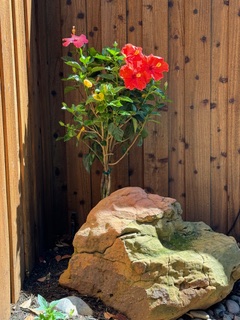

Starting in late June our three hardy hibiscus plants began their seasonal show with those bodacious salad plate size flowers. These herbaceous perennials die to the ground in winter then around mid-April new growth signals their return to the garden.
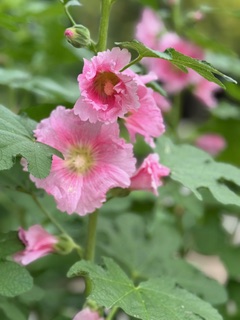
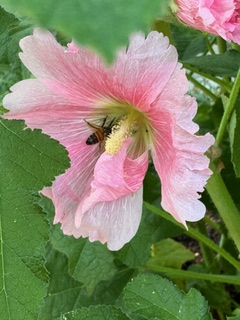
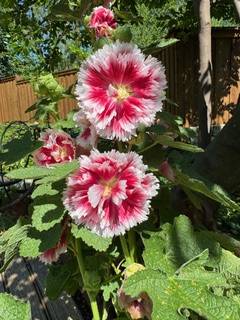
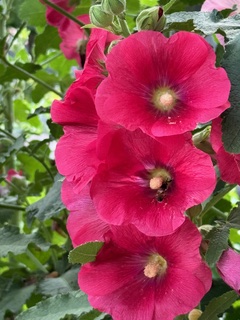
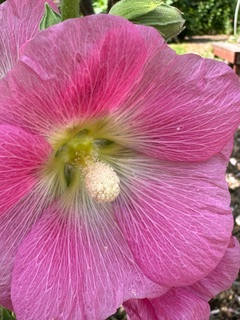
At Raincatcher’s Garden of Midway Hills, Master Gardener Susan Thornbury started seeds of a variety respectfully referred to as ‘Outhouse’. In days past, this treasured garden beauty was supposedly used as the perfect blocking for an unsightly outhouse while helping to mask the smell. Take a closer look at the multi-colored single blooms of white, pink, red and burgundy and you’ll see why it provided a pretty visual barrier.

Hydrangeas: When we moved into our home in May of 2006, oak leaf hydrangeas were already growing in a mostly shaded area of the garden. A few years later, they had overgrown the space and needed to be moved. A successful relocation to an area with filtered sun in the morning gave them more room to stretch their branches.

Since then, we’ve introduced a variety of hydrangeas to our garden beds:
*Big Leaf Hydrangea – Hydrangea macrophylla (Also, known as ‘mopheads’, these are the most common type of hydrangeas grown in home gardens and landscapes. Bloom time is usually late April through July. They are deciduous shrubs with large pom-pom heads of pink, purple or blue flowers. The flowers are greenish-white when young, picking up subtle shades of pink and brown as they age.


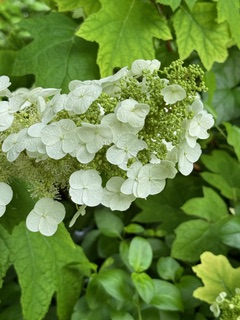
*Oakleaf Hydrangea – (Hydrangea quercifolia) Commonly referred to by its translation oak-leaved or oakleaf hydrangea, this variety offers year-round beauty with seasons of blooms, foliage and peeling bark. Blooms in spring and early summer. These beautiful plants were already growing when we moved to our home in 2006. Since then, I have searched for the compact, well-rounded deciduous hydrangea shrub known as ‘Ruby Slippers’. Finally, in mid-June, our local garden center received a shipment. I was first in line to purchase 3 plants. It was a special Father’s Day gift for my husband whose late mother was Rubye. He was thrilled! Oakleaf hydrangeas bloom on last year’s growth, so prune minimally after they bloom – not in early spring when new flower buds appear.


(This incredibly spectacular display of oakleaf hydrangeas is in the yard directly behind our house. It is the first thing that catches my eye when turning to leave our driveway. The photo on the left was taken in April when the plants were filled with those enormous white blossoms. Early to mid-summer they transitioned to lovely shades of deep pinkish/red. While the specific variety is unknown, something suggests to me that they could possibly be “Ruby Slippers’.)
*Panicle Hydrangea – (Hydrangea paniculata) This is one of the most cold hardy and heat tolerant of all species of hydrangea, thriving in Zones 3 through 9. Reaching 8’ + at maturity, there are now several dwarf varieties that stay under 5’ tall. For the strongest stems and the most abundant flowers, locate them in an area that receives 6+ hours of bright, direct morning sun then shaded during the hottest part of the day. We added ‘Limelight’ to our garden in 2022 and it has been a joy to watch them grow. Their huge, luxuriant conical flowers are mesmerizing. Bountiful blooms appearing in late May gradually turn from lime-green to creamy white in late summer followed by a rich deep pink which fades to beige as fall arrives.
*Of note, these hydrangeas are a recipient of the prestigious Award of Garden Merit of the Royal Horticultural Society and the Gold Medal Award of The Pennsylvania Horticultural Society.

Note: All photos were taken in the April – July time frame. The 100+ degree temperatures of the summer have left some plants struggling to endure the extreme heat. However, just as happened last year, the hardy hibiscuses, hollyhocks and hydrangeas will return next spring. The tropical hibiscus plants are going to be replaced with a new color palette in April of 2025.
Linda Alexander, Dallas County Master Gardener Class of 2008
Order your fall color!
Our pansy sale is still open. The sale has been extended through Tuesday, October 29th, 2024.



 DALLAS GARDEN BUZZ