I’m kind of obsessed with pepper plants lately. This is the second year in a row we have loaded Raincatcher’s courtyard beds with pepper plants and I have 27 pepper plants growing in containers at my house.
I think my obsession started when Jim Dempsey grew the Emerald Fire Jalapeno for our plant sale several years ago. The award winning Emerald Fire Jalapeno has become my absolute favorite pepper plant. It produces an abundance of jumbo sized, glossy green jalapenos that are longer, wider and thicker than standard jalapenos. It turns a beautiful red color if left on the plant. Because of the large size of the fruit, it is great for stuffing and grilling as well as pickling and salsa making.
Comparison of standard jalapeño at bottom with Emerald Fire jalapeño on top
Pepper plants need full sun and plenty of water during the hottest part of the summer. They do well with a well balanced fertilizer (5-10-10) every few weeks for the best production. So if you have space in your vegetable garden or a have a large container, you might want to consider growing this jalapeno.
Jackie James, Dallas County Master Gardener Class of 1993
Note: Start jalapeños as seeds in January or as transplants after that threat of frost has passed.
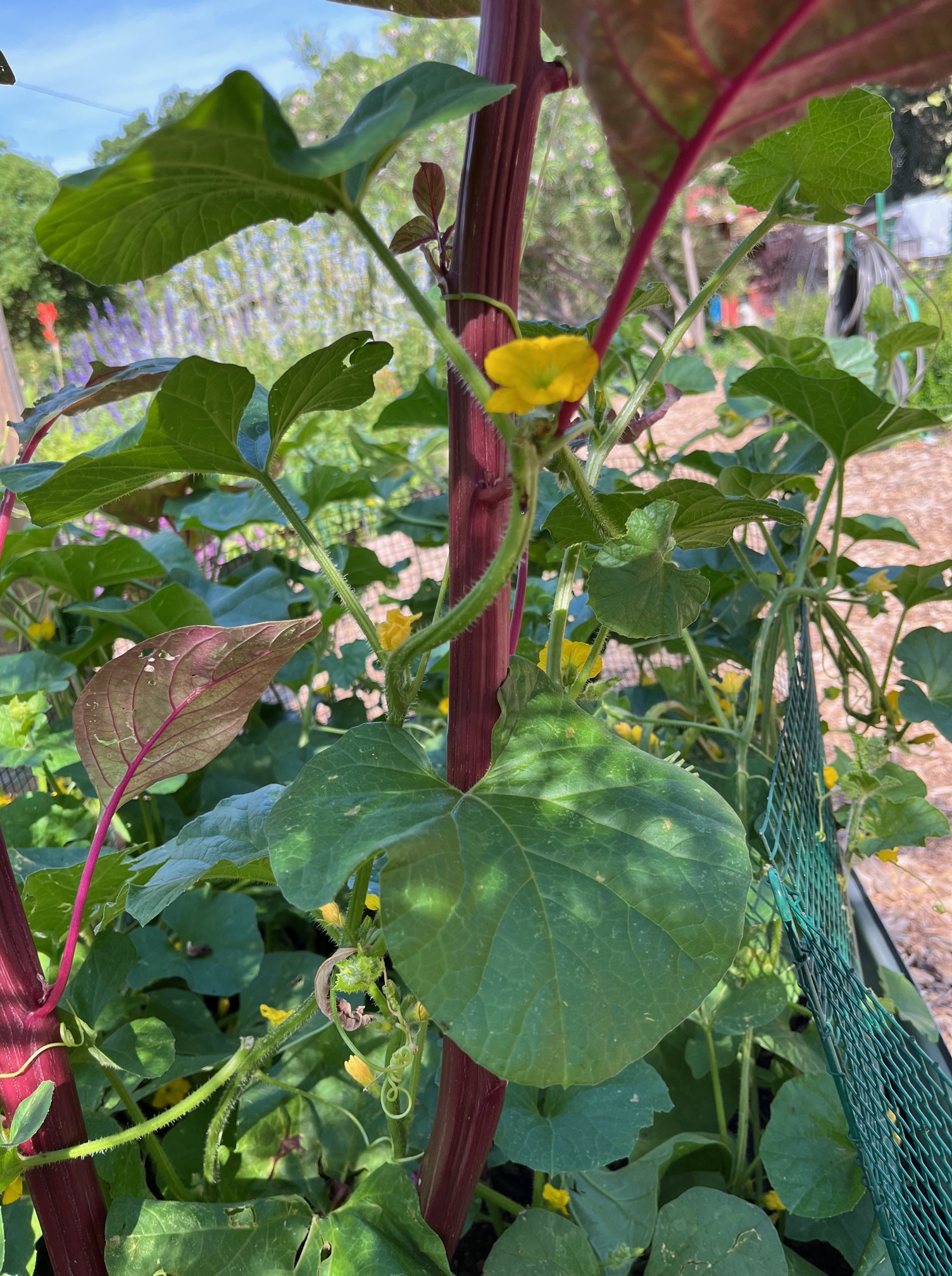
An amaranth volunteer provides climbing support for a Minnesota Midget cantaloupe vine. Since 1948 this plant has been known for producing sweet 4 inch cantaloupes on 3 foot vines.
Blackberry season is at its peak. Volunteers harvest and freeze them every day so that the jam and jelly team can work their magic.
Patio Choice Yellow and Cherokee Carbon tomatoes have been especially productive. All of the tomato varieties have to be picked at the first sign of color change and ripened indoors to protect them from squirrels.
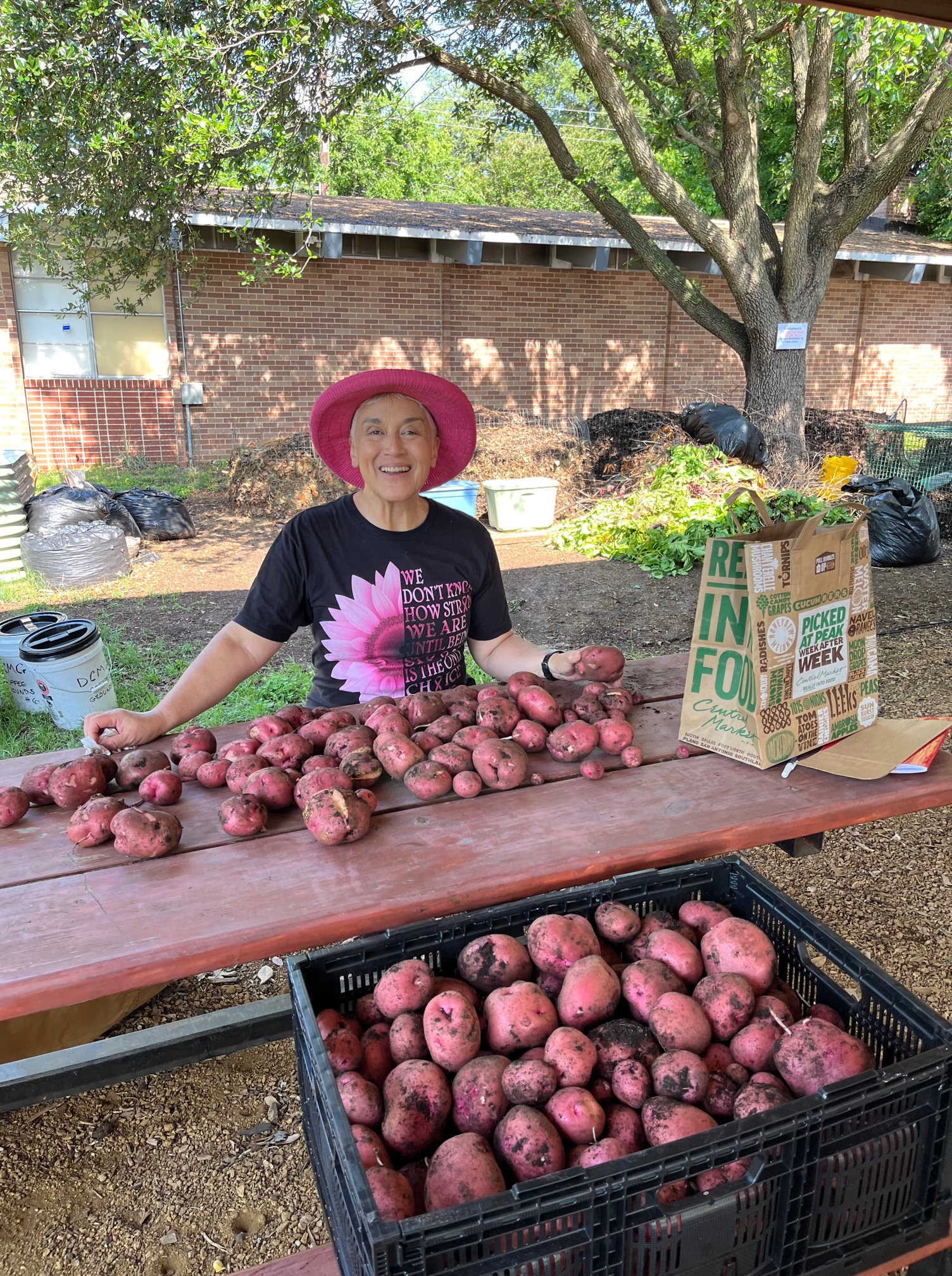
The season is off to a great start. We donated 142 pounds of potatoes to the North Dallas Shared Ministries food pantry in May. The peppers, cucumbers, long beans, and eggplant are coming along nicely. The squash vine borers have been distracted long enough to allow us to harvest some lovely round zucchinis.
We welcome Master Gardener volunteers and community support. Drop us a line in the comment section if you are new to our garden and would like to know more.
Beverly Allen, Dallas County Master Gardener class of 2018
(These are excerpts from a story by Rosemary Mosco and orginially published on mentalfloss.com and updated for 2023)
Ladybugs are named after the Blessed Virgin Mary.
One of the most common European Ladybugs is the seven-spot ladybug, and its seven marks reminded people of the Virgin Mary’s seven sorrows. Germans even call these insects Marienkäfers, or Mary’s beetles.
They are not bugs!
Ladybugs are not bugs – they are beetles. They are part of Coleonptera, the beetle order.
Some people call ladybugs birds, bishops, or cows.
In parts of England, and for reasons that are unclear, the ladybug is a bishop. Nowadays, most people in England use the word ladybird, perhaps because these insects are able flyers.
In several languages, the portly, spotted ladybug is affectionately known as a little cow. French people sometimes use the term vache à Dieu, which means “cow of God”.
Ladybugs come in a rainbow of colors.
You’ve probably seen red ladybugs with black spots – but members of the ladybug family come in a wide range of hues, from ashy gray to dull brown to metallic blue. Their patterns vary, too; some have stripes, some have squiggles, and some have no pattern at all.
Those colors are warning signs.
To avoid being eaten, ladybug species with bright colors are walking billboards that say, “Don’t eat me, I’ll make you sick!” And that is because…
Ladybugs defend themselves with toxic chemicals.
A lot of ladybugs produce toxins that make them distasteful to birds and other would-be predators. These noxious substances are linked to a ladybug’s color, the brighter the ladybug, the stronger the toxins. Don’t panic: Ladybugs won’t harm you unless you eat many pounds of them!
They lay extra eggs as a snack for their young.
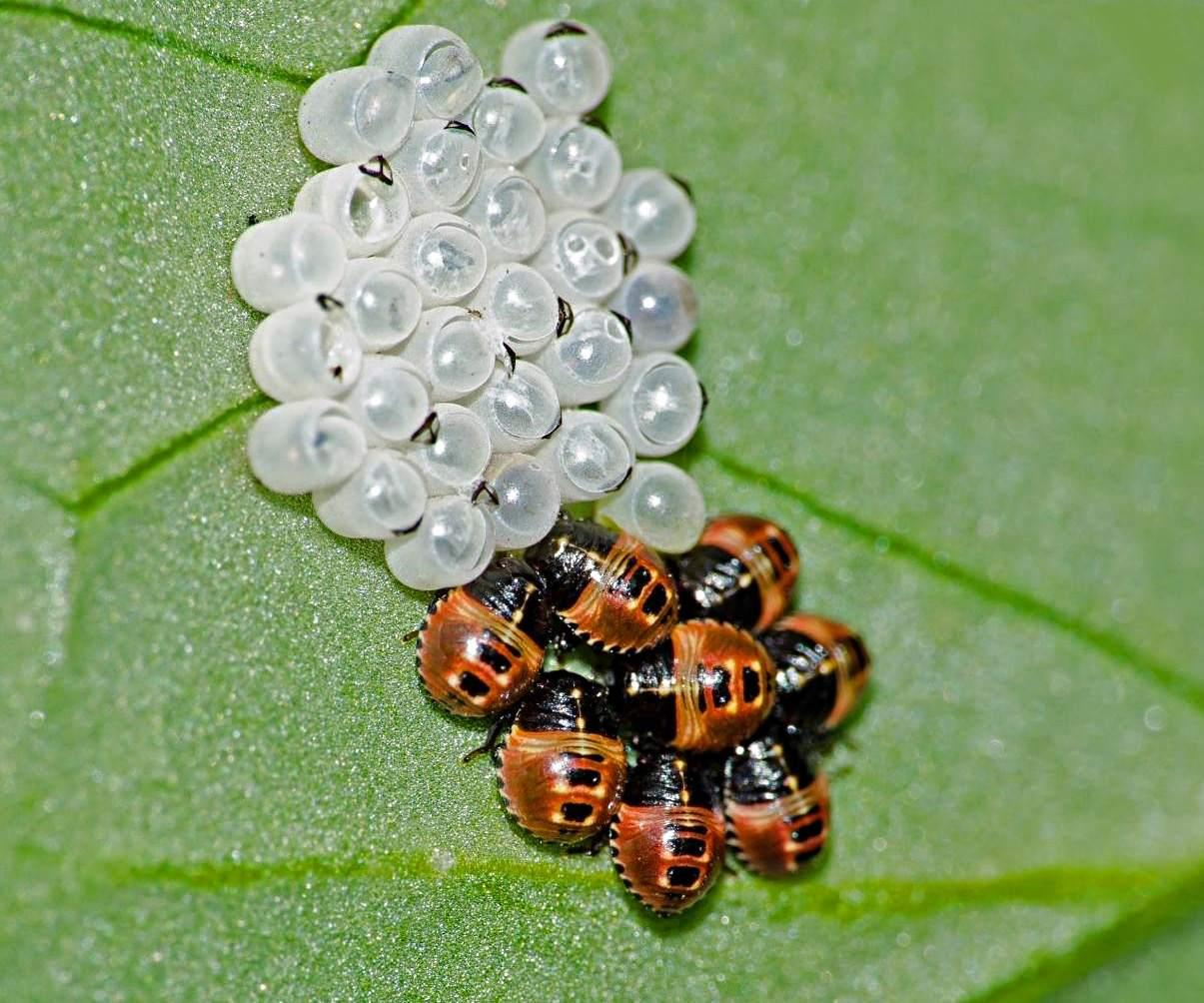
Ladybug moms lay clusters of eggs on a plant, but not all of those eggs are destined to hatch. Some of them lack embryos. They’re a tasty gift from the mother ladybug; the newly hatched larvae will gooble them up.
Ladybug larvae look like alligators.
What hatches out of those ladybug eggs is a long, spiny larva that looks a little like an alligator. Though ladybug larvae may be intimidating, they’re not harmful to humans. They crawl around, feeding and growing, until they’re ready to turn into something even weirder…
Ladybug pupae look like aliens.
Once the larvae find a nice spot in the garden, they turn into an alien-looking pupa. Protected by a hard covering, the ladybug then makes an incredible transformation from larva to adult, bursting out of its old skin.
Adult ladybugs fly with hidden wings.
When a ladybug takes flight, it lifts up its protective, hard covered wings, that are not suitable for flight, and slides out another pair of wings that are light weight, slender and perfect for flight.
Ladybugs survive the winter as adults.
They enter a state of rest and cuddle together in groups, often in logs or under leaves. Some even find comfort in our homes, the harlequin ladybug enjoys the warmth that is provided.
They’re voracious predators – mostly.
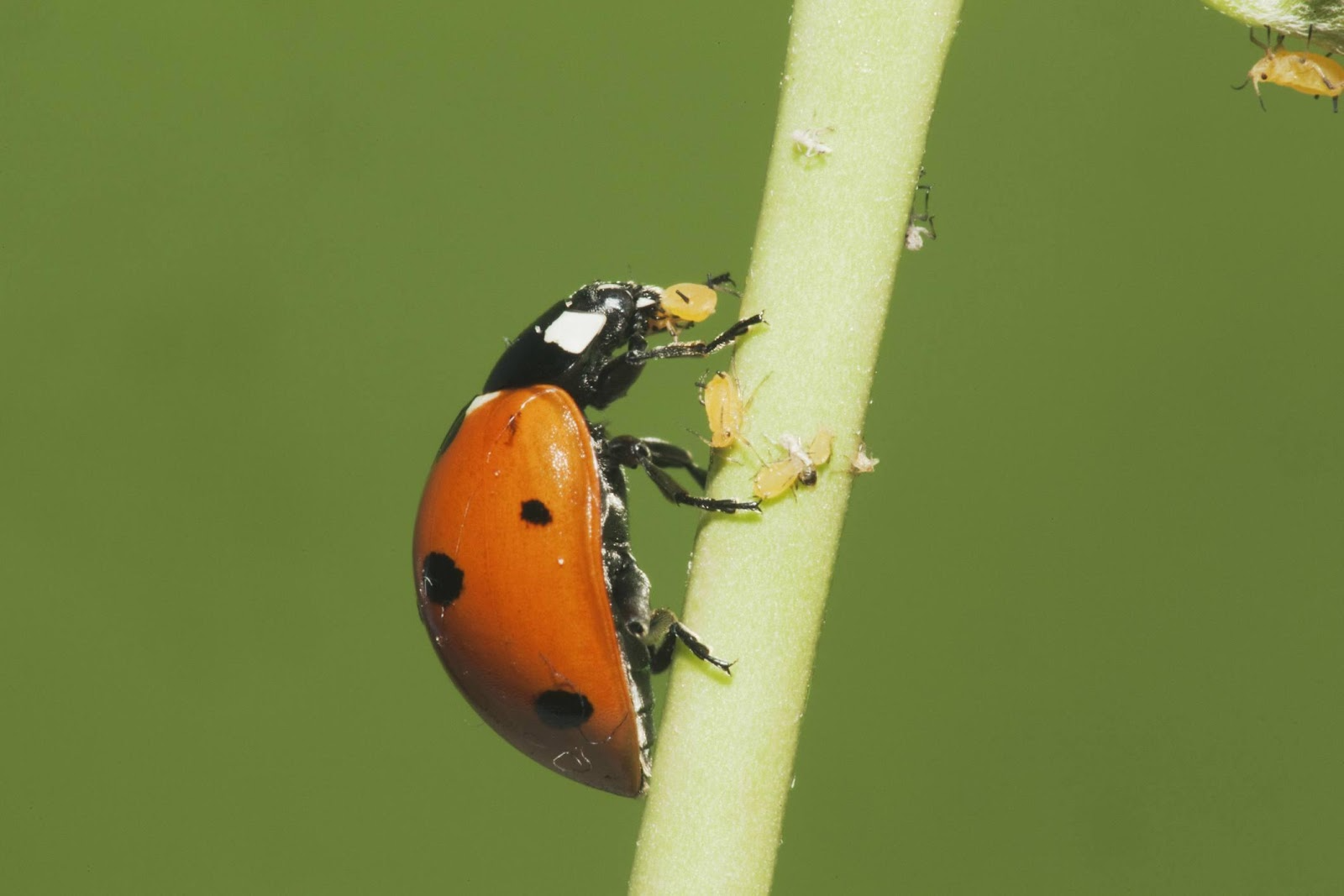
They are a natural form of pest control. They’re favorite foods are some of our worst plant pests: aphids, scale bugs, and mealybugs. A single ladybug can eat 5000 aphids across its lifetime.
Humans are spreading ladybug species around the world.
People have introduced non-native ladybugs to combat agricultural pests, and in some cases they’ve hitchhiked on imported goods. The results have not always been beneficial as they push out the native species and introduce a deadly fungal parasite.
They can be bad for your wine.
After devouring the aphids on nearby crops, such as soybeans, if vineyards are nearby, the ladybugs take up residence in bunches of grapes. When ladybugs become frightened during harvesting, they squirt out a smelly defensive liquid fluid. The resulting wine has a particular stinky flavor that has been likened to peanuts or asparagus.
There are additional sources on the use of beneficial insects at:
In 1971 singer-songwriter Van Morrison released his album Tupelo Honey. Shortly thereafter, the album reached number 27 on the Billboard charts. As a result, the name and brand of Tupelo honey reached a national audience. Then in 1996 Tupelo honey once again gained recognition in the media spotlight with the release of the major motion picture Ulee’s Gold starring Peter Fonda. Not only did Fonda win a Golden Globe for his performance in the film, but Tupelo honey also earned the distinction of being known as the Queen of the Honey World.
Tupelo honey is light golden amber with a greenish cast. The first taste is of cinnamon with a tinge of anise. That gives way to a whisper of jasmine and something citrusy like tangerine rind.
Tupelo honey is unique for its unusually high fructose to glucose ratio. Because of this ratio, raw Tupelo honey is very slow to, and rarely ever crystallizes. The higher fructose to glucose ratio also makes Tupelo honey one of the sweeter honey options.
Considered by many to be the most expensive honey in America, it seems strangely odd that the best Tupelo honey producing region in the world is the Florida panhandle along the Appalachicola, Chipola and Choctahatichie River systems of creeks and backwaters. It comes from the nectar of the White Ogeechee Tupelo trees. The Tupelo tree, also known as the swamp gum tree, is abundant in only a few places in the country including Northwestern Florida, Southern Georgia and Louisiana. Beekeepers load their beehives on barges and float them in the swamp for the 3-week blooming period, being careful to avoid the alligators lurking in those waters. The little flowers are very delicate and can be easily destroyed by high winds or severe rain. This is why the demand for Tupelo honey will always exceed the supply!
Tupelo BlossomTupelo Trees
Linda Alexander, Dallas County Master Gardener Class of 2008
Take a quick look at the six jars of honey shown above. What did you notice? If the first thing that caught your eye were the different colors, then a brief description of honey’s relative visual properties might provide some insightful information. And, yes, it’s true that most of us generally choose honey based on color.
Honey Colors
The U.S. Department of Agriculture classifies commercial honey (the jars you typically find in the grocery store) into 7 color categories:
*Water White (0 mm – 8 mm) (Colorless and transparent)
*Extra White (8 mm – 17 mm) (Very light-yellow tint while remaining transparent)
*White (17 mm – 34 mm) (Slightly more yellow/very light amber, also transparent)
*Extra Light Amber (34 mm – 50 mm) (Transparent with a light orange/amber hue)
*Light Amber (50 mm – 85 mm) (Deeper orange /amber hue, not fully transparent)
*Amber (85 mm – 114mm) (Deep orange color and not transparent)
*Dark Amber (114 mm – 140 mm) (Very dark and opaque, referred to as “motor oil black”)
How Honey Color is Measured
The color of honey is typically measured using a continuous scale known as the Pfund scale of measurement. The scale consists of a glass wedge that varies in its color from lightest to darkest amber. The honey to be evaluated is poured into another wedge-shaped container and then the color is compared with the amber scale. The place where the color of the honey matches closest to the scale is then marked as the result. The final measurement is thus given in a number ranging from 0 to 140 mm (according to the scale length where the match occurs).
What Determines Color?
The color of honey is determined by its floral source, or blossoms of the nectar, and mineral content. Honeybees forage for both nectar and pollen. Nectar is the bee’s source of energy while pollen provides protein and other nutrients. As the bee forages, pollen grains collect on its head. The bee then uses its front legs to transfer the pollen to the pollen baskets located on its hind legs. Bees mix dry pollen with nectar to compact the pollen in the pollen basket. Honey, therefore, gets its color from the pollen that a hive gathers to make it.
Light colored honeys like citrus, rosemary, lavender, eucalyptus and thyme contain high amounts of calcium. Darker honeys contain higher amounts of potassium, chlorine, sulfur, sodium, iron, manganese and magnesium. Iron is what gives buckwheat honey its deep brown color.
Lighter-colored honeys generally have a milder flavor but with a pronounced floral aroma often accompanied by herbal, spice, vanilla, butterscotch or other enticing flavor notes. As the honey gets darker in color, the aroma and taste become more distinctive. All honey tends to deepen in color as it ages, but this change does not affect its flavor.
Finally, it is important to keep in mind that soil, climate, water, wind and sun all contribute to every honey’s sensory attributes, including color, aroma and flavor. This unpredictable mosaic of natural conditions is a gentle reminder of the ever-changing profile of varietal honey. Clover honey from this year may surprise your taste buds with a slightly different flavor profile in the future.
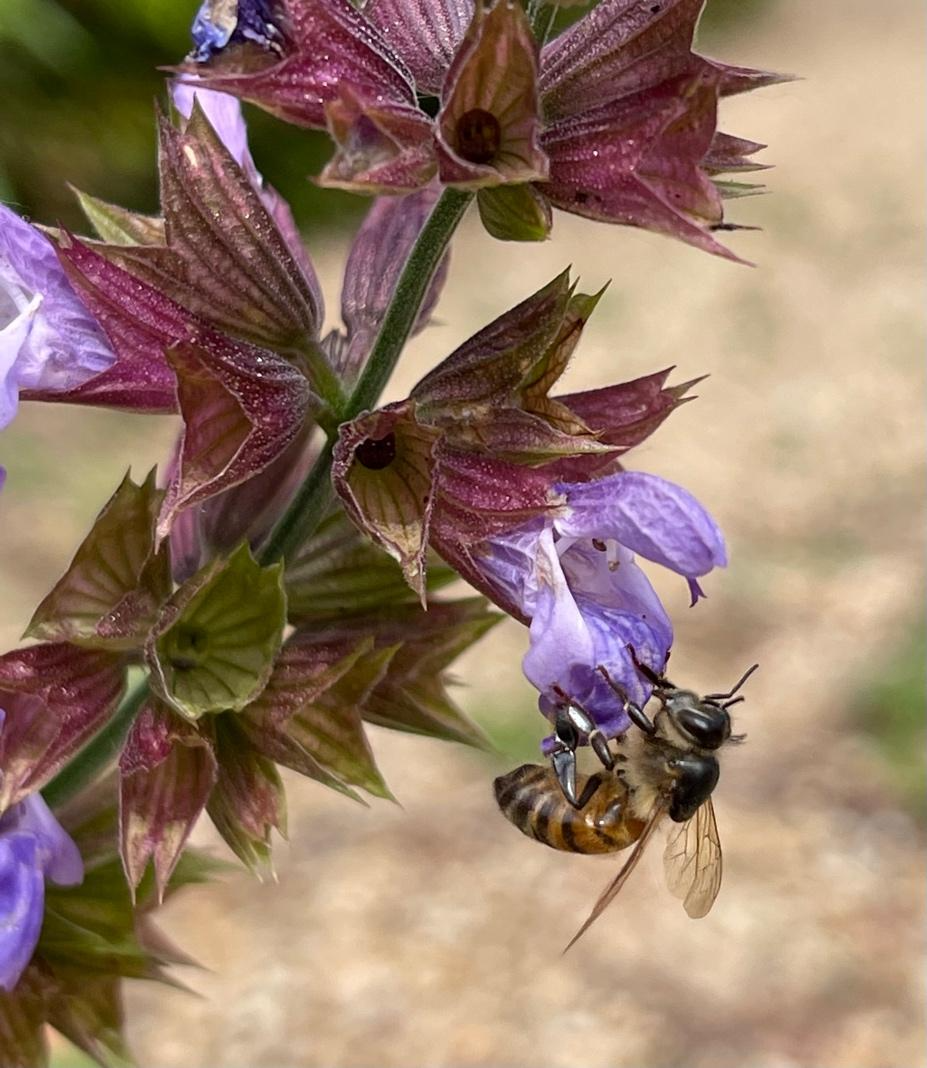
(Honeybee gathering nectar from Sage blossoms)
Examples of light honey floral sources:
*Sage
*Clover
*Fireweed
*Cotton
*Acacia
*Alfalfa
*Apple Blossom
*Blackberry
*Blueberry
*Palmetto
*Tupelo
Examples of dark honey floral sources:
*Buckwheat
*Avocado
*Chestnut
*Dandelion
*Huckleberry
*Manuka
*Tulip
Linda Alexander, Dallas County Master Gardener Class of 2008
Saturday, May 20th bee lovers from all over the globe will gather in Rome, Italy to celebrate bees and their importance. It also serves as a chance to raise awareness of the ongoing increasing threat against them from human activity.
The theme this year is “Bee engaged in pollinator-friendly agricultural production”. One of the featured speakers during the Friday, May 19th pre-event is well-known Texas professional beekeeper, Erika Thompson of Texas Beeworks. She will be speaking on behalf of bees and beekeepers at the United Nations in Rome. The title of her presentation is Saving Bees and Pollinators.
For more information and to register for the webcast, google World Bee Day 2023.
Linda Alexander, Dallas County Master Gardener Class of 2008
To celebrate World Bee Day, we will post another monthly bee article tomorrow.
Mark Jones demonstrating how to dig under the potatoes and lift them out to minimize damage.
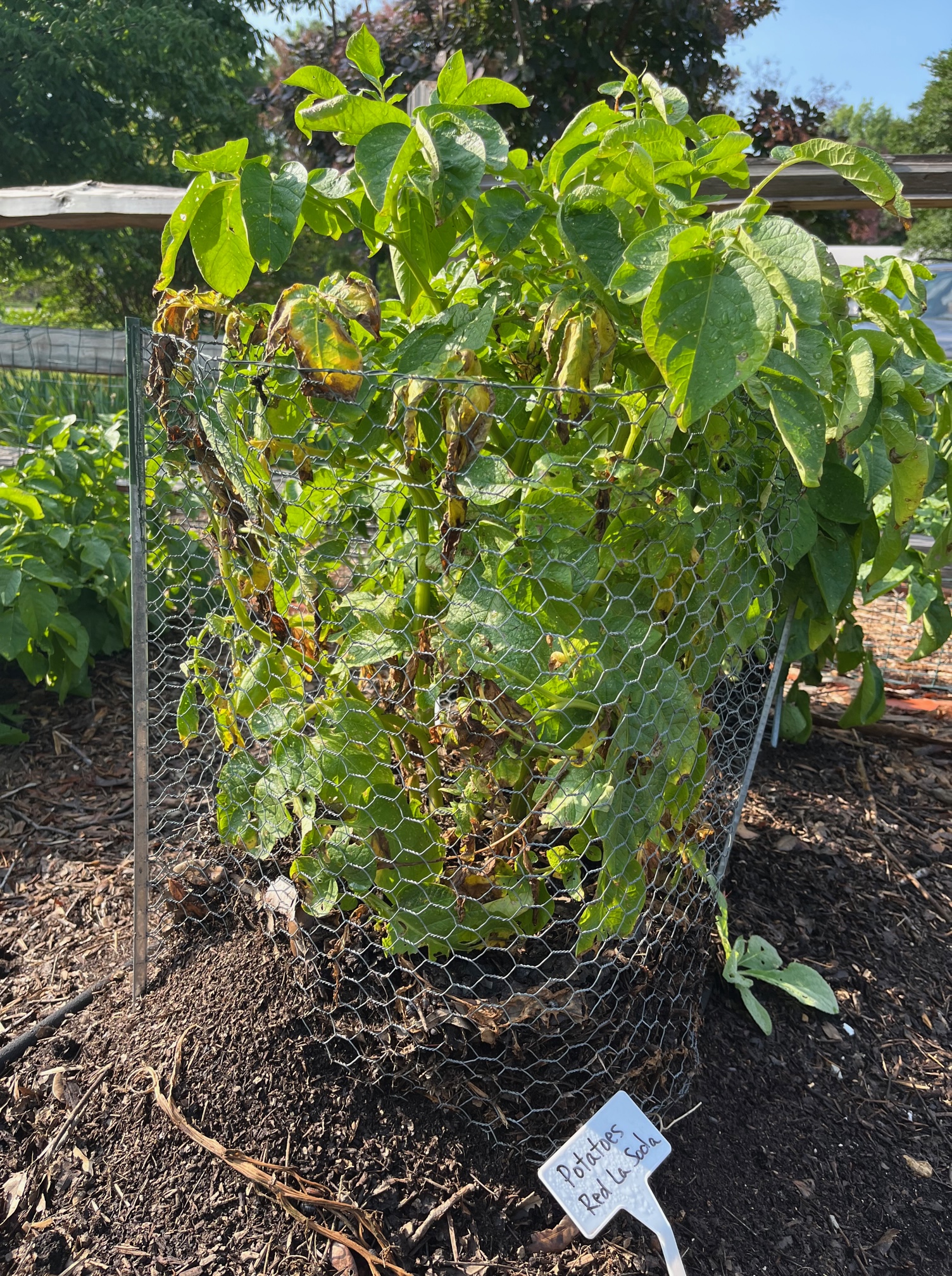
These potatoes were hilled up with compost but we did not add any support to keep the compost in place and they peeked out of the soil. The skin became scaly.
Ruth Klein with a gigantic red potato
Ruth Klein and Yuliana Rivas Garcia digging up potatoes
It is fun when the potatoes pop up out of the soil.
We improvised to keep the compost from sliding off after we hilled up the potatoes. The added layers of compost increase yield and keep the potatoes from being exposed to the sun.
Cynthia Jones preparing just over 68 pounds of Red La Soda potatoes for North Dallas Shared Ministries Food Pantry.
Beverly Allen, Dallas County Master Gardener Class of 2018
Red La Soda and Kennebec potatoes were planted in February
Last week I made one of my favorite seasonal dishes. If you imagined a multi-layered cake enrobed in a sublime chocolate frosting or a deep-dish fruit cobbler oozing with a syrupy filling and the perfect cinnamon-dusted crust, think again.
Instead, I’m especially drawn to the simplicity of a different springtime jewel. Colorful, tasty and nutritious, this one is a winner for me.
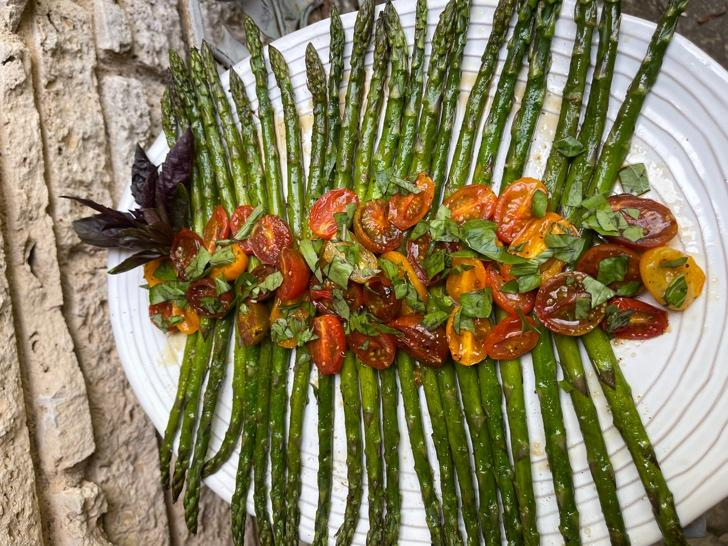
Roasted Caprese Salad is easy to prepare and lovely to serve. If you already have asparagus growing in your springtime garden, chances are the other ingredients may be found there, as well. Gather up some cherry, grape or Campari tomatoes, several sprigs of basil and head to the kitchen. For the past few years, I’ve developed a fondness for Balsamic Blooms and Cardinal basil. Both are growing in my garden now. The leaves hold up well using the chiffonade method and maintain their color nicely.
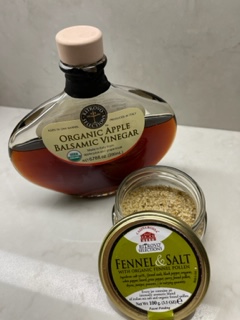
After reviewing the recipe, you might want to follow it, as is, or try my suggestions for adding a little punch to the flavor profile. Once roasted and out of the oven, I like to drizzle the tomatoes with a generous splash of Apple Balsamic Vinegar. Next comes a sprinkling of Fennel Salt with Pollen. Finish the dish with chopped basil and prepare to dazzle your family or guests.
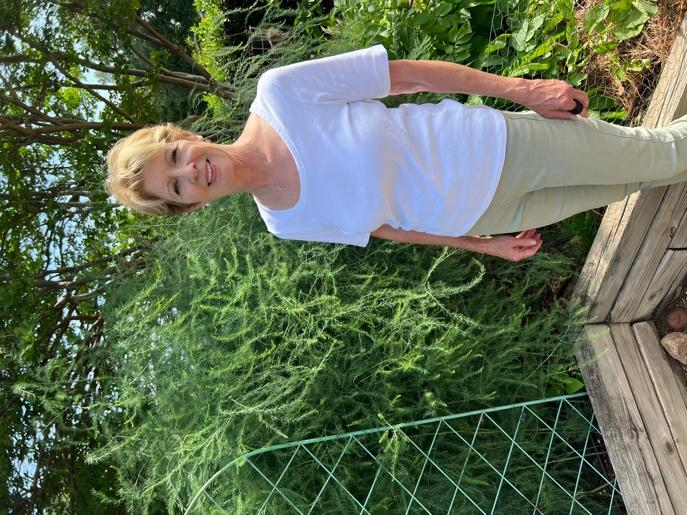
Sheila Standing in Front of her Asparagus Bed
Master Gardener, Sheila Kostelny, graciously shared her asparagus growing tips in a short Q & A.
When did you first plant asparagus in your lovely backyard garden?
“I planted 2-year crowns from Redenta’s in 2014. I believe the variety is UC 157. I lean on the wisdom of Dr. Sam Cotner, Dr. Joseph Masabni and Skip Richter for advice regarding all my vegetables.”
When do you start harvesting?
“I harvest them from about the second to third week in February for about 6 weeks. Then they present foliage that I will use for flower arrangements for the rest of the growing season.”
How long do you expect your asparagus to produce?
“In North Texas, the crowns should continue to produce for 12-15 years. That’s quite a bonus for little effort on our part.”
What do you enjoy most about having asparagus growing in your garden?
“Asparagus are a ‘no fuss’ no muss’ vegetable. They require little and reward you with a sweet, bountiful harvest. What I especially love about them is that they grace your garden in the dead of winter when there is nothing else to bring to the table.”
Happy Growing Sheila! We appreciate your asparagus “tips”.
Linda Alexander, Dallas County Master Gardener Class of 2008
‘Brilliant Pink Iceberg’ Floribundaand onion chives at Raincatcher’s in the edible landscape
Imagine me and you, I do… I think about you day and night, it’s only right!
Just as the Turtles sang to us in 1967, some things belong together. In the plant world this loving and beneficial relationship is commonly referred to as “companion planting.” You might even have heard the popular expression…” roses love garlic.” Let’s consider several reasons why.
From the New York Botanical Garden
*Members of the onion family such as chives, ornamental alliums and edible onions are rumored to increase the perfume of roses, ward off aphids and prevent black spot. Herbs and other aromatic plants make wonderful rose companions.
According to Birds and Booms
*Garlic protects roses from not only bad bugs, it can also help prevent fungal diseases. Aphids don’t love garlic, they hate it!
The Garlic Farm offers this advice –
*Plant three to four cloves in a circle around each rose bush, and the sulphur present in the garlic will disperse into the soil and be taken up by the roses – making it a less palatable treat for little bugs.
Gardening Know How says –
*Rose lovers have planted garlic, chives, garlic chives and onions in their rose beds for many years. Garlic has been known to repel many pests that bother rose bushes. Garlic chives have interesting foliage, repel some pests and their pretty little clusters of white or purple flowers look wonderful with the rose bush’s foliage.
Seasoned gardeners offer these tips –
Included in the list of rose companion plants are alyssum, lavender, marigolds and parsley.
Be sure to check on the companion plant’s growth habit as to height. In many cases, you might want lower-growing companion plants. Herbs will work well planted in the rose beds but, again, check their growth habits to be sure.
Pairing members of the allium family with your roses helps to ward off aphids with their strong scent and may prevent black spot.
So glad we knew about this dynamic relationship when planting our beautiful rose topiary a few years ago and surrounding it with garlic chives. As you can see from the photo, they seem to be saying… yes, we are indeed happy together!
Linda Alexander, Dallas County Master Gardener Class of 2008
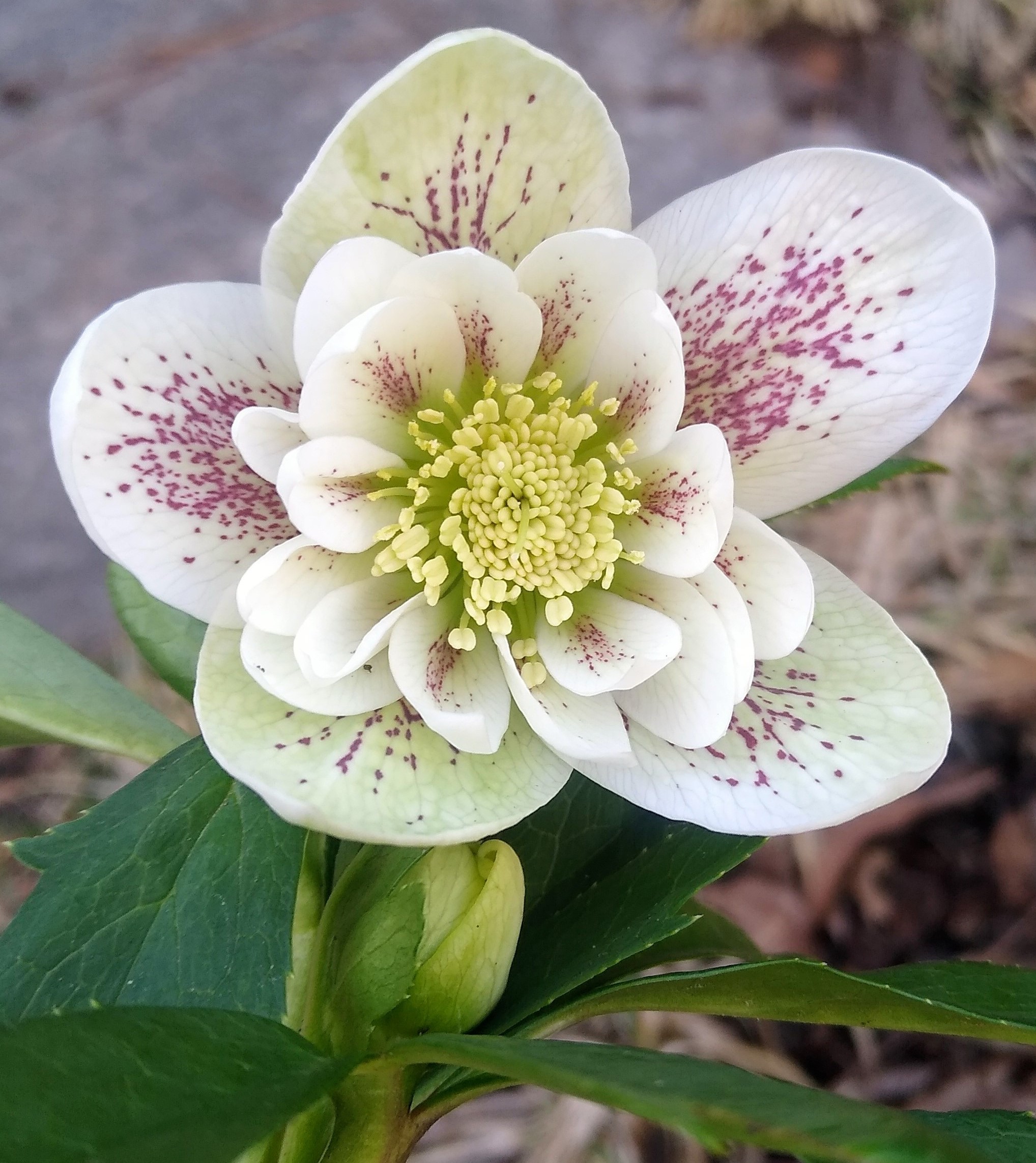
Lenten rose plants (Helleborus x hybridus) are not roses at all but a hellebore hybrid. It was given its name because the flower looks similar to a rose and it blooms in early spring often during Lent. This is another plant that we will have at our annual Raincatcher’s Plant sale on Thursday, May 4th.
It is an evergreen, slow growing perennial and the blooms on the heirloom varieties are downward facing. The flowers are very long lived, sometimes remaining for eight to ten weeks.
Lenten rose thrives in partial to full shade which makes it a good plant for adding color and texture to dark areas of the garden. Try planting it in small groups of 3 to 5 plants (18 to 24 inches apart) or plant along walkways and edging. As you can see from the photo, it looks great planted alongside purple oxalis and holly fern. It is best to keep the soil moist but it can tolerate drier conditions once established.
Lenten Rose foliage with Holly Fern and Purple Oxalis
We hope to see you at our plant sale on Thursday, May 4 from 10 AM to 3 PM. Raincatcher’s Garden is located at 11001 Midway Road, Dallas, Texas on the campus of Midway Hills Christian Church. Raincatcher’s is a Dallas County Master Gardener program and all proceeds from this sale benefit master gardener programs.
Jackie James Dallas County Master Gardener 1993
Come shop the sale on Thursday, May 4th, 10am until 3pm.
Midway Hills Christian Church 11001 Midway Road Dallas, Texas 75229

















 DALLAS GARDEN BUZZ