Tag Archives: Dallas County Master Gardener Association

Winter Garden

January 1, 2026

 Winter is officially here! The winter solstice has come, leaves have finally turned and fallen, and the Frost Weed has frosted. Never mind that we are alternating between sweaters and shorts. It is winter in the garden. Many older gardening books speak of closing down or putting a garden to bed for this season, but like children waiting to see the New Year arrive at midnight, our landscapes are not truly snoozing. 

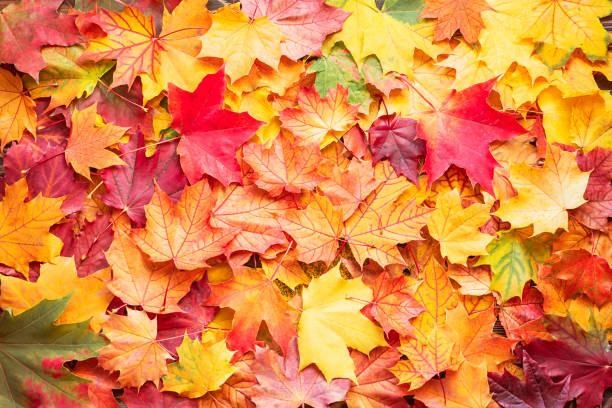
Our deciduous trees stopped producing chlorophyll. This let us see and enjoy their yellow carotene colors that were previously hidden, instead of just greens. The gorgeous reds and pinks seen across Dallas this year remind us that our autumn was dry, sunny, and certainly stayed above freezing, the conditions needed for the productions of anthocyanins. The mix of colors this year was constantly changing and quite stunning. 

But now these trees are bare (my sister refers to them as stick trees) and this slimmed down profile helps to protect them and their branches from wind, snow, and ice.  But those lovely leaves still have so much to offer, in one form or another across just about every landscape.

One use involves shredding leaves. This allows us to add that temperature modulating 3–6-inch layer of mulch around our trees and shrubs, or 2-3 for our flowers. That blanket is really appreciated by any newly planted perennials as they settle into their new homes. Extra shreds are perfect for composting. Whole leaves between rows in the vegetable garden keep our feet dry and relatively mud free, while they discourage pesky weeds.

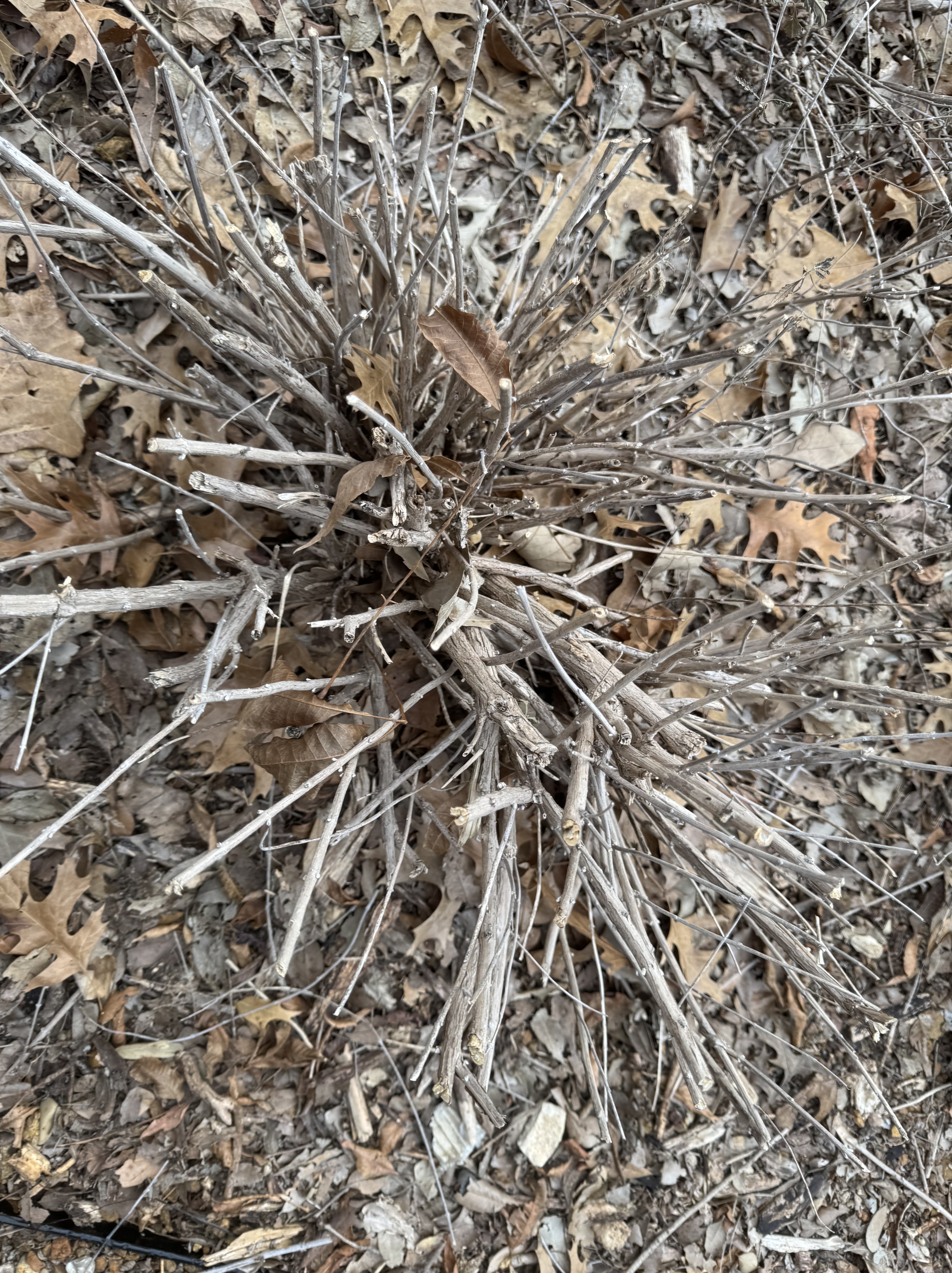
But consider the advantages of doing nothing at all in much of your flower beds and lawns, leaving even a small section of your landscape undisturbed, with plant stems untrimmed and fallen leaves where they fall this winter. Those stems and leaf litter house the insects that will populate, pollinate, and protect our plants next spring. Leaf blowers, rakes, snippers, shredders, and compost heat destroy the habitat our beneficials need this season.

Not all our garden friends headed further south with the monarchs and hummingbirds. They have deployed many clever techniques to survive until spring and summer. Some insects are sheltering in stems, others have headed underground, and some have taken the ‘get small’ approach by wintering as eggs.   Cleaver swallowtail butterflies produced their own antifreeze, turning sugars to glycol as an added layer of protection for chrysalis wintering in their cocoons. Despite appearances, life has not deserted our landscapes.

And in our pollinator gardens most especially, we want those insects to survive, to continue to play their garden roles.  A fascinating study of the effects of removing autumn leaves can be found here: https://www.sciencedirect.com/science/article/pii/S0048969725004565. To support our diminishing populations of butterflies, bees, beneficial of all kinds, please consider how you can support them as they winter in our yards and gardens. While I don’t want to offer my house as a winter vacation getaway for arthropods and arachnids, I do want them year-round in my landscape outside.  

Mary Freede, Dallas County Master Gardener Class of 2005

Jewels of Opar

November 3, 2025

My Jewels of Opar is in a mostly shady area. Next spring, as new plants emerge, they will be relocated to a place in my garden that receives full sun until late afternoon.

In May of 2021, we shared an article with our readers about Jewels of Opar, a lovely plant that is both edible and ornamental. Click here for the original article which includes helpful growing information.

This time, we’ve chosen to “drop in” for a quick autumn visit showcasing this adorable little beaded wonder in full bloom. You may remember that Jewels of Opar, sometimes referred to as Pink Baby-Breath, produces wands of tiny, pink star-shaped flowers followed by jewel-like fruits in shades of pink and orangish red.

Enjoy this photo of a simple arrangement filled with Roselle Hibiscus leaves gracefully surrounding Jewels of Opar in its colorful autumn wardrobe!


Linda Alexander, Dallas County Master Gardener Class of 2008
A Wave of Purple Haze

October 16, 2025

If you’re like me, a baby boomer who graduated from high school in 1967, the title above might suggest something other than what I’m going to write about. Yes, the song “Purple Haze” written by Jimi Hendrix came to mind one hazy, overcast afternoon as I was taking photos and working in my garden. I don’t remember the words and really never fully understood the reason for the title but it wasn’t difficult to find the answer. 

Jimi Hendrix, a brilliant guitarist, wrote the song on December 26, 1966, while backstage at a club in London. The inspiration came from a vivid dream he had after reading a science fiction novel. In the dream, Hendrix finds himself walking under the sea when a purple haze surrounded and engulfed him. And from that experience his iconic song “Purple Haze” (later discovered to be to be about a woman he loved) changed rock music forever.

Putting this into perspective as it relates to that quite afternoon in the garden, my own sensory moment of feeling “engulfed” by the color purple had nothing to do with walking underwater. It was the sheer beauty of being surrounded by a sea of purple flowers in full bloom. Honeybees, by the hundreds, were so busy visiting the blossoms that I quietly paused just to listen to the familiar buzzing sound bees make when foraging for nectar and pollen. I was reminded, once again, how time spent in the garden brings unexpected joys.

Hopefully, you will appreciate my “Purple Haze” experience and the lovely flowers in varying shades of purple and blue that gave me the opportunity to share it with you!

Here are some of the flowers and plants featured in the video. You’ll see a selection of many within the purple/blue range that have been growing in my garden over the past five to six months:

Ageratum 

American Beauty Berry

Angelonia

Anise Hyssop

Aster

Basil (African Blue, Balsamic Blooms, Cardinal, Red Rubin)

Blue Borage (a favorite of honeybees)

Butterfly Bush

Celosia

Clary Sage

Eggplant Blossoms

Foxglove

Impatience

Lavender

Pentas

Perilla

Petunias

Periwinkles

Phlox

Rose of Sharon (Blue Satin)

Sage (in bloom)

Veronica

Wisteria

Zinnias

Why, you might ask, designate so much garden space for flowers in the blue/purple spectrum?

*I’ll offer a few answers, but, most importantly, is that honeybees are highly attracted to these colors and see them more clearly than other hues. Flowers in this range signal to the honeybees higher nectar production. For this reason alone, gardeners focused on pollinator-friendly flowers should try to include blue and purple flowers in the landscape whenever possible.

*Looking a little deeper into the psychology of color, studies have shown that blue lowers cortisol while purple stimulates creativity and inner calm. In our gardens, these colors not only provide beauty but help to nurture our mental well-being.

*And finally, from a landscaping perspective, click on the link to Longfield Gardens for an in-depth guide on using purple in your flower garden. You will be inspired to get started!

DALLAS WATER UTILITIES 31st WATER WISE GARDEN TOUR OCTOBER 18, 2025 

October 14, 2025

Every fall, I look forward to one of my favorite  garden tours—The Water-wise Garden Tour hosted by Dallas Water Utilities and the city of Dallas.  There are several smaller organizations that participate, some giving lectures at the White Rock Pump Station (the traditional starting point of the tour). That’s where one picks up the map showing the location of the participating “winners” of this year’s tour.  I know in years past Dallas County Master Gardener’s Association has been both entrants and support staff. I’ve lost track of how many years Roger and I have wandered through Dallas, looking at peoples’ interpretation of what water-wise gardening entails.

Years ago, A&M Research Center on Coit Road had a program called Water University.  They had examples of homes with all sorts of saving water inside and outside the home.  We learned about Rainwater harvesting: how to build rain barrels for the home, rain gardens, etc.  All of which we demonstrated at our Joe Field location (thanks to County Commissioner M. Dickey).

When the county closed that location in 2014, we found a new home at Midway Hills Christian Church, located at 11101 Midway Road—thus our name “The Raincatcher’s Garden of Midway Hills.” This rain garden is located near the street on Midway Hills, next to the two cisterns that were put in place shortly after we started gardening there. This noncommercial rain garden would work in most home landscapes. It captures water from heavy rains and is also used to catch overflow from the cisterns.

2-2500 gallon water cisterns at The Raincatcher’s Garden

Although our garden is not on tour this year, feel free to visit us at 11101 Midway Road in Dallas, especially on Tuesday mornings when we are working in the garden. We love to share water saving tips.

Water Wise Garden Tour maps of the participating homes will be available at the White Rock Pump Station on Saturday and the information link can be found below.


Some yards or gardens use xeriscaping, while others have lush  lawns and gardens.  There are innovative uses of hardscaping. 

On the 18th, I am playing tourist to get more ideas about saving water and creating a beautiful yard at home.  I always find some new idea  to take home to try out.

Hope to see you on the tour.  Be sure to take notes or, better yet—pictures!

Cindy Bicking, Dallas County Master Gardener Class of 2006

Pictures by Starla Willis, Dallas County Master Gardener Class of 2011

Water Wise Tour Information

Growing Eggplant in Texas

October 11, 2025

The Raincatcher’s Garden vegetable gardening team has enjoyed growing several varieties of eggplant.

They have found them to be easy to grow as long as they remain vigilant about controlling the flea beetles with diatomaceous earth.

These long purple eggplants are called amazingly enough long purple eggplant.

Aswad eggplant pictured above is an Iraqi heirloom variety known for its mild sweet flavor.

Mark your 2026 calendar to start eggplant by seed February – mid-March. Transplants should be set out in mid-May through June.

While eggplant may not be your favorite vegetable, it’s nice to harvest something new after summer crops have withered in the heat. There are many varieties and ways to cook eggplant. Tonight, at our house we’ll have eggplant apple quesadillas; find the recipe here.

For more growing information: Easy Gardening-Eggplant

Ann Lamb, Dallas County Master Gardener Class of 2005 with Beverly Allen, Dallas County Master Gardener Class of 2018

Revisiting A Fairy Tale

October 9, 2025

Last summer, 2024, I grew Fairytale Eggplant for the first time. It produced adorable little tear-drop shaped eggplants for over three months. During that time, most of the harvest was used for Apple and Eggplant Quesadillas, a simply delicious treat. 

For 2025, a new recipe that we’ve enjoyed over the past few months is “Roasted Fairytale Eggplant Salad with Fresh Tomato”. Inchelium Red organic garlic had cured from my late spring/early summer crop, while fairytale eggplants, English cucumber and mint were growing in my garden and ready to use.

It’s now early October and my two Fairytale Eggplants are producing almost double the amount as last year. Here’s an example of what gets harvested every day.

Linda Alexander, Dallas County Master Gardener Class of 2008

Roasted Fairy Tale Eggplant Salad with Roasted Tomato

My Favorite Herb…And a Good Companion

September 18, 2025

Here’s a hint – with its strong lemony scent and flavor, you’ll find many uses for it in the kitchen. You may have already guessed just by looking at the photo but, yes, the answer is Lemon Verbena (Aloysia triphylla). For over 30 years it has been my very favorite herb. I’ve used it countless times for breads, cakes, cookies, puddings, in savory dishes and beverages. From early spring when it emerges from the ground and sends up those first “shoots”, a fresh sprig goes into my daily glass of green tea. The ritual continues until at least November or whenever our first freeze of the season arrives.

Lemon Verbena Tea Garnished With Freshly Cut Lemon Verbena

Why should lemon verbena be growing in your garden? To start, lemon verbena is considered by some to be the queen of aromatic herbs, myself included. One whiff of its sweet lemony aroma explains why Southern ladies suffering from the “vapors” mopped their brows with a decoction made from its leaves. For this reason, it is sometimes called the Scarlett O’Hara herbs. Growing in our Zone 8 climate, you can expect lemon verbena to easily reach 4 to 5 feet in height when planted in full sun and in good garden soil. Consider placing it toward the back of your garden bed where it will become a nice informal shrub. Also, keep in mind that it tends to ramble off in different directions but can easily be trimmed to the shape you desire. Lemon verbena is a woody perennial that will start losing its slender, elongated leaves in late fall. If heavily mulched, it will survive a moderate winter. However, in the northern part of Texas, it may succumb to temperatures lower than 25° F. Over the years, I’ve lost at least five or more lemon verbena plants during a hard freeze. But once spring arrives, most local garden centers have it in stock. And, thankfully, it is a relatively quick growing plant.

Lemon Verbena Growing Gracefully in My Garden

Recently, I discovered a recipe in one of my 1995 herbal cookbooks that gave me a new appreciation for using lemon verbena with another well-loved herb, Anise Hyssop (Agastache foeniculum). In the summer section of ‘Today’s Herbal Kitchen’ published by the Memphis, Tennessee Herb Society, the recipe that caught my eye was Anise Hyssop Lemon Cake with Lemon Sauce.

Anise Hyssop is a pollinator-friendly plant whose blossoms are filled with honeybees

Reading through the short list of ingredients, I learned that anise hyssop was called for in the cake along with lemon verbena leaves in the sauce. Hooray! With both herbs growing in my summer garden, it was time to start baking.

Freshly snipped anise hyssop flowers ready to be chopped and mixed into the cake batter

Once out of the oven, and allowed to cool, it was time to slowly pour the luscious, warm lemon sauce over the top. I tried to imagine how the minty, licorice flavors of the cake would blend with the citrusy, floral taste of the sauce. Should I wait for my husband to come home from work before tasting? After carefully slicing the cake for the “photo shoot”, I yielded to temptation and willfully gave in to that first bite. It was a divine experience. My taste buds were rejoicing at the thought of this wonderfully harmonious combination. A new discovery is usually very satisfying and, in the case of anise hyssop and lemon verbena, I’ve determined that for as long as herbs are growing in my garden, these two “companions” will be there.

Anise Hyssop Lemon Cake with Lemon Verbena Sauce

Linda Alexander, Dallas County Master Gardener Class of 2008

Dallas County Master Gardener School and Moon Flowers

September 16, 2025

Moonflower in my garden. Smells delighful, blooms at night!

Do you remember the book, All I Ever Really Needed to Know I learned in Kindergarten?

That’s how I feel about the Master Gardener training I recieved in 2005. Although I was raised in a backyard full of horticulture and minored in horticulture at Texas Tech, the Dallas County Master Gardener School and my experiences working in gardens for 20 years with other Master Gardeners have been my grounding influence. Myabe you have been thinking about expanding your understanding of gardening in Texas, if so-see below.

  1. Applications Available NOW for Dallas County Master Gardener School
    What: Dallas County Master Gardener School
    When: Every Thursday starting January 8, 2026 through April 23, 2026 8:30 AM- 3:30 PM
    Where: Dallas County Roads & Bridges Building / District 1 (aka “R&B1”), located at 715 Rowlett Road, Garland, TX 75043

    2. Use this link to apply: https://forms.gle/D1aTXZQLL1cK6kwD8
    Save and share this flyer with friends who might be interested!

Applications accepted until September 26th for the 2026 class starting in January 2026.

Ann Lamb, Dallas County Master Gardener Class of 2005

And if you want to know more about Moon flower, click here.

Summer Finale at the Saturday Farmer’s Market

September 12, 2025

This past Saturday, September 6th, marked the end of season schedule for St. Michael’s Farmer’s Market. Like many of our readers, I’ve been attending the Saturday market for years! Getting to meet so many of the vendors and following them each week has always been a delightful experience for me. 

People like The Baugh Family (now with two young children) drive in early from Wylie to bring an amazing assortment of east Texas vegetables, blueberries, blackberries and more. But it’s always those juicy, ripe peaches that create the long lines of anxious customers with everyone hoping there will be enough once it’s their turn. Wayne and his wife get up around 2:30am to harvest their magnificent bouquets of freshly cut flowers. Driving in to Dallas from Henderson is about 2 hours but these long-time flower farmers have us drooling over the rainbow of colorful blossoms that are bundled up and ready for purchase.

Master Gardener, Janet Smith class of 2008, became a regular this summer with her west Texas pecans. What a special treat! And new to the market was Honey Apple Farm in Canton, Texas. This small, family owned and operated farm produces a variety of artisan honeys. They are also passionate about strengthening the bee population by providing tips on planting a bee garden and going chemical free.

My end of season trip to the market on September 6th was bittersweet. While some of the vendors will return for a one-time only October appearance, we’ll have to wait until May 2026 for the weekly schedule to resume. Until then, I’m thankful for the bountiful blessings given to us by the farmers, flower growers, beekeepers and more whose hard work provided us with fresh, flavorful food this summer. I’ll be first in line to welcome them back next May.

Looking back through one of my herb cookbooks, I landed on a recipe that had been “tabbed” many years ago but never prepared. Things were about to change. Jerry Traunfeld wrote “The Herbal Kitchen” in 2005 as a handbook for incorporating fresh herbs, from his own herb garden, into everyday home meals. I would be using fresh tomatoes from the Saturday market to prepare his recipe for Tomato Bread. From my own garden, freshly picked basil and thyme along with cured garlic from late spring would supply most of the ingredients. 

Let me go on record as declaring that this new recipe exceeded my expectations.  And for those of you who already have your autumn tomato crop in the ground, please give this incredibly delicious dish a try. You might want to serve it as an accompaniment to salad, soup or with any grilled meats. I’ve made the recipe three times in the last month and shared it with family and friends. Everyone agreed that this is an exceptional way to enjoy fresh juicy tomatoes!

Start with chewy cubes of Italian-style bread drizzled with olive oil then topped with minced garlic and “torn” basil leaves. Finish with juicy, sliced tomatoes and a generous sprinkling of fresh thyme.

Tomato Bread Recipe here !

Linda Alexander, Dallas County Master Gardener Class of 2008

Growing Figs in Texas

September 6, 2025

Dig a hole through time and you will hit a fig tree’s roots. Figs are one of the oldest cultivated plants.

Figs are interesting little fruits but not in the traditional sense. The structure of the fig is a called a syconium, a fleshy sac lined with tiny flowers inside. When you eat a fig, you’re technically eating hundreds of tiny inverted flowers that bloomed inside the syconium.

  • The word “fig” comes from the Latin ficus
  • There are over 700 species of fig trees worldwide
  • Figs grown in the USA are self pollinating but in other countries pollination is provided by fig wasps which crawl into the fig, complete their mission and then die inside the fruit.
  • Figs conatin fiber, copper, potassium, maganese, vitamin K and other nutrients
  • Plant your fig tree in full sun in soil with good drainage, mulch regularly and monitor moisture needs

My experience with growing figs started with a fig tree propagated by Master Gardener, Jim Dempsey. It was planted in my backyard about 10 years ago. Every year I have looked up into my trees large, deeply lobed leaves longing for figs. The winter storm of 2021 nicknamed “Snowmagdeddon” caused the tree to die back and it would be several more years of waiting and hoping as it recuperated.

Finally this year my family tasted the fruit! About 12 pounds of figs were harvested from our Celeste fig tree. We let it grow to a height of over 20 feet. Rather than try to protect the tree from birds with a net or other artificial means, we let the birds eat the fruit in the branches way up high leaving the rest for us. There’s nothing like the taste of a fig eaten at peak ripeness from your own backyard tree.

Our Celeste Fig Tree, note the neighbor’s two story chimney for height comparison.

Another personal story: My son and wife and three little children moved to a new house last year. They have a “Texas Everbearing” fig tree. To my great delight, my grandchildren are eating figs from thier own tree. Imagine me walking into their kitchen and seeing figs on their high chair plates. Surely this is tender hearted beauty!

Ann Lamb, Dallas County Master Gardener Class of 2005


Extra figs were made into Fig Jam!

More Fig Facts here

Fig Fest