HELLO, HONEY! LUNCHEON AND LECTURE

Why spend April 15 with a calculator, a pile of receipts, and a deadline? The Demonstration Garden was buzzing on tax day with more than 30 guests enjoying a packed morning learning all about bees and honey.
IMG_9962


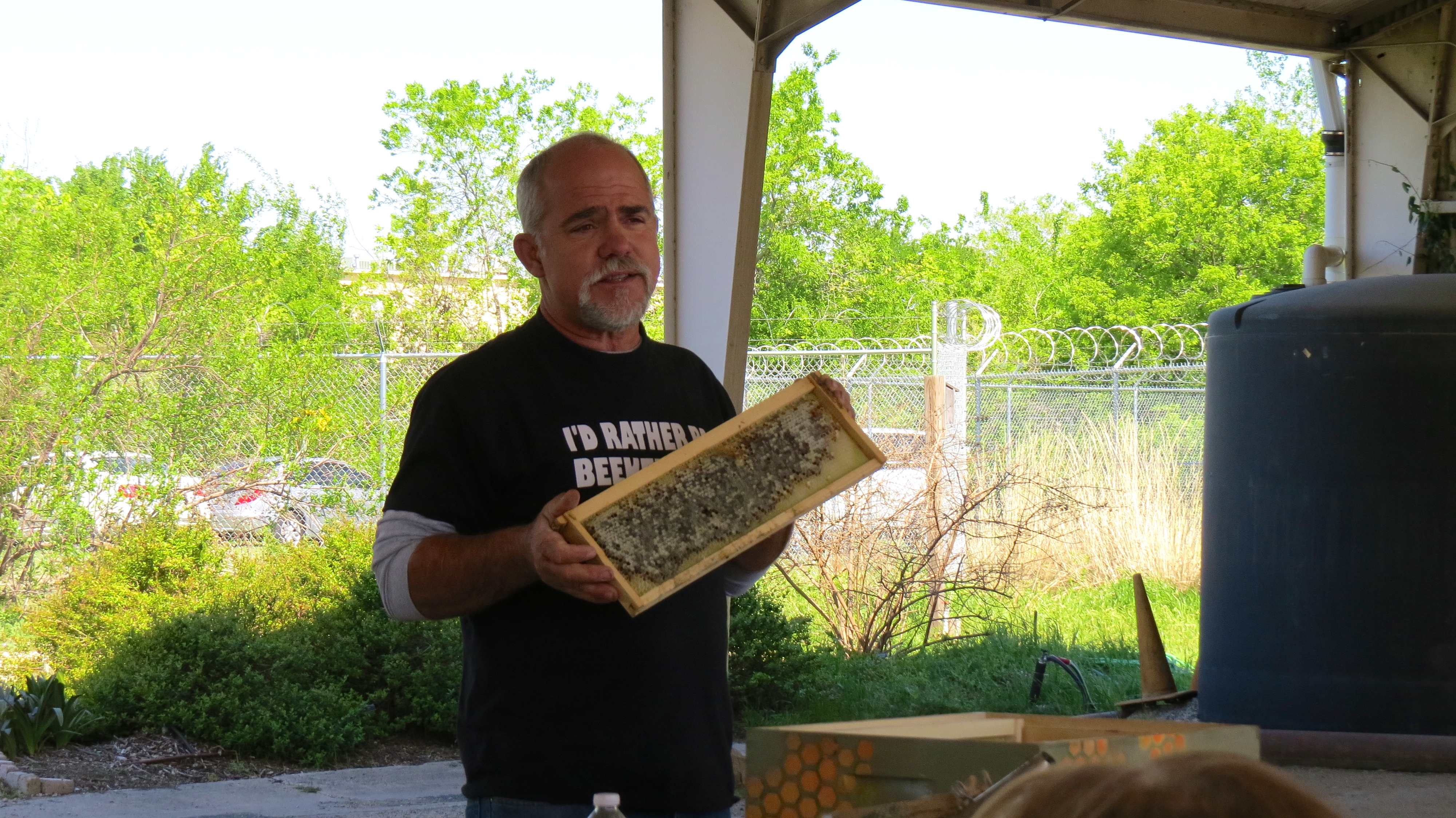
Jewish Honey Cake, a traditional favorite for the Jewish New Year, and coffee helped take the chill off the brisk morning. In his talk, beekeeper David McCarty encouraged guests to purchase local honey. David noted that honey tastes of the nectar from particular flowers visited by bees, and honey from the same hive can have dramatically different flavors. Commercially produced grocery store honey is often so processed that all pollen is destroyed, he said, and may even contain fillers like corn syrup and fructose. (In the worst cases, generic honey may be little more than corn syrup.)

Honey cake was delicious with hot coffee.

David harvests honey, of course, but his passion is the small insects that make it. He works to rescue bees from exterminators and to keep hives healthy. David shares information with other North Texan bee enthusiasts on the Facebook open group, CrossTimbers Beekeepers. (https://www.facebook.com/groups/CTBees/).
Honey Lunch Lecture with bee frame

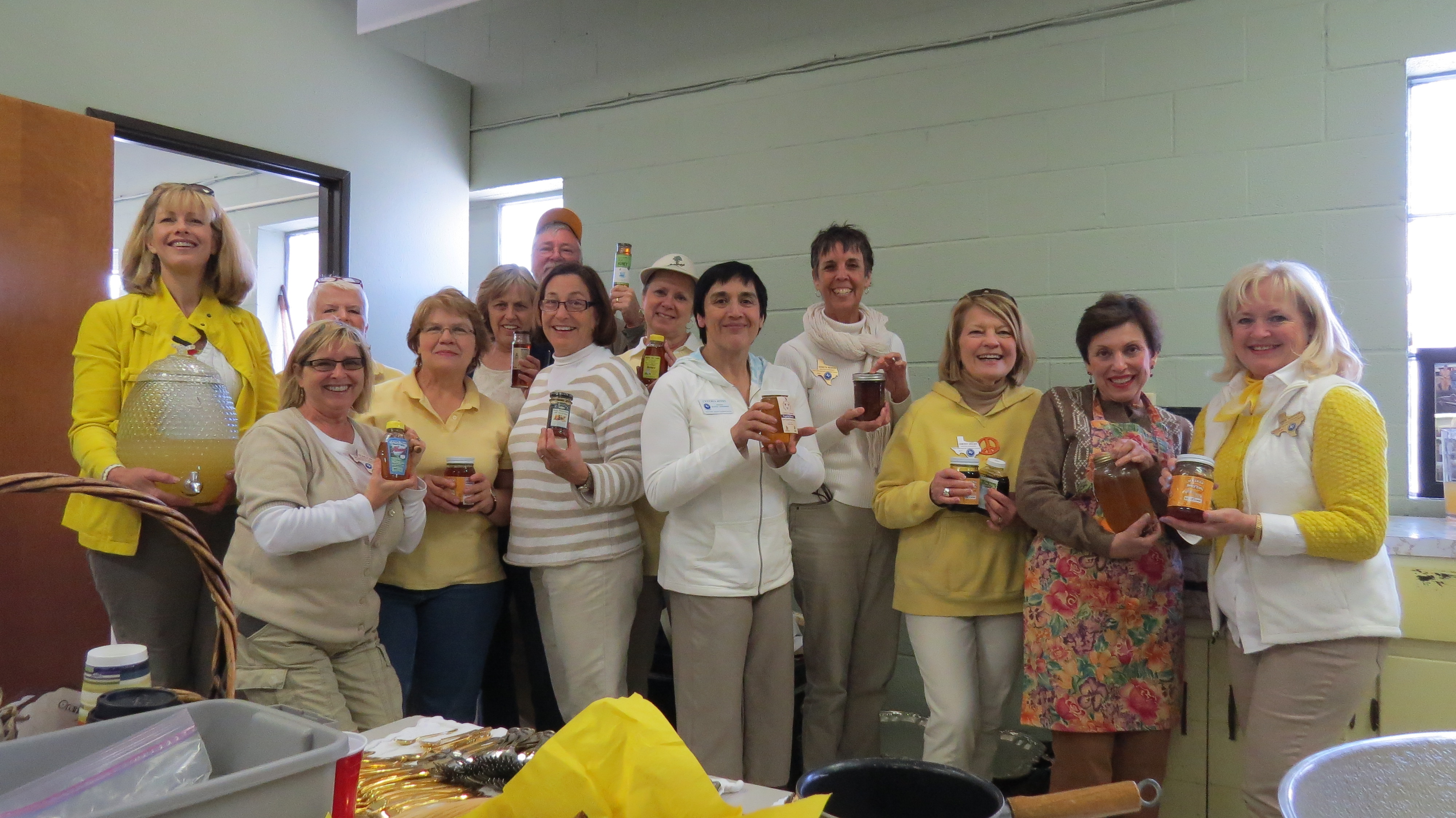
Joe Field gardener (and beekeeper) Tim helped guests try different honeys with popsicle sticks. It’s hard to pick a favorite when testing Tupelo honey from Florida swamps, Sourwood from southern Appalachia, Orange Blossom from southern Florida, Wildflower from Texas fields, Huajillo from the brush country in Southwestern Texas, and Buckwheat from New York and North Dakota.

Linda dazzled guests with an appetizer tray of Brie, Manchego, and Point Reyes Blue Cheese from Scardello, an artisan cheese store at 3511 Oak Lawn, scardellocheese.com. She sprinkled the cheese slices and honeycomb with Spanish Marcona Almonds, then drizzled the tray with honey from Master Gardener Jan Ramsey’s Tranquility Hill Ranch.
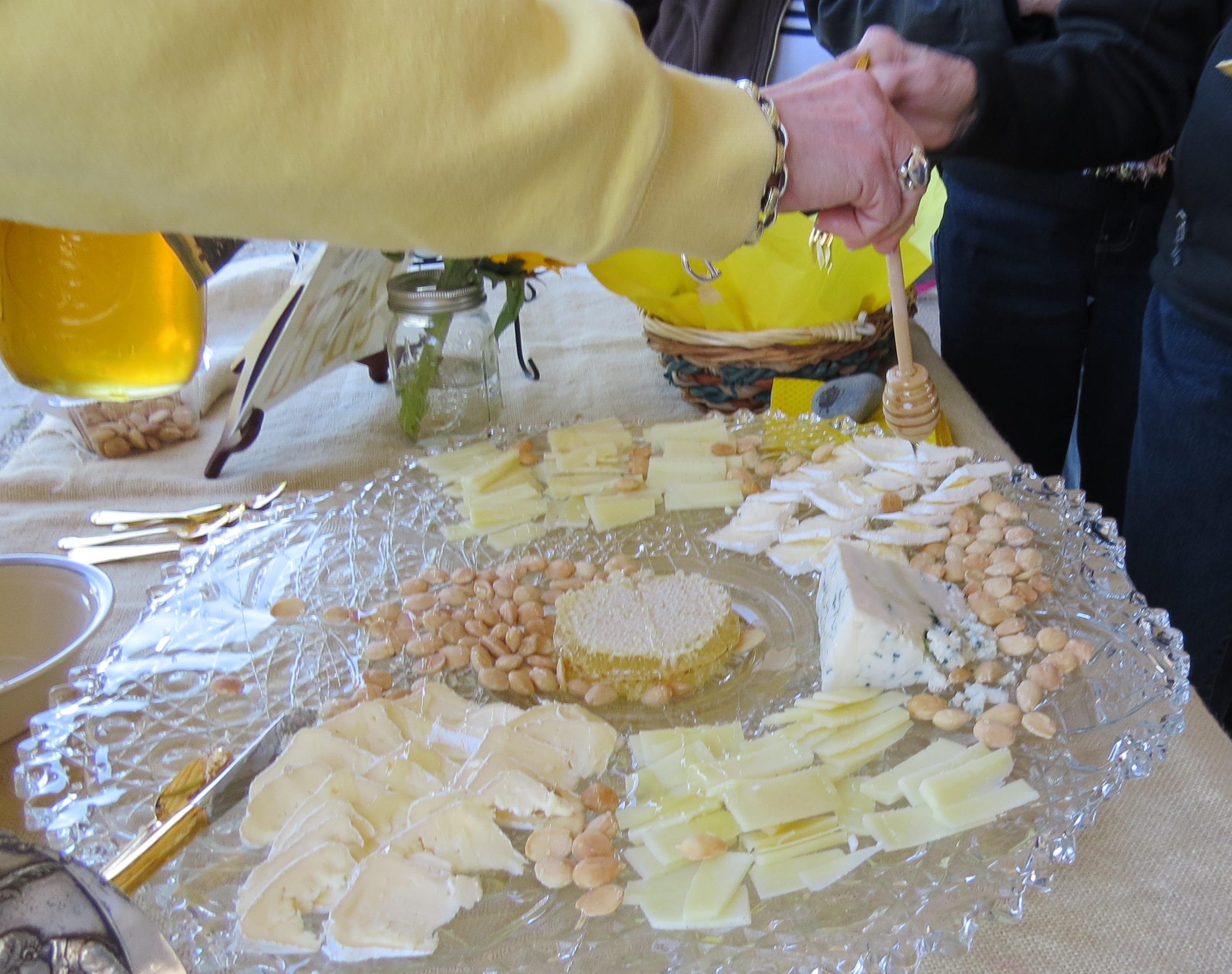
Cheese Tray Drizzled With Honey

Cheese Tray Drizzled With Honey


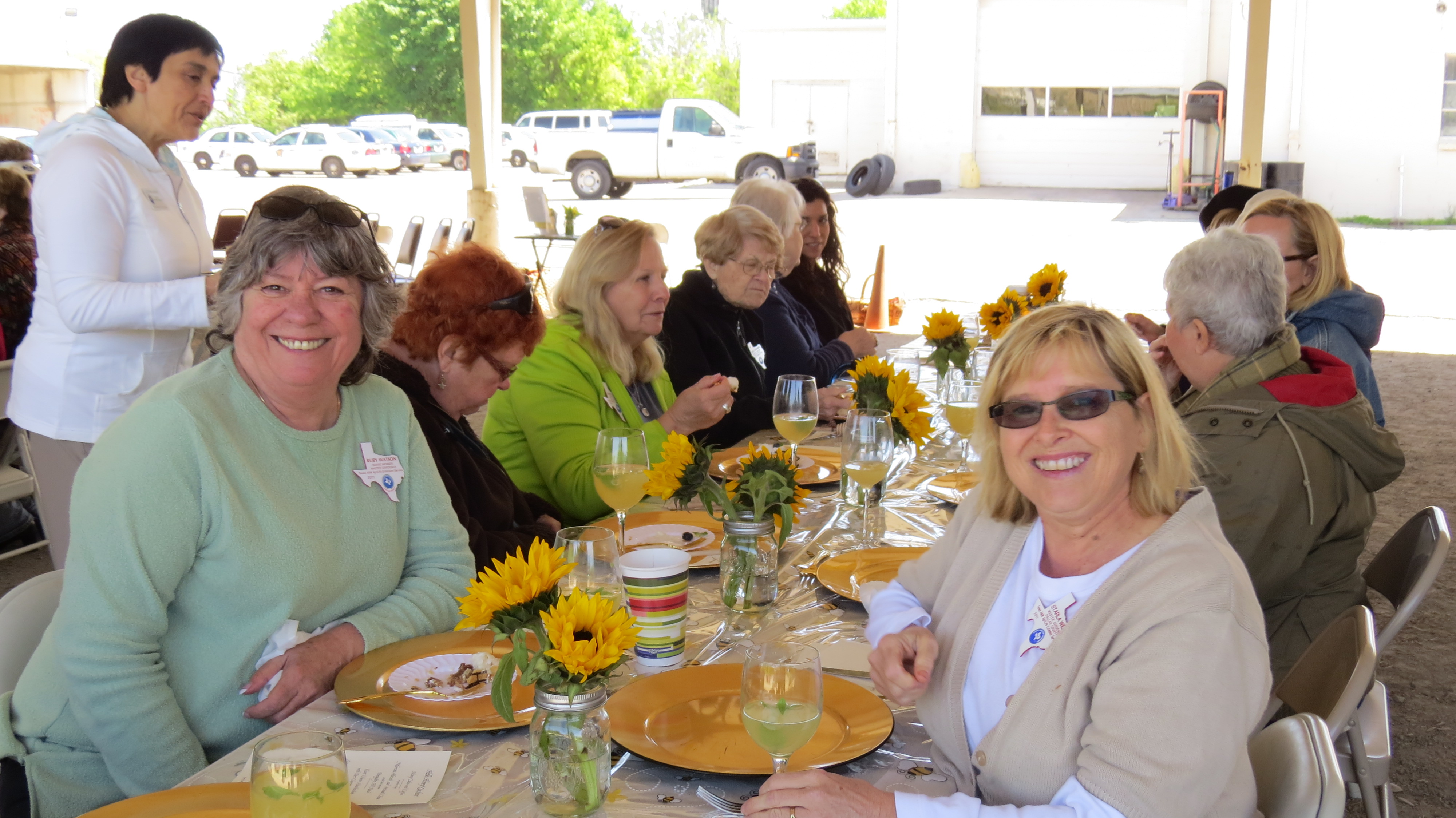
The table featured plates with tiny bees around the rim, bee-friendly bouquets of sunflowers, gold chargers, hand-lettered menus, and neutral tablecloths with a bee-themed runner. A place card with Elizabeth’s calligraphy tied to a honey dipper marked each guest’s place.
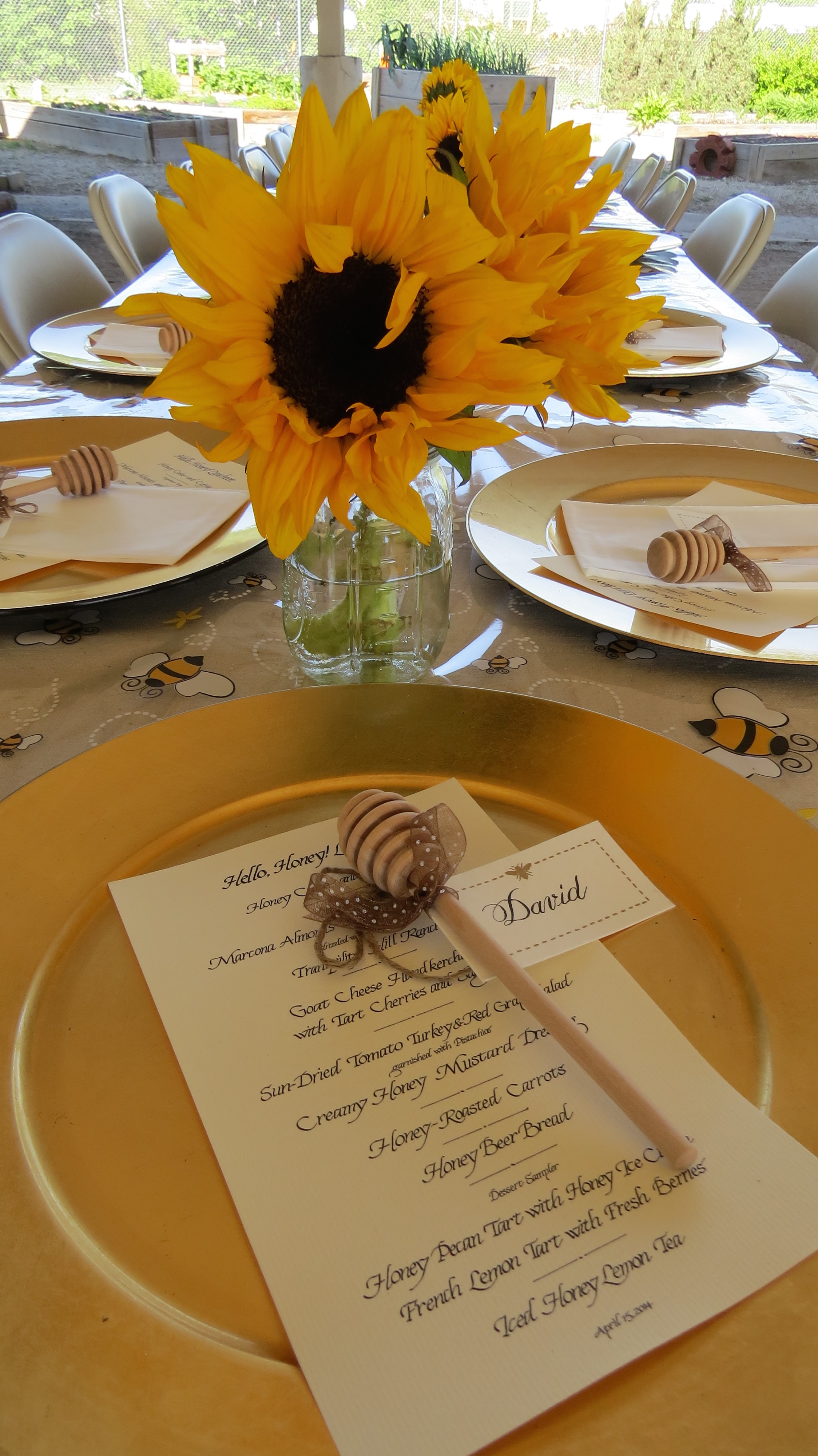
IMG_9739

Oh, did we mention lunch?

The menu, of course, featured items with a honey twist: turkey and grape salad with honey-Dijon dressing, pasta handkerchiefs with tart cherry, sage (and honey) sauce, honey beer bread, honey-roasted carrots, and honey lemon tea. A dessert sampler tempted guests with a square of honey pecan tart, honey vanilla ice cream, and a French lemon tart topped with an abundance of whipped cream, a mint leaf, and fresh blueberry.

Information from the national Honey Board, a list of bee-friendly flowers, and in-depth information and sources for each honey were given to each guest.

As we planned the event, we were amazed at the intricate and amazing world of bees and honey. We learned the difference between varietal (one source of nectar) and local honey (Texas Wildflower). One thing led to another, and soon we were ordering honey from across the South, visiting our local beekeeper at the farmers market, and purchasing honey on college visitation trips.

Lisa purchased the Huajillo and Buckwheat honey from Walker Honey Farm, which has a retail store about 10 miles from I-35 in Rogers, Texas, near Belton and Temple. She also found a good selection of local honey at Ruibal’s Rosemeade Market in Carrollton, the HEB grocery stores in Georgetown and Temple, and the farmers market behind the famous Monument Cafe in Georgetown (a must stop if only for the homemade lemonade). Elizabeth made multiple trips to the farmers market on Campbell Road (near UTD) to purchase local honey and dippers from Warne Bee Farm in Anna, Texas.

Linda explored cookbooks, magazines, and internet sources including L.L. Lanier, lltupelohoney.com, which has harvested Tupelo honey since 1898 in swamps along the Chipola and Apalachicola Rivers in Florida. She also found the Savannah Bee Co. of Savannah, Georgia, which sells the rare and wonderful Sourwood honey.

Next time you’re at Bruce Miller Nursery on Belt Line Road in Richardson, check out Fain’s Honey from Llano, Texas. Lisa says Fain’s is a family favorite and something she and her family always pick up at Cooper’s Bar-B-Que in Llano after a big platter of brisket and ribs. Turns out there’s a honey of a family connection: Lisa’s dad, after all, was Fain Gibbons.

Elizabeth

Pictures by Starla

Recipes and more buzz about honey coming up in the next few days! Keep posted!
 

In Loving Memory of Betty Haughton, June 20, 1930 – April 12, 2014

Betty with daughters Elizabeth Peck and Ann Lamb

Betty with daughters Elizabeth Peck and Ann Lamb

Our own dear Ann Lamb’s mother, Betty, was a beloved Master Gardener and friend to many of our volunteers. She was a frequent visitor to the Demonstration Garden on Joe Field Road and would light up the garden with her smile, her laugh, and the twinkle that only Betty had in such abundance. Such an irreplaceable, gracious, loving woman; we will miss her dearly.

Betty’s family and friends will celebrate her life at a memorial service at Grace Bible Church on Tuesday, April 15, at 10 am with graveside services at 2 pm at Sparkman/Hillcrest.

“Betty’s loving smile radiated the love of Christ Jesus as she was a blessing to all. She sewed seeds in hearts and also in her garden. Flowers and vegetables flourished wherever she lived, and she became a Dallas County Master Gardener at 78 in the class of 2008. Those who knew and loved Betty were familiar with her heartwarming ways, her love for her family, Sunday lunches, Haughton tea, Fourth of July floats and picnics, knitted baby hats and blankets, our country, and our military. Her quiet strength, humble spirit, and daily walk with her Savior are the legacies she leaves with all of us.”

Our thoughts and prayers are with Ann, her three sisters and their families.

Bee Expert, Local Honey Tastings & Lunch

Bee on Blanket Flower

 TAKE THE “STING” OUT OF TAXES

Bee Expert, Local Honey Tastings & Lunch

It’s a Honey of a Deal!

Tuesday April 15 Ÿ10:30 a.m.-12:00 noon

$20 per person Ÿ Limited Reservations

EARTH-KIND®/WaterWise Demonstration Garden Ÿ 2311 Joe Field Rd.

Bee Expert David McCarty will tell you:

Ÿ Why are honeybees brilliant?

Ÿ Which bees produce the most honey?

Ÿ Why is the honeybee referred to as a well-designed engine?

Ÿ Why is the “waggle” dance a kind of honeybee GPS?

 Hello, Honey! Menu 

Appetizer Tray featuring Marcona Almonds & Artisanal Cheeses

Drizzled with Tranquility Hill Honey RanchŸ

Goat Cheese Handkerchiefs with Tart Cherries & SageŸ

Smoked Turkey, Red Grape & Pistachio Salad

With Creamy Honey-Dijon DressingŸ

Honey-Pecan Tart with Honey Ice CreamŸ

Iced Honey Lemon Tea

Your check is your reservation and must be received by April 5th.  No refunds.

Make checks payable to: DCMGA.

Email: dallasgardenbuzz@gmail for the address of where to send your checks.

Harbinger of Spring


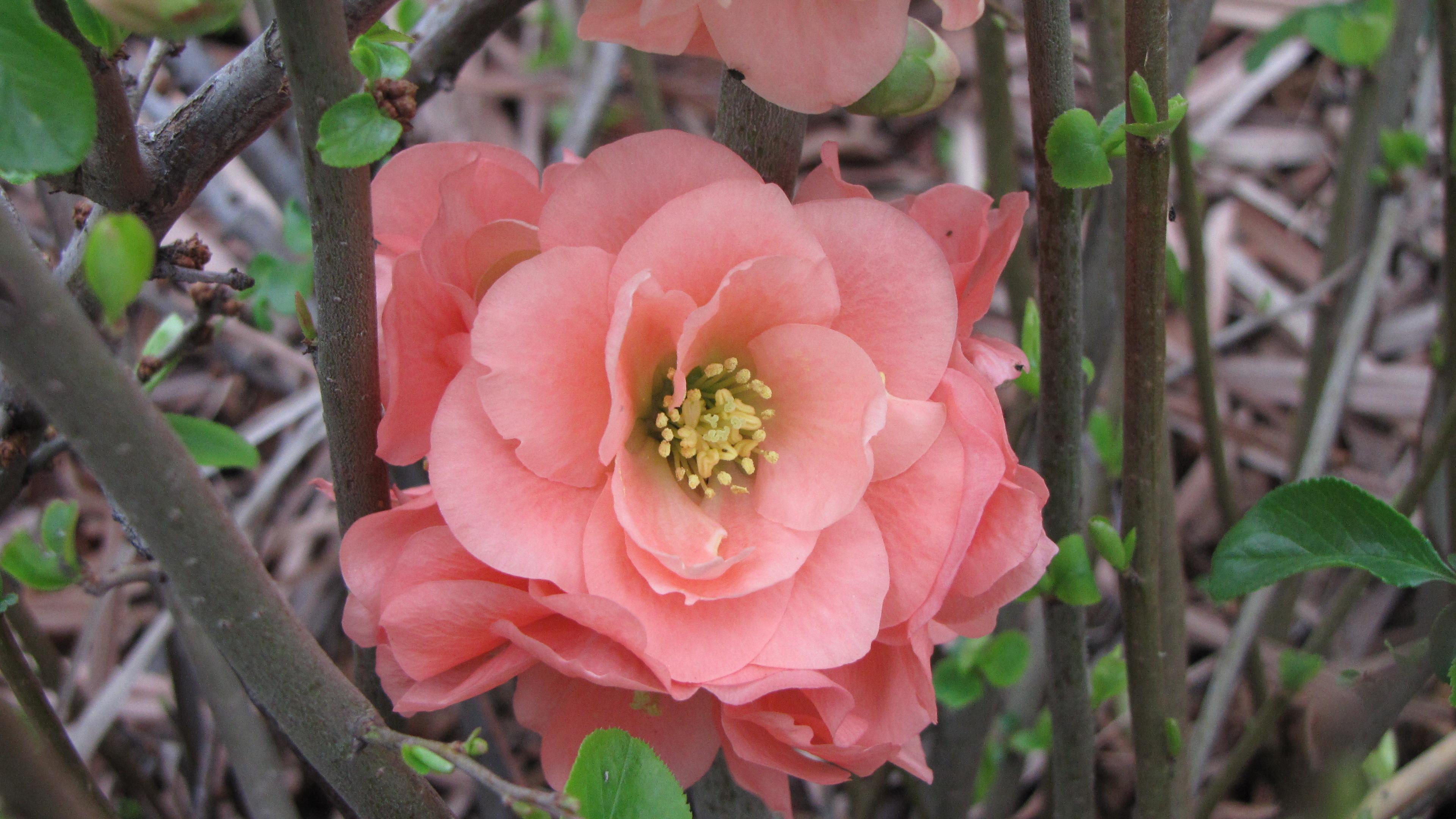
Quince BranchAlmost no other plant screams as loudly “Spring is just around the corner!! “ as the cheerful sight of a Flowering Quince in full bloom in the dreary winter landscape.

Native to eastern Asia, Japan and China, Flowering Quince is highly adaptable to growing well the United States, including Texas.  Because of its Asian origins, an old-time name for the plant was Japonica and the pink and white blossoms of Flowering Quince and its fruit are often depicted in Japanese paintings.

quince

Flowering Quince, genus Chaenomeles, can range in size from 2-10 feet tall and wide depending on the variety.  They tend to be a rounded shrub and nearly all have thorns, though some of the newest varieties are thornless.  Except for their brief moment of glory when they bloom in shades of red, white, pink or salmon in late winter, they are a nondescript, glossy green shrub which some consider too ungainly and rambling to be given a prominent place in the landscape.  They are very hardy, will live for years, and require only moderate maintenance.  In highly alkaline soils they may become chlorotic but even in Dallas County this does not present much of a problem.  Though some of the newer varieties are said to grow in partial shade, the more sun they are given, the more flowers they will produce. 

     Here at the Demonstration Garden we grow a variety called Texas Scarlet Flowering Quince, Chaenomeles japonica ‘Texas Scarlet.’  It grows from 3-6 feet tall and wide and has very fiery tomato-red, apple-blossom-like flowers that precede the deciduous leaves.  After blooming it produces a greenish-yellow fruit which can be harvested in the fall.  It is considered best when used in a shrub border or as a background plant.

    The fruit of Flowering Quince, including Texas Scarlet, can be used to make jellies and jams.  The fruit is very hard and must be cooked before eating; and the seeds, which contain amygdalin, must be removed before cooking.  Because the fruit contains more Vitamin C than lemons, in Estonia, it is called a Nordic Lemons.  There are several recipes for Flowering Quince jelly on the internet.  However, because of the small size of most of the fruit from ornamental varieties, most cooks consider it too labor intensive to make jelly from varieties such as Texas Scarlet.

   quince-flowering  Though nurseries are carrying Flowering Quince now that are in full bloom, just remember that glory of these shrubs may only last for ten days to two weeks.  However, if you plant and establish Flowering Quince now, just wait until next year.   You will be greeted with a flamboyant harbinger of spring. 

Carolyn


Daffodil, Jonquil, Narcissus


What’s in a name? That which we call a rose by any other name would smell as sweet.

–Shakespeare’s Romeo and Juliet

     Picture the flower: daffodil, jonquil, narcissus.  If you are like most people, probably a particular flower comes to mind.  However depending in which part of the country you grew up or lived, or even your age, the specific flowers associated with each of these terms may be different.  This confusion, when using common names for plants, is why botanists classify plants using their Latin or scientific names.

So what exactly is the difference between a daffodil, a narcissus, and a jonquil?  The simple answer, according to University of Illinois   Extension specialist Jennifer Schultz Nelson,  “is nothing, or “it depends.”  All three terms are used as common names in many cases and used incorrectly.  Narcissus is technically the only correct scientific name identifying the genus of this group of plants.  It is not a common name, though some use it as such.  Daffodil is typically used as a collective name for all these plants, but is more often used to describe the larger flowered types.  Jonquil is a name sometimes used for this group as well, but actually only applies to a very small subgroup, Narcissus jonquilla and related hybrids, which typically have several small, fragrant flowers on each stem with flat petals.  The foliage is very narrow and reed-like, according to the American Daffodil Society (ADS).”

 
Daffodil 'Unsurpassable'

Daffodil ‘Unsurpassable’

The American Daffodil Society (ADS) designates 13 divisions of daffodils with, depending on which botanist is asked, over 40 to 200 different daffodil species, subspecies and varieties of species and over 25,000 registered cultivars or named hybrids.  Daffodils are members of the Amaryllis family, of the genus Narcissus.  Narcissus is derived from the Greek word narke, meaning numbness or stupor.   Perhaps the name was given because in Greek mythology Narcissus was a young man so enamored of himself that he stared at his reflection in a pool of water until he eventually drowned as he tried to embrace himself.  Supposedly flowers grew up around the site.  Or the name Narcissus may refer to the flower’s intoxicating fragrance, or because all parts of the daffodil are poisonous.  In fact, not only animals but even humans who have occasionally mistaken a daffodil bulb for an onion, have become ill upon eating the bulb.  There is even a contact dermatitis called “daffodil picker’s rash” which can occur upon repeated handling of the stems.

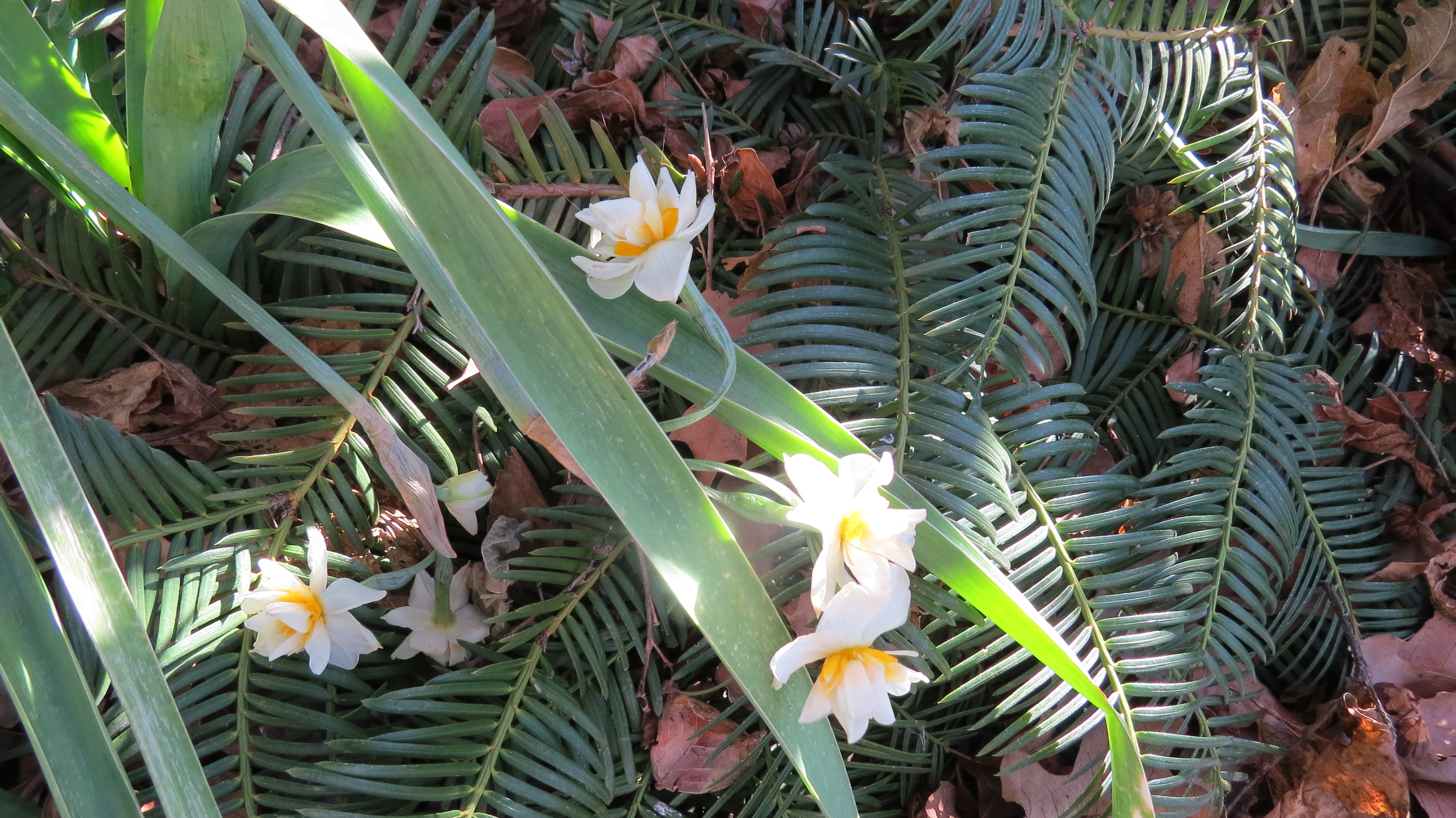
Above: Narcissus tazetta Double Roman peeking our thru leaves of our yew at The Demonstration Garden

Above: Narcissus tazetta Double Roman peeking our thru leaves of our yew at The Demonstration Garden

Daffodils found growing wild in Texas around old homesteads or cemeteries were probably brought over here from Europe by early settlers, according to Dr. Jerry Parsons, retired AgriLife Extension Horticulturist. Daffodils will grow best in a well drained area in full sun though they can naturalize in part shade under deciduous trees.  The bulbs should be planted and divided in the fall or late summer.   It is extremely important that the foliage be allowed to grow, mature and ripen naturally.  According to Dr. Parsons, it should never be cut off or “tied in cute little knots.”  It is the foliage that stores up the food reserves for the next year’s blooms and new bulbs.  In a flower bed, the withering foliage can be disguised by other plants.

Narcissus tazetta '‘Grand Primo’', a bulb that will naturalize in Texas

Narcissus tazetta ‘‘Grand Primo’’, a bulb that will naturalize in Texas

To naturalize daffodils in Texas, it is important to plant the correct varieties.  In general, according to Dr. Parsons, Southern grown stock is genetically superior in vigor to the commercial Dutch forms.  His article on daffodils in Plant Answers lists some of his favorite varieties.  Another excellent source for bulbs of all kinds collected from Texas and neighboring states is The Southern Bulb Company www.southernbulbs.com.  The owner, Chris Wiesinger, collects heirloom and sometimes rare bulbs that will perform very well for the warm-weather gardener.  Many of the daffodils and bulbs planted at the DemonstrationGarden have come from his stock.

So, whether you call them daffodil, narcissus or jonquil,

now is the time to enjoy these delightful flowers.

Carolyn

Picture of ‘Double Roman’ and ‘Grand Primo’ by Starla

Daffodil ‘Unsurpassable’: DaffSeek, American Daffodil Society, Inc., Unsurpassable retrieved on Mar 6, 2014’, available at www.daffseek.org

Take in all things Daffodil at The Annual Texas Daffodil Society Show  this weekend at the Dallas Arboretum.

Companion Plants and Plantings

Onions and potatoes…not only do they taste great together – they grow great together!  A few weeks ago, we planted our onions (yellow 1015, otherwise known as Texas Sweet) and potatoes (red LaSoda) in one of our raised beds.  We planted the onions from seedlings, and prepared seed potatoes.

Above: Calloused Potatoes, ready to plant

Above: Calloused Potatoes, ready to plant

To prepare the potatoes, they were quartered – making sure there were a couple of eyes in each section, dipped in sulfur powder (you may know it as the stuff you sprinkle on yourself to keep chiggers at bay), and then left in a cool, dry, dark place to callous over.   By callousing over the cut parts of the potatoes, excess moisture evaporates and the chance of mold growing underground where the potato was cut is reduced. Usually, 7-10 days is sufficient for callousing.

Since the onions didn’t require any special work, they got planted a couple of weeks earlier, at the top of two rows we’d made in the bed.  They were planted about an inch deep, and roughly four inches apart from one another.  These are bulb onions, so we wanted to make sure there’d be plenty of room for them to grow nice and big.  The potatoes, once they were ready, got planted in the furrow made between the two rows of onions, cut side down (eyes up), about four inches deep and roughly six inches apart.  Six inches may seem a little close, but our goal was to plant all our sets, and that’s how the spacing worked out in our raised bed.

Above: Sue and Christina planting our potatoes inside rows of onions

Above: Sue and Christina planting our potatoes inside rows of onions

So why plant these two together?  It goes like this:  as the onion grows, to help facilitate bulb production, we’ll start removing some of the soil off of the tops of the bulbs.  Meanwhile, the potato plant grows upwards, but the potato is formed off of the part of the stem that is underground.  So as the potato grows upwards, we’ll use the soil we’re removing off of the onion to help bury the potato plant stem so there’s more stem to swell into more potatoes!  Pretty nifty, eh?

Finally, at the end of the bed we have a boxlike structure made of wood.  There, we’re experimenting with growing the potatoes really tall – covering the stems with compost as the plant grows upwards.  We’ve planted five potato pieces in there – one in each corner, and one in the middle – and our drip line extends into the box area.  As the plants grow up and we add more compost, we’ll lift the drip line (we’ve left a little play in there) so it stays near the top of the soil.

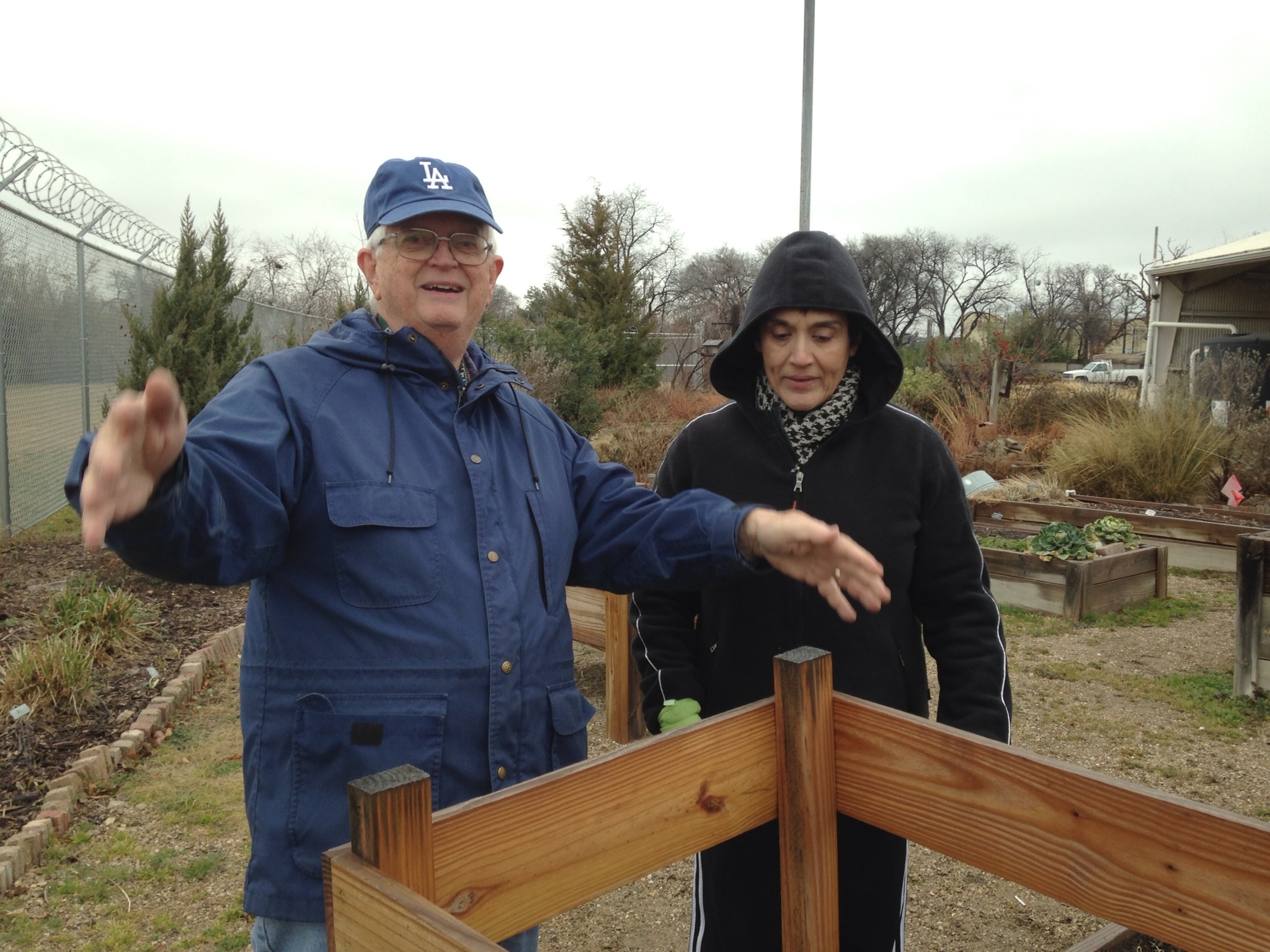
Above: Jim explaining the potato growing process

Above: Jim explaining the potato growing process

It’ll be a few months before we can harvest the roots and tubers of our labors, but it’s good to keep in mind that if you plant a short-day/spring/sweet onion, it’s not considered a storage onion.  If cured properly, it may last a couple of months, but the high sugar content works against long storage.  So it’s best to cook ’em up and eat ’em quick!

Lila Rose

More about our Potatoes: One Potato, Two Potato, Hopefully More, A Better Mouse Trap, and Vegetable Planting in January and more about Onions: The Lowly Onion.

WELCOME TO DALLAS GARDEN BUZZ

Gardening in North Central Texas is enough to make you throw away your trowel.  Our summers are hot enough for a blast furnace.  Our winter chill can freeze pipes and coat trees with ice.  We’re pummeled with spring storms and hail, but when we most need the rain, not a cloud is on the horizon.  Dallas’ unforgiving black clay forms clods hard as rocks and is so alkaline, its pH is off the chart.

DALLAS GARDEN BUZZ shares our journey through the triumphs and missteps of gardening in our North Texas heat, clay soil, limited water, and high alkalinity.  In the world of gardening, there is always a story to be told and sage advice to share.  As we dig, trim, harvest, and cook, we’ll give you the best information we can gather from our “hands on” work in  The Raincatcher’s Garden of Midway Hills, a Research, Education and Demonstration garden at 11001 Midway Road in Dallas.

DALLAS GARDEN BUZZ is written by Dallas County Master Gardeners, volunteers trained by the Texas A&M AgriLife Extension Service.

dcmga_logo_20160109-jpg-2017 agrilife_logo_9-12-jpg-2017

Hearts and Roses Luncheon Desserts

Red Velvet Cake

Hearts and Roses Lunch-Red Velvet Cake

Ingredients:

½ cup butter, softened

1 ½ cups sugar

1 tablespoon white vinegar

1 teaspoon vanilla extract

3 large eggs

1 (1-ounce) bottle liquid red food coloring

2 ½ cups all-purpose flour

2 tablespoons cocoa

1 teaspoon baking soda

½ teaspoon salt

1 cup buttermilk

Cream Cheese Frosting

Directions:

1.  Beat butter at medium speed with an electric mixer until creamy; gradually add sugar, vinegar, and vanilla, beating well.  Add eggs, 1 at a time, beating until blended after each addition.  Add food coloring, beating until combined.

2.  Combine flour and next 3 ingredients; add to butter mixture alternately with buttermilk, beginning and ending with flour mixture.  Beat at low speed until blended after each addition.  Pour into 2 greased and floured 9-inch cake pans.

3.  Bake at 350 degrees F for 20 to 25 minutes or until a wooden pick inserted in center comes out clean.  Cool in pans on wire racks 5 minutes; remove from pans, and cool on wire racks.

4.  Spread Cream Cheese Frosting between layers and on top and sides of cake.

Yield: 1 (2-layer) cake

Cream Cheese Frosting

Ingredients:

1 (8-ounce) package cream cheese, softened

½ cup butter

1 (16-ounce) package powdered sugar

1 ½ teaspoons vanilla extract

1 cup chopped pecans

Directions:

1.  Beat cream cheese and butter until creamy; gradually add sugar and vanilla, beating well.  Stir in pecans.

Yield:  3 cups

Creamy Chocolate Mousse

Hearts and Roses Lunch Dessert


Ingredients:

3 eggs, separated

1 ½ teaspoons vanilla extract

½ teaspoon almond extract

4 (1-ounce) squares semisweet chocolate, melted and cooled slightly

½ teaspoon cream of tartar

½ cup sugar

1 cup whipping cream

Directions:

1.  Beat egg yolks lightly; add flavorings and chocolate to egg yolks, stirring well.

2.  Beat egg whites (at room temperature) and cream of tartar at high speed of an electric mixer until frothy.  Gradually add sugar, 1 tablespoon at a time, beating until stiff peaks form and sugar dissolves (2 to 4 minutes).  Stir about one-fourth of meringue into chocolate mixture; fold remaining meringue into chocolate mixture.

3.  Beat whipping cream at medium speed of an electric mixer until soft peaks form; fold cream into chocolate mixture.  Cover and chill at least 2 hours.

Yield:  5 cups.

How to Make Sugared Raspberries

Ingredients:

1 cup of raspberries (or other whole, small summer fruit such as blueberries, small strawberries or blackberries)

1 egg white

½ cup sanding sugar

Directions:

1.  Select the firmest, plumpest raspberries to work with.  This will help the final berries retain their shape and they’ll be less likely to turn into a juicy, sugar puddle.

2.  Lightly paint egg white onto entire outer surface of raspberry (using a small pastry brush).  Make sure to get the base and the top of the berry completely covered.  Dipping the fruit into the egg white is not recommended; it becomes messy and doesn’t turn out as well.

3.  Pour about ½ cup sanding sugar onto a plate to use for sugaring.

4.  Place fruit on plate and sprinkle with sugar.  Gently rolling the raspberry in sugar works too.  Be careful not to squeeze or push too hard, breaking the berry.

5.  Coat the raspberry in sugar as evenly as possible.

6.  Dry sugared raspberries on a parchment-lined baking tray for 4 to 8 hours, resting the fruits in a cool, dry place.  Humidity will affect this process, so if your home is very humid, you may want to try this recipe at a different time.

7.  Enjoy just a few berries as a garnish to any dessert (they are very sweet and strong!)

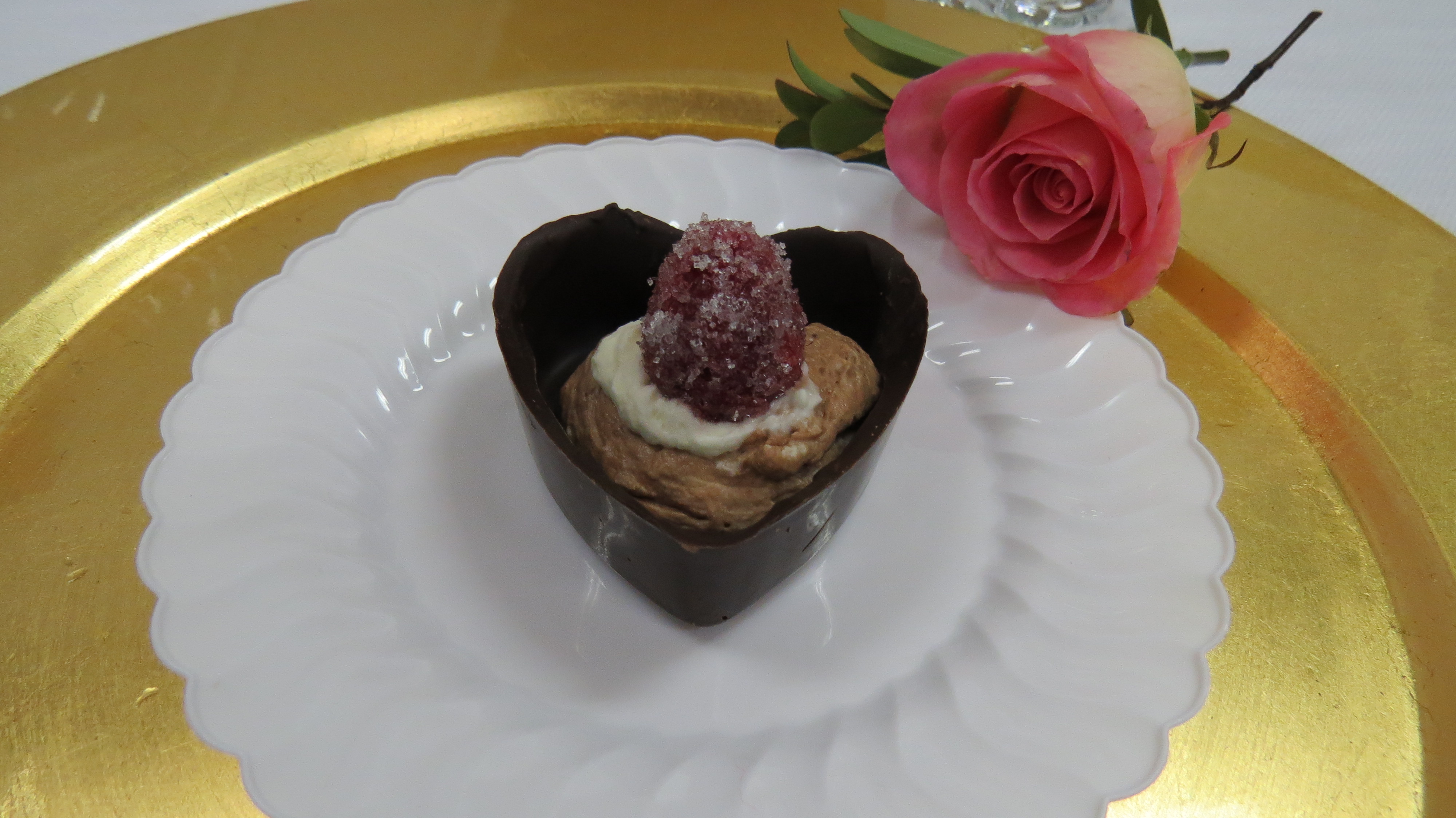
Serving suggestions for sugared raspberries:  Use as a topping for creamy chocolate mousse, angel food cake smeared with lemon curd, or gingerbread topped with whipped cream and a pretty sugared raspberry sitting on the top.  Or, how about a delicious piece of homemade pound cake topped with a combination of sugared berries?  Yummy!

Linda

Strawberry Spinach Salad

Spinach and Strawberry Salad

Ingredients:

1 to 2 pints strawberries, sliced

1/3 cup slivered almonds, lightly toasted

2 (5-ounce) bags fresh baby spinach, rinsed

¼ cup vinegar

½ cup vegetable oil

½ cup sugar

2 tablespoons sesame seeds

1 tablespoon poppy seeds

1 ½ teaspoons finely chopped onion

¼ teaspoon each Worcestershire sauce

¼ teaspoon paprika

Directions:

1.  Toss the strawberries, almonds and spinach in a large bowl.

2.  Whisk the remaining ingredients in a bowl until blended.

3.  Add to the salad and toss to mix.

Yield:  8 servings

Linda

AND THE WINNERS OF OUR VALENTINE TRIVIA QUIZ:

Dallas County Master Gardeners, Eric and Jane, the winners!

Dallas County Master Gardeners, Eric and Jane, the winners!

Hearts and Roses Luncheon Recipes

On February 11th winter’s chill may have been all around us, but we were warmed up with a “good- for your- heart and soul” menu today at the Demonstration Garden.   Our very capable group of volunteers prepared and served this lovely menu for the “Hearts and Roses” Luncheon.  As we reminisced about childhood memories, comfort food in all its glory transported each of us to a happy place.  It was a delightful gathering.

Hearts and Roses Luncheon-Dallas County Master Gardeners

Baby, when it’s cold outside – get in the kitchen and start cooking!


Old-Fashioned Chicken and Dumplings

Just close your eyes and savor the memory of this heart-warming treat

Just close your eyes and savor the memory of this heart-warming treat

Sometimes referred to as “country dumplings”, a bowl of this warms both tummy and soul.


Ingredients:

1 (3- to 3 ½ -pound) broiler- fryer

2 quarts water

2 stalks celery, cut into pieces

2 teaspoons salt

½ teaspoon pepper

1 stick butter

2 cups all-purpose flour

2 teaspoons baking powder

½ to ¾ teaspoon salt

¼ cup butter, softened

¾ cup buttermilk

Directions:

1.  Place chicken in a Dutch oven; add water, celery and 1 teaspoon salt.  Bring to boil; cover, reduce heat, and simmer 1 hour or until tender.  Remove chicken from broth, and cool.  Discard celery.

2.  Bone chicken, and cut meat into bite-size pieces; set aside.

3.  Bring broth to a boil; add butter and pepper.

4.  Combine flour, baking powder and ½ teaspoon salt; cut in butter until mixture resembles coarse meal.  Add buttermilk, stirring with a fork until dry ingredients are moistened.  Turn dough out onto a well-floured surface, and knead lightly 4 or 5 times.

5.  Pat dough to ½-inch thickness.  Pinch off dough in 1 ½ -inch pieces, and drop into boiling broth.  Reduce heat to medium-low, and cook about 8 to 10 minutes, stirring

occasionally.  Stir in chicken and serve.

Yield: 4 to 6 servings

Linda

Tomorrow the remainder of the Hearts and Roses Luncheon Recipes will be launched. Check back with us tomorrow.