Happy New Year From Raincatcher’s!

December 31, 2020

Dear readers, weary of 2020, please watch this video even if you saw it the first time we released it.

We are hoping you have lots of hope for 2021 and will have your best garden ever. We plan to send  information and ideas via this blog straight to your inbox for implementation into your garden plot.

We preach composting, mulch, proper plant selection, water-wise design, efficient irrigation, soil improvement when necessary, and appropriate maintenance. As one garden retailer says, we believe in improving the earth one garden at a time. Join us in 2021 for more education on these subjects.

Thank you, Starla, for this video.

Ann Lamb

It’s That Time of Year!

Master Gardeners fell in love with this recipe almost five years ago. McIntosh apples are a must and can be found at Central Market now.

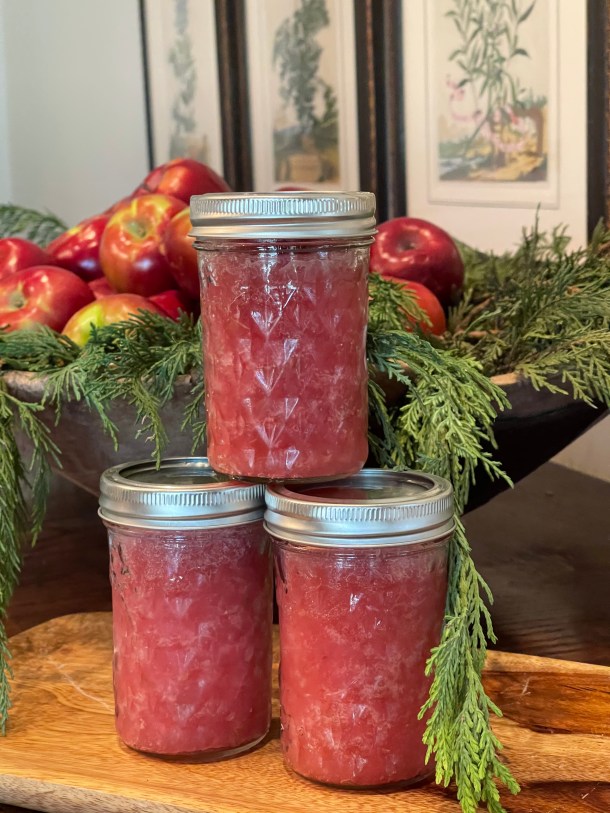
Very Best Homemade Applesauce

Ingredients
6 large McIntosh apples (use only this variety)
¾ cup white sugar, use more or less
1 ⅔ cups water
12 whole cloves

Directions
Wash and quarter apples, but do not peel. Remove seeds, if desired, before cooking. Place apple pieces in a large saucepan along with the rest of the ingredients. Before cooking stir some to dissolve sugar. Bring to a simmer and cook slowly with lid on until apples are mushy.
This doesn’t take long. Allow to cool for a few minutes.
Put cooked apples through an “old timey” cone-shaped metal ricer, pushing with wooden large- fitted dowel or wooden spoon, catching sauce in a large glass bowl. (Can use metal wired sieve with a large bowl underneath). Push apple pulp through sieve with wooden spoon. Seeds, whole cloves and peels will be removed. Stir sieved applesauce and refrigerate. Serve with sugar cookies.

Note: This recipe came from the University Park Elementary School Kindergarten class in 1989 via Patty Brewer. Apple peels will make sauce a beautiful rosy pink color so there is no need to add red food coloring.

Linda Alexander

Using Homegrown Evergreens For your Christmas Decorations

When you dream of a home filled with the colors, sights and scents of the season what images come to mind? In the following photographs discover some creative ways for using winter greenery during the holidays. Find joy in letting the fragrance of nature invigorate your home with a fresh, festive spirit.

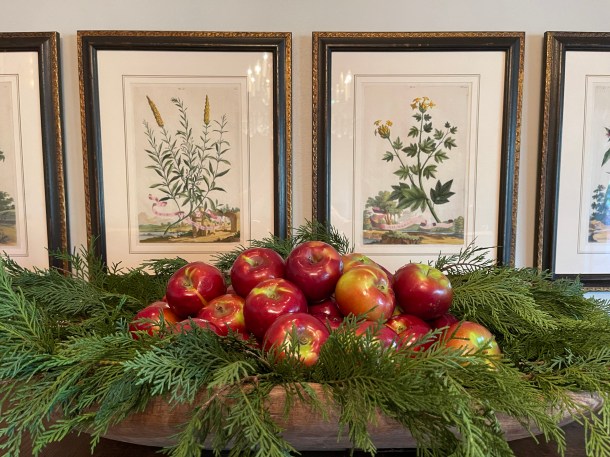
An antique wooden dough bowl becomes the perfect cradle for freshly cut cedar branches adorned with bright, red McIntosh apples. In the days following Christmas those same apples will be used to make a favorite recipe, Very Best Homemade Applesauce. Cooked and jarred rosy applesauce goes straight to the freezer after cooling with the promise of being savored throughout the new year.

Grow It/Use It

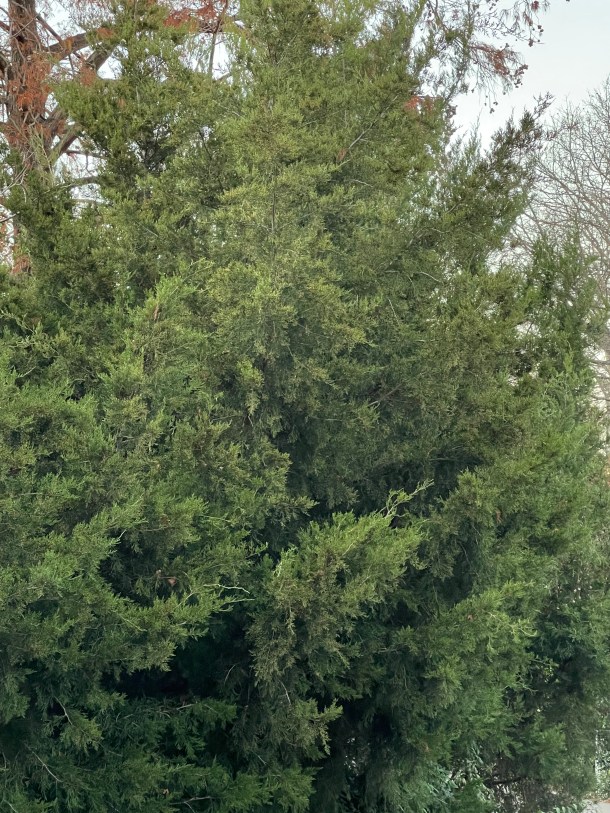
Eastern Red Cedar (Juniperus Virginiana)

This cedar can be grown almost anywhere in the country. They can handle the cold up north and heat in the south. The green foliage of this tree grows on a pyramidal shape creating a stunning, elegant evergreen look. In the winter, small blue-hued berries emerge from the trees, attracting birds. Mature Height: 30 -60 ft. Mature Width: 8-25 ft. Prefers full to partial sun. Makes for a perfect wind and noise screen.

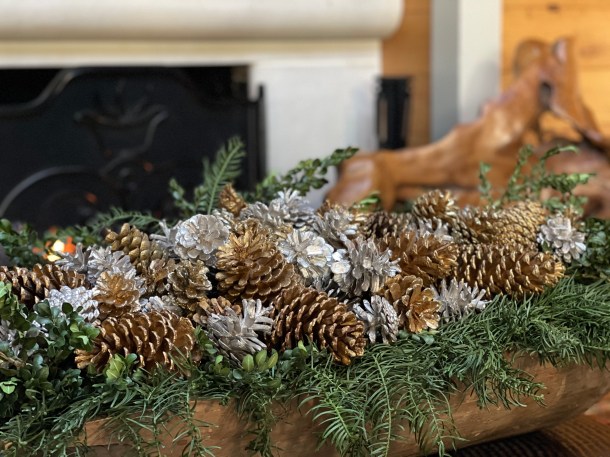
For many years, I’ve accumulated a nice collection of pinecones given to me by friends …some from Oklahoma, others from east Texas. While the natural look is my preference, many of them have been embellished with bright silver or 24 kt gold spray. Over the years they’ve been used in a multitude of ways but this year I decided to combine them all into one large wooden dough bowl filled with greenery from my yard. Japanese Plum Yew and Boxwood clippings were plentiful this year and added a lovely green accent. If you are drawn to the rustic chic design aesthetic, here’s a little glitz and glam to give it some holiday sparkle.

Grow It/Use It

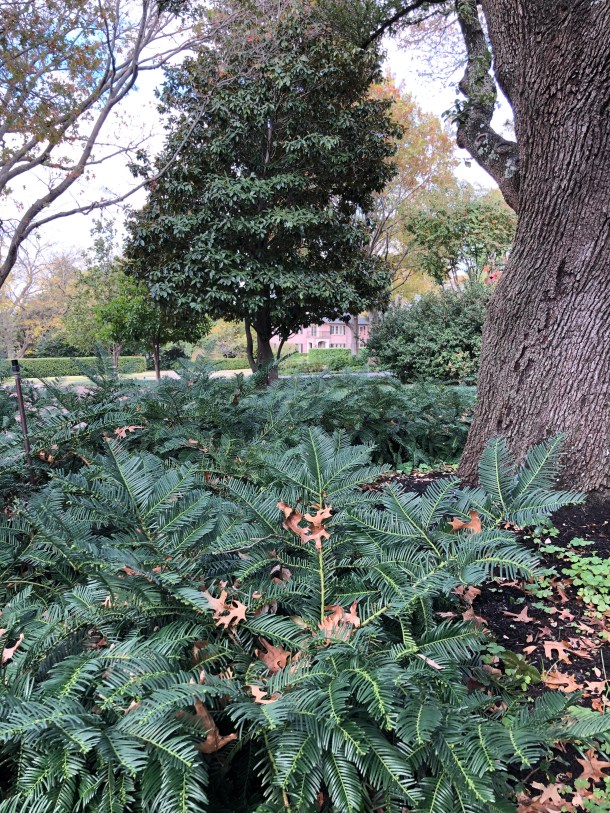
Japanese Plum Yew (Cephalotaxus harringtonia) ‘Prostrata’

This is a versatile evergreen spreading yew with dark green needles making it attractive to use for foundation or mass plantings. (My favorite place to use it is for filling in under large trees and other semi-shady areas.) Slow growing 2-3 ft. tall, 3-4 ft. wide. It is an easy-care plant that can be sheared annually to help maintain a tidy, neat appearance.

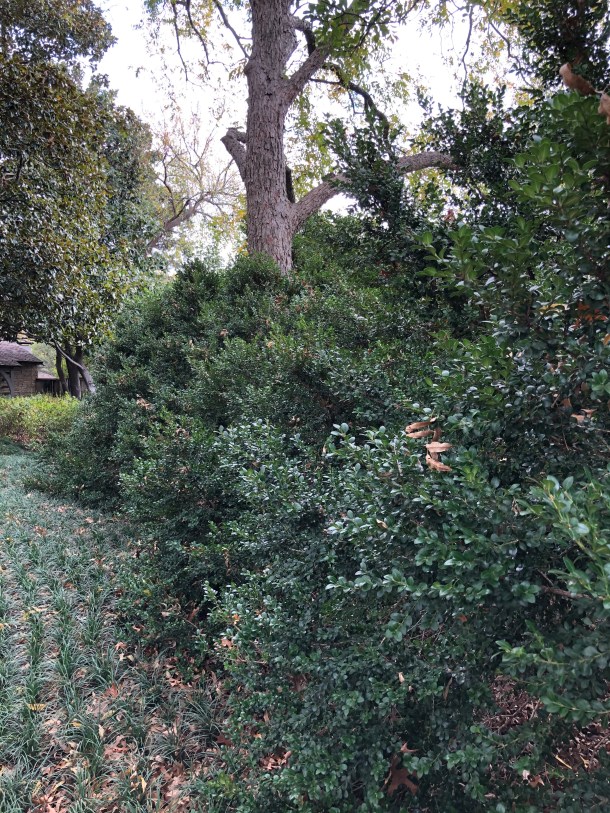
Boxwood (Buxus)

Boxwoods are everywhere. From elegant, formal landscapes to hedges and foundation plantings, their versatility is endless. We have a 30-40 ft. long boxwood hedge growing on the west boundary of our property that has never been trimmed back. As you can see from the photograph, it is over 7 ft. tall with branches gently drooping downward to the ground below. It has become a nice privacy screen for our 70-year-old property. When planting boxwoods, choose a spot appropriate for their needs. A full or part sun location is needed for optimum growth. Consider planting them in an area that is protected from winter wind to avoid a condition called winter bronzing. When left untrimmed, growing boxwoods is a low maintenance task. Older boxwoods, like mine, should be thinned to allow sunshine to reach the inner foliage. My preferred time to do this is in December when the clippings are used for my Christmas decorating projects.

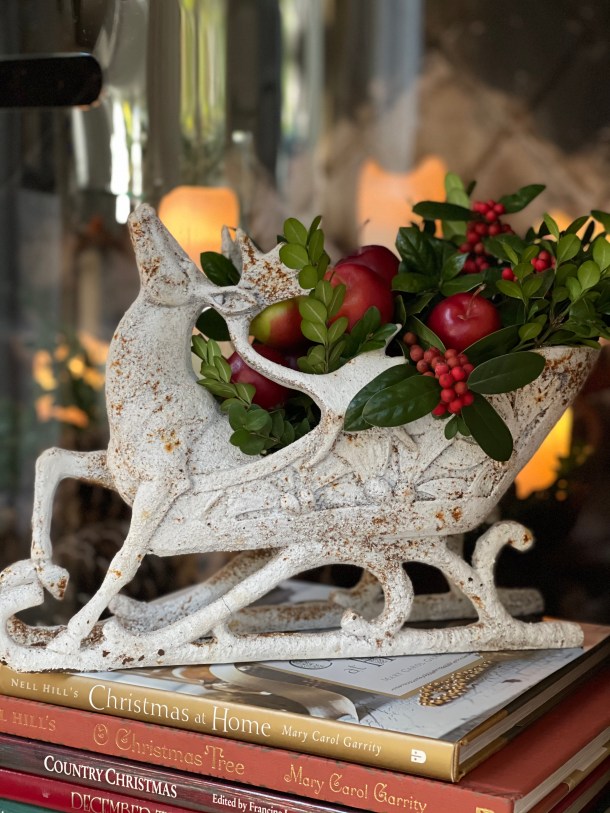
A vintage stone reindeer and sleigh once used to hold Christmas cards is now adorned with Lady apples left over from Thanksgiving. Tucking sprigs of boxwood and holly under the apples provides a pleasing contrast of colors.

Grow It/Use It

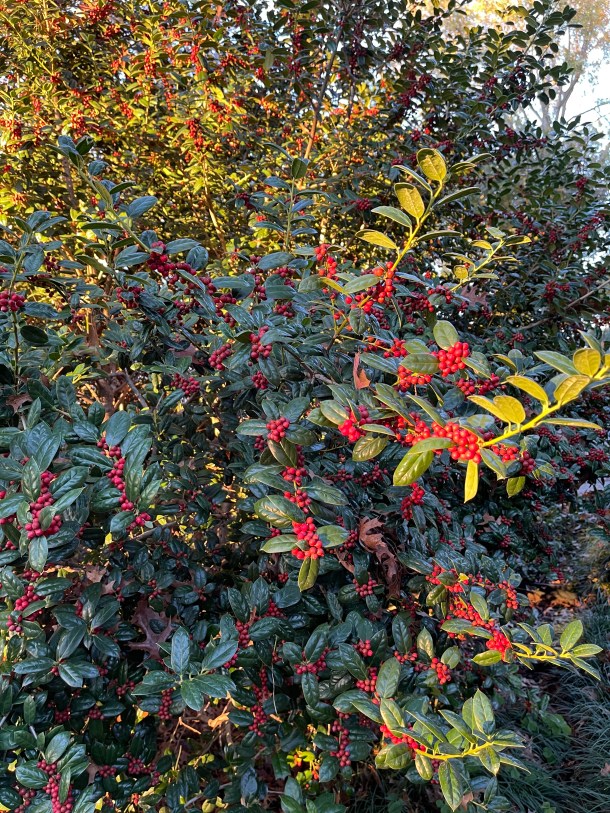
Dwarf Burford Holly (Ilex cornuta ‘Dwarf Burford’)

Dwarf Burford Holly is a broadleaf evergreen that typically grows as a shrub 8-10 ft. tall. Dull white flowers appear in May. Fall and winter is when it gives us those showy clusters of small red berries. For the densest foliage and heaviest berries, plant Burford holly in full sun and well-drained soil. It is perfect used as a natural hedge.

The same tarnished copper container used for a fall arrangement has been polished up for the holidays and filled with an assortment of garden greenery. Included in the mix are boxwood, cedar, magnolia, cherry laurel, Burford holly, Savannah and yaupon holly.

Grow It/Use It

Yaupon Holly (Ilex vomitoria)

Neil Sperry calls it Texas’ Star Native Shrub.  He says that “no shrub that grows wild in the Lone Star State is any better suited to our landscapes and gardens than this great holly”. Mature size to 20 ft. tall and wide but can grow larger in exceptional conditions. In nature, all yaupons are shrubs. What we commonly see are lower branches that have been removed allowing plants to be trained to grow as small trees. Small bright red berries mature in winter and remain attached to plants until cedar waxwings and other migrating birds feed on them in early spring. Female plants produce berries but there must be a male plant somewhere nearby. When planting, it’s important to know that yaupons produce a denser canopy in full sun.

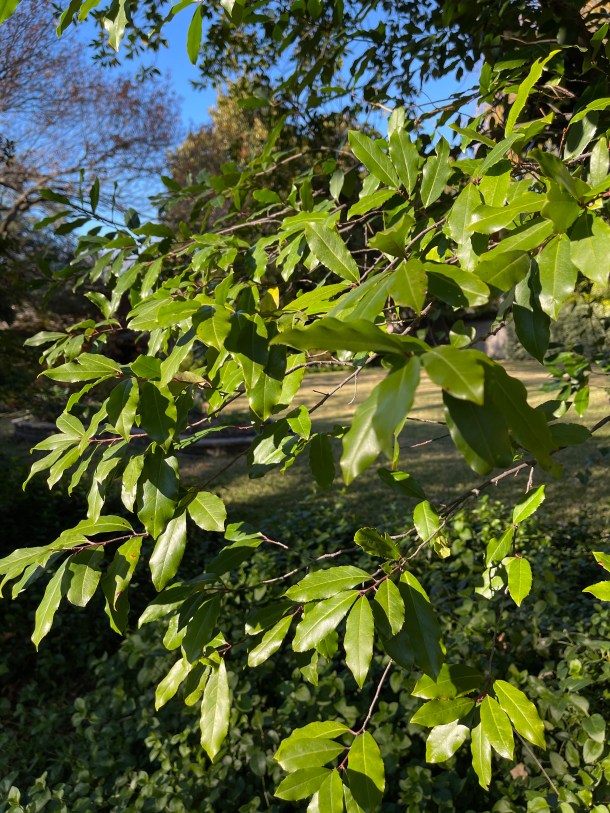
Cherry Laurel (Prunus caroliniana)

The Cherry Laurel is a dependable, easily grown, North American native that is densely foliated with glossy, dark green, evergreen leaves. The tree can reach 40 ft. in height with a 25 ft. spread though it is often seen smaller when grown in the open. It is attractive when allowed to grow naturally into its upright-oval, dense form. Plant in full sun to full shade on any well-drained soil. In springtime, tiny, creamy-white showy flowers appear in fragrant clusters followed by small, shiny, black cherries, which are attractive to wildlife. You can expect to see many seedlings beneath the crown each year from germinating seeds.

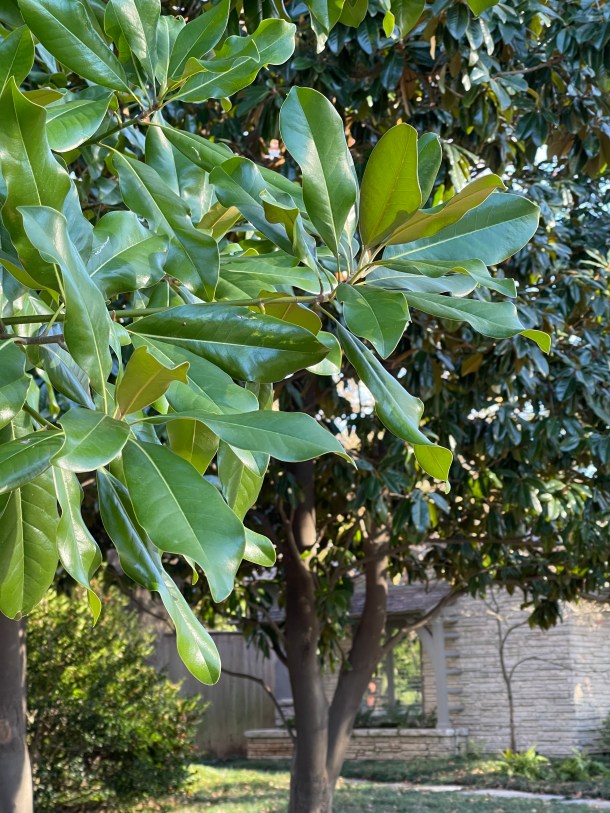
Southern Magnolias (Magnolia grandiflora)

A magnificent tree cultivated for its glossy green leaves and lovely white blossoms. The leaves are so beautiful they may be reason enough to start growing a southern magnolia. For a healthy tree with the maximum number of spring flowers, plant your magnolia in full sun. Give it plenty of room to grow and reach its possible height of 80 ft. with a spread of 40 ft.

Growing up in Durant, Oklahoma, I attended college locally at Southeastern State University, a school that is still known today as the “Campus of 1,000 Magnolias”. But my love affair with magnolias started much earlier. My childhood home was only three blocks from campus and the elementary school I attended (Russell Elementary) was located on the college campus. As a child, my friends and I probably climbed most of the trees on that campus. It was our favorite place to play and ride our bicycles. I’ll always treasure those sweet memories. 

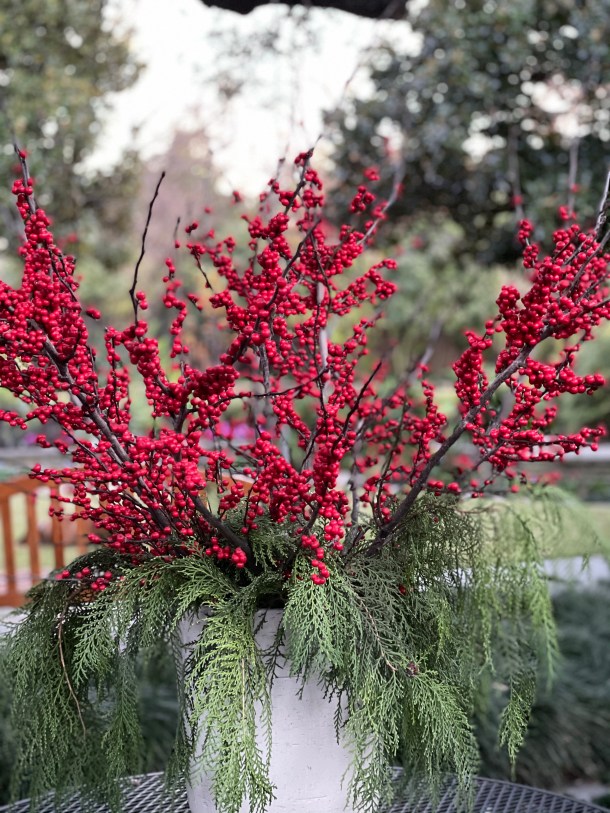
One concept that starting trending a few years ago is the “Hot Chocolate Bar”. This three-tiered stand sprinkled with faux snowflakes is an attractive way to invite guests to indulge in the experience. Cinnamon sticks, spoon shaped peppermint sticks, hand crafted marshmallows and chocolate chips make customizing your cup of cocoa fun and easy. Burford holly branches bursting with red berries complete the look.

Candlelight takes this centerpiece from simple to something enchanting. Three round glass vases partially filled with water are ready for clippings from a holly berry bush. Floating candles cast a soft glow on the table as dinner begins.

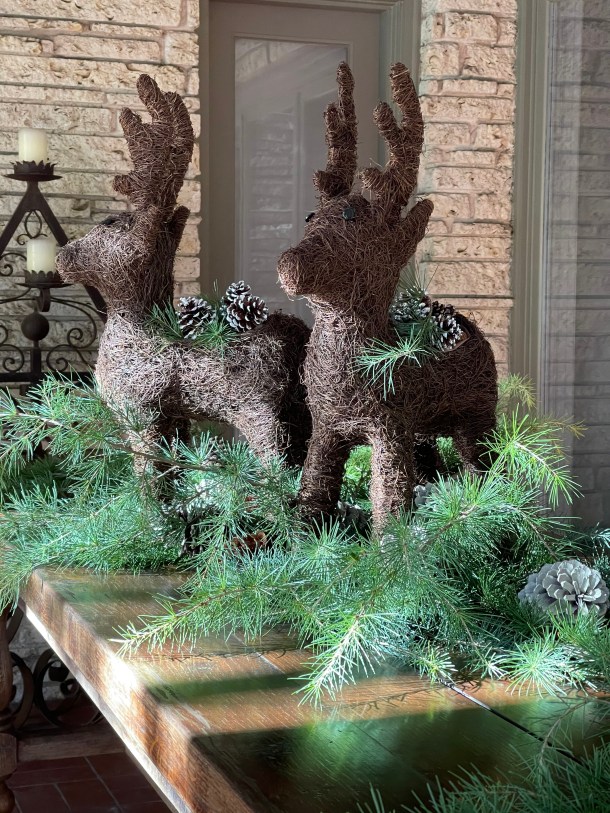
Two vine formed deer give this woodland scene a sense of magical wonder. With branches of freshly cut Deodar cedar and pinecones scattered around their feet, a covered patio tabletop arrangement suddenly feels like a visit to the forest.

Grow It/Use It

Deodar Cedar (Cedrus deodara)

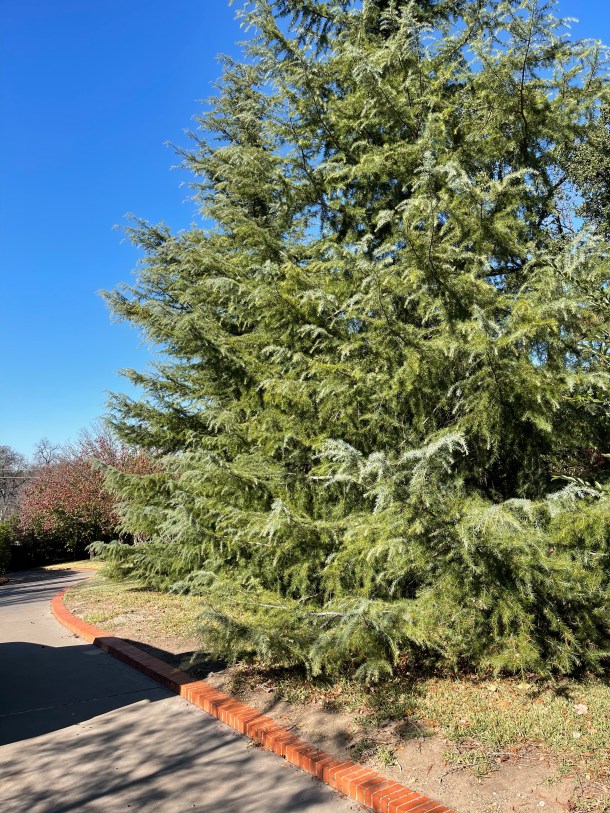
Deodars are not native to this country, but they offer many of the advantages of native trees. Drought tolerant, fast-growing, and relatively pest free, these conifers are graceful and attractive specimens for the yard. Plan to give them plenty of space to grow as they can rise to 50 ft. tall. Deodar cedars grow into a loose pyramid shape, with 2-inch-long whorled needles that give the tree a soft allure. The branches extend almost horizontally, angling slightly down, and the tips rise slightly. Thanks to my neighbor and fellow Bluffview garden club member, Barb Babb, for graciously allowing me to take an armful of clippings from her trees for my Christmas arrangements. As you can see from the photographs of Deodar’s growing on her property, these trees are most beautiful when they keep their lower branches. Needles of the deodar cedar are a silvery-green, making it an incredibly attractive and popular ornamental.

WISHING ALL OUR READERS A JOYFUL HOLIDAY SEASON

Linda Alexander

Lesson from a Compost Queen

For almost as long as I can remember, Cindy and Roger have been making compost for our garden. It supplies vital nutrients for our plants at Raincatcher’s Garden. Dig into the article below to hear what they collect to get their compost cooking in the fall. Cindy, our compost queen, also gives her “compost recipe.”

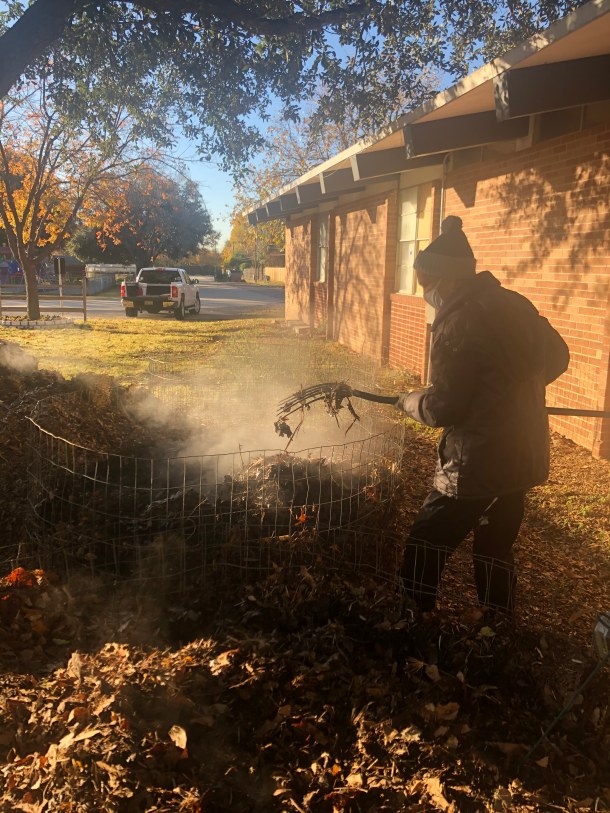
Cindy with her steamy compost!

WHERE THERE’S A WILL…


Here it is December already. Halloween and Thanksgiving are in the past, so
PUMPKINS AND GOURDS of every shape, color, and size are now on the curbside!
They are waiting for bulk pick-up by the city to be taken to the LANDFILL. What a
way to end up after being such a pretty embellishment for the holidays. What a
shame.


Since Roger and I enjoy “harvesting by the side of the road” during bulk pick-up
periods to augment our compost bins at home and especially at Raincatcher’s
Garden of Midway Hills, we have been keeping our eyes out for those jewels of
autumn.


During fall and winter bags of leaves are abundant. They are our primary
“brown/carbon” source for our compost recipe. “Green/nitrogen” sources are
becoming scarce since grass clippings and fresh vegetable/fruit scraps are dwindling
down to almost nothing. What shall we do to come up with that green ingredient?
Look for fresh items curbside? Pumpkins fit the bill, don’t they?


We put out the word, and many pumpkins and gourds magically appeared in our
compost area in the past couple of weeks. We harvested bags and bags of dried
leaves that were also waiting for pick-up. Jim and I cranked up the old mower at
Raincatcher’s and started chopping pumpkins and leaves, mixing them in our large
bins and adding shredded paper and any other compost contributions.

Today we filled a third new bin to the top. The pumpkins are juicy enough that we didn’t have to
add any water this week. If we don’t get the forecasted rain on Friday, we’ll add some
water next week—the “blue” ingredient in our compost recipe. The temperature in the
bins today ranged from 130° to 160°—great cooking temperature for compost piles.
Some of our fellow gardeners said that they had more pumpkins if we wanted them.
Silly question—of course we want them!

After leaving the garden, we went “harvesting,” filling the bed of our pickup almost to overflowing. We dropped by the garden and off-loaded our bounty.

Pumpkin pile ready for compost

Now we have a supply of “green” material available when we need it during the winter to balance our compost recipe. By next spring, as we turn the bins to add air and moisture when needed, our
compost mixture will have changed from piles of leaves and clippings to BLACK
GOLD—also known as COMPOST!


…THERE’S A WAY!


Cindy Bicking, “Compost Queen”


RECIPE FOR “BLACK GOLD”

GREEN—nitrogen sources, such as green grass, fresh fruit & vegetable scraps, coffee grounds

BROWN—carbon source, such as dried leaves, shredded paper, hay

BLUE—water

CLEAR—air

WHITE—time


Flowers for a warm Texas fall

An extra Thanksgiving greeting to all our readers. We think you will enjoy this blog of a fellow Texan. Look at her Leopard plant!


Source: Flowers for a warm Texas fall

Happy Thanksgiving 2020!

From all of the plant lovers, seed starters, soil amenders, bakers, composters, diggers, trimmers, mowers, brick layers, planters, harvesters, propagators, jam and jelly makers, fund raisers, and every other volunteer who lovingly nurtures and cares for Raincatcher’s Garden of Midway Hills, we wish you a blessed and bountiful Thanksgiving.

Crocus Sativus…Worth Its Weight in Gold

As autumn leaves began to fall throughout the edible landscape, we noticed little touches of purple peeking through the bee balm in our greenhouse beds. Much to our surprise, crocus bulbs that had been planted over two and a half years ago, were starting to bloom. As we gently lifted back drooping branches of bee balm more crocus plants appeared. It seemed that the crocus was whispering to us for help, “please don’t cover me up”.

Crocus crying out!

With many other garden chores on the agenda that day, we took a quick departure and started the process of carefully digging up over 15 clumps of crocus plants. Everyone agreed that a new location was essential for the health and survival of our precious plants. We choose three spots in between the raised beds under the swing set frame. Our crocuses now have their own permanent, mostly sunny, location with no competition from other plants.

Crocus replanted

If you are interested in growing crocus in your garden, here is some helpful information to get you started:

*Crocus sativus is an autumn blooming crocus which produces the highly prized and expensive spice, saffron. The spice is actually the red stigmas of the crocus flower.

*Each saffron crocus bulb will only produce one flower. Each flower will only produce three yellow styles, each of which ends with a crimson-red stigma. It takes about 50 to 60 saffron flowers to yield about 1 tablespoon of saffron spice.

*Saffron crocuses need well-draining soil and lots of sun.

*Saffron crocus multiply rapidly so in a few years’ time you should have enough for your garden.

*Saffron crocus are hardy down to -15F. Fertilization may be applied annually but isn’t required.

*Saffron crocus only blossoms during a short period in the fall. Once a flower blooms, it must be harvested that same day, as it begins to wilt almost immediately.

If you’re wondering why saffron is so expensive, consider this; since each flower contains only three delicate stigmas, it takes upwards of 50,000 flowers to yield one pound of dried saffron.

Conclusion: At Raincatcher’s Garden of Midway Hills, we’re hopeful about a venture into the saffron market someday!

Linda Alexander

Meet Diane – A Frequent Visitor to the Raincatcher’s Garden

Our new friend, Diane

I met Diane at the Raincatcher’s Garden a couple of months ago when she was in the edible garden and courtyard taking photos.  I stopped to say hello and she raved about our garden.  She lives in the neighborhood and had noticed the garden from the street. Eventually she stopped by to check it out – and the rest is history. 

She told me she sends a selection of the photos each week to people to “brighten their day.”  Diane sent some of her photos to me and I was so impressed that I thought it would be nice to share some on Dallas Garden Buzz. 

We have made two slides shows from Diane’s photos for you to enjoy.

Diane sends weekly emails (subject line Happy Merry Monday) to about 20 friends, family members and former co-workers.  Many of the recipients live in Dallas but the photos reach people in Tennessee, Arizona and Ohio as well.

 She also shares her efforts with about 25 people from her church who are home bound. Several of these people don’t use a computer so Diane gets copies made and mails the photos to them!!!  It is a pleasure to think of all of the people who are enjoying our garden through her images.

DCMG volunteers have worked hard (within the activity limitations of the pandemic) to ensure the garden remains beautiful and well kept. Many of us have found working at the garden to be a much needed retreat from everything that is happening in the world.

 As gardeners we take great satisfaction in the knowledge that visitors to the garden and recipients of Diane’s photos are enjoying the positive benefits and beauty of nature. 


Jackie James

Dallas County Master Gardener 1993

Enchanted Part II

Linda has done such a beautiful job teaching us how to bring our gardens indoors. We have several more arrangements to show you. Feast your eyes and learn about the plants that you can grow in your own backyard.


You might think of this arrangement as something akin to the “moody blues”. Drooping, berry laden branches create a somewhat mystical scene captured in this nighttime photo. Aralia and elephant ears leaves lend the right amount of weight needed for balance. FYI…this arrangement is best used in an outdoor setting. Beauty berries inside the house aren’t worth the worry.

Beauty berry growing in the Raincatcher’s courtyard

Grow It, Use It –At Raincatcher’s we are growing Mexican Beauty Berry, commonly known as black beautyberry, in a shaded part of the courtyard that receives some morning sun. It has a sprawling habit with woody, multi-stemmed branches and large, toothed, green foliage. Leaves appear in late April followed by small pinkish-white flowers in July. Late summer and into September the dark mulberry fruit on arching stems makes a dramatic statement in the garden. Wildlife, including a variety of birds, raccoons, squirrels and some rodents, enjoy it as a food source. Master gardeners at Raincatcher’s rush to get berries harvested ahead of the critters so that our jelly making can begin. After making multiple jars, we are sold out for this year.

“A tisket, a tasket, a green and purple basket”. My slightly modified version of this late nineteenth century nursery rhyme was inspired by a trip to the aster bed in the north garden at Raincatcher’s. Just a few snips later a simple, green, ceramic container filled with purple asters served as a perky little centerpiece for the dinner table.

Asters exploding with blossoms in our fall garden at Raincatcher’s

Grow It, Use It – Daisy-like flowers blooming from August until early November are superstars in the fall garden. As other flowers are fading, asters give us their most spectacular performance. It is recommended that potted nursery specimens be planted in a loamy, well-draining soil in full sun sometime in the spring. These fast-growing perennials will be ready to put on a good fall display in their first year.

 The bold strokes of a Russian painting are repeated in a treasured collection of chinoiserie pieces. Mexican Mint Marigold is nestled inside a cherished blue vase from my late grandmother. A delft blue vase brought back from Holland and given to me by my mother holds a small bouquet of fall ageratum. A trip to Istanbul, Turkey yielded this unique hand-painted, glazed vase holding a cluster of small blue flowers. A combination of purple fall asters and orange zinnias draws your eye to similar colors found in the painting. Lastly, while on a trip to the mountains of West Virginia, our visit to a glass-blowers studio resulted in the purchase of this adorable trio of miniature vases. Individual Mexican Mint Marigold blossoms give them a stronger presence.

Blue Ageratum, love it!

Grow It, Use It – Blue Ageratum (Mist Flower, Wild Ageratum) is a vigorous perennial bearing fluffy-looking, bluish-purple flowerheads. It grows in a large stand, reaching 2 to 3 feet. Bloom time is July – October. Sow seeds after last frost. Attracts bees. Orange zinnia is an old-fashioned annual that is easy to grow. Seed directly into the garden after the last spring frost date. Summer blooms continue into fall. Wonderful cut flower to use in garden-type arrangements.

An old, tarnished copper vessel gives flowers and foliage in this arrangement a place to shine. Except for Firebush, all plant material listed above has been carefully gathered and rearranged into this spectacular fall display. If possible, take a tour of the Raincatcher’s Garden of Midway Hills in the next few days where you will see most of these plants in their best fall wardrobe. Don’t delay as some are starting to fade while others will soon succumb to the colder nights of November. And finally, remember to use your garden to grace your home with the gifts of the season. Let nature be a treasured friend.

Firebush glowing

Grow It/Use It-Firebush is a perennial semi-woody shrub that can grow about 5-10 feet tall. It’s bright red-orange tubular flowers bloom from late spring till the first frost. They attract butterflies, including zebra longwing and gulf fritillary, as well as hummingbirds. Plants grow well in a range of soils, both alkaline and acid. Firebush will grow successfully in part shade or full shade but likes full sun. This trouble-free shrub does not have insect or fungus problems and thrives without fertilizer.

Linda Alexander


Dallas County Master Gardeners love having visitors (masked and socailly distanced) at our garden. We are located on the campus of Midway Hills Christain Church, 11001 Midway Road, Dallas, Texas.

Come take in the beauty of our fall garden and learn about our carefully selected plants.


Enchanted

It was the sweet, anise like fragrance of Mexican Mint Marigold that drew me into the garden on the morning of October 18th. Brushing up against the plants, I yielded to the temptation and immediately tasted one of the delicate yellow blossoms surrounded by slender green leaves. My garden journey was just beginning.

Landscapes bursting with brilliant color, leaves gently tumbling down from trees and pumpkins spilling out from the porch and into the yard welcome fall in all its glory. I find myself truly enchanted, wanting the experience to linger beyond this moment in time.

Spending one blissful day after another outdoors renews my spirit and encourages me to immerse myself fully in the shimmering days of October and November. I’m immediately drawn to the garden where beauty abounds throughout. Join me on a creative journey of discovery among the flowers and foliage of the season.

Bringing the natural world indoors reminds me, once again, that Autumn’s gifts never fail to bring happiness to my home. From soft whispers of golds and ochre to vibrant shades of burgundy and orange, fall arrangements lend themselves to a more simplistic style. Gathering your treasures is almost as joyful as placing them in a cherished vase. Let nature speak to you in a soft, sweet seasonal whisper. Savor every precious sight, smell and color of this magical season.

My first experience with frostweed was in 2008 as an intern in the Dallas County Master Gardener Association. It was a “give away” during one of our classes. For the past twelve years it has continued to grow in my garden.

Frostweed growing in the garden

Grow It, Use It – Frostweed is a lovely perennial plant native to Texas and many other states. It is a member of the Sunflower Family. Frostweed grows from 3’-6’ and is covered with white disc-like blooms from late August until November. It is an exceptional nectar source for butterflies like Monarchs and Great Purple Hairstreaks. It grows well in dappled shade.

During the month of October Red Rubin Basil delivers a vibrant splash of deep purple in the garden. Paired with purple-veined kale leaves in a mustard colored French olive pot, the only elements needed to complete the picture are two glasses of robust Pinot Noir and freshly cut Black Mission Figs. Cheers!

Grow It, Use It-Plant Red Rubin Basil in April and watch the colors intensify as the months pass. A location with morning to mid-day sun followed by dappled shade in the afternoon will reward you with that spectacular fall foliage. Bees and butterflies will visit the spiky blossoms until the first frost ends its growing season.

A simple bouquet of Mexican Mint Marigold surrounded by the bold, deep red and purplish savoy leaves of Red Giant Mustard pair perfectly in an unassuming pedestal vase.

Grow It, Use It – Mexican Mint Marigold can be planted in the garden after the danger of frost has passed. It tolerates many different soil types but must have good drainage. Plant it in a location that receives early morning to mid-day sun. The distinctive anise flavored leaves can be harvested throughout its growing season from spring through frost. The real show-stopper attraction begins around late September when bright yellow, marigold-like flowers attract migrating butterflies and other pollinators. Mexican Mint Marigold is a perennial that usually freezes to the ground in winter but reappears in spring.

Red Giant Mustard gets two bonus points; it has good cold tolerance and is more insect resistant than other varieties. Start outdoors in late September and continue growing until late spring. Plant in partial shade. Enjoy its beauty as a dramatic landscape plant but harvest the spicy mustard flavored leaves for eating.

When the glossy dark-green leaves of Japanese Aralia began to lose their color, consider using them in unexpected and unusual ways. As the browning tips gently began to curl and turn upwards, create a sense of drama by giving each uniquely faded leaf its place within the arrangement.

Aralia and Dried Hydrangeas

Aralia growing under an arbor

Grow It, Use It – Japanese aralia is grown around the world as a cultivated plant. Enjoy adding a tropical feel to your landscape by using it as an understory plant beneath trees or large shrubs. Plant it in rich, moist soil that drains well. Aralias prefer part sun to shade and will typically grow to around 8 feet. Try to avoid afternoon sun which may scorch the leaves. Flower stalks with creamy flowers followed by black berries appear in late fall or winter.

Freshly squeezed rosy grapefruit juice is your invitation to come for a perfectly planned fall brunch in the garden. Cascading branches of ‘Rose Creek’ abelia create a relaxing and peaceful environment where you are embraced by nature. Dreamy blush colored blossoms found in this simply elegant tabletop setting create a calming effect.

Abelia ‘Rose Creek’ at Raincatcher’s Garden

Grow It, Use It – Monrovia best describes this variety of abelia as having showy clusters of small, fragrant, white flowers that emerge from rosy pink sepals in summer. It is best planted in rich, well-draining soil in a location that receives full sun.

Come visit our blog again Wednesday morning to see the remaining photos plus a spectacular ‘Grand Finale’ arrangement.  We encourage you to stroll through Raincatcher’s anytime this week to experience the full seasonal beauty of our garden.

Linda Alexander