Category Archives: Winter

 INCH BY INCH LIFE’S A CINCH —YARD BY YARD–IT’S VERY HARD

February 14, 2025

This bit of wisdom came by way of what seems an unexpected source. It was a great many years ago now–in a cartoon a  FELIX THE CAT cartoon that was most likely old even then.  Thinking back it was a strange cartoon not really designed for children at all.  But that hardly matters at all.

Wisdom comes in many ways and forms and can make a lasting impression–so maybe it was a good thing for children–after all wisdom is useful to everyone.  Once its firmly in one’s mind it can be called upon when most needed.

It turns out it’s needed now–by gardeners at least. This can be a discouraging time in the garden.  Sure its great to have lots of perennials and if you try to remember–they were lovely pretty and then there were bees and butterflies.  And the summer and fall were sure improved by the blooming annuals. Oh but now –just how many dead stalks did all that beauty leave behind–sadly alot!!  And no way are they lovely now  in fact they are awful.

It’s time for the big cutback!!!   This just isn’t a happy thought.  Let’s face it –its a very unhappy thought. It can seem overwhelming when you look at the whole thing–just too much hard to face.  

All gardeners know it has to be done.  The health and beauty of the plants require it and there is an absolute need to tidy things up.  All the hoped for winter beauty of seed heads and such–its done stalks are falling over and there just isn’t anything pretty about it.  

Don’t despair–this is where the wisdom of FELIX THE CAT comes in.

Take a step back from the whole situation.  It all doesn’t have to be done at once–more than likely it just can’t be.  Just get started–get out the clippers and loppers and sturdy gloves–make it as pleasant for yourself as possible.

Then remember INCH BT INCH.  It will get done.  You will be happy and justifiably proud  of your accomplishment.

Cutting back lots and lots of dead stems just isn’t fun..  That doesn’t mean you can’t get some pleasure from the process. 

Take breaks  look at what you have done  congratulate yourself!!

Look for signs of life among the dead stalks.  Remember how valuable your work is.  The Spring annuals and the bulbs can’t possibly look good if the garden isn’t ready for them.

Keep saying to yourself inch by inch–and yard by yard–will happen!!

Susan Thornbury, Dallas County Master Gardener Class of 2008
Obsession™ Nandina

January 28, 2025

Nandina domestica ‘Seika’ 

Raincatchers’ Garden chose Obession Nandinas to co-exist with established Crepe Myrtles that have a darker leaf and white blooms.  These two plants provide an attractive, easy to maintain small area within our garden, and provide a colorful treat for the eye throughout their growing season.  Our plantings flank our shade pavilion located in the northwest corner of our north garden.

Glowing vibrant red in the spring and summer, Obsession™ Nandina is visually appealing, and it is also easy to grow, even for beginners. An upright, compact, dense grower, Obsession offers richer color than ordinary nandinas and is non-invasive. 

With its vibrant foliage and compact form, Obsession Nandina adds texture and color to any landscape. It thrives in various growing conditions and adapts to full sun and partial shade. Whether you aim to create a colorful border, enhance a foundation planting, or beautify a patio or balcony, Obsession Nandina is up for the task. Best of all, Obsession Nandina is deer-resistant!

Ideal growing conditions for the Obsession Nandina shrub include well-drained soil and regular watering, especially during hot summer months, though you’ll find the water-wise Obsession to have low water needs once established.

This low-maintenance plant also doesn’t require frequent fertilizing, making it an excellent choice for those with busy schedules. If you wish, feed your Obsession Nandina once per year in early spring.

You can selectively prune to shape your nandina shrub prune in late winter or early spring according to your preference, but Obsession Nandina doesn’t require pruning to stay compact. When pruning, remove any dead or damaged branches, as well as any crossing or overcrowded stems.

Bloom/Feature Bright red new growth

Evergreen or Deciduous? Evergreen

Plant Hardiness Hardy to -10°F to 0°F

Key Features Deer Resistant, Disease / Pest Resistance, Water-wise, Winter / Floweing Season

Fall Foliage Color None

Uses Accent, Container, Mass Planting, Slope

Water Needs Medium

Fertilize Yearly in early spring

Pruning None Needed*

Planting Instructions

• Water before planting

• Plant in location that receives partial sun to shade

• Dig hole 2X the width of pot

• Plant 1-2″ above ground soil level, backfill hole with soil

• Water deeply to settle, then add more soil if needed

• Mulch 1-2″ deep around plant, avoiding area closest to stem

*If pruning is desired for shape, remember to cut the offending branches at ground level, not from the crown of the plant.

Information above is from Southern Living Plant Collection.

Jon Maxwell, Dallas County Master Gardener

Flowers of Frost and Freezes

February 25, 2024

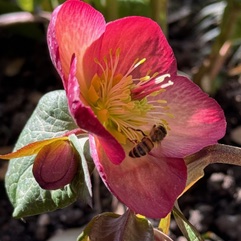
In our Zone 8 climate they are not only survivors of winter’s chill but soon after a January freeze, Hellebores lift their lovely heads and shower us with an abundance of February color. Starting now and continuing into late March and early April, refresh your home by selectively snipping and arranging their decorative blossoms. 

A close-up of a flower

Description automatically generated

If you aren’t already growing Hellebores in your garden, now is a really good time to give them a try. Many of our local garden centers currently have a wide selection of varieties with colors ranging from ivory and pale green to pink and dark burgundy. You might find comfort in knowing that the symbolic meaning of hellebores includes peace, serenity and tranquility.

My hellebores were planted three years ago and were used to make each of the featured arrangements. However, this was my first time to use hellebores as a cut flower, but it won’t be my last. It has been impressive to see how well their strong and sturdy stems hold up when anchored in a “frog-type” holder. 

Here are my top three reasons for growing hellebores:

  1. During the dreary backdrop of winter, hellebores bring joy to your garden with a rainbow of beautiful colors. 
  2. As a cut flower, hellebores hold up well and can be arranged in unique and beautiful ways.
  3. As you can see from the photos, hellebores provide honeybees with a much-needed nectar source when options are extremely limited.

Linda Alexander, Dallas County Master Gardener class of 2008

Other Hellebore articles from our archives:

Hellebores

Lenten Rose

Helleborus, ‘Glenda’s Gloss’ will be planted
along the wavy wall in memory of Raincatcher’s volunteer
and dear friend, Glenda Nix. She was loved and is missed.

FOREVER YOUNG,WITH HELP FROM THE GARDEN

February 13, 2024

This is the time of the year when everyone wants something to change and improve advertisements that didn’t attract a bit of concern a while ago now seem tempting–the newest skin treatments that absolutely promise “younger brighter fresher”  The poor child in the picture seems still a bit concerned but yet now doing better–well she should be concerned of course she is probably past Fourteen and knows its all downhill from here.  Now if you want to buy thats fine after all it won’t hurt–although the price might be a real surprise  and the bottle is so small and then there are two more things you absolutely must have if you really want “results”  But we will go no further with this.

No because YOUNG honestly is a state of mind more than anything and at this time of the year–well we may have to work at realizing that–and most importantly acting on our knowledge.  

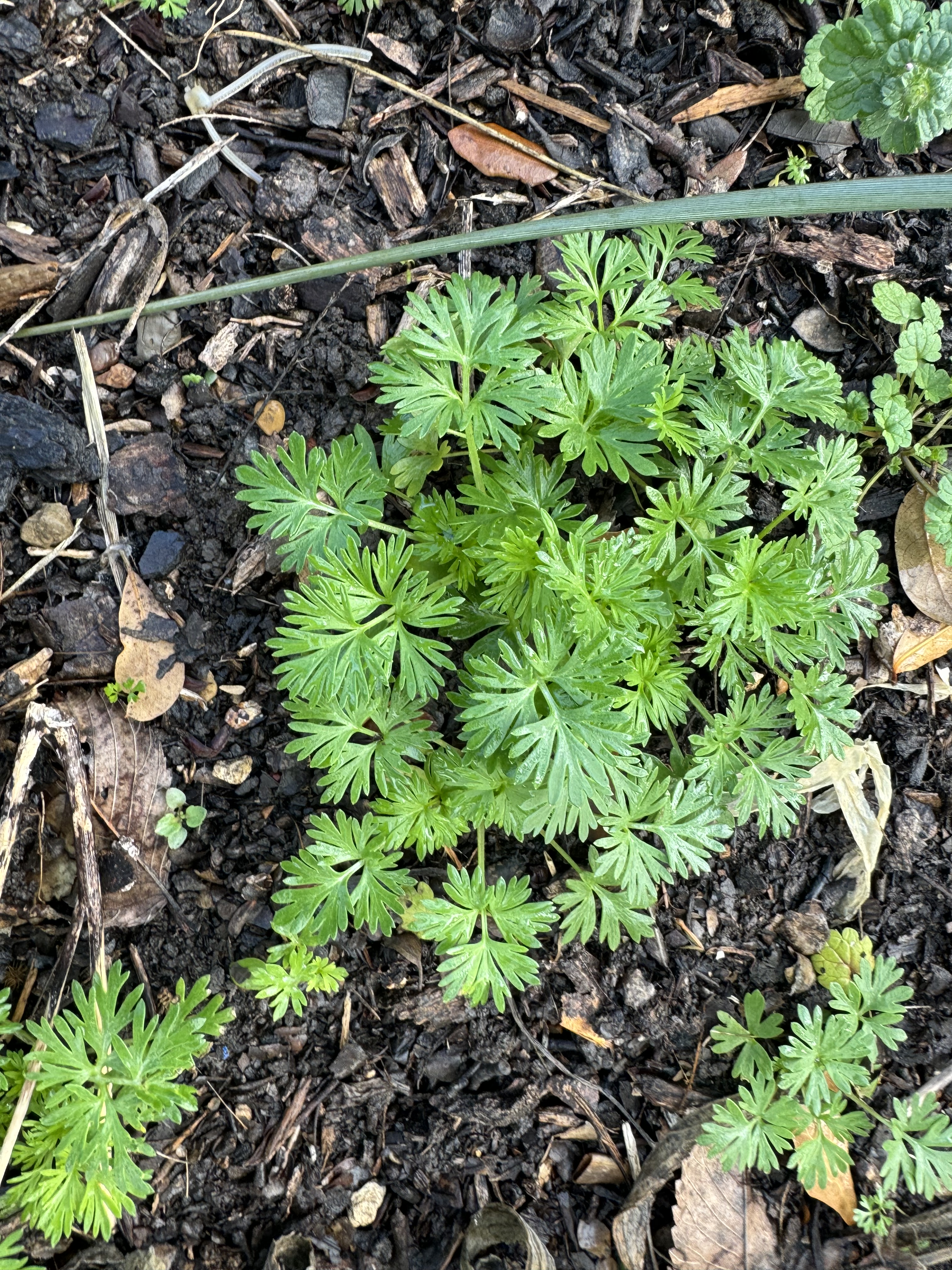
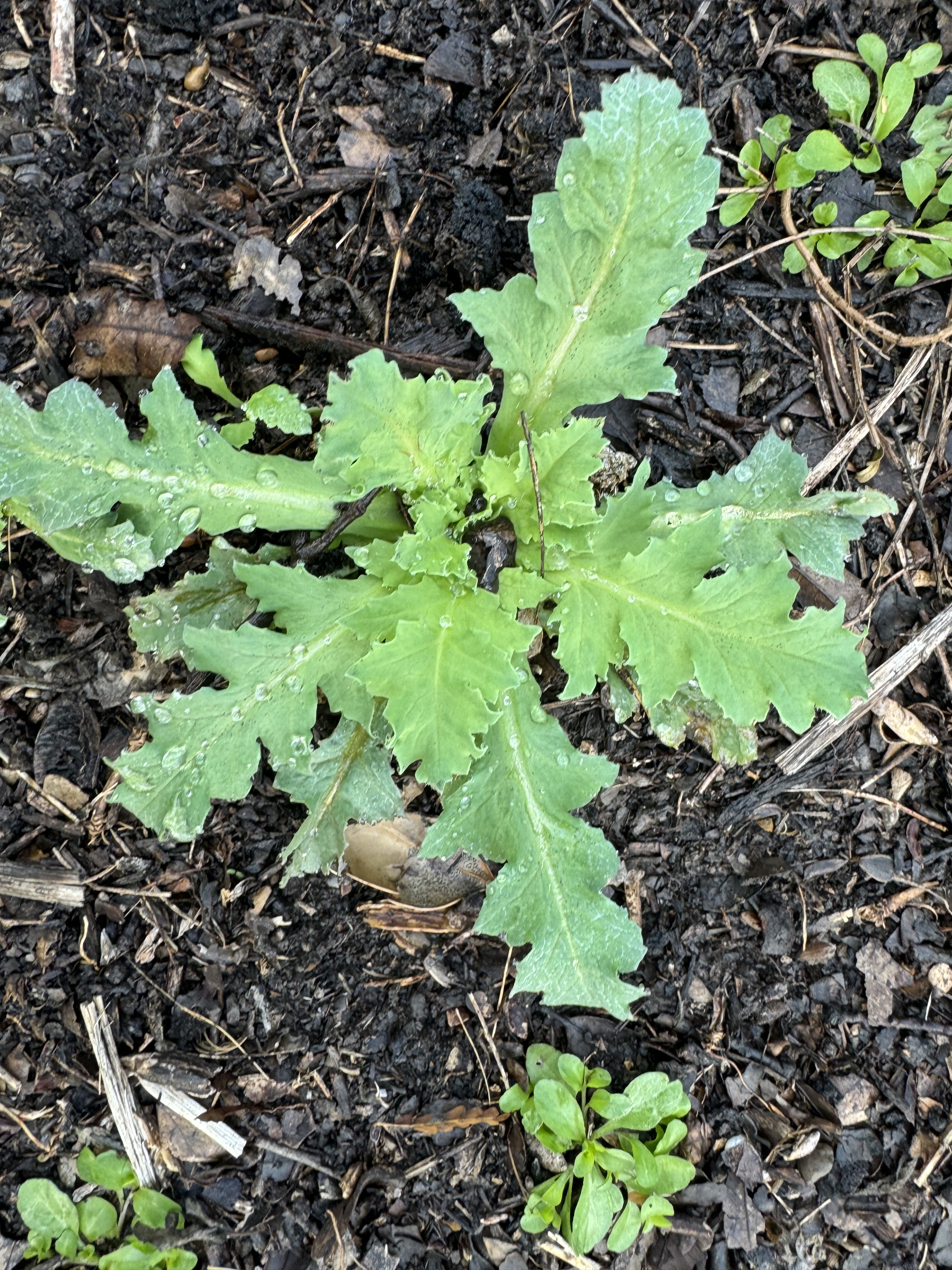
WE can’t let the season get us down.  Its absolutely true that the leaves lying about have totally lost their  charm –and how on earth did there get to be so many sticks and stalks everywhere.  We have to look at things closely–after we clean up a bit of course.  But take your time don’t be hasty, baby plants can be deceiving.  The last thing you want to do is accidentally “weed”  your precious spring  flowers when in doubt don’t pull it up.  Better to leave and weed than loose a poppy!  Let your imagination take you to the blooms that will be here soon  and you will be surprised at how much happier you will feel.  Anticipating good things to come–well that is a receipt for real joy.

This is nothing but pure potential and hope!

Try to see bare patches as “Potential” not “Problems”.  All  the fresh seeds are here–stop and look .  For some people this can be as much temptation as the five hundred dollar skin serum so do be careful.  READ the labels and remember that if it says avoid heat you must avoid buying no matter how chilly and misty the day is right now.  But maybe choose something new to try and  go home and plant it–nothing worse than buying seeds and forgetting them–that doesn’t lead to happiness.  But the choosing and preparing and planting–that can make a big difference for anyone.  Feelings of accomplishment and planning for the future and feeling hopeful–well that makes anyone feel younger and fresher  and its a feeling that lasts!  Just the work in the fresh air helps so much  even if you have to wrap up and use plastic shoes.

If it gets really cold take the time to protect your plants you will be glad you did–its work but it pays off and that makes us feel powerful. Just a little cover saved this lettuce.

If there are plants in the house don’t just pass them by they aren’t sofa cushions they really will respond to attention.  water them and clean their leaves look for changes and growth–if you are fortunate even flowers–its the natural time for orchids to send up flower spikes–look carefully.  Just noticing will brighten the whole day and who knows what tomorrow might bring .That is the key.

When we think about it–isn’t YOUNG really anticipating the future–the good exciting things to come?  That feeling may get a little harder to come by sometimes but if we really notice our plants and gardens and care for them that feeling just seems to catch us and carry us forward–and that is FOREVER YOUNG.

Susan Thornbury, Dallas County Master Gardener Class of 2008

Old Plant Friends Cannot Be Forgotten

January 10, 2024

This is the time of the year when one things about past efforts and plans ahead for what’s to come—naturally the future must be vastly improved over what came before.  Its been that way for a long time.  After all January is named for Janus the god who is able to look to the past and the future.

All useful so far.  Evaluating past efforts and planning for the future is important for just about everything.

However this is also a time when one is most susceptible to promises of  perfection if only you buy something—well not just anything of course but the new and improved item currently on offer.  Let’s not consider the diets and health promoting supplements and the body that would be ours if only a new and improved fitness machine was ordered.  All available right now and payment can be easy—there is a plan available. 

Gardeners are not immune to these thoughts  by any means.  Emails seem to arrive daily to showcase the “must haves” for this years garden.  All involve buying the new and improved plants from all sorts of places.  Catalogues have pictures that are simply astonishing  The flowers in glorious colors.  Petals are now double and triple and maybe more.  Some seem to be very small “fit any space”  How can this be exactly.  Surely they would want to grow at least a little bit.

Even shrubs and trees are new and have amazing flowers and turn all sorts of colors.  Buy now”   really seems the only reasonable thing to do after all “supply may be limited”. 

But wait—take a deep breath and consider—where will all these new plants go?  Go back and look at your garden photos (you know they are right there)  and when you look you see that not only was the garden actually lovely it was pretty full.

Now there is nothing all wrong with buying new plants.  There are indeed new discoveries to be made.  Plus its just fun and adds excitement to the garden—and may be the key to the perfection everyone is looking for—this could happen.

Just think carefully about replacing the tried and true plants.  The ones you have counted on for years—that have stood the tests of time and weather.  Afterall they hold memories of past gardens—yours and so many others—and even of the gardeners who loved them before you and maybe even shared them.  It’s a lot to think about.

The little song children used to sing sums it up: 

Make new friends but keep the old— one is silver and the other gold.

Susan Thornbury, Dallas County Master Gardener Class of 2008

Gifts From the December Garden

December 20, 2023

A red ball on a statue

Description automatically generated

The chill of winter, though not officially here according to the calendar, has arrived. Trees are now displaying their bare branches as each day swirling, gusty winds bring colorful autumn leaves to the ground. From the stately red oaks and maples to the stunning brilliance of Chinese Pistache, yard crews are struggling to keep up with the piles and piles of leaves covering grassy lawns and flower beds. 

What remains is winter’s gift to our yards and woodlands…the mighty evergreens. My Christmas decorating theme was simplified significantly this year as I took time to pause and contemplate this marvel of nature.  Suddenly, I was caught completely by surprise upon discovering a towering tree growing along the back side of our neighbor’s fence. After 17 ½ years of driving past their property to enter our back gate, a large evergreen tree bursting with clusters of small blue berries caught my eye. I had never even noticed this tree until two weeks ago. Unsure of its name, a quick plant search on my iPhone gave me the correct answer. It was a JUNIPER. 

From that moment of discovery, I was smitten with the dreamy blue color of berries drooping from needle-like leaves with a delicate and aromatic pine scent. Thoughts of decorating my home with the greenery of winter were filling my head. And then a beloved old Christmas carol seemed to speak the words I needed to hear. My decorating theme for Christmas 2023 would be…” Let Heaven and Nature Sing”.

My sweet neighbor was so accommodating by giving me permission to ‘harvest’ as much as I wanted from her Juniper tree. That was the beginning of a foraging-type mission for evergreen material in our yard and along the alley ways and streets behind us. My goal was to respectfully select, then carefully cut, branches that would complement my decorating theme. 

The joy of using freshly cut evergreen branches for Christmas decor is their aromatic gift and profound color. Our home not only has the feel of a nature-inspired Christmas, but the air is filled with a calming heavenly scent, as well. 

Please enjoy a sampling of nature’s gifts in this short video featuring the evergreens used to adorn our home as we proudly proclaim…” Joy to the World!”

*Evergreens, and herbs, used from our yard (and a kind neighbor) are: Magnolia, Boxwood, Burford, Foster, Nellie R. Stevens, Savannah and Yaupon Hollies, Junipers, Cedar Trees, Japanese Plum Yew, Lavender, Rosemary, Thyme, Winter Savory and traditional English Ivy.

Linda Alexander, Dallas County Master Gardener Class of 2008

Winter Color in Dallas,Texas and Pansy Sale Pick- Up Directions

November 7, 2023

After what seemed like the summer that would not die, the trees begin to show color, we get rain and an early frost… it is time to plant pansies, violas and their friends for color that will carry us into spring.

Members of Violaceae family, pansies and violas can be traced back to their wild relatives in 4th Century Europe. These sweet flowers have long been associated with love and thoughtfulness. As plant cousins, all pansies are violas but not all violas are pansies. In general (and perhaps easier to remember) pansies tend to have larger but fewer blooms, while violas have more but smaller blooms. 

Appearing quite delicate, they are surprisingly sturdy and are extensively used as bedding plants across Dallas County.  Because they do not like intense heat, we plant them when cooler weather finally sets in, knowing they will fade away when our weather once again heats up. Autumn planting is designed to allow pansy and viola roots to develop before the weather turns especially cold. 

Plant these cousins in rich well drained soil in a sunny spot, for best blooming. Place plants 6-10 inches apart in beds or add them to pots with drainage holes. That spot under your deciduous tree might be perfectly bright this winter, or perhaps you have pots with annuals that are ready for something new.

Grown for instant color, pansies were fed heavily in the greenhouse, so don’t starve them when you get them home.  If you haven’t already added organic matter to your beds, plan to add a good well-balanced fertilizer, with light monthly feedings for both beds and pots. You may find a time release product works better for you.

Mulch after planting, leaving a gap around the plant stem. That few inches of mulch will help keep moisture and temperatures moderated. Water your new transplants in well and plan to keep them moist but not soggy. Let the soil dry out only slightly between waterings.

All varieties can handle light frost. Some varieties will reportedly survive single digit temps IF they have have a chance to develop a good root system and are planted in an ideal microclimate, but you will have to wait for new flowers to grow from the center. 

That crucial time needed for pansies to get rooted in can be just too short here in Dallas. This year was no exception!  Rather than risking the loss of their lovely color, water your plants well when temperatures are expected to drop to 20 or below.  Move containers to protected areas if possible and cover your pansies with frost cloth. Sheets and blankets can work but avoid plastic.

Pansies and violas aren’t our only options for winter gardening. It is no accident that this year our pansy sale includes alyssum, kale, mustard, and bright lights chard. They all play nicely together and have similar needs.

Ornamental kale is a frilly leaved member of the Brassica family that have been developed for their looks, rather than for their flavor. Looking like extremely large rose blossoms, they need cooler weather to fully develop their color variations. If we encounter a dry spell they will need water and plan on adding a good, high nitrogen fertilizer in December.

Swiss chard has been called beets without roots and was one of the first vegetables to be sold as an ornamental. Bright Lights is the 1998 All American selection that can add gold, red, yellow and orange stalks and veins to containers and borders…and it is edible! This could be just the “thriller” your containers want this winter.

Red Giant Mustard is another lovely and edible plant that brings maroon leaves with bright green ribs and what is called a “zesty” bite.  These leaves will play nicely with kales and pansies.

Last but certainly not consider alyssum in shades of white and purple. The Crystal Clear white and purple alyssum are historically a cool season annual here, fading when our heat returns. The newer White Stream is a 2013 Texas Superstar plant bred to survive into summer and does not tolerate freezing. Both varieties form sweet smelling mats and can fill in between other plants or stand on their own in a pot.

Surely you have a spot for one or more of these in your winter garden? And if you purchased some of these plants from our sale, our hearfelt thanks will surely boost your winter garden to beauty.

Mary Freede, Dallas County Master Gardener Class of 2005

PIck up is Wednesday, November 8th from 10-2 under the shade pavilion on the North side of the garden.

NEW YEAR—-NEW GARDENING YOU

February 9, 2023

The new year brings programs that promise the new and improved you.  These sensational claims are seen everywhere; the gym, the bus stop and store fronts. They boast incredible results like guaranteed weight loss of 100 lbs. And we can’t forget the facials that will freshen the person you are right now.

It seems that for gardeners fewer promises are offered.  While you might not become a whole new gardener, it really is a good time to think about improvements, realistic improvements. And thankfully that can happen without signing a contract you might soon come to regret.   Improvement for gardeners can start today!

Where to start?  Well of course it’s a personal thing that will be a bit different for each gardener but here a few suggestions.

First It all starts with being there—in the garden.  Plan to make your garden time a part of as many days as possible.  And make the time count.  When you are in the garden really be there. 

Remember the old saying:  “The best fertilizer for the garden is found in the footsteps of the gardener.” 

Use a little time to observe closely.  See what is there. Look for insects and other creatures that have a home because of your garden. Amazing! Appreciate what is happening now.  Yes, for sure we have to plant and weed and clean but also just enjoy what is.  It is so easy to forget this in the need to make the next moment better.  The best plans and actions will just follow when we carefully observe.

The Raincatcher’s Garden, a garden worth observing!

So lets plan to enjoy the garden more by being in it and carefully observing.

Yet another old saying comes to mind “ Reduce Reuse Recycle.’ 

Thinking before buying is so important.  First think if you can divide current plants and use what you already have. 

Try a new propagation technique.  Cuttings don’t always work but amazingly they often do.  Instructions are just a ‘click away.’ You can often share with a friend, and in return they share back.  You not only have a new plant but a happy memory.

Evelyn Womble sharing Hardy Amaryllisa happy memory for alot of us!

Containers look trendy with small divisions of grasses paired with ground covers. You might even consider a sedum that creeps over the sides.

Naturally we all want to buy just something to support local plant sales  Do be sure you have a place for the plant. No doubt you have seen pots filled with very dead plants by the curb waiting for the landfill. Poor things never even got planted.  Never do that!

The Raincatcher’s plant sale, full of repurposed pots and pass-along plants is a great sale to support! Don’t forget to put May 4th on your calendar.

Think carefully, as well, before buying products.  Obviously no toxic chemicals and remember peat is completely non sustainable.  Try coir based product. Speak up at the shop and ask nicely for what you want and explain why.  It can make a difference. Let’s try to be more aware, to spend as much time in the garden as we can and try to be responsible with resources.  

What is the next step ?

Sharing of course!  We know every garden can make a difference in supporting people and creatures—so why don’t more people have one?  Well, that is a question we can’t really answer but we can try to inspire and even assist those that do show an interest.   Take time to show neighbors around your garden and answer questions.  If you “plant the seed”  maybe it will grow and they will start a garden and then maybe they will share. And well maybe you yourself will have started something really valuable. 

Its all too easy to get discouraged with the situations around us but in practical terms gardeners can make a difference; first for themselves then the little patch of the world we care for and then others.

So, let’s start by making just a few improvements in ourselves and we will make it the best gardening year ever.

Susan Thornbury, Dallas County Master Gardener Class of 2008

Pictures by Starla Willis, Dallas County Master Gardener Class of 2011

Purple Wintercreeper, Euonymus Fortunei ‘Coloratus’

Purple Wintercreeper at Linda’s

Is it just the name? Why don’t more gardeners plant purple wintercreeper?

Listed on AgriLife Water University’s Top 100 Plants for North Texas , purple wintercreeper is one of the five groundcovers listed along with horse herb, frog fruit, snake herb and grey santolina. Texas gardener, Neil Sperry, also gives it a thumbs up.

It is evergreen, grows in full sun or partial shade, has reddish-purple fall and winter color and provides a wonderful texture to the garden floor. You might consider planting it instead of the ubiquitous Asian jasmine because it isn’t damaged by our cold weather temperatures.

Purple wintercreeper is easily established in a large area needing ground cover, just add mulch around the new plants and water as you would any new planting. After establishment, purple wintercreeper thrives on a moderate watering schedule.

Drip irrigation would be perfect as shown in this first photo.

In the next few weeks our thoughts will turn to spring, but while considering ground covers please don’t forget the one with the funny name, purple wintercreeper.

Ann Lamb, Dallas County Master Gardener Class of 2005

Ice Creations in the Garden

February 20, 2021

Just before the extreme winter temperatures fell upon us last week, my husband called me quickly to our backyard. He was concerned about the unusual ice formations surrounding the stems of our Frostweed plant. Had he forgotten to turn off the sprinkler system or was our plant in distress?

Most years, after those beautiful fall blooms have faded and the plant turns brown, we would already have cut it down to ground level. Seems this year, it was overlooked. As we carefully touched the somewhat intriguing white substance, it was evident that the plant stems were covered in frost.

After doing a little online research, I discovered the reason for the plants name.  Frostweed, Verbesina virginica is a Texas native biennial that ranges in height from 3 to 6 feet. Our plant has easily reached the six-foot mark. It blooms in late summer and continues blooming until frost. The plant was named Frostweed because of this unique characteristic of producing intricate ice formations from its stems. Only a few species of plants are capable of producing these ice creations, more generically referred to as “frost flowers.”

Frost flowers at Raincatcher’s Garden

As early as 1833 John Herschel, son of the famed astronomer William Herschel, who discovered the planet Uranus in the 18th century, made an interesting observation. In a letter printed in Philosophical Magazine he describes going for an early morning walk several winters before noticing “a remarkable deposition of ice around the decaying stems of vegetables.” A few days later, he found a similar strange ice formation, this one seeming to emanate in a kind of riband-or frill-shaped wavy excrescence.”

Herschel’s letter is one of the earliest recorded observations of the phenomenon of “frost flowers” (sometimes called ice flowers or ice ribbons). However, he could only hypothesize about the cause of these formations. Not able to explain, he concluded that “It is for botanists to decide.”

Scientists are unsure why only a few plants in nature produce crystal ice patterns into ribbons or clusters that resemble flowers, and why only certain types of plants are affected. One theory is that frost flowers develop when air temperatures are freezing but the ground temperature is warm enough for the plant’s root system to be active and the air temperature is cold enough to freeze the upward flowing plant juices. Perhaps, as the moisture in the plant freezes, the ice crystals push out through the stem. They may emerge from a small slit to form thin ribbonlike strands. Or they may split open a whole section of the stem and push out in a thin, curling sheet.

Another theory is that the stems rupture and crack in just the right way so sap oozing out forms into wide ribbons that freeze into the ice patterns.

As you can see from the photographs, our frostweed plant seems to have formed frost crystals resembling spun cotton candy. Notice, also, that the formations are mainly around the base of the plant descending upwards for about two feet.

Frost Crystals

Whatever the true scientific reason for this phenomenon of nature, we now know that next fall when blooms are spent, frostweed will remain in our garden throughout the winter months. Even our 5-year-old granddaughter, Sadie, was so intrigued with the crystals that she couldn’t resist gathering up a handful. Oh, the joy of experiencing childlike wonders found only in nature.

Linda Alexander

Pictures by Linda Alexander and Beverly Allen

Related Posts for more learning about Frostweed: