Category Archives: Uncategorized

Summer Emerald’ Swept Me Away

It may sound like the title of a new song, but this dazzler of an eggplant has started coming on strong in my summer garden. Over a half dozen online sources describe Summer Emerald as “living up to its reputation as one of the best-tasting eggplants–firm texture, few seeds, sweet and tasty flesh–perfect for broiling or grilling.” My one little transplant was purchased a few months ago at a local garden center. At the time, I really wasn’t familiar with this variety but was intrigued by the name. Isn’t that a good reason to try something new? 

Eggplant ‘Summer Emerald’ growing in my raised bed

Once those petite little fruits (1” x 8”), with lime-green skin that is never bitter, started making their debut in my garden, I was impressed and ready to crank up the grill. A simple lengthwise cut down the center followed by a light brushing of olive oil was all the preparation needed. As suggested, It only took a few minutes for these dainty little eggplants to cook. We enjoyed our perfectly grilled eggplants alongside a light summer salad. Finally, I must confess that I had never tasted a lime green, grilled eggplant before, but it was so incredibly delicious that the grill will be fired up again for this one!

A bowl of green vegetables

Description automatically generated

‘Summer Emerald’ Eggplant harvested from my garden

Left, ‘Summer Emerald’ eggplant cut down the center and ready to be prepped, Right, brushed with Texas Hill Country Blood Orange Olive Oil, Bottom Grilled in Stove Top Skillet 

A group of sliced zucchini on a table

Description automatically generated
A row of green squash with a paintbrush

Description automatically generated
Grilled vegetables on a grill pan

Description automatically generated
A wooden plate with grilled vegetables

Description automatically generated

Perfectly grilled eggplant garnished with freshly clipped lemon thyme, a light dusting of cracked black pepper and a sprinkling of fine gray sea salt

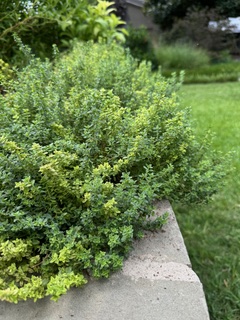
Lemon Thyme in my raised bed

Linda Alexander, Dallas County Master Gardener Class of 2008

Gardening and Dining in “High Style”

Returning from a 5-day trip to Park City, Utah last week, my husband and I weren’t too happy about the Dallas forecast. Discouragement at having to return during the height of summer heat left us agonizing over the cool, crisp air that had filled our time in the mountains.

Upon arrival at the Salt Lake City airport, our wonderful Dallas friends greeted us and immediately suggested a leisurely lunch at The Grand America Hotel near downtown. As promised, lunch on the patio of the Garden Café was a welcoming introduction to our incredible stay. Shortly after lunch, we made our way out to the hotel’s world class gardens which were beautifully dressed in their finest summer attire. A spectacular display of brilliant and colorful blooms filled every inch of garden space. The natural beauty of flowers and plants so artistically arranged was mesmerizing.

Following a relaxing pause as we strolled through the gardens, a short 30 minute drive took us to our final destination, Park City, Utah. At just over 7,500 feet above sea level, this little Wasatch Mountain town is filled with stunning panoramic views. (This was our 8th consecutive summer to spend time with our friends who enjoy renting a condominium in Park City each year for their summer escape from the blast of Texas heat).

Early the first morning, our hosts took us to a roadside market stand that they hoped would have fresh peaches. Unlike Texas, Utah peaches were just beginning to ripen and become available for purchase along with tables of juicy, red tomatoes and freshly picked summer corn.

Driving around town, individual yards, city parks and medians throughout the Park City landscape were in full bloom. Zinnias, marigolds, cannas,  petunias, geraniums, blue salvia, hollyhocks and goldenrod offered a sprinkling of confetti-like color for everyone to enjoy.

August temperatures in the area hovered around the mid 50’s at night with daytime highs in the upper 80’s with the absence of humidity! Plants and humans alike were soaking up the dreamy climate and the refreshing mountain air. Spending time outdoors couldn’t be more enjoyable in this kind of environment. Hope you will take time to enjoy a visual feast of our mountaintop adventure. Wish we were still there but our invitation to come back in 2025 has already been accepted!

Linda Alexander, Dallas County Master Gardener Class of 2008

Yellow Crooked Neck Squash

June 26, 2024

Sliced yellow squash with a bouquet garni of freshly snipped parsley, sage and thyme

Last year was disappointing. My yellow squash limped along with only a few blossoms and then fizzled! But in the world of gardening, we know that last year’s failures can easily be replaced with surprising success in the new year. Hopefully, this photo reveals my sentiments regarding the crop of yellow squash coming out of my garden over the past two weeks. It inspired me to search for the perfect yellow squash soup recipe seasoned with fresh herbs from my garden. 

No surprise, then, that I landed on a recipe from the queen of flavor, Paul Deen. Her recipe called for 1 pound of yellow crookneck squash, but with much more than that amount ready to be harvested, I was motivated to double it and share with family and friends.

My tiny 4” yellow squash plant went into the garden around the last of April. It is now over three feet tall and three feet wide and has supplied me with over a dozen perfectly formed yellow squash, to date. Depending on how much longer it produces, I’m planning on sharing a few recipes in early July from our master gardener cookbook, ‘A Year On The Plate’. 

As called for in Paula’s recipe, I added a bouquet garni made with a sprig each of thyme, parsley and sage from my garden. For a colorful garnish, freshly snipped blue borage blossoms added a touch of texture and interest. The soup was a very satisfying accompaniment to beef quesadillas topped with smashed avocado and snappy salsa. Ymmm!

A bowl of soup with flowers on top of it

Description automatically generated

Yellow Summer Squash Soup with Sage and Thyme

Linda Alexander, Dallas County Master Gardener Class of 2008

Garden Love

Many things connect us to our gardens. We have had a busy spring at The Raincatcher’s Garden.

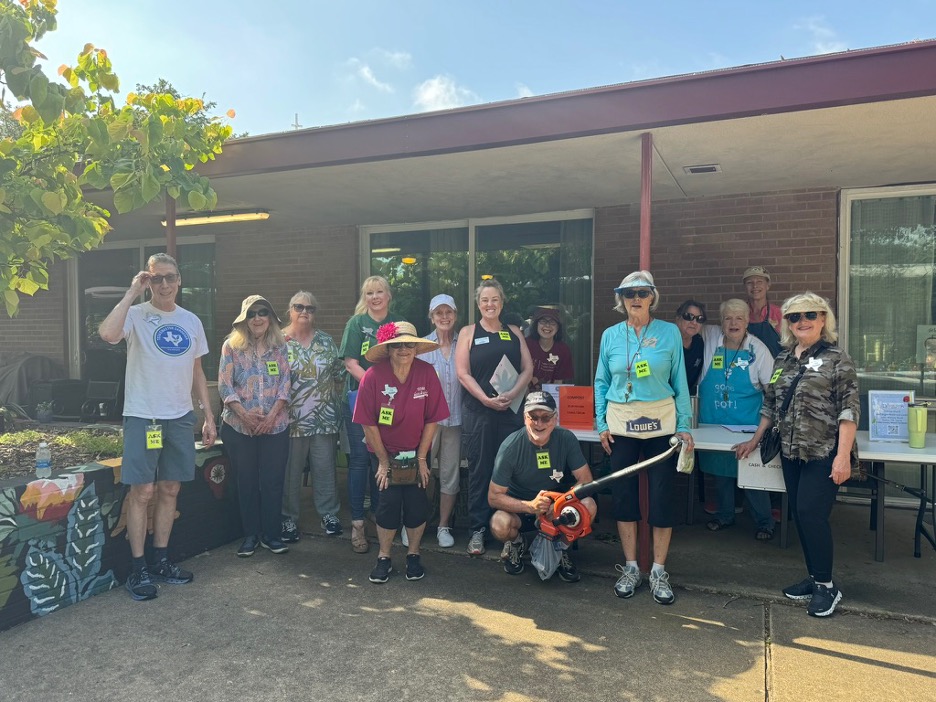
Garden chores become pleasure when we work together. Spring has consisted of weeding, seed collecting, watering and learning from each other and then sharing the fruit of that knowledge with all ages and also agencies that assist others

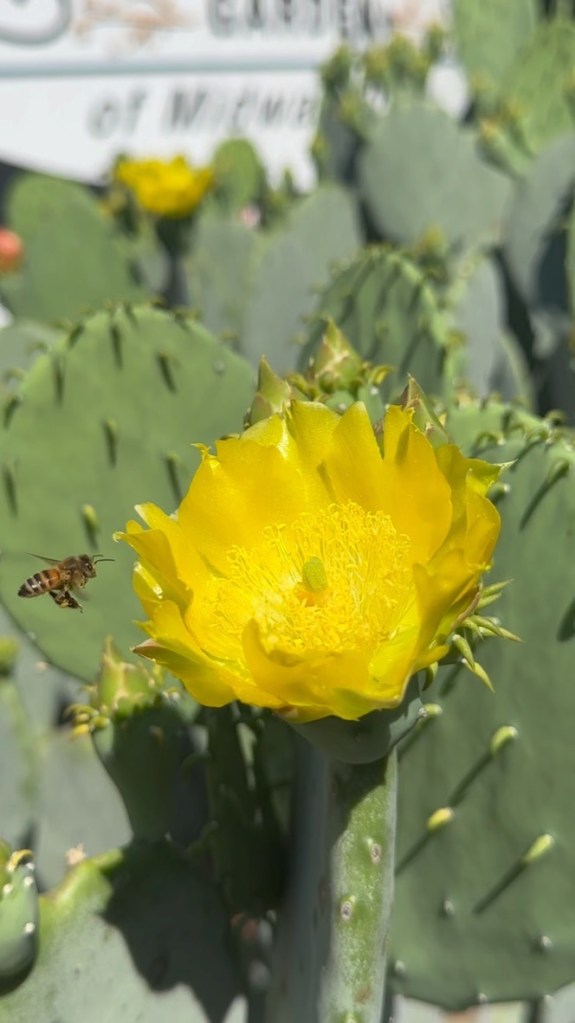
Nature unfolds before our very eyes. This honeybee is about to forage for nectar on a beautiful cactus flower at the Raincatcher’s Garden.

Garden love also includes sharing life, having fun, and learning through our garden work experiences.  

Starla Willis, Dallas County Master Gardener Class of 2011

May 20th is World Bee Day

May 20, 2024

The UN officially recognizes May 20th as World Bee Day. In their opening statement, we are reminded that “Nearly 90% of the world’s wild flowering plant species depend, entirely, or at least in part, on animal pollination, along with more than 75% of the world’s food crops and 35% of global agricultural land. Not only do pollinators contribute directly to food security, but they are key to conserving biodiversity.”

Here are some of their suggestions for ways that we can do more to help make pollinators a priority:

*planting a diverse set of native plants, which flower at different times of the year

*buying raw honey from local farmers

*buying products from sustainable agricultural practices

*avoiding pesticides, fungicides or herbicides in our gardens

*protecting wild bee colonies when possible

*sponsoring a hive

*making a bee water fountain by leaving a water bowl outside

In celebration of our local honeybees, please enjoy these recently captured photos of the bees busy at work gathering nectar and pollen for the hive!

Linda Alexander, Dallas County Master Gardener Class of 2008

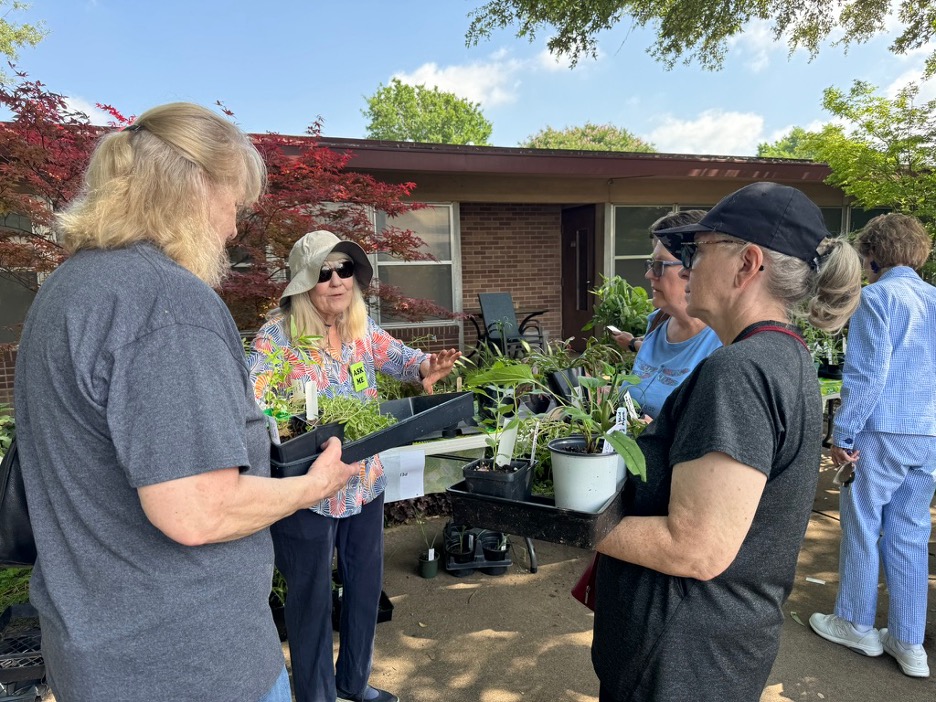
Plant Sale Today at The Raincatcher’s Garden

May 7, 2024

Raincatcher’s volunteers are waiting for you!
Plant Sale today from 10-3.

Annuals, perennials, herbs, peppers, succulents, shrubs, trees, groundcovers, bulbs, houseplants, decorative pots, yard art and so much more available today!

All proceeds go to Dallas County Master Gardener projects. Thank you for your support.

Credit card, check or cash accepted.

Address: Midway Hills Christian Church 
11001 Midway Road 
Dallas, Texas 75229

Ann Lamb, Dallas County Master Gardener, Class of 2005 and picture by Starla Willis, class of 2011

May Dates to Save!

April 19, 2024

If these are the kind of plants and garden pictures you like to see, you will want to save May 7th for our plant sale and May 18th for the Dallas County Master Gardener Garden Tour. All these pictures were taken at The Raincatcher’s Garden last week.

True gardners can’t pass up two things-plant sales and garden tours. As you will see in the information below these pictures, you have the opportunity to make plans for both!

The Raincatacher’s Plant sale is May 7th. Information is right here.

The Dallas County Master Gardener Association 2024 Garden Tour is May 18th . Click here for tickets and information.

Ann Lamb, Dallas County Master Gardener Class of 2005

A Day’s Work in the Garden at Raincatcher’

February 21, 2024

What does it take to keep a garden like The Raincatcher’s Garden producing? Dedicated leadership, hearty volunteers and planning are essential componets. This week Beverly sent out this list from the vegetable patch. It’s inspiring and reminds us of what we can do in our own gardens as spring comes towards us.

Harvest lettuce, spinach, and broccoli;

Hand water the raised beds, corral, and greenhouse (but not the donation garden);

Start sunflower and marigold seeds in trays;

Direct sow climbing nasturtiums near the raised bed trellises;

Start lettuce, spinach, collard greens, and chard seeds outside in the corral after amending with Espoma fertilizer;

Transplant lettuce from greenhouse if ready;

Make melon cages, bring heavy gloves and wire cutters if you have them;

Keep working on the Morgan building and greenhouse.

Ann Lamb, Dallas County Master Gardener Class of 2005 with Beverly Allen, Dallas County Master Gardener Class of 2018

A Peachy Year Ahead!

January 3, 2024

A Chritmas gift from a dear friend tied up with a fuzzy peach ornament


How could we enter into the new year without knowing the big announcement from Pantone? In 1999, the Pantone Color Institute created the color of the year educational program to engage the design community and color enthusiasts around the world in a conversation around color. Their hope is to inspire us to look at color in a different way. It is interesting to read about the process Pantone global color experts follow to arrive at the selection each year. You can do that by going directly to their website at pantone.com.

For 2024 we are encouraged to “Embrace the Warmth”. They suggest that we look for ways to nurture ourselves and others. To help guide us along in our yearning for closeness and connection, the Executive Director of the Pantone Color Institute, Leatrice Eiseman, made the following announcement on December 11, 2023.

Pantone’s Color of the Year for 2024 is Peach Fuzz, a velvety gentle peach tone whose all-embracing spirit enriches mind, body and soul. Officially, the number you need to know is PANTONE 13-1023. For like-minded gardeners, it is gratifying to learn that they selected a perfectly peachy nature-inspired fruit.

As a Texas girl, my mind went quickly to a lifetime of memories revolving around fresh peaches. If you are like me, the thought of ripe summer peaches makes this color choice especially meaningful. Going forward you can expect to find Peach Fuzz making an appearance in the design industry, fashion industry and in home décor. Also, it appears that Peach Fuzz will open the door to a wide assortment of lipstick, blush and contouring options. Nail color options will be available, as well.

Just last week I embraced that fuzzy feeling by ordering a pair of Peach Fuzz tennis shoes from Cariuma. If all goes well, I’ll be wearing them on one of our summer trips to the Texas Hill Country where we hope to visit a ‘pick your own peaches’ roadside orchard.

If you feel inspired to start growing your own peach trees this year, go to aggie-horticulture.tamu.edu for a full list of varieties recommended for our area. Wishing you all the joys of a heartfelt peach hue that enriches mind, body and soul.

Here are a few of our favorite peach recipes from ‘A Year On The Plate’ 2016 Master Gardener Cookbook.

Number One Favorite Peach Recipe – Fresh Peach Pound Cake

Peach Tree Tea Room Old Fashioned Peach Cobbler

Peach, Watermelon and Tomato Salad with Mint and Basil

Linda Alexander, Dallas County Master Gardener Class of 2008

IN SEARCH OF PUMPKINS

December 29, 2023

As composters for the Raincatcher’s Garden  of Midway Hills, we are continuously looking for ingredients to make compost.

During the spring through fall, we find green grass, leaves, coffee grounds, kitchen scraps, etc. to add to our compost piles.

In November we are blessed with the remains of Halloween and Thanksgiving decorations—PUMPKINS!  During bulk pick-up weeks we scrounge the neighborhoods looking for the elusive pumpkins and gourds.  Rather than allowing them to rot in the dump, we chop them up and add them as the GREEN (nitrogen source)ingredient of compost.  The BROWN (carbon source)ingredient of the recipe is, of course, are the dried leaves that are falling everywhere.  The BLUE ingredient is water.  The CLEAR ingredient is air.  The last is TIME.  

Result—BLACK GOLD—also known as compost.

This year we “harvested by the side of the road” six pickup loads of pumpkins, gourds, bags & bags of leaves, some grass, and even a bale of hay.

And, at our last stop—THE GREAT PUMPKIN!

Cindy and the great pumpkin!

As winter progresses, we will chop, grind with the mower, mix in water, turn piles as they heat up and cool down (temperatures up as high as 160°).  As we turn the piles, the chunks begin to change shape and color.  The unseen microbes and fungi consume and break down everything making pieces smaller and smaller, and of course,darker—hence , BLACK GOLD.  This process takes time—sometimes as long as 2-4 months, depending on how energetic the humans are in turning the piles.

When we add compost to our heavy clay soil, we lighten it, allowing the plants to absorb the nutrients in the compost, allowing better drainage, thus producing more healthy plants and feeding everything.

Cindy Bicking, Dallas County Master Gardener Class of 2006