My Jewels of Opar is in a mostly shady area. Next spring, as new plants emerge, they will be relocated to a place in my garden that receives full sun until late afternoon.
In May of 2021, we shared an article with our readers about Jewels of Opar, a lovely plant that is both edible and ornamental. Click here for the original article which includes helpful growing information.
This time, we’ve chosen to “drop in” for a quick autumn visit showcasing this adorable little beaded wonder in full bloom. You may remember that Jewels of Opar, sometimes referred to as Pink Baby-Breath, produces wands of tiny, pink star-shaped flowers followed by jewel-like fruits in shades of pink and orangish red.
Enjoy this photo of a simple arrangement filled with Roselle Hibiscus leaves gracefully surrounding Jewels of Opar in its colorful autumn wardrobe!
Linda Alexander, Dallas County Master Gardener Class of 2008
Along with Van Gogh, who described yellow as “wonderful”, many people associate yellow with feelings of warmth, happiness and positivity. And still others say that yellow’s vibrant, cheerful color evokes feelings of joy, optimism and enthusiasm.
Yellow is one of the oldest colors in history. Cave paintings over 17,000 years old reveal that the yellow pigment from ochre was readily available in prehistoric times. In ancient religions, yellow was considered a sacred color. Like gold, yellow was seen as eternal, imperishable and indestructible. Today, yellow flowers are used in gardens across the globe adding vibrancy and beauty to landscapes in a multitude of imaginative ways.
From the dainty blossoms of French marigolds to the dramatic trumpet-shaped beauty of squash blossoms, yellow flowers add brightness to the garden. And don’t overlook the decorative nature of edibles such as yellow pear tomatoes dangling in clusters like drops of sunshine clinging to the vine.
Whether edible or just enjoyable, bright yellow flowers, fruits and vegetables have a magical way of lighting up our landscapes. Additionally, those radiant blooms attract a host of beneficial pollinators to the garden including bees, butterflies and hummingbirds. So, why not add some late September sunshine to your garden? Let the video photos inspire you to create a natural environment filled with yellow for all to enjoy!
Top Ten Yellow Flowers and Vegetables (Observed/Photographed) in the Metroplex:
Echinacea and Rudbeckia/Black Eyed Susan (Both plants are sometime referred to as “coneflowers” but Rudbeckia is widely known as a “Black-Eyed Susan”)
Main Differences:
*Echinacea flower petals tend to droop and curve downwards. Echinacea features a spiky, prominent central cone that may be green, brown or orange. Leaves are typically smooth.
*Rudbeckia petals usually extend straight out from a flattened or slightly raised central cone. Leaves are described as hairy or fuzzy.
(Rudbeckia ‘Sunbeckia’ Juliana)
Zinnias
Sunflowers
Daylily
Hibiscus
Cannas
Lantana
Yellow Pear Tomatoes
Cucumber and Yellow Squash Blossoms
Marigolds and More (Day Lilies, Calendula, Canna, Dill, Fennel, Gerbera Daisy, Nasturtium, Yarrow)
*Overall, it seems there is an absence of marigolds and a profusion of coneflowers; flower beds once brimming with marigolds have transitioned to the daisy-like look of coneflowers.
*Coneflowers have become soldiers of the landscape. They have an authoritative presence with their strong, upright stems and dramatic, bold color.
*Generally, coneflowers are used as “pocket” flowers. Nestled against large boulders or in “waves” of color in a natural setting, they offer countless possibilities.
*Yellow is an underused color in gardens throughout the metroplex.
*Purple is the most complimentary color to use with yellow flowers.
*The majority of yellow flowers need a minimum 6 to 8 hours of direct sun daily.
From the professionals, some tips for using yellow flowers in the garden:
Fine Gardening-Yellow blossoms carry farther, shine brighter, and remain visible longer in the evening than flowers of any other color except white.
Proven Winners-Yellow is an attention-grabbing color that makes a cheerful statement in the landscape.
Gardening Know How-Yellow flowers/plants as a single color scheme greatly enliven the garden, especially when the area is small or shaded, brightening and enlarging the garden space.
Linda Alexander, Dallas County Master Gardener Class of 2008
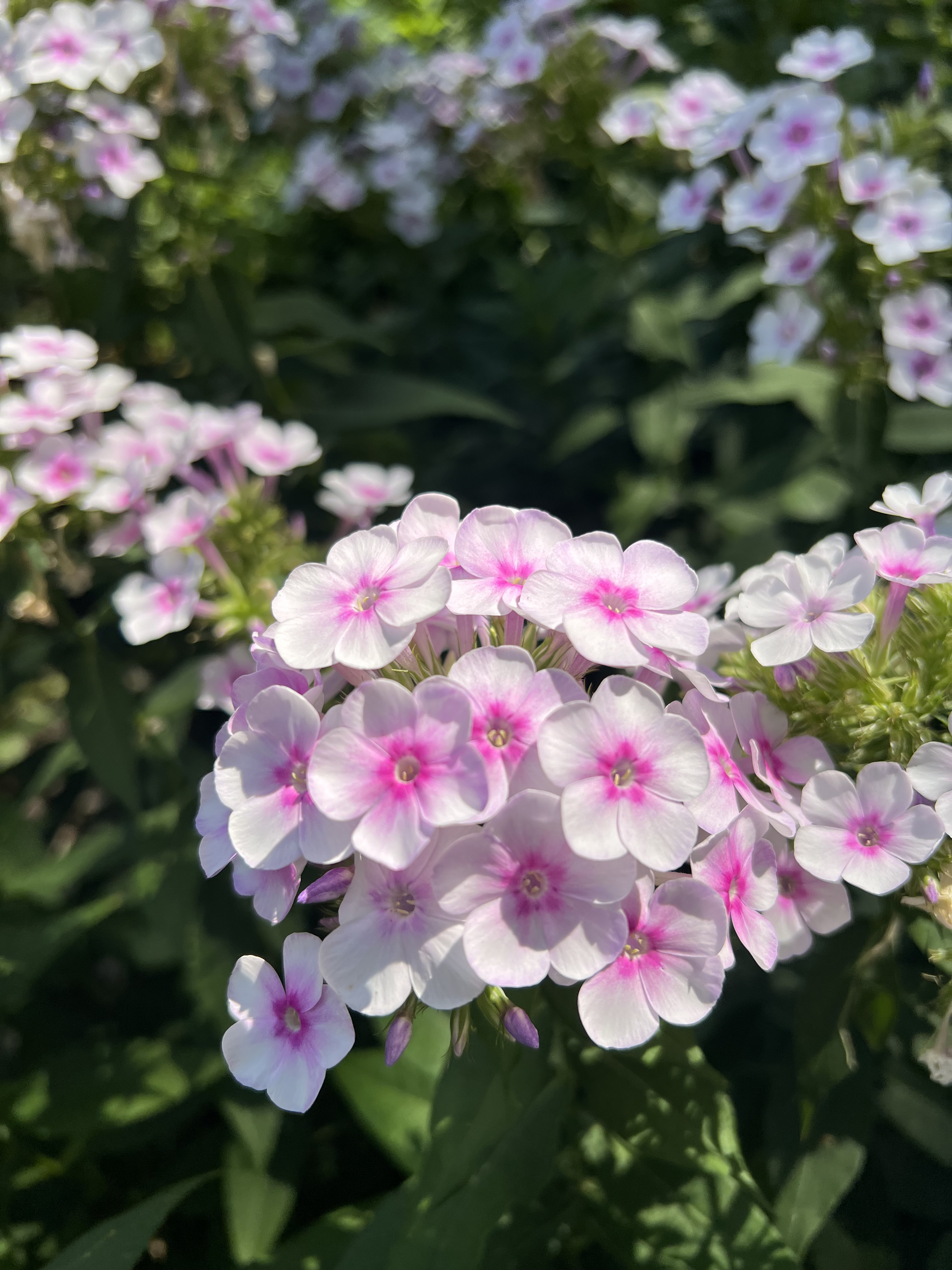
Everyone’s garden needs a leading lady. Have you considered Summer Phlox as yours? This tough, heat tolerant perennial makes a 3″ tall show stopping clump that lasts from early summer through fall. Texans make sure to select the Victoria Phlox shown above or the John Fanick cultivar. They have both been named to the Texas Superstar Program which means they will perform well in your garden and after all they probably grew at your grandmother’s homestead.
Phlox paniculata ‘Victoria’ at my house with boxwood and white Turk’s CapNeighbor’s PhloxPhlox along a garden path at Linda’sClose up, note the many tubular flowers forming a panicleRaincatcher’s Phlox ‘John Fanick’
Oh, I so enjoy the colors and flowers that bloom during the early summer and one that I’m enjoying of late is bee balm. Its magenta flowers atop a tall stalk are a feast for pollinators. In the wildflower area of Raincatchers, a purple rocket-like plant is putting on a show – Bee balm? It looks nothing like the other, but I recall it being bee balm too. Can it be? And then there’s Lemon Balm with its bushy habit and ability to travel readily. Looks like it’s time to clear up this mystery—
Upon further investigation, these similar names create a climate for confusion Bee balm, Lemon Balm, and Lemon Bee Balm -the looks of the plants are distinctively different but all are related to the mint family.
eBee balm, also called Wild bergamot, has several varieties – some perennial and others annual. Monarda is a genus of flowering, plants from the mint family. Lamiaceae didyma or fistulosa (zones 4-9) are perennials. Its cheery pink flowers are located near the Edible landscape greenhouse and stands 24-48 inches tall, and can spread 24 -36 inches. It blooms late spring into summer in full to part sun in well prepared beds with good drainage. Bee balm has magenta, pink, purple, red or white flowers that are 2-3-inch across with slender tubes looking flowers on a tall stalk.
Bee Balm
If your garden needs a smaller specimen, pinch the stalks in early spring, or purchase a shorter variety. Deadheading and cutting makes way for more flower production. Cut the stalks close to the ground in late fall and they will return in the spring. Powdery mildew might make an appearance if it’s a wet spring, but it won’t harm the plant.
II was purchased at the DCMG Plant Sale at Fair Park and then a dear friend gifted some she started from seeds (Northaven Gardens). It spreads some, but not difficult to control. The bees, Butterflies and hummingbirds are delighted. Mark and Cynthia Jones captured this picture of a moth (white lined sphinx moth I think) feasting on the variety Peter’s Purple.
Lemon BEE Balm (Monarda citriodora) is a herbaceous annual of the mint family, native to Central, southern America and Mexico and is commonly found in pastures and prairies. It will thrive in full sun, and in poor, rocky, or sandy soils. Can you see where this gets confusing? It Blooms in late Spring early summer about the same time as the Bee balm is blooming. This was found in our wildflower area at the garden along with blanket flower, long after the bluebonnets, Indian paint brush, and Engelmann daisies have said their adieus (goodbyes) To confuse even more, Lemon Bee balm is also known as purple horsemint or lemon mint. It has lemon scented spiky clusters of varying shades of lavender. You can find this in seed packets and often in wildflower mixes.
Lemon Bee Balm
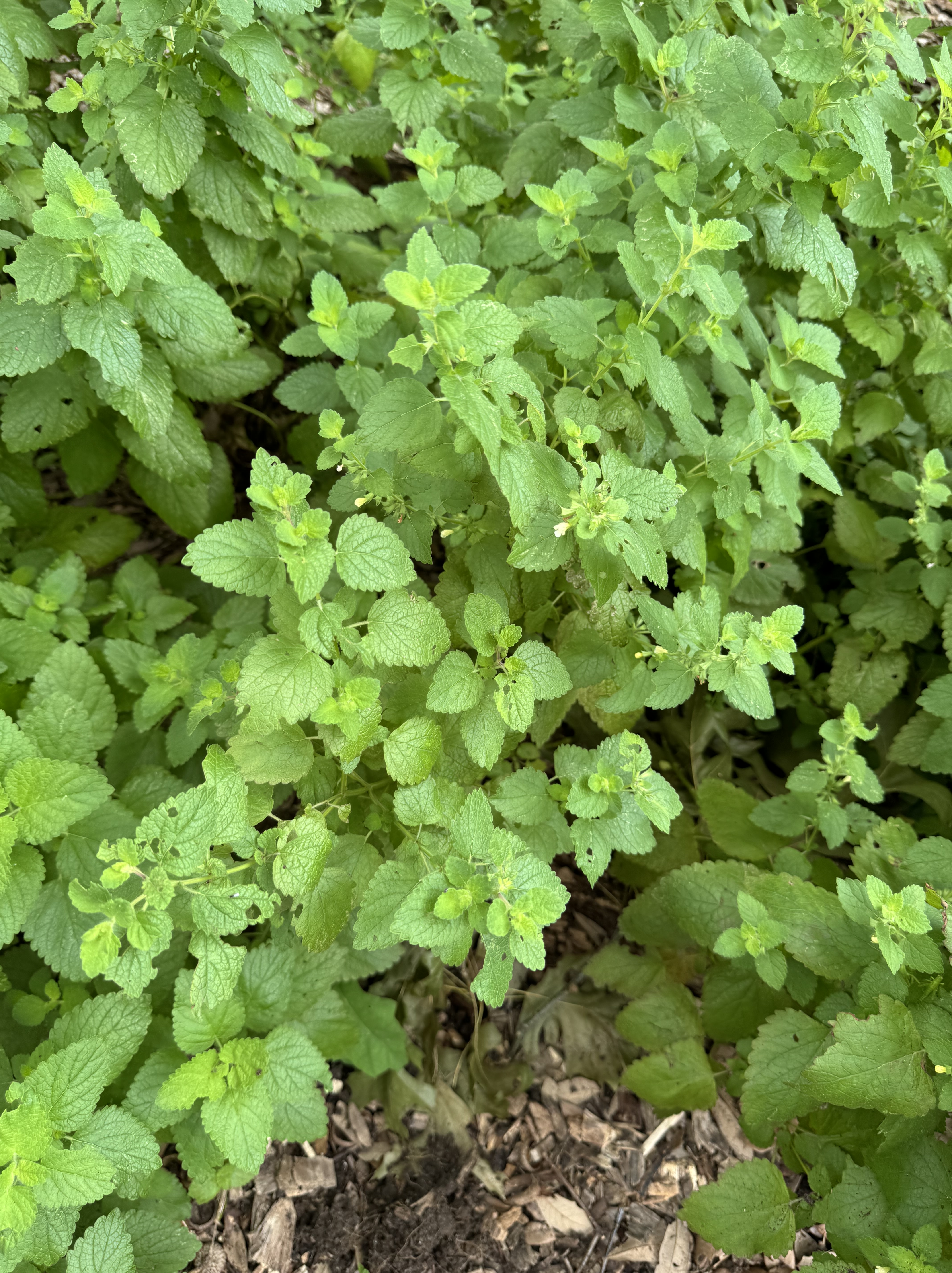
Lastly there is Lemon Balm, another member of the mint family, (Melissa officinalis). Native to Europe, It can be found in many places, but most recently has been thinned from the Hügelkultur in the Edible landscape. It grows in a clump, with wrinkled leaves that have a scent of Lemon. The flower is an insignificant spiky pale-yellow cluster. This herb is said to produce calming effects. It seeds and spreads readily and can get 3 feet by 2 feet. It consistently returns in the garden. It can be obtained in the herb section of garden centers or possibly a garden friend would gift you a start.
Lemon Balm
Now that that mystery is put to rest, figure out a way to use one or all of these beauties in your landscape.
Starla Willis, Dallas County Master Gardener Class of 2011
Video of sphinx moth, courtesy of Mark and Cynthia Jones, Dallas County Master Gardeners Class of 2013
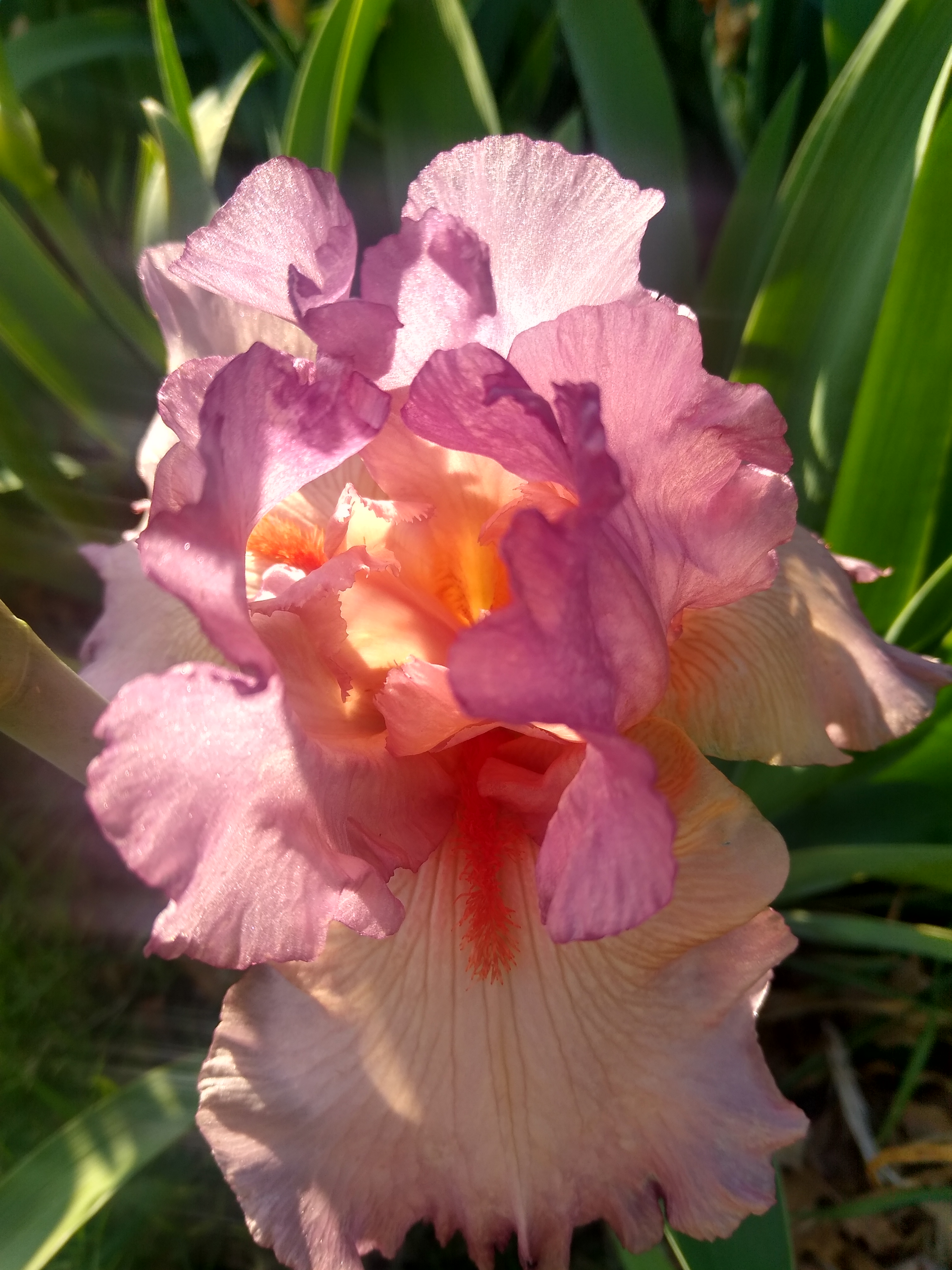
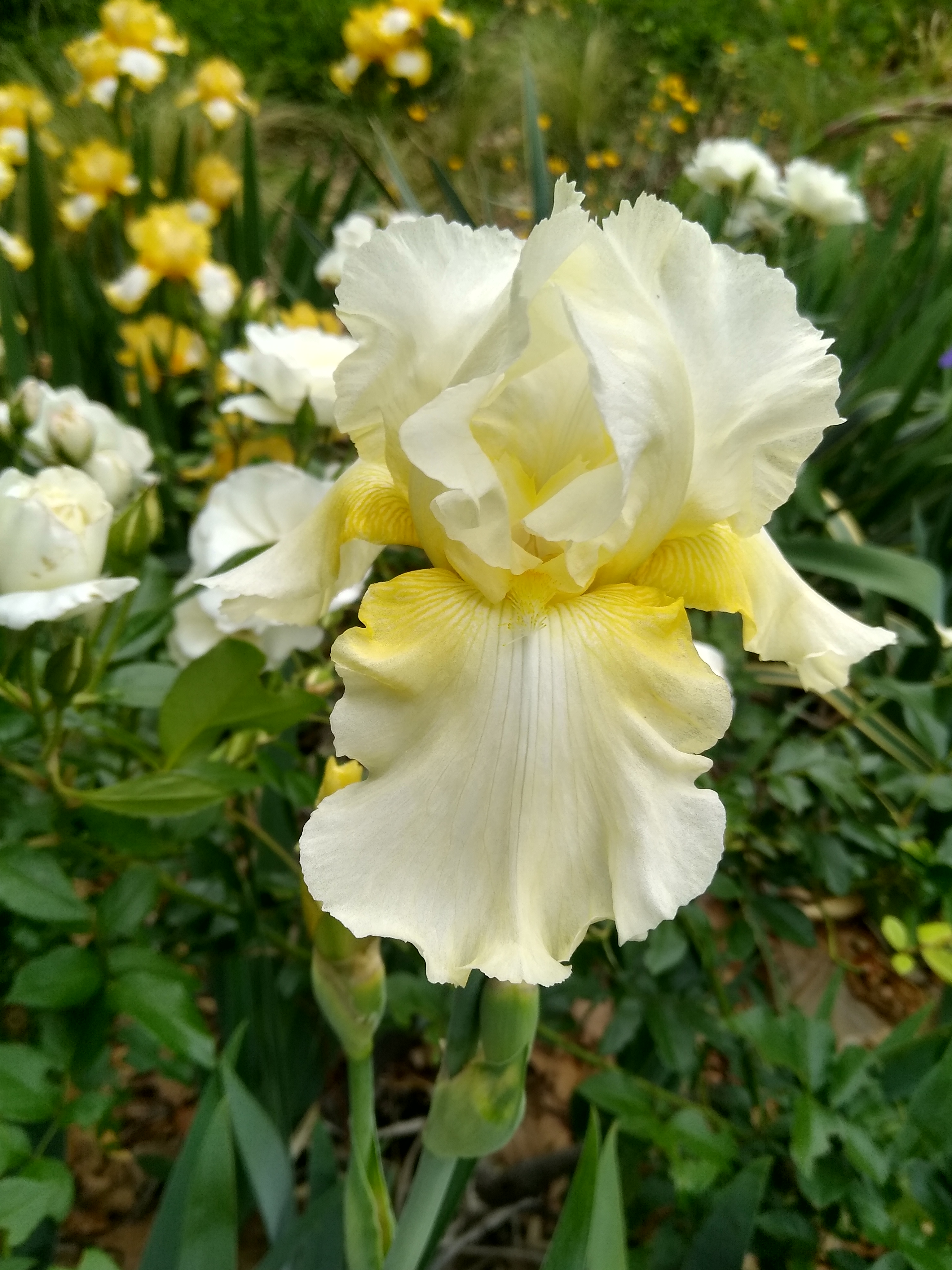
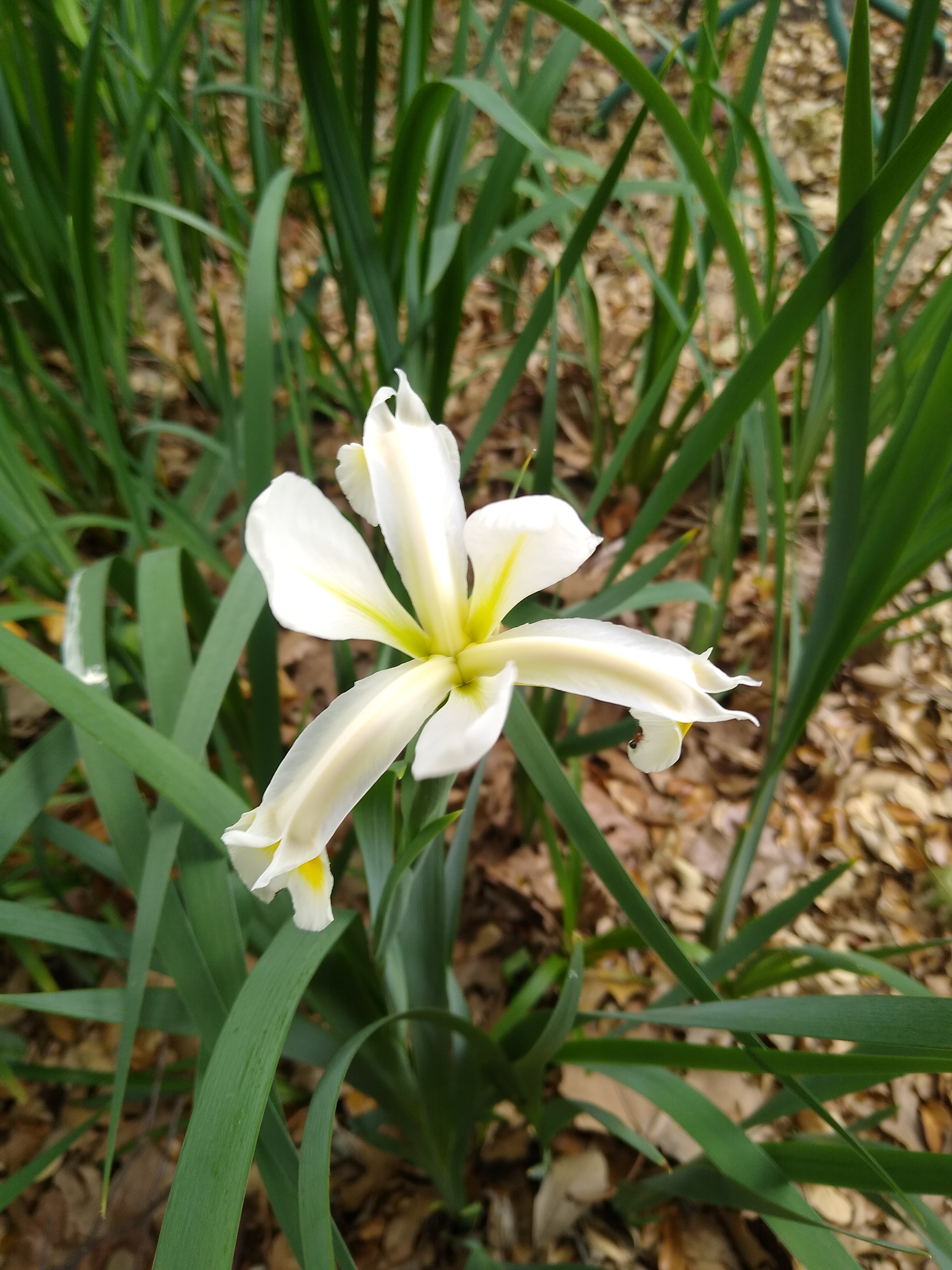
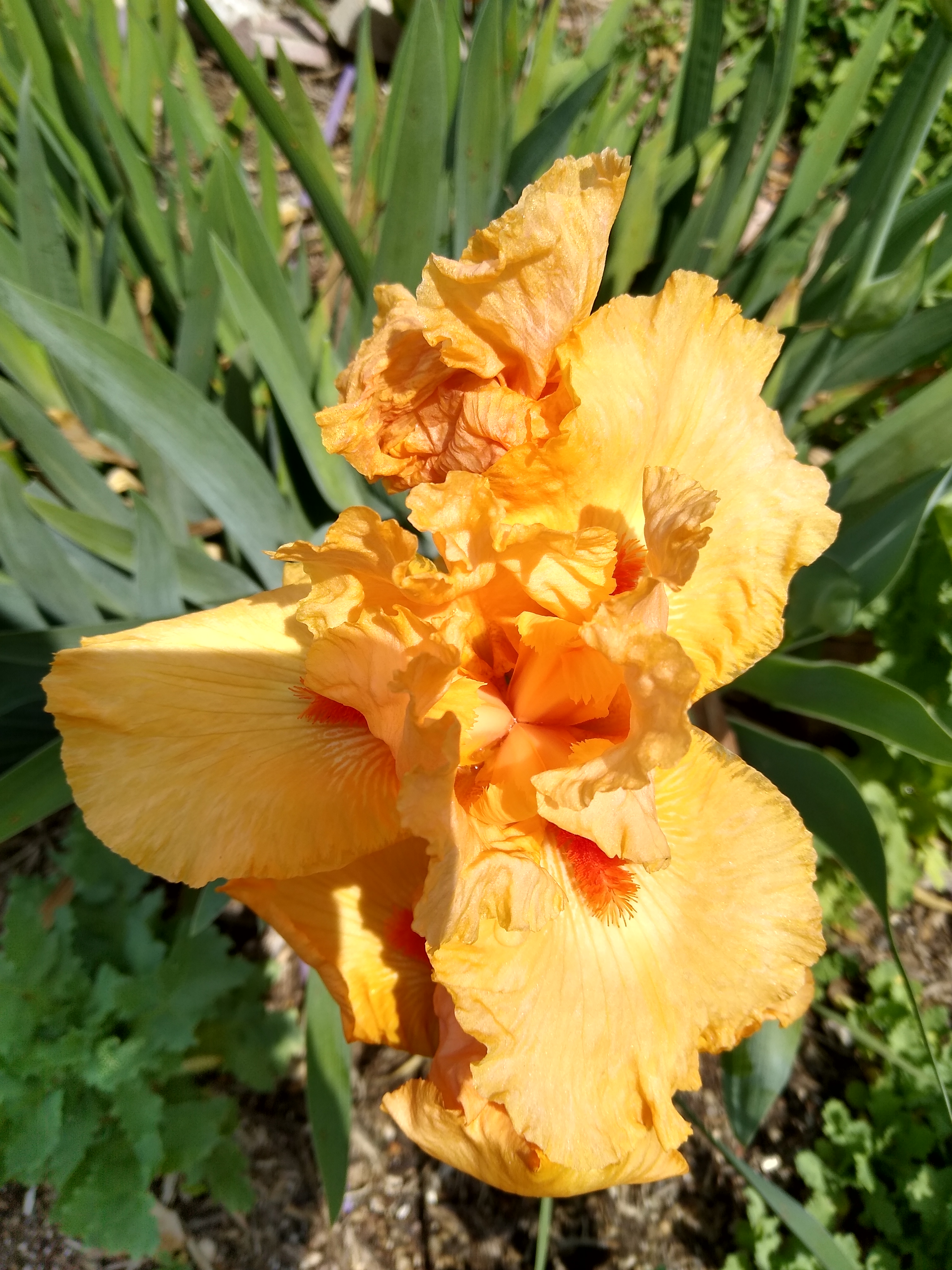
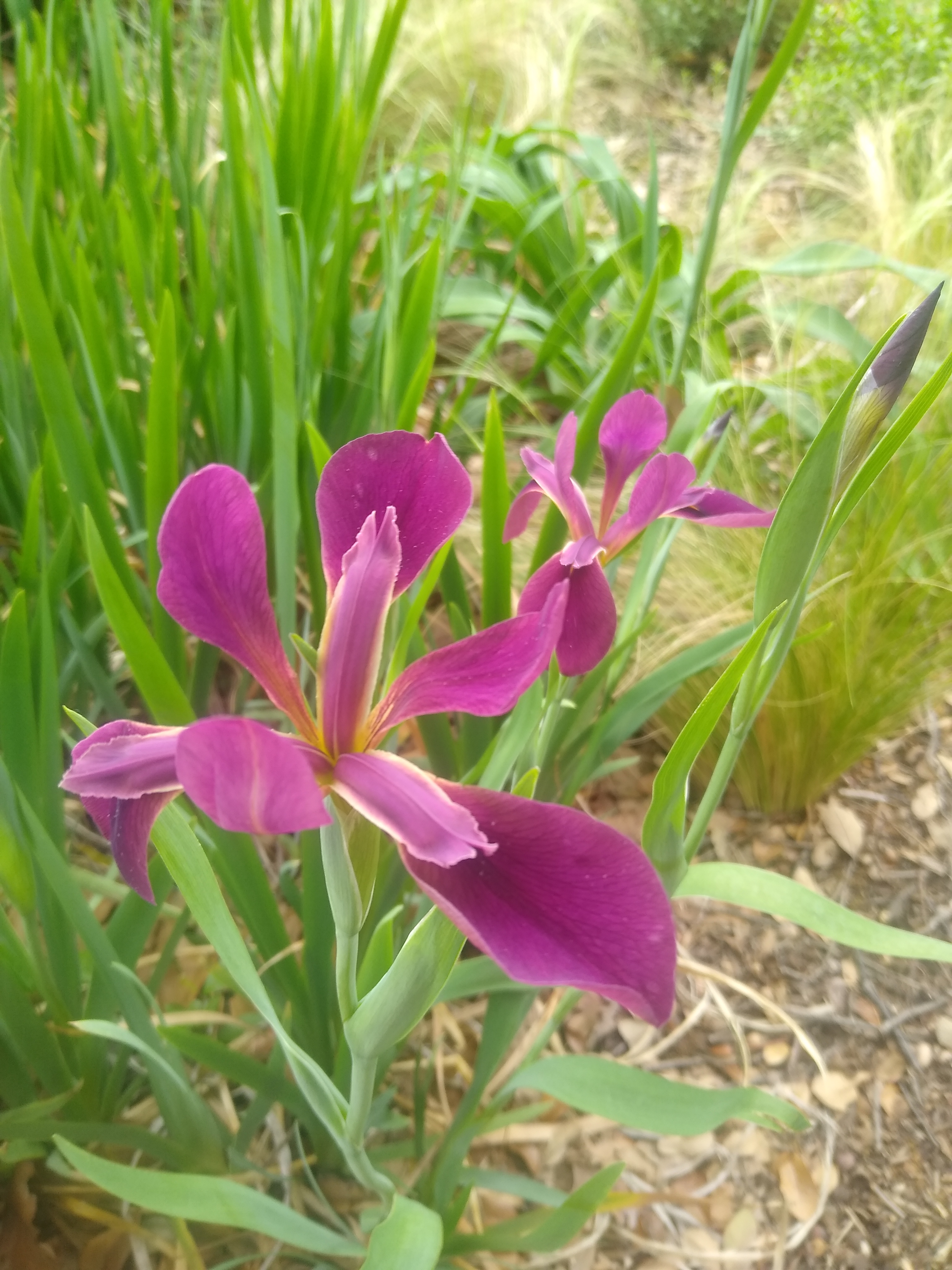
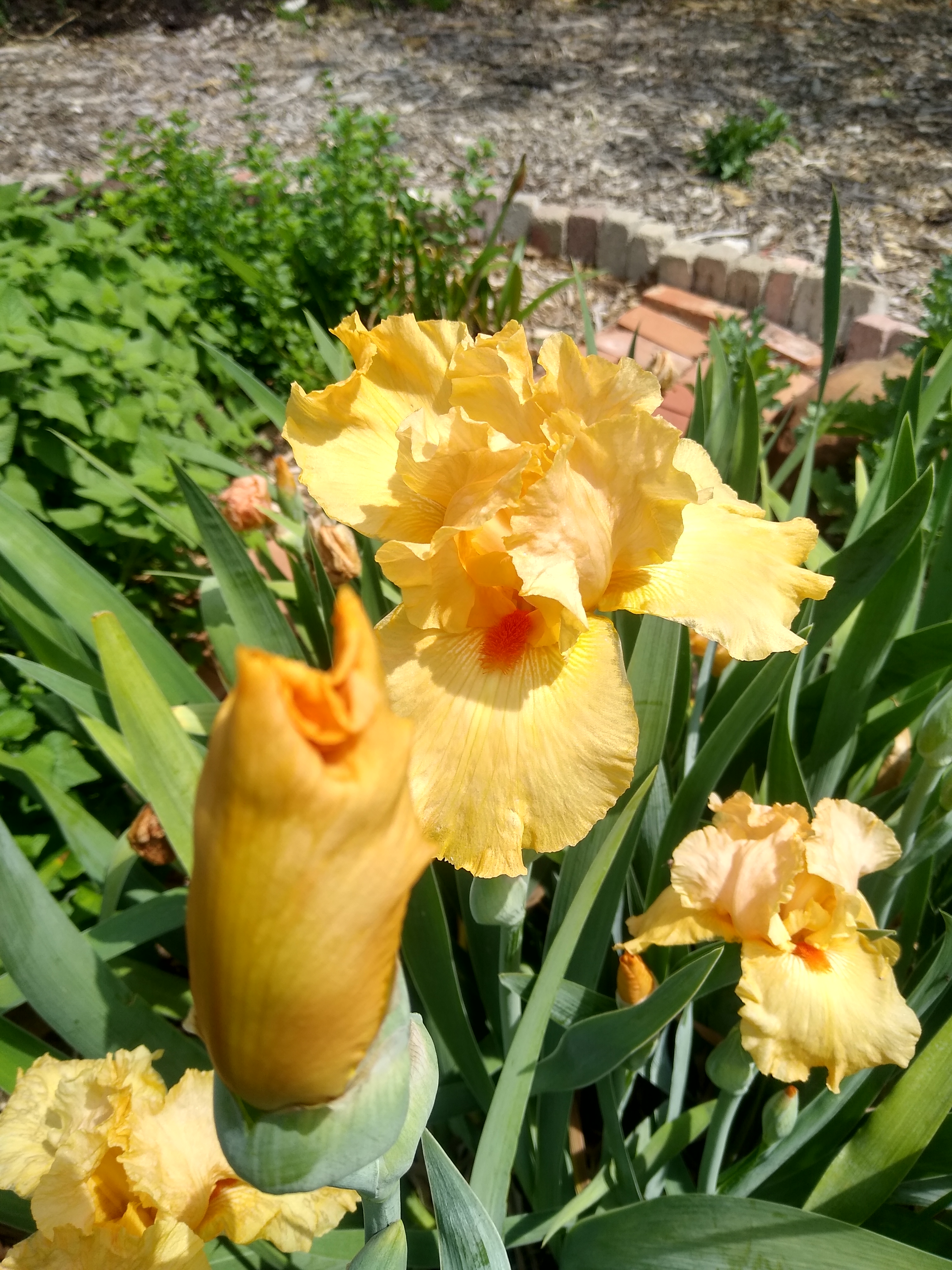
Who doesn’t love a beautiful iris plant? It’s one of the first plants to bloom in the spring and it is rugged, reliable and very easy to grow. The iris is named for Iris, the Greek goddess of the rainbows and personal messenger for the Gods. It is a long lived perennial that needs a minimum amount of care.
There are almost 250 species of iris and they come in a multitude of colors. With many different types and colors available, there is a perfect iris for every garden. The most popular iris is the bearded iris. Other popular varieties include Siberian and Japanese irises, Louisiana irises (which are native to North America), and Dutch hybrids. Bearded iris get their name from the “beard” that runs down the center of the cascading petal.
The rhizomes need sun and air to keep them dry. If they are covered with soil or mulch there is a chance the plant will rot. Some say to plant the bearded iris rhizomes “with their face in the sun” leaving the upper part of the rhizome exposed. Iris plants need at least 6 hours but preferably 8 hours of direct sun. The best time to plant iris is early fall. This will give the plant enough time to settle into the ground and start rooting before the first frost. They should be planted 12–18 inches apart. If you have different types of iris cultivars, plant each type together in groups of 3 to 7 plants for a greater color impact.
After iris plants have finished blooming, cut the flower’s stem down to the base but do not trim the leaves. The plant’s foliage carries on with photosynthesis in order to generate energy for next year’s growth and flowers. It is best to divide iris plants in the fall.
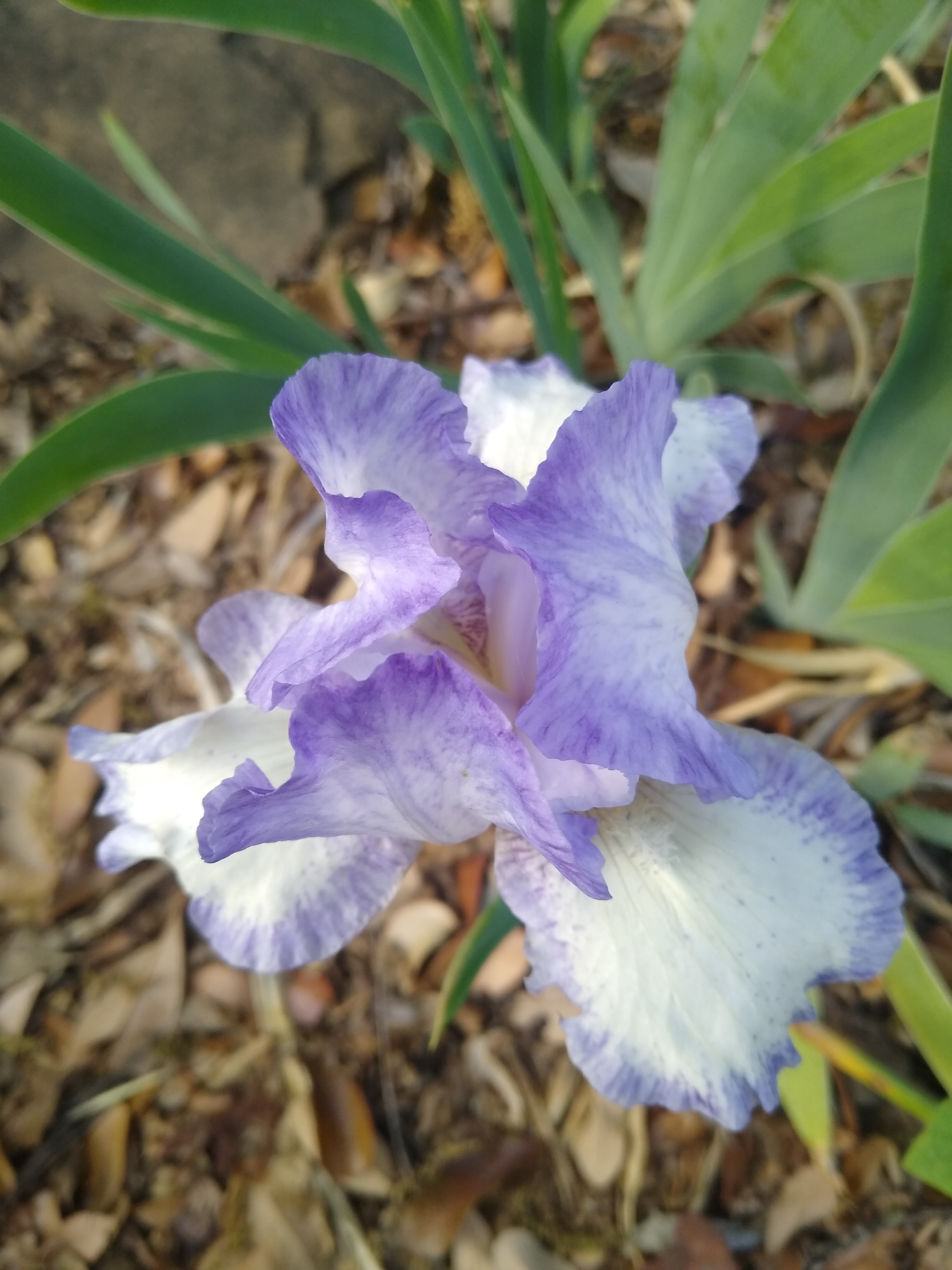
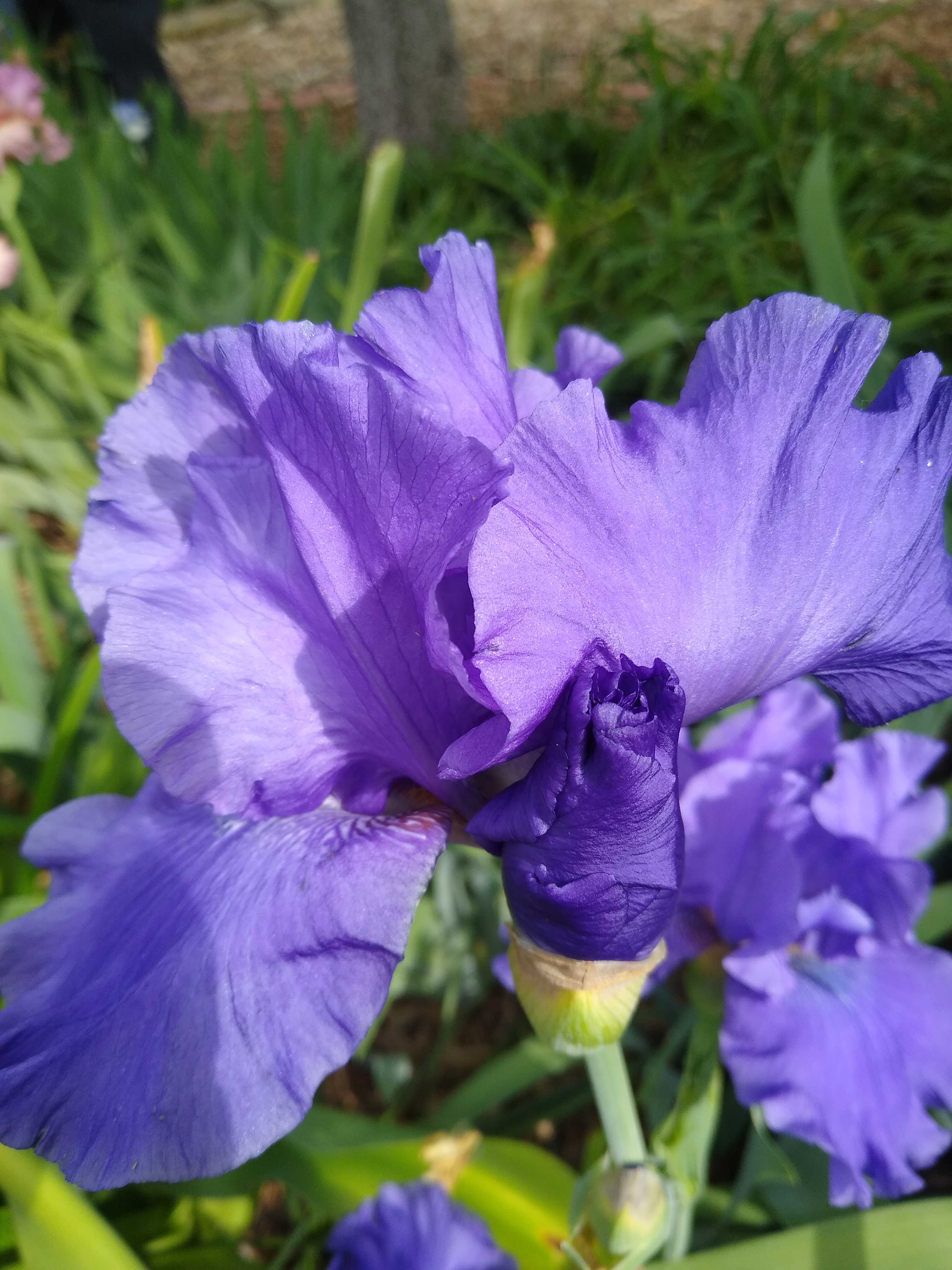
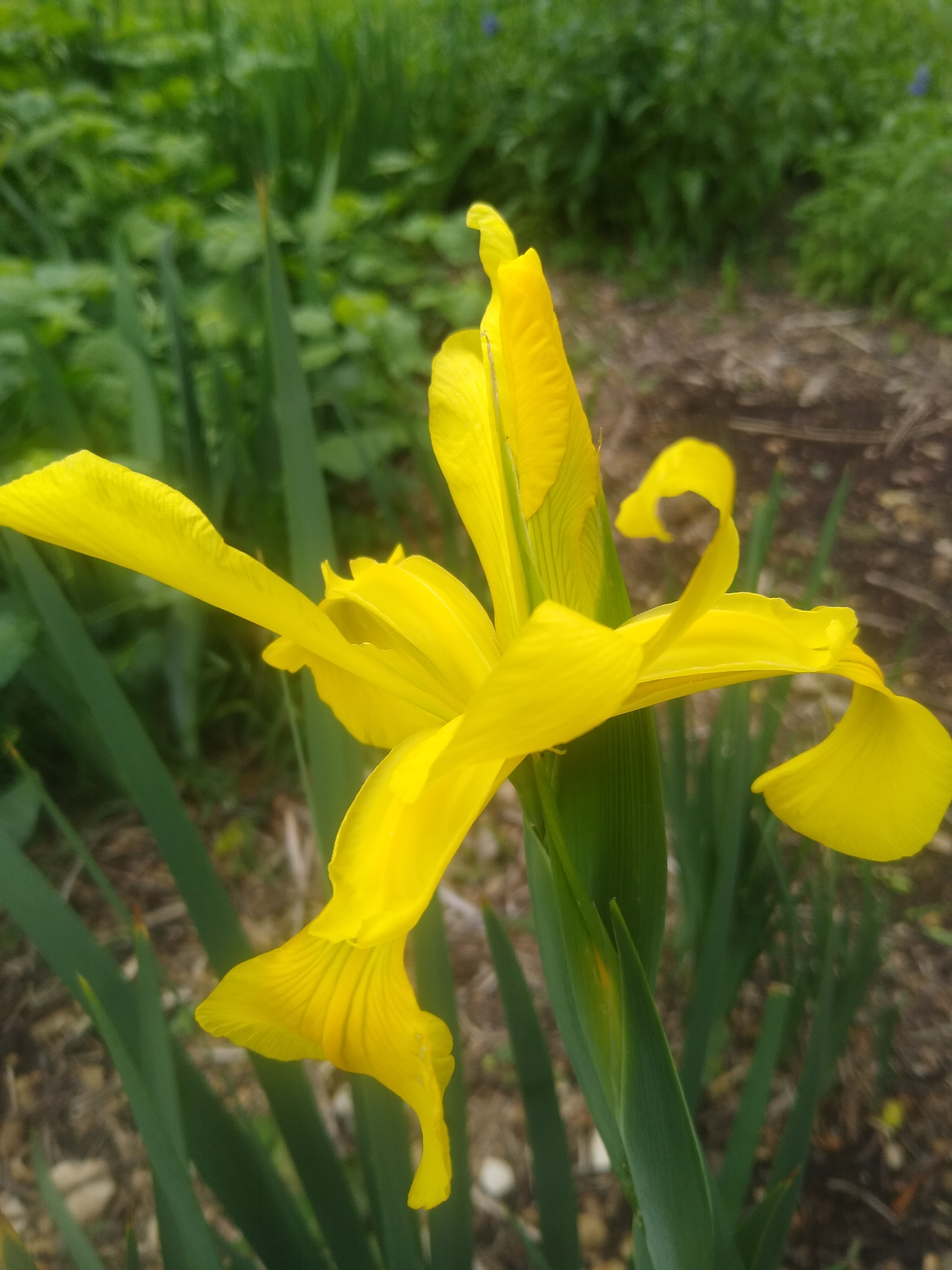
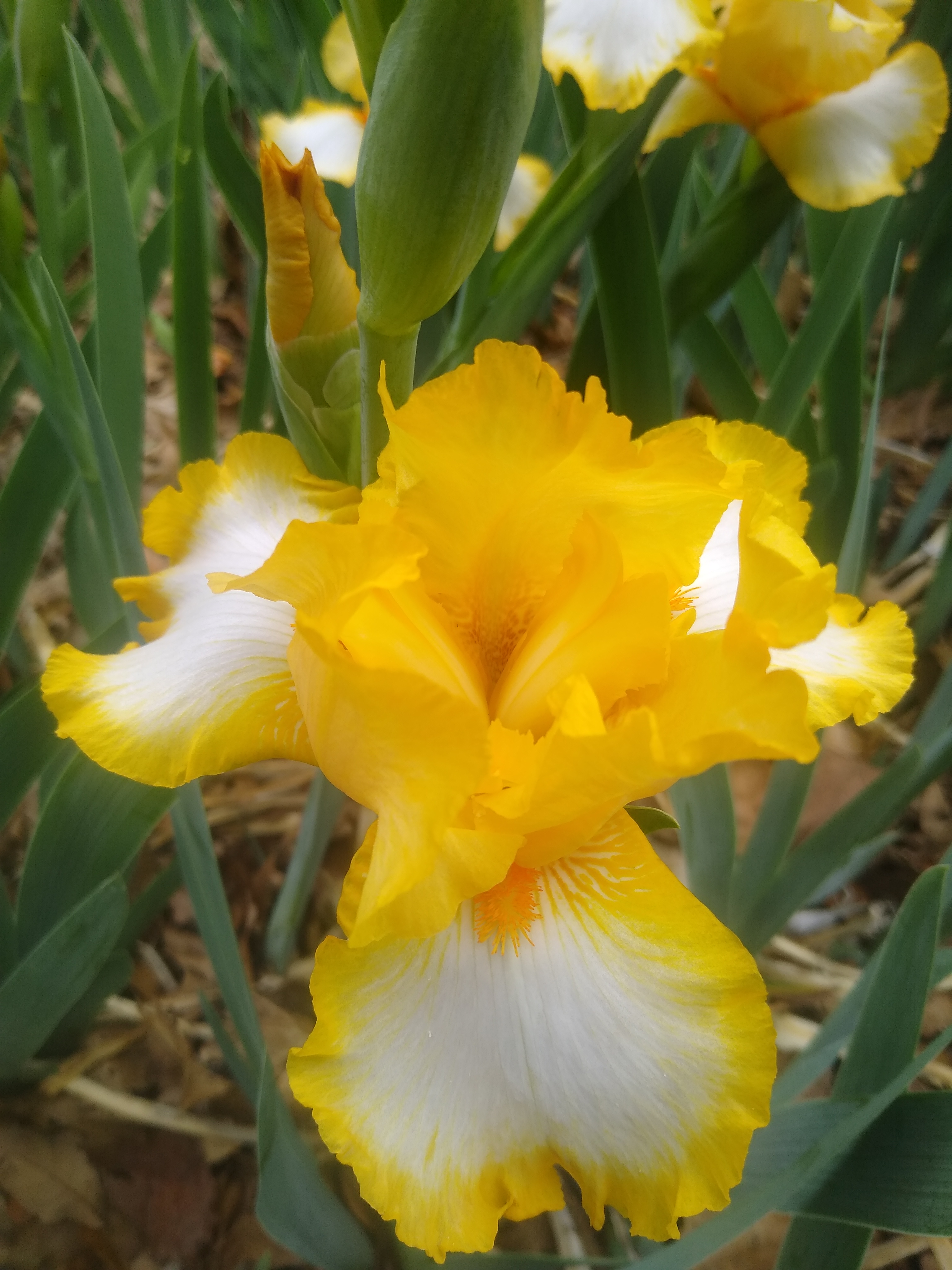
We are lucky at Raincatcher’s Garden to have the most beautiful collection of iris so I hope you enjoy the photos taken at the garden.
Or better yet, visit the garden in the near future and see these beauties in person! If you have iris in your garden, share them with friends and neighbors and help spread the joy of iris!
Linda has done such a beautiful job teaching us how to bring our gardens indoors. We have several more arrangements to show you. Feast your eyes and learn about the plants that you can grow in your own backyard.
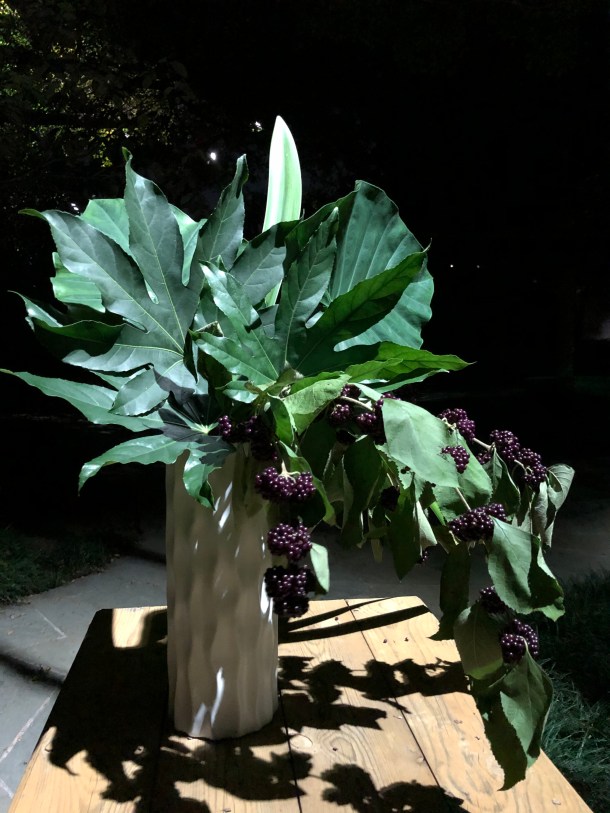
You might think of this arrangement as something akin to the “moody blues”. Drooping, berry laden branches create a somewhat mystical scene captured in this nighttime photo. Aralia and elephant ears leaves lend the right amount of weight needed for balance. FYI…this arrangement is best used in an outdoor setting. Beauty berries inside the house aren’t worth the worry.
Beauty berry growing in the Raincatcher’s courtyard
Grow It, Use It –At Raincatcher’s we are growing Mexican Beauty Berry, commonly known as black beautyberry, in a shaded part of the courtyard that receives some morning sun. It has a sprawling habit with woody, multi-stemmed branches and large, toothed, green foliage. Leaves appear in late April followed by small pinkish-white flowers in July. Late summer and into September the dark mulberry fruit on arching stems makes a dramatic statement in the garden. Wildlife, including a variety of birds, raccoons, squirrels and some rodents, enjoy it as a food source. Master gardeners at Raincatcher’s rush to get berries harvested ahead of the critters so that our jelly making can begin. After making multiple jars, we are sold out for this year.
“A tisket, a tasket, a green and purple basket”. My slightly modified version of this late nineteenth century nursery rhyme was inspired by a trip to the aster bed in the north garden at Raincatcher’s. Just a few snips later a simple, green, ceramic container filled with purple asters served as a perky little centerpiece for the dinner table.
Asters exploding with blossoms in our fall garden at Raincatcher’s
Grow It, Use It – Daisy-like flowers blooming from August until early November are superstars in the fall garden. As other flowers are fading, asters give us their most spectacular performance. It is recommended that potted nursery specimens be planted in a loamy, well-draining soil in full sun sometime in the spring. These fast-growing perennials will be ready to put on a good fall display in their first year.
The bold strokes of a Russian painting are repeated in a treasured collection of chinoiserie pieces. Mexican Mint Marigold is nestled inside a cherished blue vase from my late grandmother. A delft blue vase brought back from Holland and given to me by my mother holds a small bouquet of fall ageratum. A trip to Istanbul, Turkey yielded this unique hand-painted, glazed vase holding a cluster of small blue flowers. A combination of purple fall asters and orange zinnias draws your eye to similar colors found in the painting. Lastly, while on a trip to the mountains of West Virginia, our visit to a glass-blowers studio resulted in the purchase of this adorable trio of miniature vases. Individual Mexican Mint Marigold blossoms give them a stronger presence.
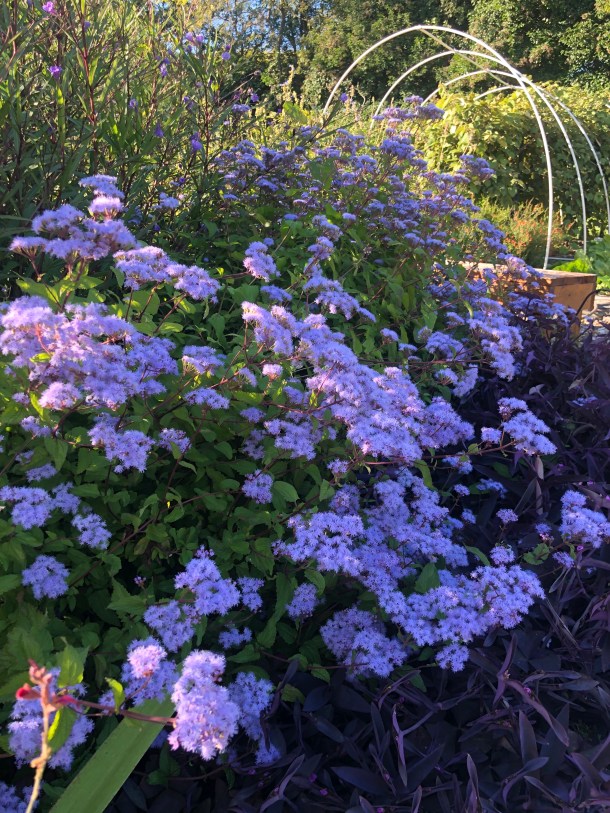
Blue Ageratum, love it!
Grow It, Use It – Blue Ageratum (Mist Flower, Wild Ageratum) is a vigorous perennial bearing fluffy-looking, bluish-purple flowerheads. It grows in a large stand, reaching 2 to 3 feet. Bloom time is July – October. Sow seeds after last frost. Attracts bees. Orange zinnia is an old-fashioned annual that is easy to grow. Seed directly into the garden after the last spring frost date. Summer blooms continue into fall. Wonderful cut flower to use in garden-type arrangements.
An old, tarnished copper vessel gives flowers and foliage in this arrangement a place to shine. Except for Firebush, all plant material listed above has been carefully gathered and rearranged into this spectacular fall display. If possible, take a tour of the Raincatcher’s Garden of Midway Hills in the next few days where you will see most of these plants in their best fall wardrobe. Don’t delay as some are starting to fade while others will soon succumb to the colder nights of November. And finally, remember to use your garden to grace your home with the gifts of the season. Let nature be a treasured friend.
Firebush glowing
Grow It/Use It-Firebush is a perennial semi-woody shrub that can grow about 5-10 feet tall. It’s bright red-orange tubular flowers bloom from late spring till the first frost. They attract butterflies, including zebra longwing and gulf fritillary, as well as hummingbirds. Plants grow well in a range of soils, both alkaline and acid. Firebush will grow successfully in part shade or full shade but likes full sun. This trouble-free shrub does not have insect or fungus problems and thrives without fertilizer.
Linda Alexander
Dallas County Master Gardeners love having visitors (masked and socailly distanced) at our garden. We are located on the campus of Midway Hills Christain Church, 11001 Midway Road, Dallas, Texas.
Come take in the beauty of our fall garden and learn about our carefully selected plants.
It was the sweet, anise like fragrance of Mexican Mint Marigold that drew me into the garden on the morning of October 18th. Brushing up against the plants, I yielded to the temptation and immediately tasted one of the delicate yellow blossoms surrounded by slender green leaves. My garden journey was just beginning.
Landscapes bursting with brilliant color, leaves gently tumbling down from trees and pumpkins spilling out from the porch and into the yard welcome fall in all its glory. I find myself truly enchanted, wanting the experience to linger beyond this moment in time.
Spending one blissful day after another outdoors renews my spirit and encourages me to immerse myself fully in the shimmering days of October and November. I’m immediately drawn to the garden where beauty abounds throughout. Join me on a creative journey of discovery among the flowers and foliage of the season.
Bringing the natural world indoors reminds me, once again, that Autumn’s gifts never fail to bring happiness to my home. From soft whispers of golds and ochre to vibrant shades of burgundy and orange, fall arrangements lend themselves to a more simplistic style. Gathering your treasures is almost as joyful as placing them in a cherished vase. Let nature speak to you in a soft, sweet seasonal whisper. Savor every precious sight, smell and color of this magical season.
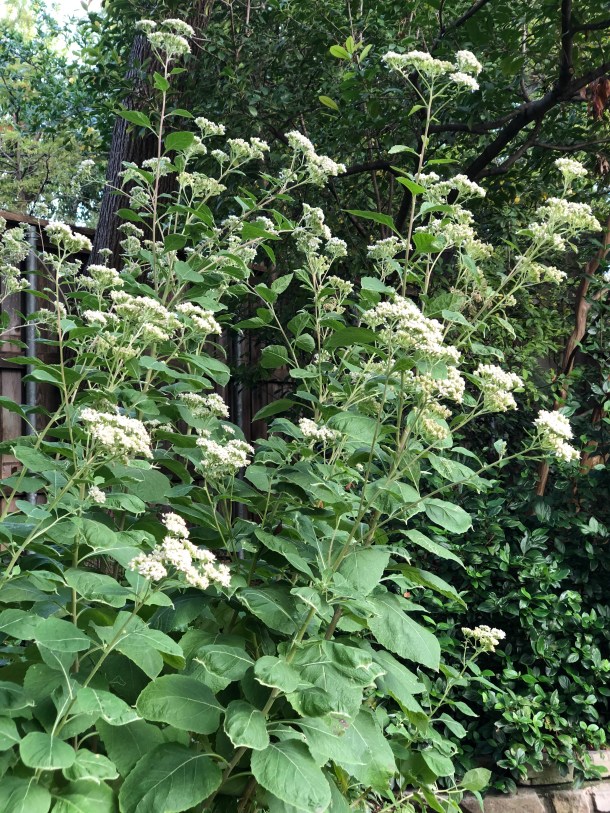
My first experience with frostweed was in 2008 as an intern in the Dallas County Master Gardener Association. It was a “give away” during one of our classes. For the past twelve years it has continued to grow in my garden.
Frostweed growing in the garden
Grow It, Use It – Frostweed is a lovely perennial plant native to Texas and many other states. It is a member of the Sunflower Family. Frostweed grows from 3’-6’ and is covered with white disc-like blooms from late August until November. It is an exceptional nectar source for butterflies like Monarchs and Great Purple Hairstreaks. It grows well in dappled shade.
During the month of October Red Rubin Basil delivers a vibrant splash of deep purple in the garden. Paired with purple-veined kale leaves in a mustard colored French olive pot, the only elements needed to complete the picture are two glasses of robust Pinot Noir and freshly cut Black Mission Figs. Cheers!
Grow It, Use It-Plant Red Rubin Basil in April and watch the colors intensify as the months pass. A location with morning to mid-day sun followed by dappled shade in the afternoon will reward you with that spectacular fall foliage. Bees and butterflies will visit the spiky blossoms until the first frost ends its growing season.
A simple bouquet of Mexican Mint Marigold surrounded by the bold, deep red and purplish savoy leaves of Red Giant Mustard pair perfectly in an unassuming pedestal vase.
Grow It, Use It – Mexican Mint Marigold can be planted in the garden after the danger of frost has passed. It tolerates many different soil types but must have good drainage. Plant it in a location that receives early morning to mid-day sun. The distinctive anise flavored leaves can be harvested throughout its growing season from spring through frost. The real show-stopper attraction begins around late September when bright yellow, marigold-like flowers attract migrating butterflies and other pollinators. Mexican Mint Marigold is a perennial that usually freezes to the ground in winter but reappears in spring.
Red Giant Mustard gets two bonus points; it has good cold tolerance and is more insect resistant than other varieties. Start outdoors in late September and continue growing until late spring. Plant in partial shade. Enjoy its beauty as a dramatic landscape plant but harvest the spicy mustard flavored leaves for eating.
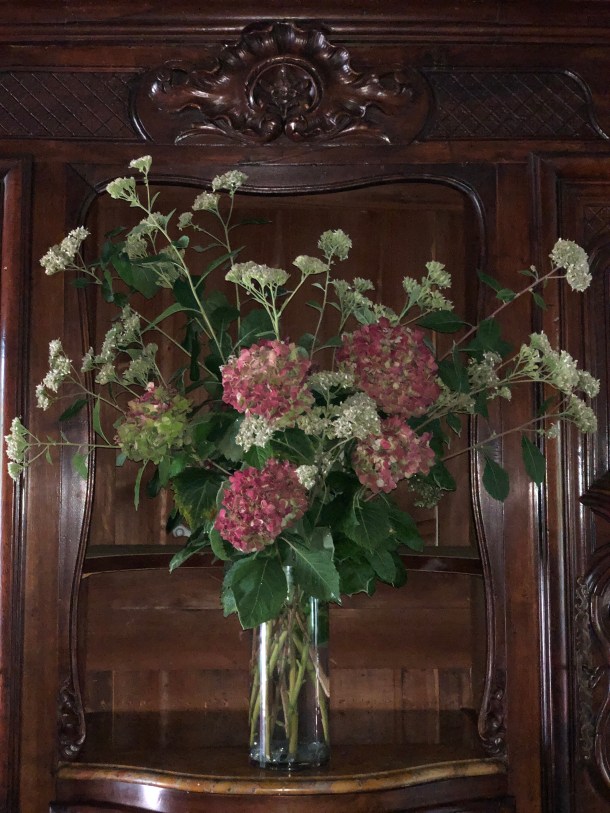
When the glossy dark-green leaves of Japanese Aralia began to lose their color, consider using them in unexpected and unusual ways. As the browning tips gently began to curl and turn upwards, create a sense of drama by giving each uniquely faded leaf its place within the arrangement.
Aralia and Dried Hydrangeas
Aralia growing under an arbor
Grow It, Use It – Japanese aralia is grown around the world as a cultivated plant. Enjoy adding a tropical feel to your landscape by using it as an understory plant beneath trees or large shrubs. Plant it in rich, moist soil that drains well. Aralias prefer part sun to shade and will typically grow to around 8 feet. Try to avoid afternoon sun which may scorch the leaves. Flower stalks with creamy flowers followed by black berries appear in late fall or winter.
Freshly squeezed rosy grapefruit juice is your invitation to come for a perfectly planned fall brunch in the garden. Cascading branches of ‘Rose Creek’ abelia create a relaxing and peaceful environment where you are embraced by nature. Dreamy blush colored blossoms found in this simply elegant tabletop setting create a calming effect.
Abelia ‘Rose Creek’ at Raincatcher’s Garden
Grow It, Use It – Monrovia best describes this variety of abelia as having showy clusters of small, fragrant, white flowers that emerge from rosy pink sepals in summer. It is best planted in rich, well-draining soil in a location that receives full sun.
Come visit our blog again Wednesday morning to see the remaining photos plus a spectacular ‘Grand Finale’ arrangement. We encourage you to stroll through Raincatcher’s anytime this week to experience the full seasonal beauty of our garden.
Raincatcher’s volunteers have always loved Iris. We have some beautiful blue iris in our garden that came from our orginal garden, and we have a happy surprise for you. We are dividing iris and have some to sell! Abbe Bolich, Dallas County Master Gardener, gives an iris tutorial below. By the way, Abbe will become our new Dallas County Master Gardener Association President next year. We are thrilled she will be sharing her abilities with the Association, which supports the Dallas County Master Gardener program including Raincatcher’s. She follows a long line of selfless, capable Dallas County Master Gardener presidents.
Plant sale information will be below the video.
RAINCATCHER’S PANSY AND PLANT SALE
Raincatcher’s Garden of Midway Hills is pleased to offer pansies at a fantastic price for your fall and winter landscape color. We are also offering iris and crinums divided from our own collection, as well as plumerias generously donated by Carol Walsh in memory of her husband and 2020 DCMG Intern, Ed Walsh.
Payments for irises, crinums and plumerias may be brought when you pick them up. Please bring a check or exact change if paying in cash. Volunteers will not have cash on hand to make change due to safety restrictions.
All pansies and plants will be staged at Raincatcher’s for you to pick up from the west parking lot. Raincatcher’s is located on the campus of Midway Hills Christian Church at 11001 Midway Road, Dallas, TX. We will offer delivery in the Dallas area for large orders of 10 flats or more. Please indicate “delivery requested” in the comments section of the slot , and we will notify you to make arrangements. You may pick up your order on Tuesday, 11/3, from 9am until 2pm or contact the garden to make other arrangements for pickup. Volunteers will be available to load your order using strict social distancing and safety measures. You are asked to remain in your vehicle and please wear a mask.
Sometimes a problem caused by carelessness can be solved while teaching a useful lesson.
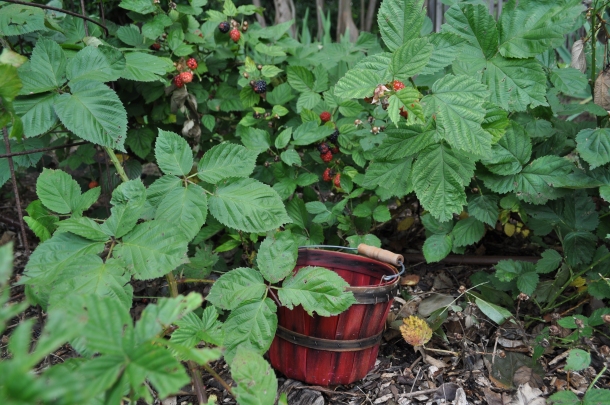
There is a blackberry patch in the Raincatcher’s garden. Blackberry jelly is a real treat. The first step in making blackberry jelly is naturally—picking the berries. This isn’t quite as easy as it might seem but gardeners are tough and volunteer to do the picking.
Above: Blackberries ready to pick at Raincatcher’s
So, with a sturdy stick and rosetender gloves I, one of the tough volunteers, was able to pick a full bowl of nice ripe berries. I took off the gloves and laid down the stick and prepared to sack up the harvest—of course—I spied a whole cluster of ripe berries in the very center of a vine. I had to add these to the bowl and felt pretty sure I could carefully grab them—which I did—but then my berry filled hand got caught in the thorns and ripped a strip of skin.
Above: Blackberries and their thorns
How could thorns cause such a wound—it was bleeding a surprising amount—blood running down my arm. Yikes, I was there alone so this was a problem to solve myself. I was just thinking I would have to use my shirt to apply pressure when I remembered that yarrow has been traditionally used to stop bleeding. The garden has plenty of yarrow so I picked a bunch of leaves and held them to my thorn wound. Amazing!! The bleeding stopped—and my hand felt much better.
Above: yarrow leaves used to treat a wound
When I got home I looked carefully at my hand. There was no blood seeping at all. This called for a bit of investigation.
The true name for common yarrow is Achillea millefolium. Millefolium means thousand leaves—makes sense—but why achillea? The hero Achilles from Greek mythology is said to have used this herb to treat the wounds of soldiers in the Trojan war.
Now the truth of this is lost in the mists of time but— scientific studies have found an alkaloid—achillene—that facilitates blood clotting and activates blood platelets.
Now we do not practice medicine in the garden nor would we ever recommend using plants in place of medical advice and/or treatment. Its also very important to be sure of a plants identity before applying it to your skin.
That said—its also good to find out how plants have been used and valued by our ancestors. Plants are amazing and powerful—not just pretty. The traditional wisdom of using yarrow to stop bleeding was a lesson learned. Of course the other lesson—don’t think you are smarter than a blackberry vine!
The subject of genetics is fascinating. Will a blue-eyed Daddy and brown-eyed Mommy produce a child with blue eyes or brown? With daylilies you can marry the favorite characteristics of one variety to another and hope to produce your perfect “child.” Daylily hybridizing is a little bit about sex and a lot about science. Jim Dempsey, a Dallas County Master Gardener since 2007 and retired city of Dallas forensics expert lets us in on daylily details.
Jim, did you start hybridizing daylilies in 2016?
Yes, 2016 was the first attempt at hybridizing at Raincatcher’s.
Above: Jim Dempsey talking to Beth Sonier about daylilies at Raincatcher’s.
Do you use diploids or tetraploids?
I prefer tetraploids because the flowers are usually larger and better color.
And how do you know which one it is, by the name of the daylily? Usually, when you buy from a grower or catalog they will tell you. Unfortunately, you cannot cross a diploid to a tetraploid.
Do you have a goal in mind when hybridizing? Larger flowers, brighter colors and longer blooming periods.
Above: Peach Daylily with ruffled edges
Are you looking for a more vibrant color, more ruffles or extended bloom time? Yes, to all of that. We do have a large yellow daylily of interest that that has a long bloom period.
Above: Yellow Daylily purchased by Jim. He was told he could name it and so he did: TBNL (to be named later)
When do you collect seeds? Collect seed pods just before they crack open and then let them dry out before planting.
Do you have a favorite?Merely Mystical – peach with yellow ruffled edges
Thank you, Jim, and thank you Starla for the pictures and videos.