Category Archives: Fall

The Oxblood Lily

On New York runways this fall, the trendy color is oxblood.  You will see leather jackets, wool pants, purses, and boots drenched in oxblood.   Last spring the color was tangerine tango, next year it might be beechnut  green.

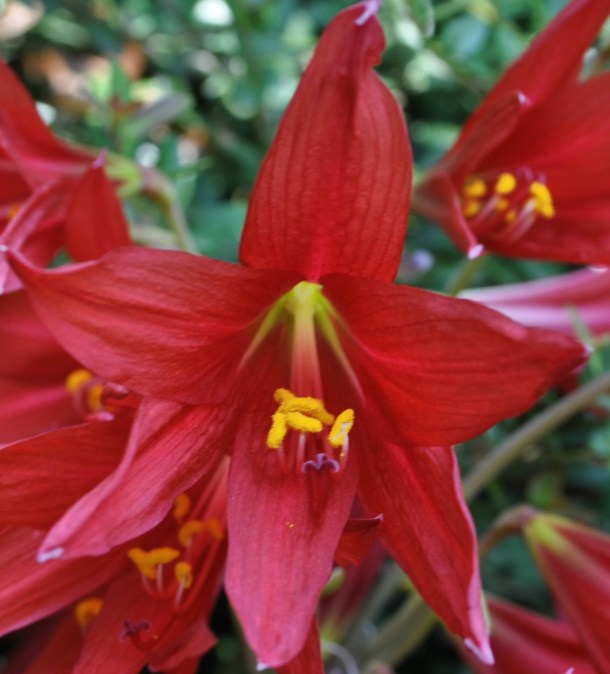
Not to be out done by the fashion world, Texans have been enjoying Oxblood Lilies (Rhodophiala bifida) for over 150 years. Think back in Texas history to the 1840’s when German settlers immigrated to Central Texas for the early cultivation of this bulb.  Like these settlers, Oxblood Lilies are tough and tenacious and thrive all over the Central Texas area on old farms and abandoned homesteads.

Oxblood Lily Close Up

Unlike fashion dictates for 2012, the oxblood lily will endure for generations and mulitply.  Plant them in part shade or full sun. The red blooms are short lived but will last a little longer with afternoon shade.  They bloom in early September following rain and are also known as School House Lilies.  After the flower dies; thin, deep green leaves will continue until early summer.

For a small investment, your garden can enjoy the bright hues of the Oxblood Lily.  Plant them in the fall through December 1.  Next year what people are wearing will change but your garden will always be in style.

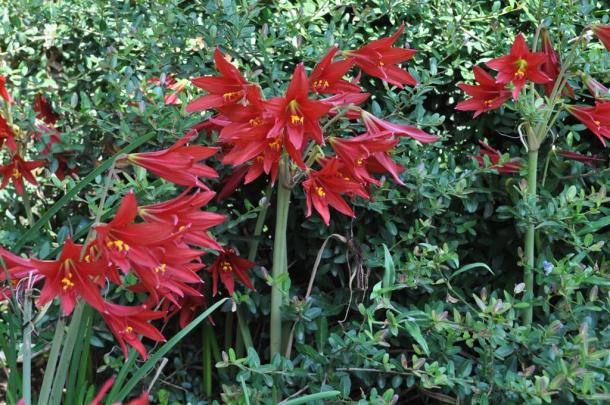
Oxblood Lilies At The Demonstration Garden With Dwarf Yaupon

Ann

Hummingbird Migration

“Hummingbird don’t fly away, fly away…”  Seals and Crofts’ lyrics always repeat in my mind this time of year.  But as the temperatures drop in North Texas, hummingbirds must migrate south.

If you are like me, the spring arrival of the first hummingbird is always a Red Letter Day.  The song lyrics continue: “I love you, love you, love you.  I don’t even know the reason why…”

Buff-bellied Hummingbird

Photo by John Lynn

Hummingbirds have always held a fascination for me.  Finding a hummingbird nest continues to be on my life list. To attract hummingbirds, I have planted many native plants including coral honeysuckle, Turk’s cap, flame acanthus, scarlet buckeye, false indigo bush, red yucca, various salvias, standing cypress, Texas lantana, cenizo, lemon beebalm, penstemons, and Texas betony.

Hummingbird and Esperanza

Photo by Pam DiFazio

My love affair with the little birds found us traveling south recently to Rockport, Texas, to learn more about these amazing creatures. Rockport is a stop on the migration map for many birds.  For more information on Rockport’s 24th Annual Texas HummerBird Celebration, visit http://rockporthummingbird.com

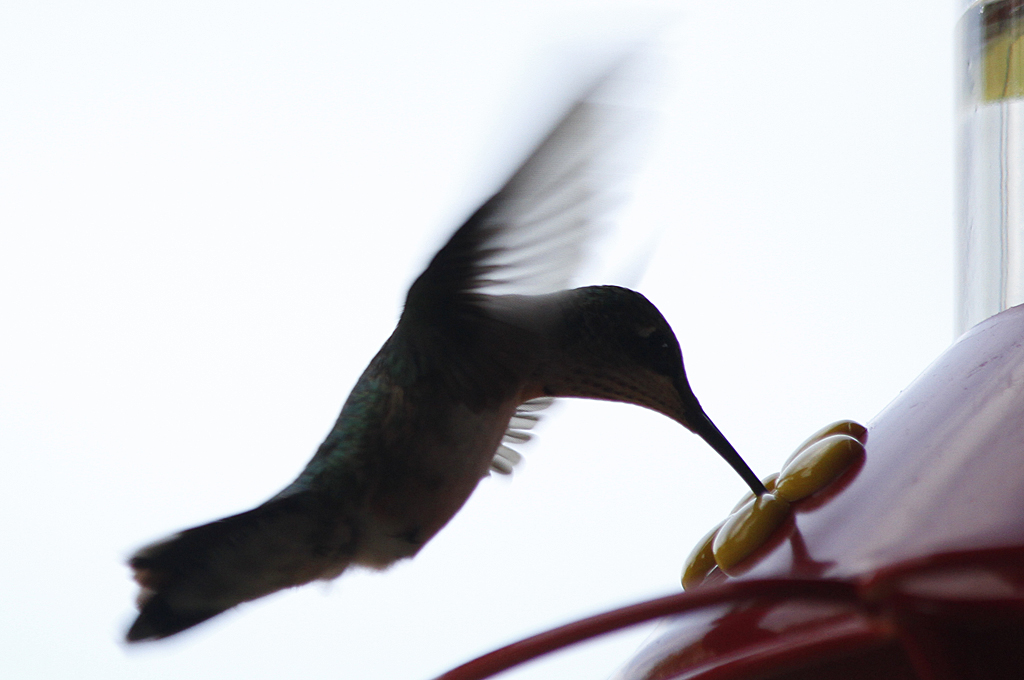
Hummingbird at feeder

Photo by Pam DiFazio

“The sweetness of your nectar has drawn me like a fly…”  The hummingbird event offered four days full of lectures, workshops and field trips.  I only attended one.  Instead, the view of these fascinating birds (uncharacteristically) sharing feeders at the 25 tour stops mesmerized me. At a single landscape more than a hundred birds could have been counted simultaneously fluttering around the feeders and flowers. I was enchanted by the hummingbirds—and the people who hosted them before sending them off for the next leg of their journey.  One yard had 40 feeders!  At another, a gentleman told me he uses about 60 pounds of sugar to prepare his feeders for the weeks the hummingbirds fly through.


The tiny birds look for more than just sweet nectar.  Gardens with food, water, and shelter are the most attractive to hummingbirds.

Hummingbird on Yaupon

Photo by Pam DiFazio


Here in North Texas, we can evaluate our yards now to host next spring’s hummingbirds.  Plant bird-friendly native plants in our milder fall temperatures.  This will give those plants time to establish strong roots during the winter months.  Their blooms will welcome a bounty of life.  Remember the importance of supplying fresh water.  Careful arrangement of shrubs and trees should provide protection for the birds and an easy step-ladder approach.  Then next spring, you might be marking your calendar with the first day you spot a hummingbird in your yard!

Pam

Fall-What’s Not To Love?

What’s my favorite season? Easy peasy. FALL. Jacket wearing, college football cheering, leaf rustling, turkey roasting, Halloween mini-Snickers sneaking—Fall!

This lovely autumnal season is so much more than pulling up summer-scorched annuals and popping in mums for a few weeks.  At a time when northern gardeners are closing up shop for the winter, Texas gardeners have realized that the fall months may very well be the best time of the year to plant.

Think about it.  A Sweet Innocent Perennial you might plant in the spring is just being lined up for the furnace blast of summer from late May through August.  It’s hard to even survive—much less thrive–in temperatures in the 100s, no rainfall, and nighttime lows that hover in the 80s.  But if you’re a savvy gardener and plant that same Sweet Innocent in the fall, you’ve tucked it in when the future holds cooling temperatures and more frequent rain.  Voila.  Plant Success.

Most plants will put on a fall flush of growth and bloom in fall weather conditions.  Roses can be spectacular in the fall, often with blooms more vibrant than spring or summer.  Trim roses back now, fertilize, and give a deep soaking to promote bloom.

Raised Bed with carrots, radish seeds and trowel

If you’re planting a fall school garden with kids, it’s time to get busy.  If you want a warm season garden, plant bush beans and pinto beans by seed until September 15.  Be sure to baby your seeds; they need to be kept moist until they sprout and are established. 

Dallas County Master Gardeners Busy With Fall Gardening

Fall is Prime Time for cool season crops, those vegetables that love a nip in the air in November and December.  Plant beets, spinach, lettuce, and carrots by seed now through October 15.  Kids love transplants; they’re veggies in miniature.  Plant broccoli, Brussels sprouts, cabbage, and cauliflower transplants now through late-November.  Mustard greens, Swiss chard, spinach, parsley, leeks and kale transplants can be tucked in the garden from September 15 through the winter.  (Harvest your warmer season crops in late October, then plant cole transplants for a continued harvest.)

Spring flowering bulbs can be a fun thing to plant with kids.  Purchase your bulbs now when nurseries start stocking bulbs, but wait on planting them until soil temperatures cool significantly, for us in mid- to late-November.  Daffodils are probably your best bet with kids.  They are dependable, don’t require pre-chilling (like tulips), and some will naturalize.  The Southern Bulb Co. in Golden, Texas  is known for propagating old varieties of bulbs, often found in deserted homesteads. 

The best reason to garden in the fall is to enjoy it.  Your garden is filled with new blooms and growth.  Pests have taken a vacation with the cool temperatures.  So nibble a bit of early Halloween candy and enjoy the season.

Elizabeth