Category Archives: Butterflies

 Life Cycle of the Gulf Fritillary Butterfly

August 25, 2025

Passion vine has been tumbling over my mailbox for years. This summer I experienced the life cycle of the gulf fritillary from egg to caterpillar to chrysalis to butterfly.

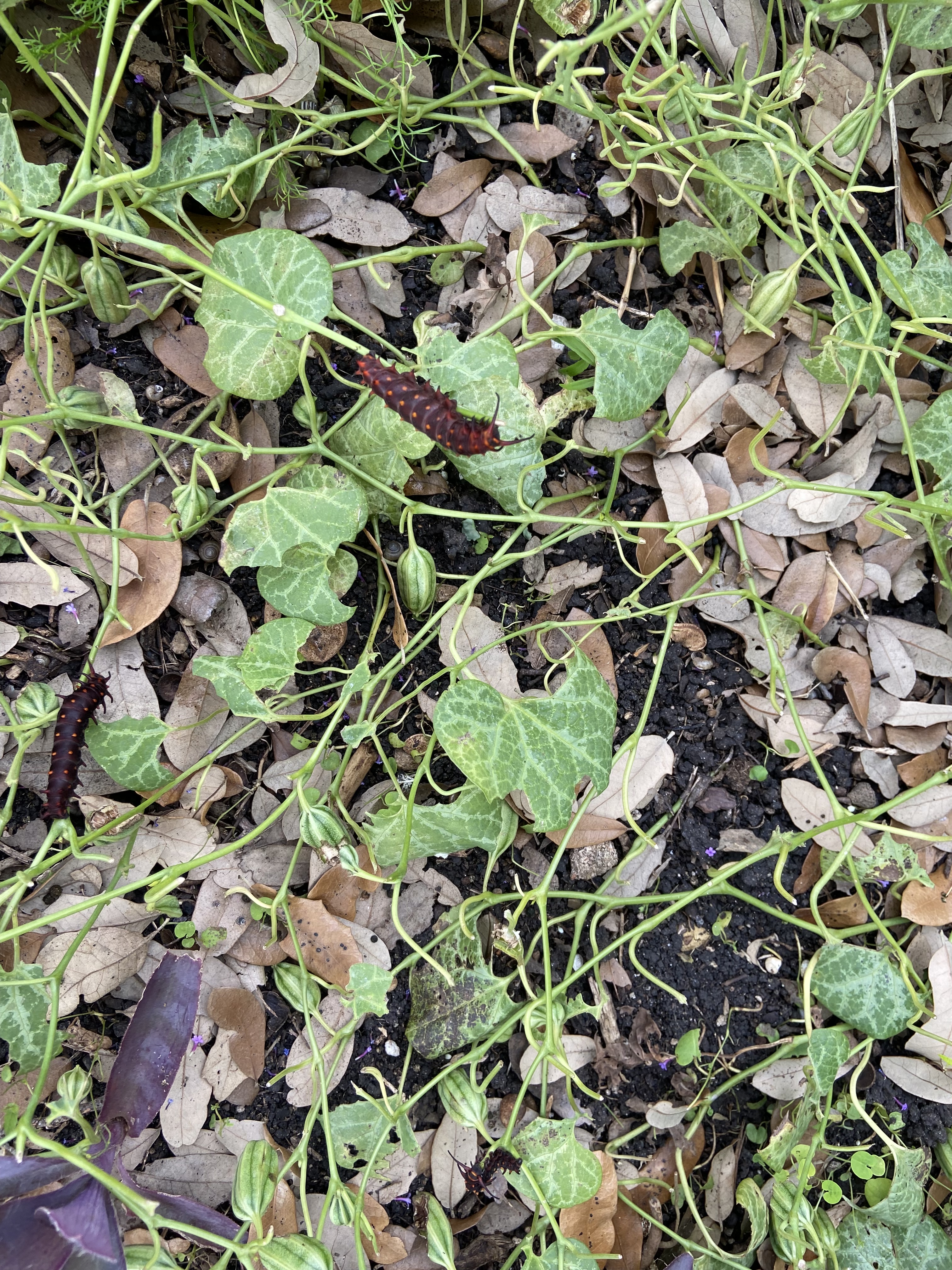
This fascinating journey captivated me for weeks. On July 25th, caterpillars were covering the leaves and blooms of the passion vine. They looked menacing with their reddish-brown spiked bodies. 

But there was one who was unlike the others – It had spikes, but had a white milky covering, and it was hanging in a definite “J” shape from my recently-bloomed color guard yucca stalk. 

 Excited, I ran to get my phone for a time lapse video, but the location and time that it would take to capture, encouraged a different approach. Pictures were snapped before running errands.  Alas, upon returning the caterpillar had created the chrysalis and was unassumingly hanging on part of the stalk right at eye level.  Had the caterpillar not been seen, it would have been difficult to recognize the chrysalis, as it looked like the material of the spent stalk.  It was unnoticeable, unless it was seen in progress. Upon closer examination, the caterpillar shape was recognizable, and the lower portion was where wings formed.  

Every morning began with observations – here are some of them:

1. Check on the chrysalis – no real change for about a week – information suggested that it would remain 5-8 days before emerging.  Search for more. 

2. Look for caterpillars– spiky, reddish brown color, they came in all sizes from very small to about 1 -2 inches long. They were in every part of the passion vine — plain sight, under the leaves, on the stems, and even in the flowers, but were voracious eaters.

3. Observe the native passion vine being ravaged by the very hungry caterpillars. -As a host plant, its lush vegetation, quicky changed to a sickly mass of stems, stripped leaves and decimated flowers. Nothing to do but watch, the plant would soon regrow.

     4. Watch gulf fritillary butterflies deposit eggs on the leaves, quickly flitting away to find another spot to do it again.  

5. Cringe as Wasps swoop in and sting vulnerable caterpillars.  It was disheartening to view but realized that this is part of the natural process.

The observations of the chrysalis were routine until Saturday morning, August 2nd; – there was a gulf fritillary butterfly with his legs clinging to the chrysalis from which he had just emerged.  Not moving much, just drying his wings and hanging out.   After a few minutes it began to slowly fly to another stalk, then paused–It’s hard work coming out!   After several minutes, there was more movement, brief flights, and then it disappeared into the flurry of other butterflies.  The short-lived journey of this Gulf fritillary began (14-24 days).  


During my daily walk around, it was noted that two eggs were deposited on the painted wood of my mailbox. The contrasting pale yellow color made it easy to observe.  With a magnifying glass and ruler in hand., I peered closer at the eggs.  For over a week the tiny egg remained unchanged, but then the color turned to a reddish-brown, becoming the smallest of caterpillars (3 mm) in search of passion vine to devour.  They didn’t have far to travel as the native passion vine encircled the mailbox. 

Checking on the cats became a morning pattern, and I was not disappointed when stumbling on another gulf fritillary emerging.  This one was located on a coneflower stem.   The wings were still droopy indicating that it had very recently exited the chrysalis and needed to dry.  As I watched, another gulf fritillary came, flitted his wings slowly and covered him as he hung to the chrysalis. This behavior mesmerized me. Was it protecting him while his wings were drying out?  After a short while, maybe 10-15 minutes, they were in flight and yet another chrysalis was abandoned.  

There’s so much I don’t know about this process but seeing it up close and personal reminded me that the wonder of God’s creation is incredibly complex and so beautiful.  With our busy schedules this is a good reminder to take time to enjoy nature that is all around and let that inspire and encourage us.  

Starla Willis, Dallas County Master Gardener Class of 2011

Read more about Passion Flower, the host plant, on this blog.

NATURE WITH NO OR VERY FEW—RESERVATIONS

June 15, 2023

Everyone loves nature right—but then not squirrels or rabbits.  Not the plants you were told were lovely natives but turn out to be so very successful that you have to carefully and quickly remove them from the neighbor’s yards.  And then we can’t even think about nature films—way too often seem to feature chasing and catching and biting—oh no—a bridge too far.

Well,there is an answer its totally natural contains almost no violence and stars—BUTTERFLIES.  What is best is they are pipevine swallowtails—beautiful large and showy—and actually are here.

Pipevine Swallowtail Butterfly laying eggs on pipevine

The whole amazing life cycle can happen in your yard right before your eyes amazing really doesn’t quite cover it—and its not hard and doesn’t involve massive expense. 

What to get started?  Of course.  Here’s how plant white veined pipe vine.  It’s a ground cover type plant that loves shade or semi shade—but seems very adaptable seeding itself into sunnier areas too—but plant your starter plants in a shady place—think about this—put them where you will see them often—and put them in front of any shrubs or tall plants.  Ask around—your friends may be willing to share.  Its best to transplant small plants.  Now natural processes take time be patient and let your plants grow and thrive. 

Larvae eating White-Veined Pipevine

Now exactly how the lovely black butterfly with blue markings finds your plants—they smell them I believe but they also seem to be looking for them.  Eggs are laid in clusters starting in late spring and early summer.  Actually we live in an area that can have two full generations—more about that in a minute.

So the butterfly lays eggs and they hatch into tiny larvae—but they don’t stay tiny long the eating of the pipevine is—well I know the word amazing is being used a lot—but sometimes—you will see its totally indicated.

When the larvae have reached there final size—which is big they leave and seem to head for a high place to form a chrysalis—first they find the place—try to leave them alone they know what they want—you don’t!.  They then become completely still and form a J this also lasts awhile.  However when the time is right the larvae turns into a chrysalis so fast that its hard to believe—honestly about 5 minutes.  The chrysalis has to harden but the change is incredibly fast. Now one thing about pipevine—it is toxic—now not to you planting or tending but when the larvae eat it they become very toxic to birds reptiles—things that might ordinarily eat it—you get the idea of this if you pick a leaf—it smells really nasty.  I mention this because you actually get to see way more of these larvae actually form their chrysalis instead of being carried away by wasps or birds—just the way nature should be right?

Now the only part that may be unpleasant it the fact that the larvae eat masses of pipevine—your beautiful patch can look truly ratty when they finish—But wait there’s more!  The pipevine knows very well that it will be eaten and is prepared.  Underground the vine has a storage unit—very like a small sweet potato that helps the vine survive very well when all the leaves have been eaten—very very soon—it has grown back as strong as before and is ready for the next wave of larvae.  That is nature at its best.

In picture above, the creatures were relocated to a better patch of pipevine. The larvae are totally harmless just be careful not to hurt them; they will not hurt you.

If you are very fortunate you will see the butterfly come out of the chrysalis dry its wings and fly away.

It just doesn’t make any sense not to plant pipe vine.   

Susan Thornbury, Dallas County Master Gardener Class of 2008

THE POLLINATOR-FRIENDLY GARDEN—AND GARDENER

June 28, 2022

Pollinator week has passed but we will continue to celebrate pollinators all month long with pictures, stories, and garden advice. Plant with purpose, now is a great time to create a pollinator-friendly yard or garden.

Bees are Essential!

What is actually involved in being a pollinator friendly gardener?  First open your eyes to the complex world that is your garden.  Pay close attention to the plants and creatures and the interaction between them. This is how the garden will become even more useful to pollinators—and to the gardener as well.

Consider that pollinator can be one of a great many creatures.  What an opportunity for learning!  These creatures have been essential to life for a very long time but they need all the help that gardeners can give.  Solitary bees make up 90% of native bees and bumble bees make up the rest. They are social but live in small groups numbering in the hundreds, not the many thousands of bees that make up honeybee hives. Now honeybees do wonderful things but your garden is not an almond orchard.  Native bees will do a great job pollinating the flowers including the flowers of herbs and vegetables.

The gardener doesn’t need to know hundreds of bee names to observe the differences between them and to begin to see how they interact with the plants in the garden. Accept that wasps, flies and beetles are also involved in pollination.  Be careful and observe them as they go about their lives. They have a place in the world so share the message.

Didn’t pollinator gardens used to be called butterfly gardens?  Well, it’s an updated designation but butterflies are an essential part of gardening.  Butterflies are delightful and this is important. They are a wonderful way to engage potential gardeners—that’s everybody!

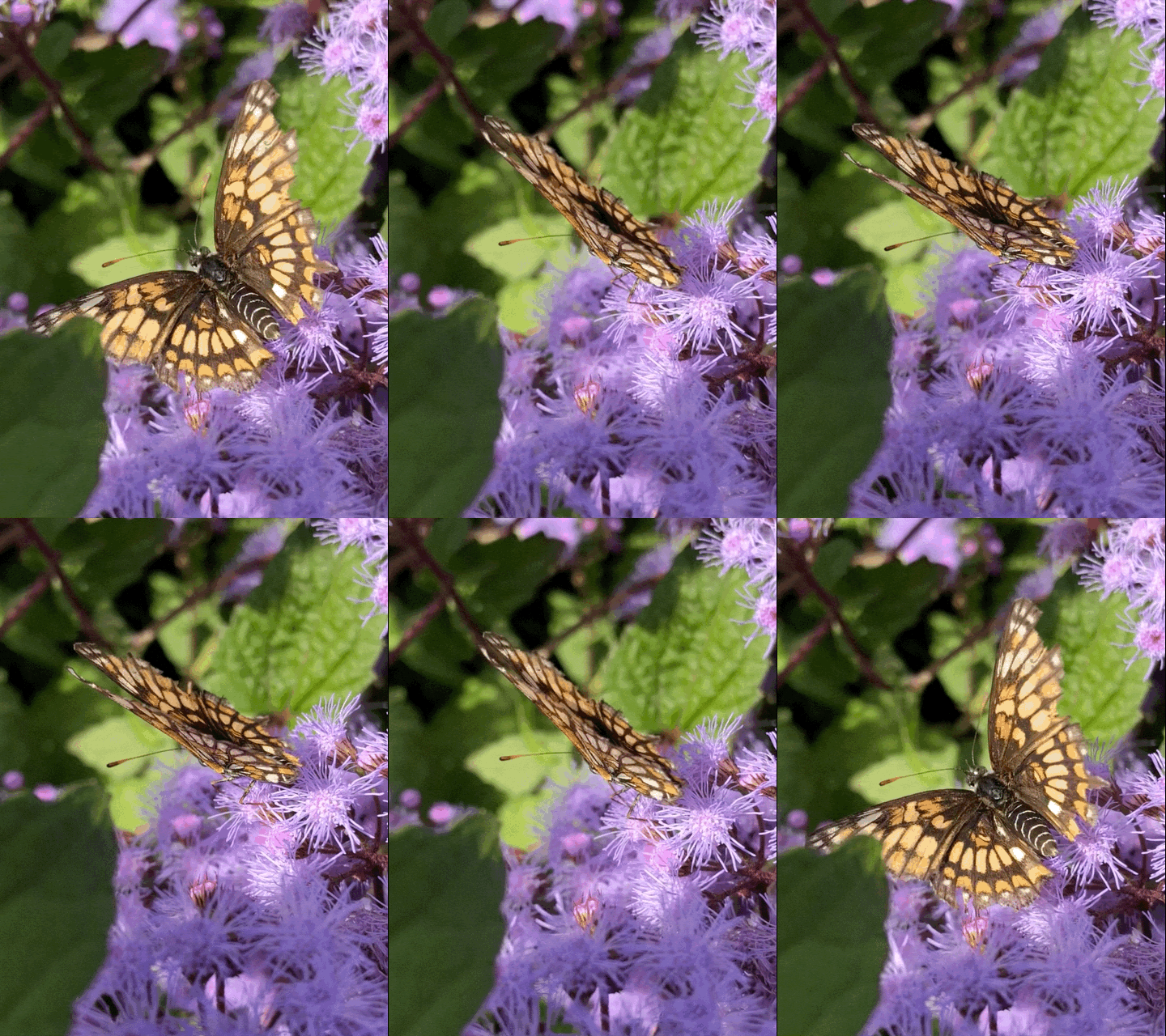
Vesta Crescent Butterfly on Hardy Ageratum

Bees are essential but butterflies win “most popular insect” every time.  Of course, the pollinator garden should attract and care for them.  Flowers are what is needed, lots of flowers. Plant as many shapes and sizes as can be grown and not just in spring but summer and fall, too. That requires planning and of course ongoing care but that’s what gardeners do.

 Everyone wants monarchs, of course they do, and that’s fine but don’t stop there.  There are so many butterflies to learn about. In this area the garden could be visited by eastern black swallowtails, pipevine swallowtails, painted ladies’, common buckeyes, lots of skippers (some people say they aren’t really butterflies) but they are lovely little creatures.  Snouts—so easy to recognize—yes they do have a snout.

Delicate hairstreaks love tiny flowers, there are dusky wings of various sorts. Funeral is a favorite with its dark wings bordered with white.  So many and all are interesting and beautiful. Take the time to look carefully. Honestly, they are just as enchanting as monarchs.

Gardeners want butterflies—so take the next step.  Find out about their host plants and try to grow at least three different kinds if possible.  Butterflies have an amazing ability to find their host plants so eggs can be laid. Then the larvae hatch. Do they eat the plants? Yes. Do the plants then look ragged? Yes”, but without this…no butterflies.  Do not assume this is common knowledge.  It isn’t and needs a good explanation. Never use pesticides, then explain again.  Butterflies and bees are insects.  Diplomatic skill must be used! So much to learn, but that’s the great thing. There is no need for boredom!

There are many sources of information on bees, butterflies, wasps and butterfly gardening.

A great butterfly reference is “Butterflies of Oklahoma, Kansas and North Texas”

(By John M Pole, Walter B Gerard and John M Nelson from the University of Oklahoma Press) 

Look up the Xerces society for information on native bees along with gardening and conservation information also. 

Susan Thornbury, Dallas County Master Gardener Class of 2008

Pictures by Starla Willis, Dallas County Master Gardener Class of 2011

Butterflies at Raincatcher’s Garden, Fall 2018

Where have all the butterflies gone? We enjoyed so many this fall in our garden.

Monarch butterfly sipping nectar from Tithonia, Mexican Sunflower.

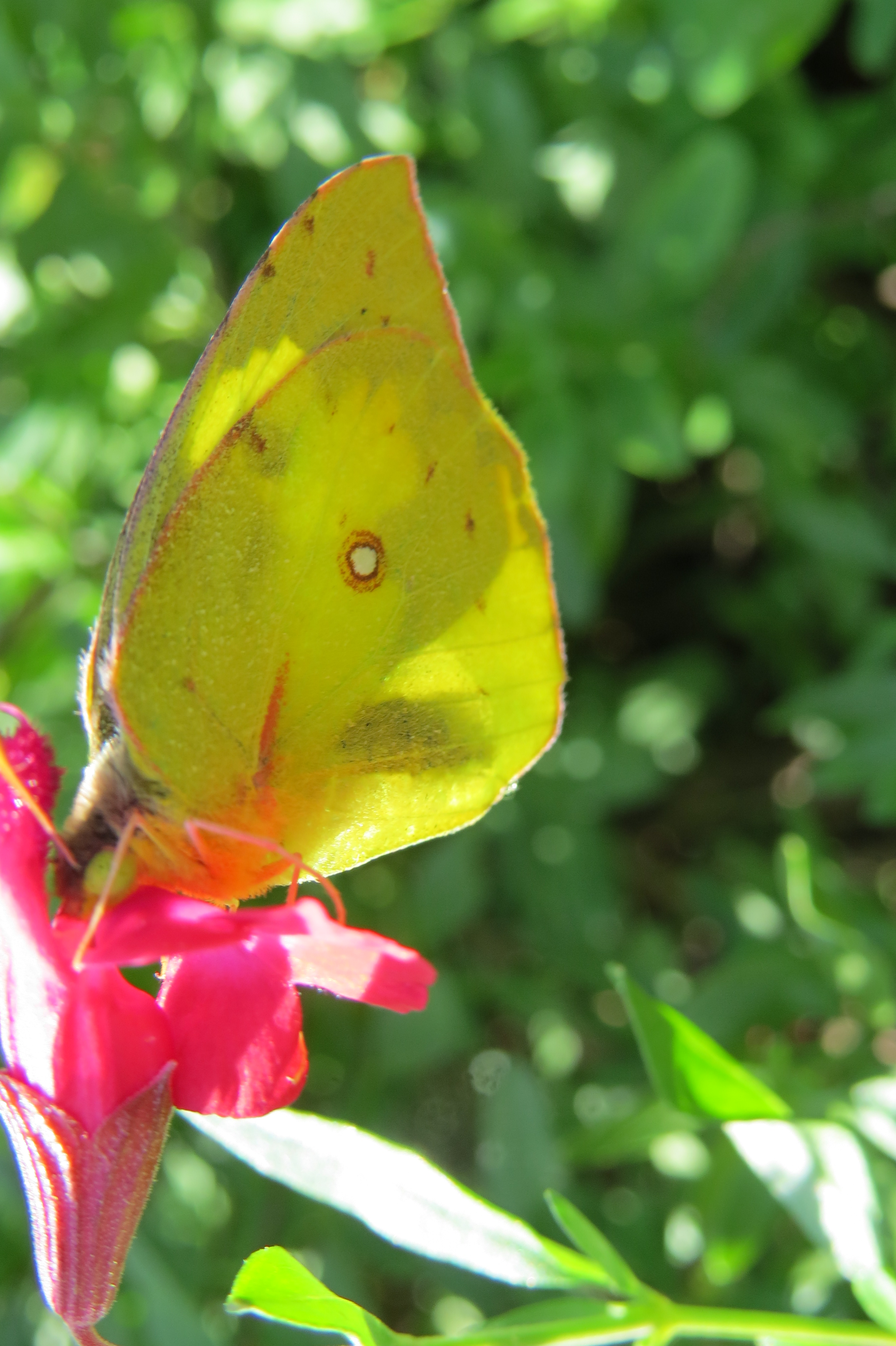
Cloudless Sulphur butterfly on a canna in our color wheel.

Queen butterfly alight Lantana, Miss Huff.

American Snout on an Okra blossom.

By late November, most butterflies have bred and died. Their  offspring  overwinter in egg, larva, or chrysalis form until next spring.

 Some adult butterflies have gone farther south and some overwinter in Dallas as adults.  Monarch migration is perhaps the most well knows but also  the Painted Lady, Common Buckeye, American Lady, Red Admiral, Cloudless Sulphur, Skipper, Sachem, Question Mark, Clouded Skipper, Fiery Skipper and Mourning Cloak  migrate to warmer regions.
Ann Lamb
Pictures by Starla Willis. Thank you, Starla!

Fascinating news from the Native Plant Society-click to read their newsletter.

A Plea For Our Pollinators!

Susan and others have been working diligently in our butterfly garden. It’s beautiful and has a purpose. As gardeners do, Susan and I had a meaningful visit about the garden as we worked.  Here are my questions and her answers:

Why are you working so hard, selecting certain plants. You seem to be planting with a purpose.

The goal is to attract a wide diversity of pollinators and to that end, we need to cultivate a wide variety of plants all throughout the year.

Pollinators depend on us and it’s our sacred duty to provide for them in all their phases of life. It isn’t that easy, but like many things it’s very worthwhile.

Why as gardeners do we need to plant for pollinators? Isn’t this provided naturally?

Much of nature has been rearranged and habitats destroyed.  Every yard needs to count! Devote at least part of your garden to create a pollinator-friendly habitat.

Joy comes when you see these creatures thrive. If you take the step, I don’t believe you will ever go back to never-ending lawns with seas of begonias.

Keep going. it’s desperately needed and of serious importance for the next generation.

It’s up to us.

Thank you, Susan. You have inspired all of us to garden for the future.

Ann Lamb

Picture by Starla Willis

Under Raincatcher’s Resources, we have a list of butterfly friendly plants to help you get started.

Pollinator week is a week away.


Tagging Monarchs at Raincatcher’s

Monarch Butterfly Sipping Milkweed, Note the Tag

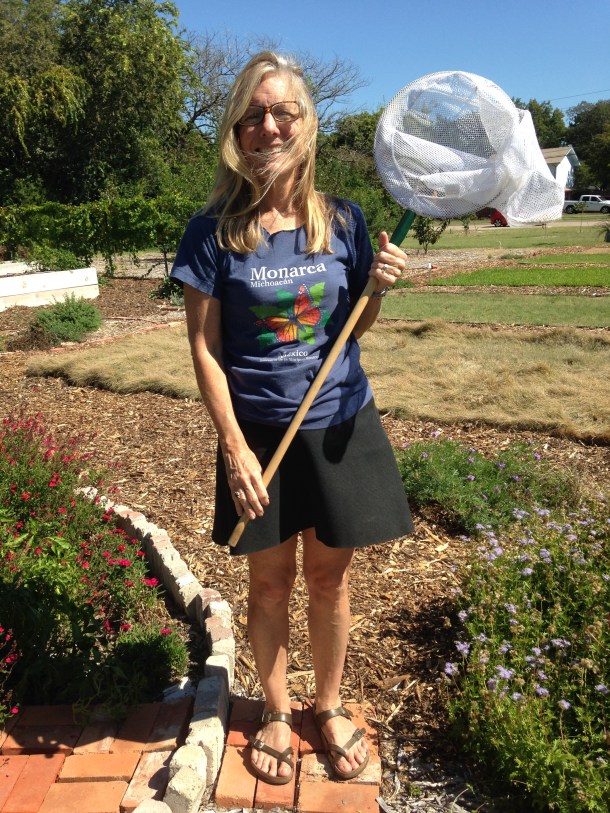
With a woosh of her net, Master Naturalist, Ellen Guiling, has captured another Monarch butterfly to be tagged and then sent on its migratory journey.

As per the Monarch Watch website: tagging information helps answer questions about the geographic origins of monarchs, the timing and pace of the migration, mortality during migration, the effects of wind and weather, and changes in geographic distribution of monarchs. Each year the information is collected and can be viewed at www.monarchwatch.org.

You may remember Starla found a tagged Monarch from Kansas who visited our garden in 2015.

We have many butterflies visiting The Raincatcher’s Garden and the reason goes back to the careful planning and planting of host and nectar plants for many different types of butterflies. Review the butterfly plant list in our Raincatcher’s Resources on the right of our front page and enjoy the delights of your own butterfly garden.

Ann Lamb

Pictures and video by Starla Willis


Butterfly In My Garden

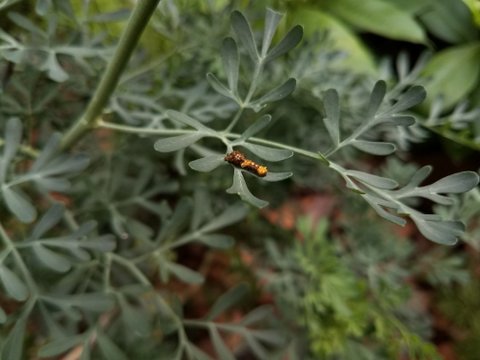
Around April 5, I caught a glimpse of a butterfly in my garden and ran out to get a closer look. I really couldn’t miss it since it had a wingspan of over 5 inches. It fluttered about my garden rue and then took off over the fence. I didn’t see any eggs just then but a week later there were tiny specks that might be larvae! By April 19, there were four “orange dog” caterpillars of the Eastern Giant Swallowtail, Papilio cresphontes. They look like bird droppings to deter predators.

Caterpillar On Rue

I have grown Ruta graveolens since becoming a Dallas County Master Gardener in 2006 and love its blue-green foliage and tiny yellow flowers. Along with various trees it is a host plant of the beautiful Giant Swallowtail larvae. The adults visit my garden every year but these are the first caterpillars I have seen. Photographing the adults is challenging as they are always in motion, fluttering away as they feed.

Then last fall I noticed this mating pair on my Loropetalum bush right at eye level. These are distinctive from the Eastern Black Swallowtail adult in that the and the row of large yellow spots on the dorsal (top) side meet in the middle of the wing rather than near the bottom and the ventral view is mainly yellow.

Eastern Giant Swallowtail Butterflies Mating

As of May 2, the four caterpillars have grown to over 2 inches and should pupate soon. The chrysalis stage is variable but usually takes 10–12 days. I hope to photograph at least one chrysalis and adult as it emerges. With luck they will return to my garden rue to produce another generation in the fall. Bugguide.net states they overwinter as a chrysalis.

Two Caterpillars!

Caterpillar Hosts: Trees and herbs of the citrus family (Rutaceae) including Citrus species, prickly ash (Zanthoxylum americanum), hop tree (Ptelea trifoliata), and Common Rue (Ruta graveolens).

Adult Food: Nectar from lantana, azalea, bougainvilla, bouncing Bet, dame’s rocket, goldenrod, Japanese honeysuckle, and swamp milkweed. Here’s one feeding on clammyweed last summer.


Eastern Giant Swallowtail on Clammy Weed

Grow Common Rue and you might have these interesting and beautiful garden visitors!

Susan Swinson


Have you ever seen a butterfly laying an egg?

Thanks to our own intrepid photographer, Starla, for capturing a rare picture of a butterfly laying an egg.

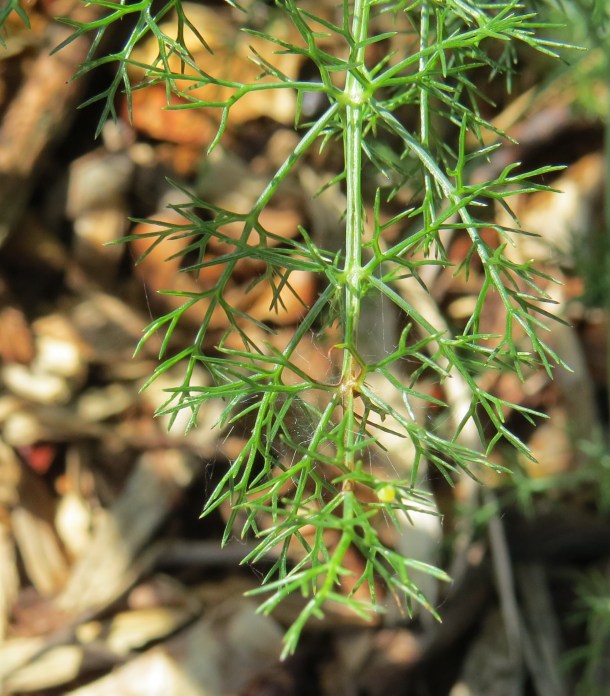
Black swallowtail butterfly laying an egg on fennel

And here’s the egg-

Look for the creamy yellow egg located on the lower right of the picture

*Eggs are laid singly on the host plants—usually on new foliage and occasionally on flowers. Development time is variable depending on temperature and host plant species, but generally the egg stage lasts four to nine days, the larval stage 10–30 days, and the pupal stage nine to 18 days.

Fascinating!

Ann Lamb

Picture by Starla Willis

*http://entnemdept.ufl.edu/creatures/bfly/bfly2/eastern_black_swallowtail.htm

Study up on our butterfly garden by looking at the right hand side of the front page of Dallas Garden Buzz under Raincatcher’s Resources for a list of hummingbird and butterfly plants or type butterfly in our search box for a host of articles on butterflies.


Monarchs Tagged in Butterfly Garden at Raincatcher’s

October is peak migration month for millions of Monarchs flying through the “Texas funnel” to overwinter in their ancestral roosts in Michoacan, Mexico. As the Monarchs flutter through the Raincatcher’s Garden, we have also had another visitor— one with a butterfly net.

monarch-tagging-ellen

Master Naturalist Ellen Guiling frequently visits the butterfly garden to capture and tag Monarchs. Ellen hovers by the Greg’s Mistflower, then her butterfly net swooshes and snaps to flip the net sock around the circle of the rim to prevent the butterfly’s escape. She gently folds the Monarch’s wings closed in the net then reaches in to hold the butterfly’s body and remove it.  It takes seconds to press a Monarch Watch tag on the discal cell, a spot on the middle of the lower wing.

monarch-tagging

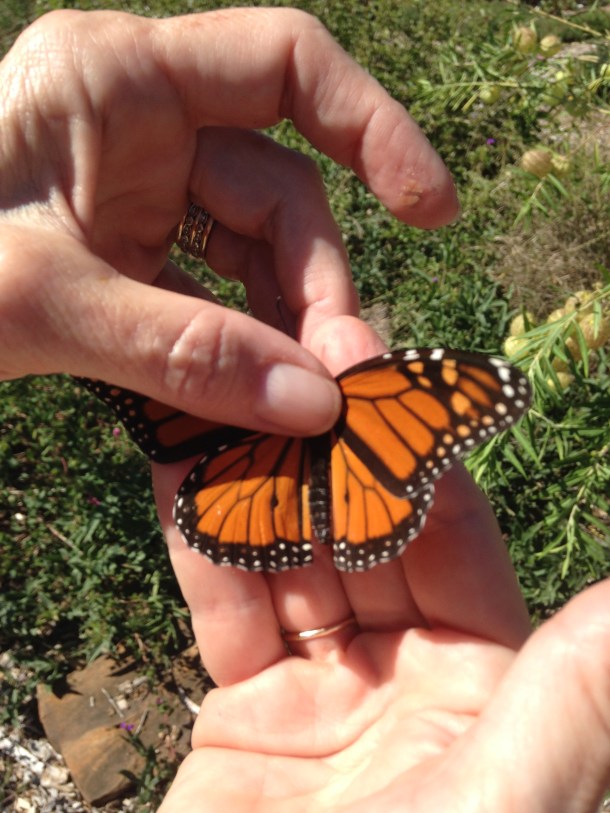
She quickly checks the sex of the captured Monarch. Two small black dots on the veins of the lower wings signal that this male with his pheromone sacks is probably quite the favorite with the lady Monarchs.  Released into the intense October skies, the Monarch flutters back to the Greg’s Mistflower, ready for his trip south.

Male Monarch-see the spots!

Male Monarch-see the spots!

Ellen has tagged about 40 Monarchs this fall at Raincatcher’s.  After recording the date, location and complete tag numbers with other information, Ellen will send her data sheet to Monarch Watch at monarchwatch.org, the organization that helps create, conserve and protect Monarch habitats.   Tagging data by volunteers has been critical in mapping Monarch migration patterns. Scientists study the tagging results to answer unanswered questions about Monarch migration, such as whether migration is influenced by the weather and if there are differences in migration from year to year.

Elizabeth

Pictures by Starla

More about Monarchs:

A Monarch Pit Stop

Butterfly Migration

Butterflies at the Raincatcher’s Garden

Dallas Butterflies


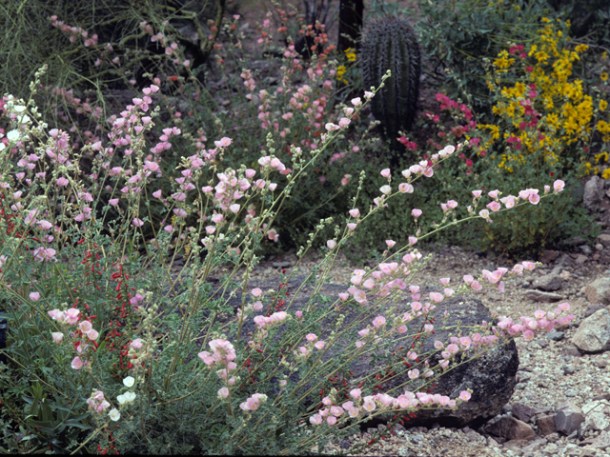
Globemallow

Globemallow Sphaeralcea ambigua

We didn’t think it would survive in Dallas. Much less bloom. Well, the Globemallow’s exquisite pink flowers triggered gardeners’ squeals—this is a passionate bunch!—last week at the Raincatcher’s Garden.

Globemallow

We planted Globemallow on a whim last year in the Butterfly/Hummingbird Garden. Most natives from the Big Bend region fail miserably in our dense clay, but this shrubby perennial will tolerate our soil and treat gardeners to “spectacular displays in wet years” according to the Lady Bird Johnson Wildflower Center.

The combination of purplish-pink 1” cup-shaped flowers and grayish-green scalloped leaves is a show stopper. The most common bloom color, however, is an apricot-orange suggestive of spring quince. If you prefer a color, you might be wise to purchase the plant in bloom.

Steer clear of stroking the leaves. The little hairs can irritate and sometimes cause an allergic reaction.

Plant Globemallow or Desert Mallow in full sun. It will become straggly in partial shade.  It is lovely with grasses or scattered throughout natural plantings.

Elizabeth

Picture courtesy of http://www.wildflower.org