August 1, 2024

If you’re contemplating a substitute for boxwood, consider these words from Cyrus Hyde, the late garden herb folklorist and founder of Well-Sweep Herb Farm in New Jersey. He referred to germander as “poor man’s box”. Why then, has it not received more recognition in the world of herbs?
Even our first president, George Washington was such an admirer of germander that it was planted at his Mount Vernon, Virginia estate. But sadly, it seems to have faded from view until recently when garden centers began featuring lesser known herbs alongside the more desirable customer favorites. Thankfully, it was a wise decision with germander finding its place as a decorative evergreen border plant and as a substitute for boxwood in the beloved knot-garden design.

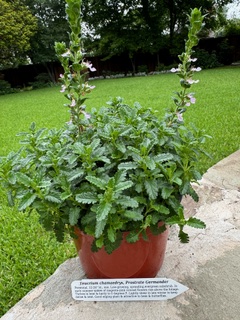
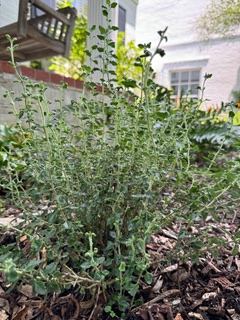
Germander is a Mediterranean native in the mint family (Lamiaceae) with small, dark green scalloped leaves and a mild garlic-spice aroma. It is a hardy perennial and evergreen, keeping its tidy appearance throughout the year. In early summer whorls of purple-pink flowers appear. Bees are attracted to the tiny flowers.
Grow it:
- *Space plants 2 feet apart and at least 3 feet away from companion plants.
- *Germander prefers full to partial sun and well-drained soils.
- *Follow a regular watering schedule to establish, then cut back to maintain health.
- *Fertilize lightly with an all-purpose organic fertilizer once or twice a year.
- *Pruning right after bloom will help to renew the plants faster.

Linda Alexander, Dallas County Master Gardener Class of 2008



 DALLAS GARDEN BUZZ