Tag Archives: Hummingbirds in Texas

Honoring the Energetic Hummingbird

September 5, 2023

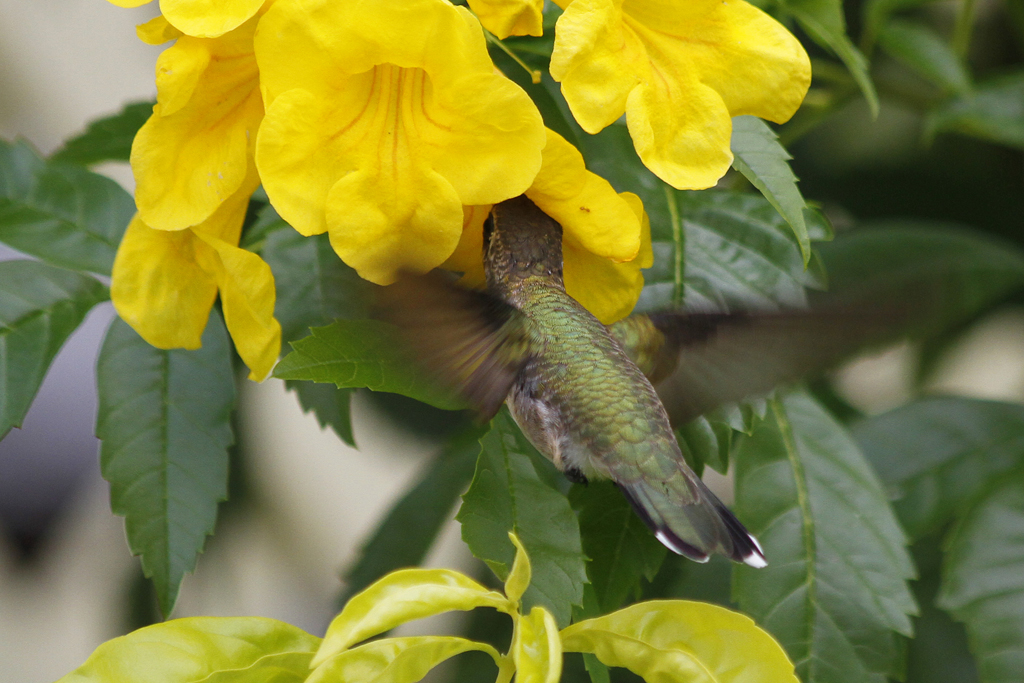
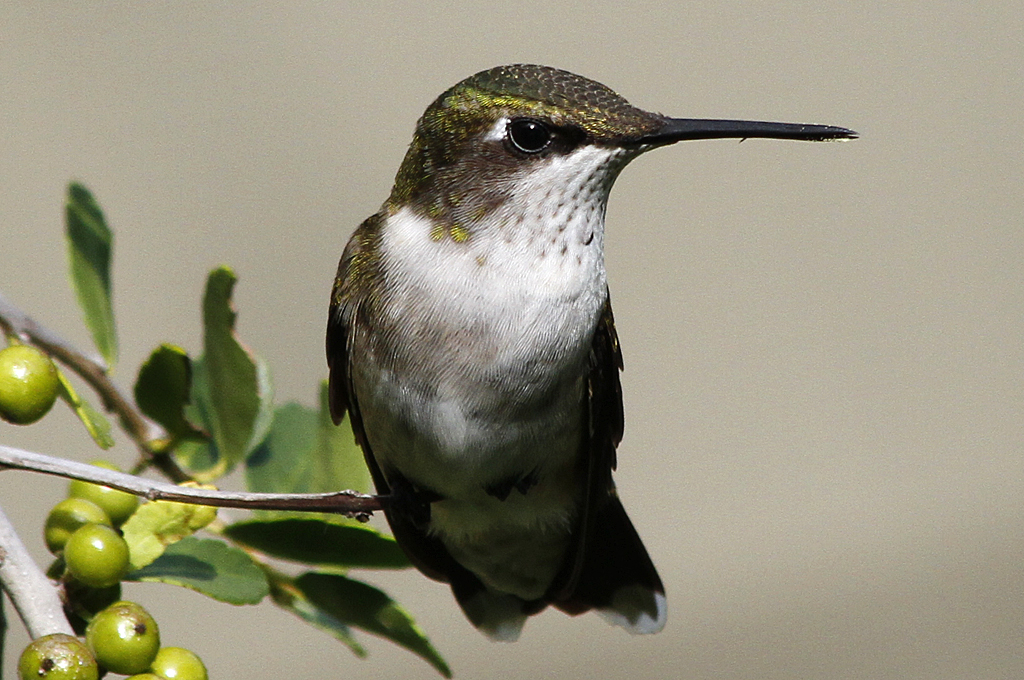
Did you know that the first Saturday in September is National Hummingbird Day? These small hovering winged creatures are from 3 -5 inches long (smallest mature birds) and are known for their long beaks and very fast beating wings.

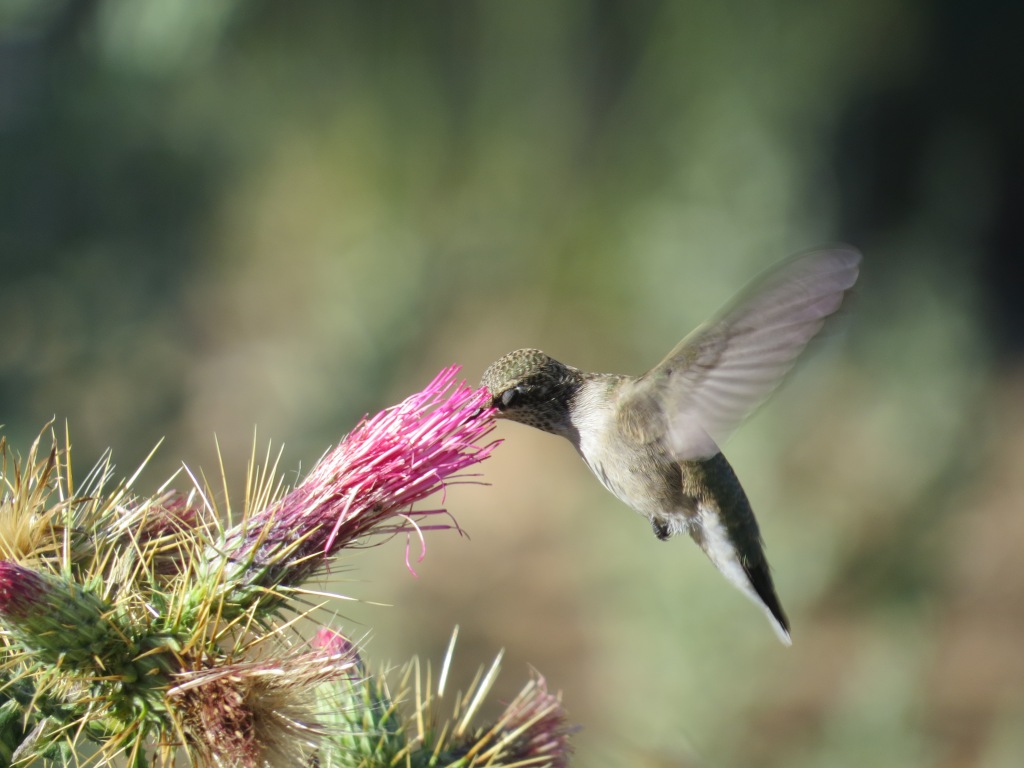
A group of hummingbirds is called a charm and charmed you will be if you have them in your yard.

Hummers are only found in the Americas today; however, they once inhabited Europe. Fossils were unearthed in Germany according to Science Magazine-May 7, 2004, but none are found today in Europe. The range is from Alaska to Tierra del Fuego in South America. The Rufous species migrates from Alaska to Mexico. The ruby throated migration is in early spring and their range is from the East coast to a line from West Texas to North Dakota . Not all migrate, and the most common in the DFW area are the black chinned and ruby throated hummingbirds.

The male birds are more colorful, but both are equally fascinating.

The Packery Channel Nature Park on Padre Island, Texas, shared these interesting facts:
 Wings flap up to 200 times per second and oscillate in a figure 8 pattern.
 Heart beats about 1,200 times a minute
 Lungs breathe 250 times a minute
 Tongue is forked and brushy and can lick nectar 10-15 times a second (and can
consume small insects).

Are you interested in having these amazing creatures in your habitat? Here are some tips to attract them.

First, think RED – Hummers see in the ultraviolet range and RED is their favorite.

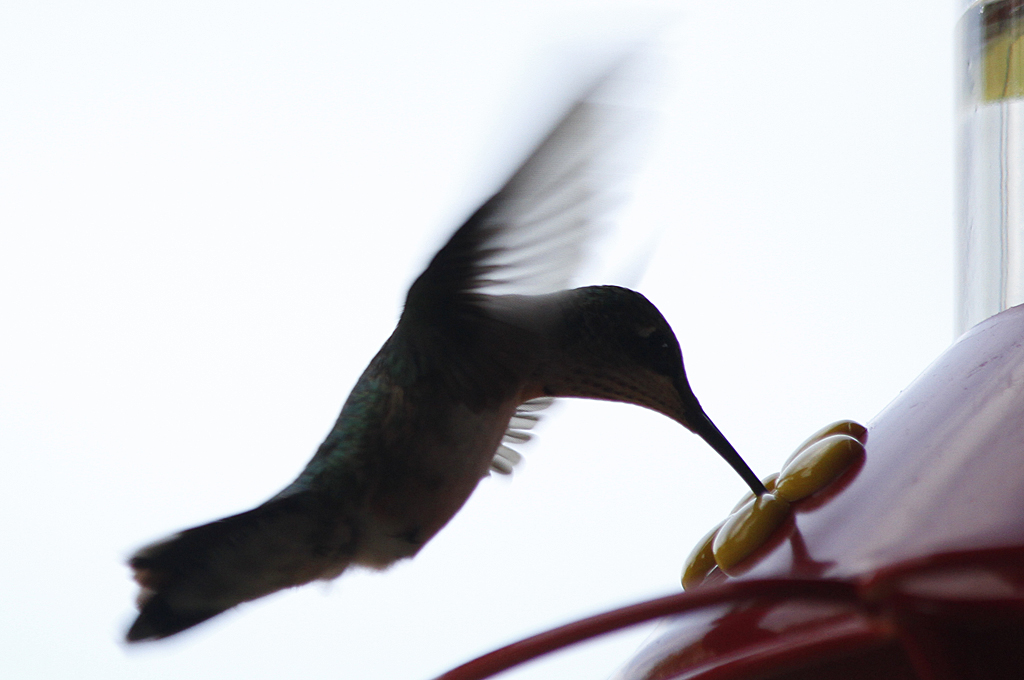
Place feeders in your yard where they are easy to observe. The food is a sweet solution that can be purchased or made. One recipe is 1 cup water, ¼ cup sugar (nectar is
preferable). Change out every other day to keep it clean and ready for winged guests.

Did I mention that there should be some RED on the feeder? – that’s a must.

Note: Starla took this picture from her family’s kitchen table in Fresno, California.

Plant flowers that attract hummers – They prefer tubular flowers so their long beak can get to the nectar that other pollinators might not be able to reach. They like bright
colors and of course, red is a favorite, but not exclusive.

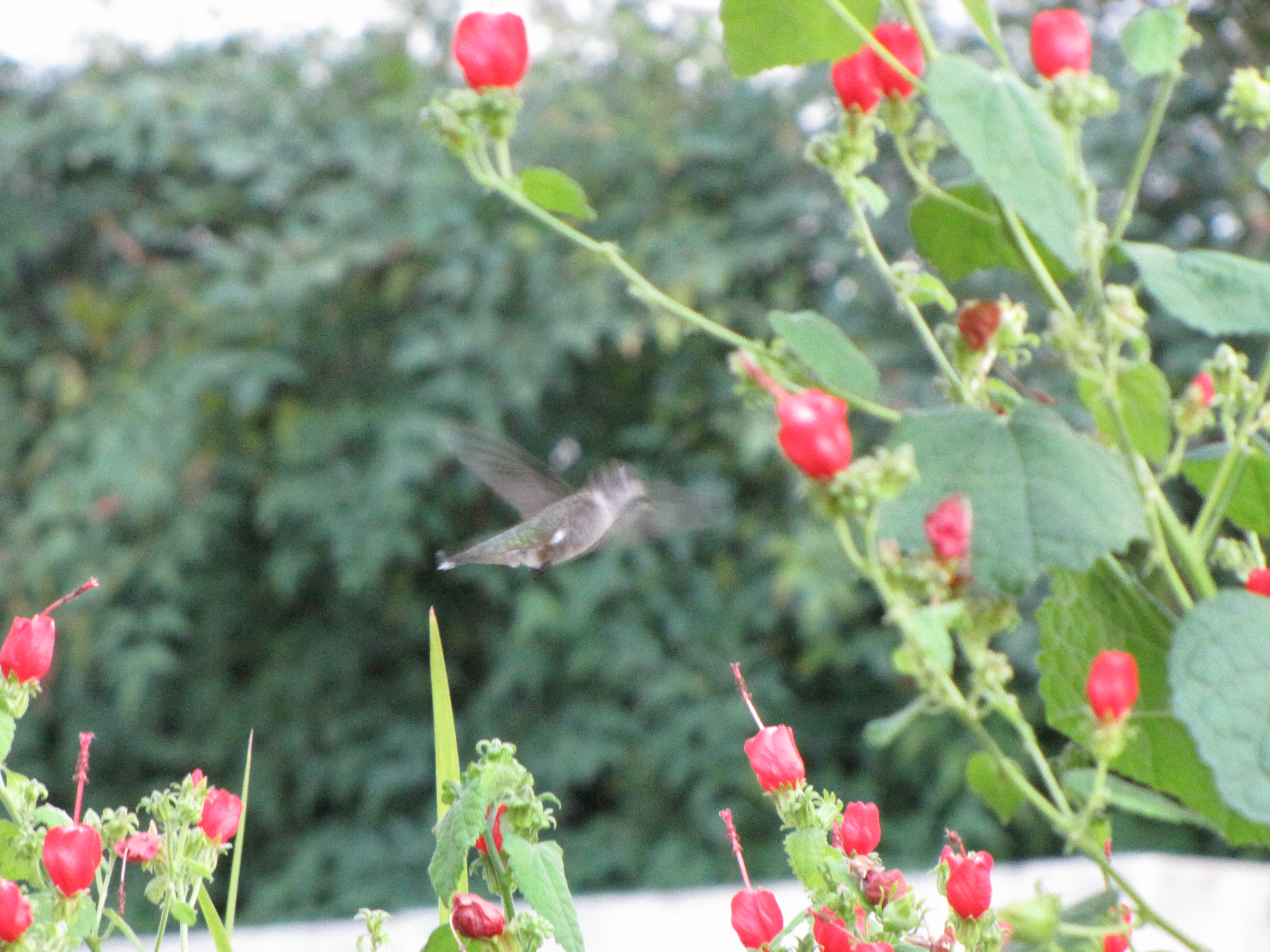
Note: Hummingbirds enjoying red Turk’s Cap and Blue Salvia Guaranitica.

In our area of Texas, zone 8a here are some options: Perennials – turks cap (red), coral honeysuckle, Texas star hibiscus(red), salvia greggi (red), columbines, standing cypress(red), day lilies, lupines.

Biennials –foxgloves and hollyhocks; Annuals – cleome, impatients, and petunias are a few to consider.

Hummingbirds are fascinating creatures that captivate and enhance our habitats and can remember where they have been and where feeders are located. These hovering
winged creatures are an asset to any yard.

Starla Willis, Dallas County Master Gardener Class of 2008

Hummer Festival 2014

I feel so lucky to have been at  The Hummer Festival 2014 in Rockport, Texas last Saturday.

image

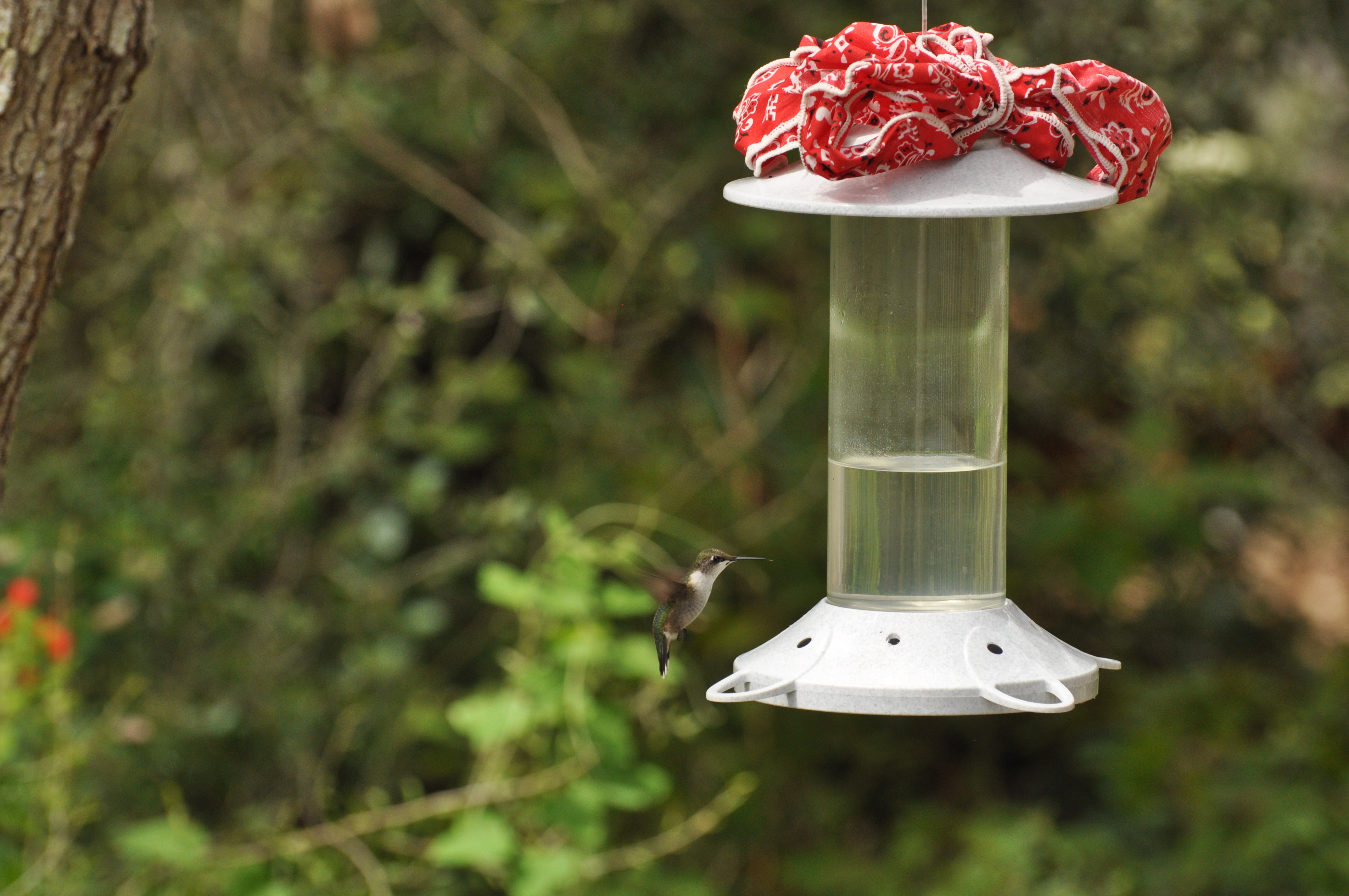
My son and I attended the lecture, Hummingbird Friendly Yards, and  visited several homes in Rockport where hummingbirds like to congregate.  We saw dozens of Hummingbirds like these two females at a feeder.

image

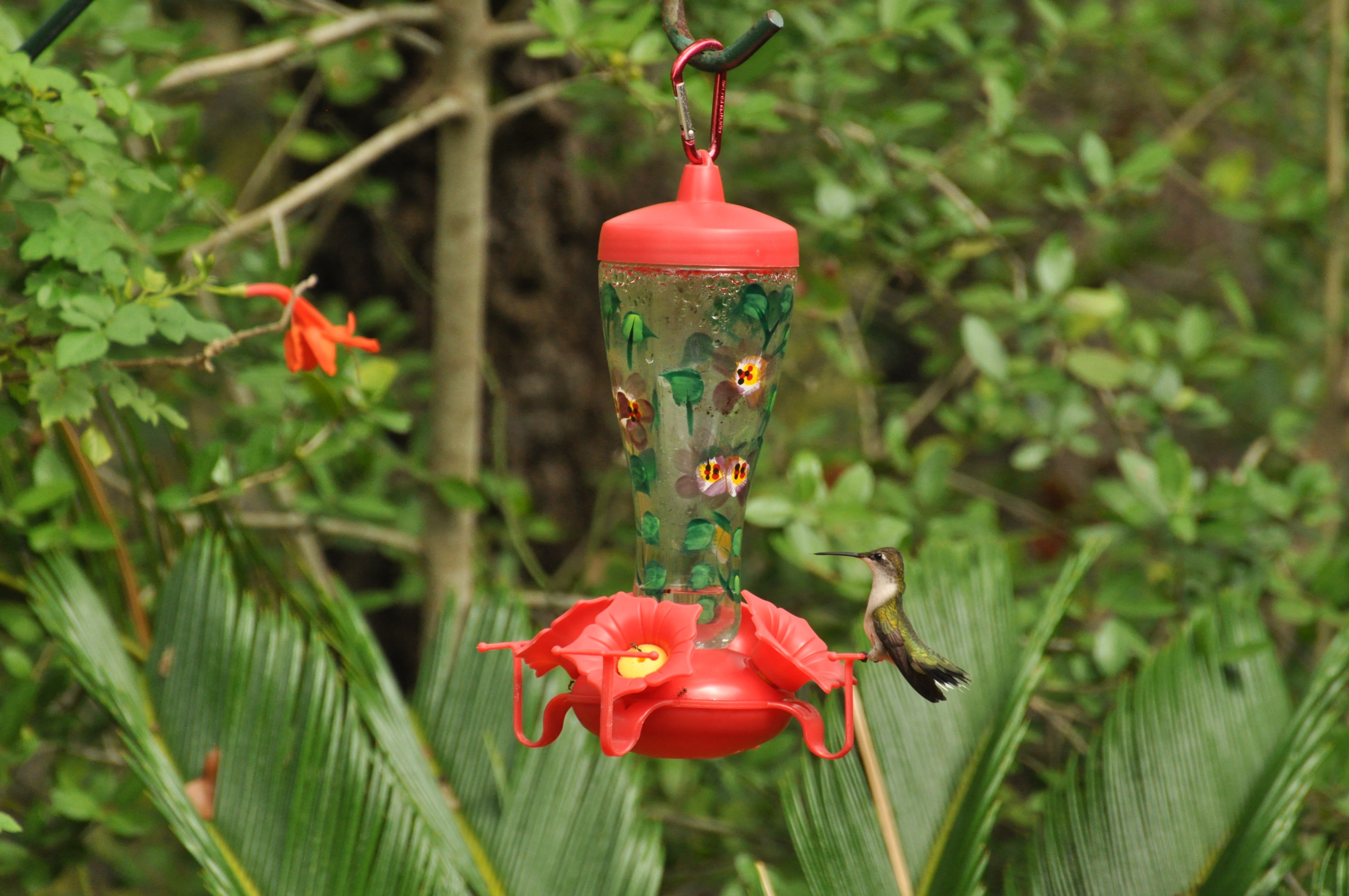
Hummers don’t care what type of feeder you have purchased. Just make sure the sugar water (4parts water to 1 part sugar) is clean and the color red is on the feeder. Here’s how one homeowner added red.

image

There are many varieties of Hummingbirds  that buzz through  Rockport: Buff- Bellied, Rufous-tailed, Black Chinned, Caliope, Allens, Anna, Broad- Tailed, Broad- Billed and the Ruby Throated which is the most prevalent.  I would like to see Anna because we share the same name.  The male Ruby Throat has guess what…a ruby throat!

image

Too bad we missed the class, Photographing Hummingbirds and other Small Birds. Next year I will try to catch that and have a little bit sharper pictures.  Other interesting classes were: Smart Phone Digiscoping with a practice session, Binoculars, Scopes, and More, Endangered Hummingbirds What Can We Do to Preserve Them. you could follow the birds by boat, bus, or on foot.

image

Ann

More Hummingbird Info Here.

Hummingbird Migration

“Hummingbird don’t fly away, fly away…”  Seals and Crofts’ lyrics always repeat in my mind this time of year.  But as the temperatures drop in North Texas, hummingbirds must migrate south.

If you are like me, the spring arrival of the first hummingbird is always a Red Letter Day.  The song lyrics continue: “I love you, love you, love you.  I don’t even know the reason why…”

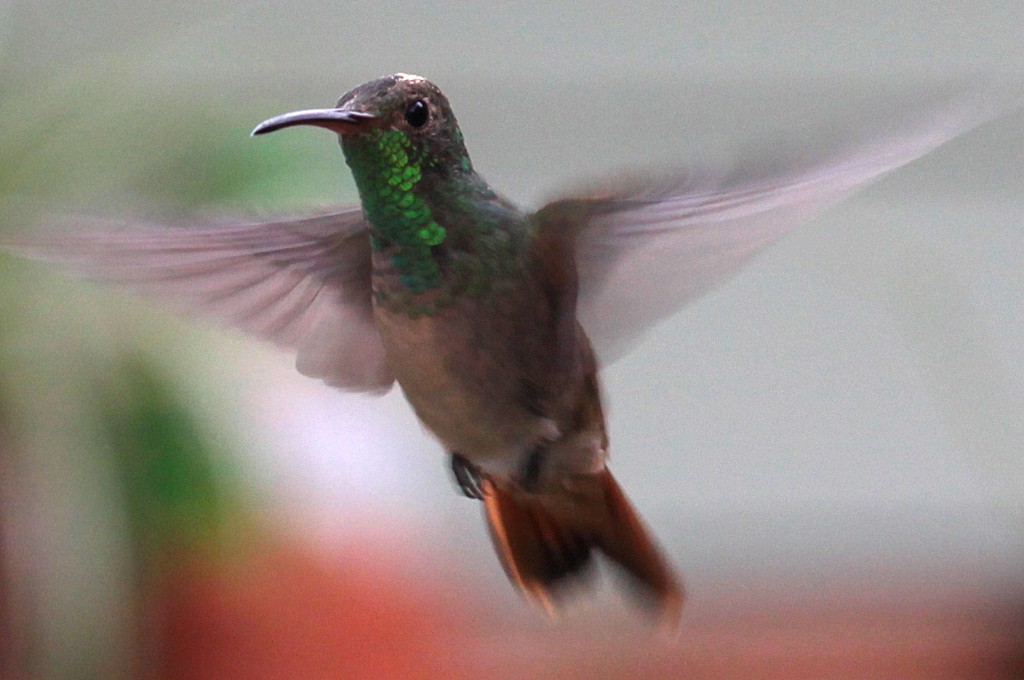
Buff-bellied Hummingbird

Photo by John Lynn

Hummingbirds have always held a fascination for me.  Finding a hummingbird nest continues to be on my life list. To attract hummingbirds, I have planted many native plants including coral honeysuckle, Turk’s cap, flame acanthus, scarlet buckeye, false indigo bush, red yucca, various salvias, standing cypress, Texas lantana, cenizo, lemon beebalm, penstemons, and Texas betony.

Hummingbird and Esperanza

Photo by Pam DiFazio

My love affair with the little birds found us traveling south recently to Rockport, Texas, to learn more about these amazing creatures. Rockport is a stop on the migration map for many birds.  For more information on Rockport’s 24th Annual Texas HummerBird Celebration, visit http://rockporthummingbird.com

Hummingbird at feeder

Photo by Pam DiFazio

“The sweetness of your nectar has drawn me like a fly…”  The hummingbird event offered four days full of lectures, workshops and field trips.  I only attended one.  Instead, the view of these fascinating birds (uncharacteristically) sharing feeders at the 25 tour stops mesmerized me. At a single landscape more than a hundred birds could have been counted simultaneously fluttering around the feeders and flowers. I was enchanted by the hummingbirds—and the people who hosted them before sending them off for the next leg of their journey.  One yard had 40 feeders!  At another, a gentleman told me he uses about 60 pounds of sugar to prepare his feeders for the weeks the hummingbirds fly through.


The tiny birds look for more than just sweet nectar.  Gardens with food, water, and shelter are the most attractive to hummingbirds.

Hummingbird on Yaupon

Photo by Pam DiFazio


Here in North Texas, we can evaluate our yards now to host next spring’s hummingbirds.  Plant bird-friendly native plants in our milder fall temperatures.  This will give those plants time to establish strong roots during the winter months.  Their blooms will welcome a bounty of life.  Remember the importance of supplying fresh water.  Careful arrangement of shrubs and trees should provide protection for the birds and an easy step-ladder approach.  Then next spring, you might be marking your calendar with the first day you spot a hummingbird in your yard!

Pam