Monthly Archives: March 2024

Snowball Viburnum

March 27, 2024

A view of 3 Snowball Viburnums, looking thru my blackberry bushes. Eleagnus flanking the west side, hellebores underneath.

Spring comes and this is what I see every year out my south-facing windows. What a sight! I planted these 3 snowball viburnums 11 years ago. They have been the showiest, easiest plant choice I have ever made. The buds are chartreuse and and bloom into softball size white blossoms.

As you can see from my picture above, mine are now feet 15 tall and slightly crowded but I don’t mind. The winter honeysuckle that has gotten bigger than I ever expected is pushing one snowball to the East. It is going to be pruned!

Last year even with the unbearably hot temperatures, my viburnums bloomed a second time. There were’t as many blossoms but in that terrible summer heat it was nice to see a few snowballs.

Plant Attributes

This picture from Neil Sperry’s website shows the early chartreuse bloom.
  • Common Name: Chinese snowball viburnum, Chinese snowball tree
  • Botanical Name: Viburnum macrocephalum
  • Family: Adoxaceae
  • Plant Type: Perennial, Tree, Shrub
  • Mature Size: 6–20 ft. tall, 6–15 ft. wide (grows larger in warmer climates)
  • Sun Exposure: Full, Partial
  • Soil Type: Well-drained loamy, sandy, or clay soil
  • Soil pH: Acidic
  • Bloom Time: Spring
  • Flower Color: begins chartreuse then becomes white
  • Hardiness Zones: 6–9 (USDA)
  • In Dallas, Snowball Viburnums do not loose their leaves in winter
  • Excellent cut flower with long vase life!

Ann Lamb, Dallas County Master Gardener Class of 2005

Captivated by Caraway…Flavorful Leaves, Spicy Seeds and Tasty Roots

March 23, 2024

Carum carvi

Early last fall I planted a 4” pot of caraway in my raised garden bed. That little plant has now more than tripled in size. 

Just a few days ago tiny white flowers appeared atop the feathery foliage. Blooming should continue until sometime during late spring or early summer when spent flowers yield those small, but wonderfully aromatic, hard brown seeds used in cuisines throughout the world.

If you’ve never grown caraway in your garden, follow along as we learn more about this carrot-like plant which is edible from root to shoot! 

Caraway is a hardy herbaceous biennial requiring two seasons to complete its life cycle. The first year, bright green threadlike foliage resembling that of a carrot form a mound 1 to 3 feet high. Next comes the umbels of creamy white, delicate flowers that resemble Queen Anne’s Lace.

Once the flowers are spent, brown ribbed seeds appear. The familiar caraway seed is actually the fruit of the plant. It is recommended that seeds should be harvested about a month after they have blossomed. To accomplish this, clip off the seed heads and place in a paper bag to finish ripening.

 While caraway seeds are most often associated with rye (or dark rye) breads there are a many other applications for using it. Some include: desserts and baked goods, liquors, stews, casseroles and as a flavoring for beef and pork dishes. 

When the plant has produced seed, dig up the taproot and use as you would any other root vegetable.

Caraway is a pleasing plant to grow in your herb garden. The lovely little flowers attract beneficial insects, including honeybees. 

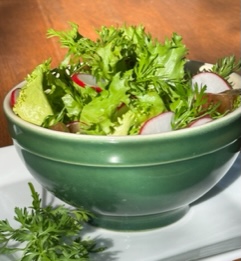
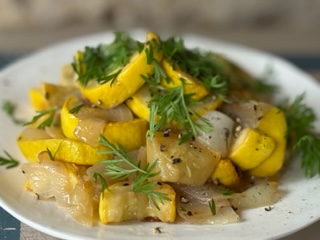
For two different dinner options recently, we enjoyed caraway leaves straight from the garden in the following ways:

Linda Alexander, Dallas County Master Gardner Class of 2008