Monthly Archives: February 2021

Cheers for Chervil!

February 25, 2021

As volunteer master gardeners took a walk-about around the garden this week to access freeze damage to our plants, something unexpected caught our eye. Our lovely, delicate little chervil plants had not only survived the freeze but appeared to be just as perky and robust as before. Left unprotected during the extreme cold event, they seemed to be welcoming us back into the otherwise “brown” garden. 

Chervil, Anthriscus cerefolium, is a member of the carrot family. (Coincidentally, just a few steps down from our chervil plant, a tiny little carrot sprig had survived, as well.) Chervil is an annual herb that grows best in cooler weather. In our Zone 8 climate, it succumbs to the sweltering summer heat. Seeds can be sown in place in early spring and again in fall. Some of our local garden centers already have 4” pots in stock, as well.

Chervil growing in our garden after the freeze

The taste of chervil can be described as parsley-like with a hint of myrrh or anise. You may know it as one of the herbs that make up the traditional French herbal spice mixture fines herbs. Fresh chervil wilts easily, so harvesting as close to preparation time as possible is advised. Use it generously in salads, cream soups, with eggs and salmon and added at the last minute to many classic sauces. 

Scrambled eggs sprinkled with chervil

In 2014, we discovered a recipe that earned the “super star” award in our cookbook, ‘A Year on the Plate’. Every Herb Pesto received a perfect score from our tasting committee. Most members agreed that the small amount of chervil (1 tablespoon) called for in the recipe gave it a refreshing lift. 

Chervil grows best in a location with morning or filtered sun and rich, slightly moist soil. At Raincatcher’s, we planted it on the south end of our Hügelkultur bed where it receives filtered shade from the red oak tree. We also have a clump growing in the sensory garden where it is thriving in morning sun and afternoon shade.

A graceful clump of chervil growing in your garden is something to be celebrated. Its feathery, pale green foliage with tiny white flower clusters that reach 3 inches across is a charming plant for the fall, winter or spring garden. Our vote is for all three!

Linda Alexander

Assessing Freeze Damage in Your Landscape

February 24, 2021

Question: Will my landscape survive last week’s deep freeze?

Answer: The short answer is: it’s too soon to tell.   Damage to soft, tender plants may be immediately recognizable; leaves look water-soaked, dark green and withered. Stems may collapse and get mushy.  However, damage to woody plants, trees and shrubs may take longer to appear and will depend on the part of the plant that was injured and the growth stage of the plant at the time of frost.  Buds, shoots and small branches are the most susceptible.  Winter damage usually does not become apparent until spring, when growth normally resumes. Winter damaged plants are slow to initiate growth, may show distorted growth, death of leaf and flower buds, or die-back of shoots and branches.  

With warmer temperatures on the horizon, it may be tempting to rush out and begin pruning branches and shoots that look dead. Instead, we encourage you to wait. 

Winter is still with us and the average last frost date is around March 16. Premature pruning can actually aggravate the damage that has already been done.  Pruning cuts will expose previously protected plant tissue to the elements.  Pruning can stimulate new growth that will then be susceptible to freezes later in the season.  Because dormant branches and dead branches can look the same, there is a risk of removing healthy tissue the plant needs for recovery in the spring.  Allowing dead limbs and foliage to remain at the tops of plants can help protect the lower leaves and branches from future frost.

TAMU recommends delaying pruning until time reveals the areas of living and dead tissue and until the threat of additional frosts and freezes has passed.  Fortunately, trees and shrubs have the ability to leaf out again if the initial growth is damaged or destroyed. Good care during the remainder of the year, such as mulching and watering during dry periods, should aid in the recovery process.

The University of Massachusetts has a great site about the effects of cold damage on landscape plants.  Not all the information will be applicable to our Texas climate, but the principles of assessment and treatment of frost damage can be used in any situation where a severe and unexpected freeze has occurred.  


Margaret Ghose Dallas County Master Gardener Class of 2017


More questions about freeze damage?

Dallas County Master Gardeners would like to help.

Volunteers staffing the Dallas County Master Gardeners Help Desk provide FREE gardening advice to area residents. These Master Gardeners welcome the opportunity to help solve your gardening problems.  You can easily contact us by sending an email to dallasmg@ag.tamu.edu

This is the best way to contact the Help Desk.  Include your name and zip code, with as much information as possible regarding the nature of your problem.

Ice Creations in the Garden

February 20, 2021

Just before the extreme winter temperatures fell upon us last week, my husband called me quickly to our backyard. He was concerned about the unusual ice formations surrounding the stems of our Frostweed plant. Had he forgotten to turn off the sprinkler system or was our plant in distress?

Most years, after those beautiful fall blooms have faded and the plant turns brown, we would already have cut it down to ground level. Seems this year, it was overlooked. As we carefully touched the somewhat intriguing white substance, it was evident that the plant stems were covered in frost.

After doing a little online research, I discovered the reason for the plants name.  Frostweed, Verbesina virginica is a Texas native biennial that ranges in height from 3 to 6 feet. Our plant has easily reached the six-foot mark. It blooms in late summer and continues blooming until frost. The plant was named Frostweed because of this unique characteristic of producing intricate ice formations from its stems. Only a few species of plants are capable of producing these ice creations, more generically referred to as “frost flowers.”

Frost flowers at Raincatcher’s Garden

As early as 1833 John Herschel, son of the famed astronomer William Herschel, who discovered the planet Uranus in the 18th century, made an interesting observation. In a letter printed in Philosophical Magazine he describes going for an early morning walk several winters before noticing “a remarkable deposition of ice around the decaying stems of vegetables.” A few days later, he found a similar strange ice formation, this one seeming to emanate in a kind of riband-or frill-shaped wavy excrescence.”

Herschel’s letter is one of the earliest recorded observations of the phenomenon of “frost flowers” (sometimes called ice flowers or ice ribbons). However, he could only hypothesize about the cause of these formations. Not able to explain, he concluded that “It is for botanists to decide.”

Scientists are unsure why only a few plants in nature produce crystal ice patterns into ribbons or clusters that resemble flowers, and why only certain types of plants are affected. One theory is that frost flowers develop when air temperatures are freezing but the ground temperature is warm enough for the plant’s root system to be active and the air temperature is cold enough to freeze the upward flowing plant juices. Perhaps, as the moisture in the plant freezes, the ice crystals push out through the stem. They may emerge from a small slit to form thin ribbonlike strands. Or they may split open a whole section of the stem and push out in a thin, curling sheet.

Another theory is that the stems rupture and crack in just the right way so sap oozing out forms into wide ribbons that freeze into the ice patterns.

As you can see from the photographs, our frostweed plant seems to have formed frost crystals resembling spun cotton candy. Notice, also, that the formations are mainly around the base of the plant descending upwards for about two feet.

Frost Crystals

Whatever the true scientific reason for this phenomenon of nature, we now know that next fall when blooms are spent, frostweed will remain in our garden throughout the winter months. Even our 5-year-old granddaughter, Sadie, was so intrigued with the crystals that she couldn’t resist gathering up a handful. Oh, the joy of experiencing childlike wonders found only in nature.

Linda Alexander

Pictures by Linda Alexander and Beverly Allen

Related Posts for more learning about Frostweed:


Japanese Maple Sale

For tree information and purchase click here.

Baby, It’s Getting Cold Outside.

February 10, 2021

Better get out more of those covers for your plants. This arctic blast is lasting through mid-week next week and temperatures are forecast to drop way down into the single digits. I have checked the weather app on my phone much more than I ever checked instagram or any other media platform and my level of anxiety was rising until I talked to Jeff Raska.

Jeff Raska, our county horticultural agent, gave some advice.

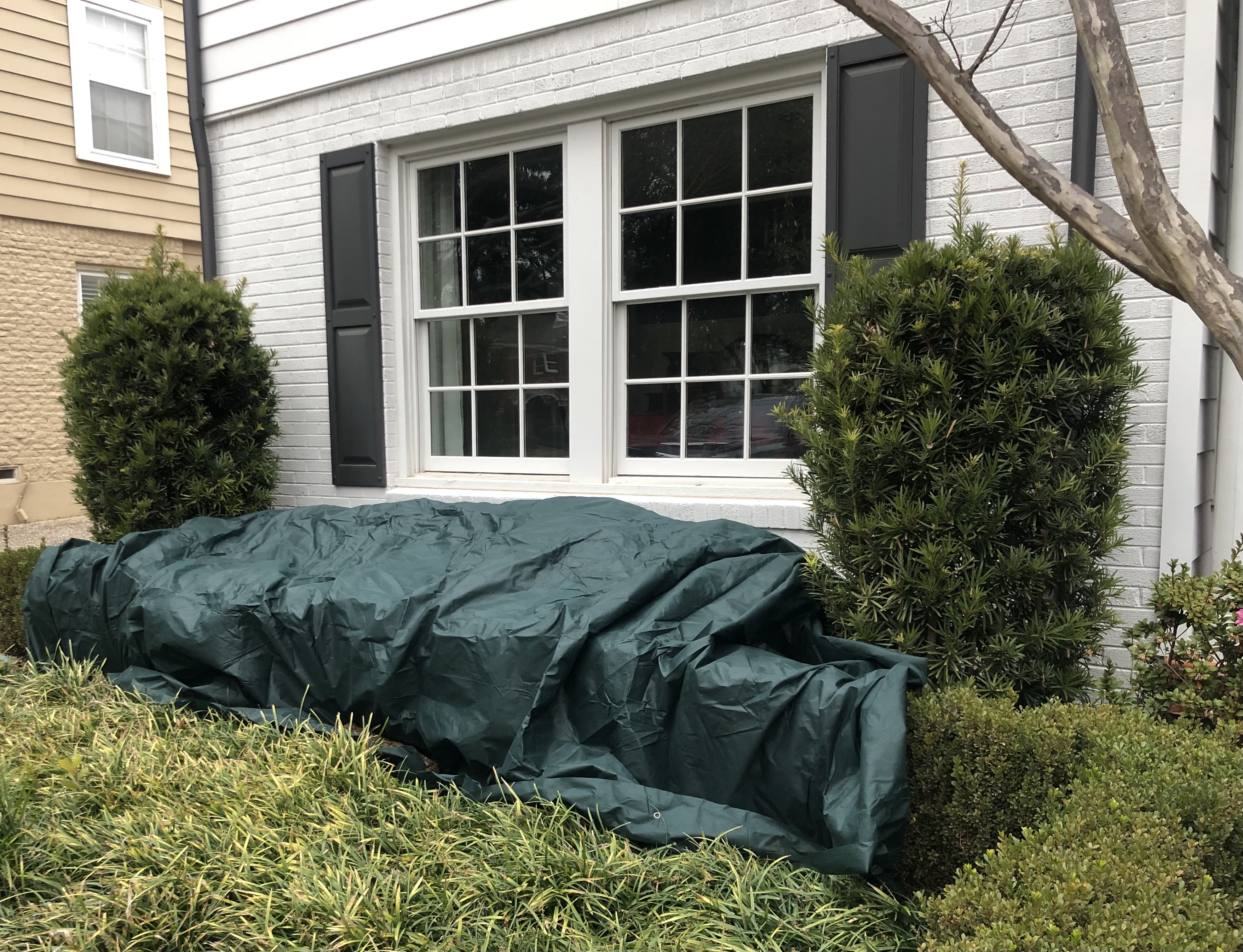
Cover all bedding plants even pansies and kale, cover all soft tissue plants and perennials that have broken bud. Shrubs that are marginally cold tolerant may also need a cover. That would include Pittosporum, Indian Hawthorn, and Loropetalum. Boxwood may get frost damage so consider covering them.

Just like us, our plants are not used to this cold weather snap so protection is in order. Fortunately, we may get rain first and Jeff says that will help a ton!

As far as frost cloth versus using bed sheets, Jeff says he has saved many plants with bedsheets. Frost cloth or frost blankets are better and will give better protection, but if you run out of those, empty out your linen closet and put those bed linens over your plants.

Looking out at my yard, I am deciding which plants are my favorites and prioritizing them. My relatively new bed of pittosporum, my giant kale, and the fall planted ShiShi Gashira camellias in front are getting the frost cloth and I may even double it. The huge Indian Hawthorns that flank my front yard beds will also get special treatment. I wish there was a way to help by Chinese Snowball Viburnums that are already blooming. For them, I will have to say a prayer.

In closing, Jeff reminded me that nature happens, Things will grow back, as long as they don’t get root damage. The sun will shine again.

Ann Lamb

Cold Weather Headed to Dallas!

February 9, 2021

I am going to make this brief because freezing weather is about to descend on us and maybe you are like the gardeners at Raincatcher’s Garden, scurrying to prepare.

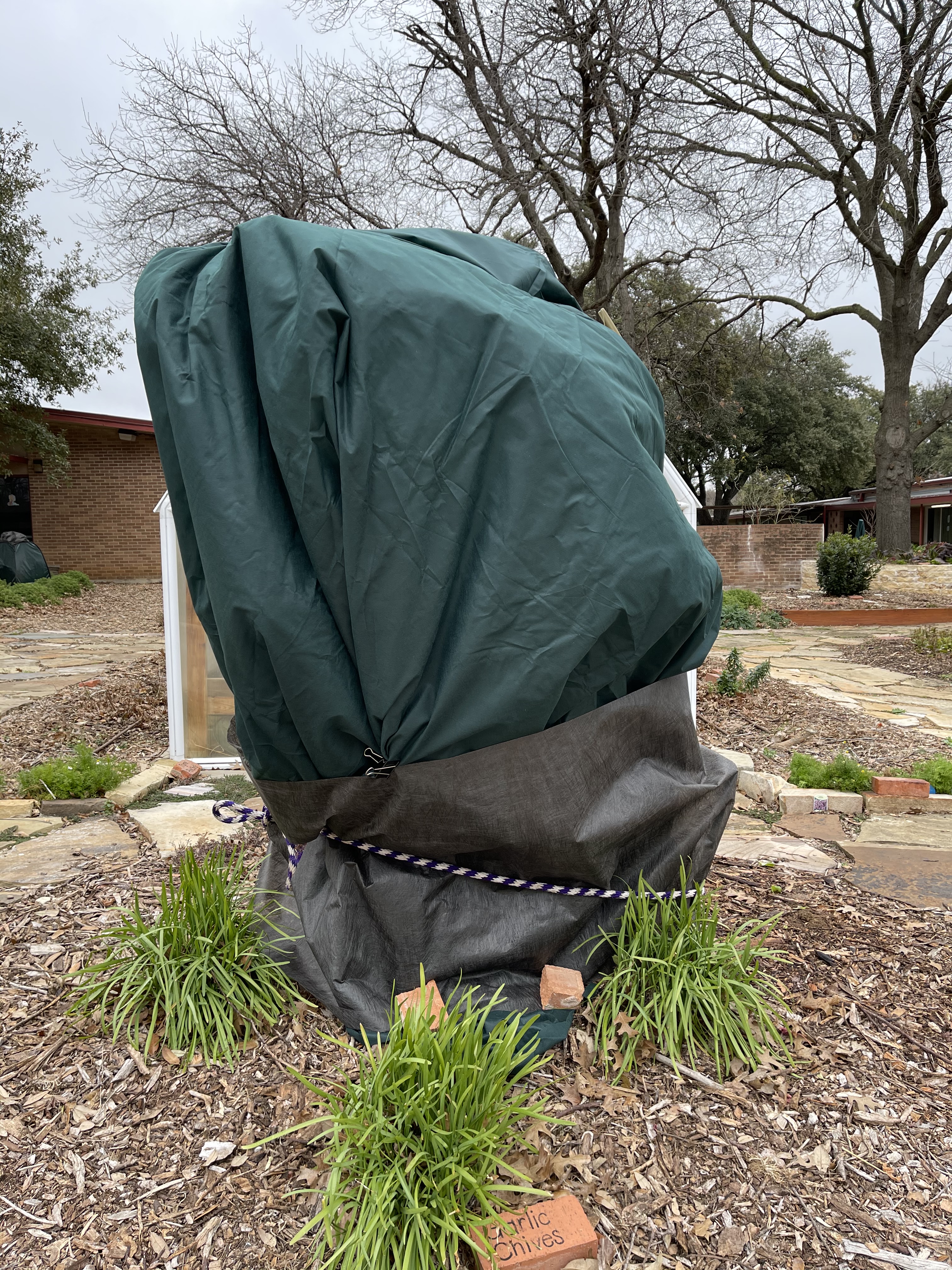
Our olive tree has been wrapped around the trunk and covered with frost cloth and mulched. Our potted Meyer lemon tree in the courtyard has been protected also with frost cloth. Frost cloth gives about 8° extra warmth.

We are not worried about our two new Satsuma citrus trees. We puts tents over them but did not wrap them as thoroughly as the olive tree and lemon tree because they are hardy down to temperatures as low as 15-20°.

Read about these two Texas Superstar® plants in the links below.

For more information from Texas AgriLife about how to protect your garden during cold weather, click here.

Stay warm!

Ann Lamb


‘Orange Frost’ Satsuma

‘Arctic Frost’ Satsuma