Tag Archives: Seeds

LARKSPUR A BEAUTIFUL LIVING LINK TO THE PAST——AND TO THE FUTURE

May 3, 2025

What a great plant larkspur is.  Coming up from the seeds of last springs plants–living all winter as little fluffy greenery  and suddenly growing tall and blooming before most other flowers.

Winter can be a challenge  but finding the tiny larkspur seedlings and thinking of whats to come lifts the spirits.  What a bonus that they honestly do not need a great deal of help from the gardener to grow and thrive.

As with most self seeding plants they come up where they wish to and may require some editing.  If they are too crowded they won’t be their best so don’t hesitate to thin out the smaller ones.  This will allow the remaining plants to grow tall. This adds structure to the spring garden.  The color honestly goes with everything.  Pink poppies–nigella–combined with the blues and purples of the larkspur–its a picture waiting to be painted–at least admired by you and anyone lucky enough  to pass by.

Watch carefully larkspur is a magnet for native bumblebees.  As we know bumblebees have been struggling.  Seeing so many enjoying the larkspur makes growing them worthwhile in itself. 

But wait–there is more!!  When you grow larkspur you are growing a plant that has been grown by gardeners for hundreds of years.   The Victorians  were very fond of them–they were popular gift flowers.  

In medieval times they were grown in monastery gardens.  These gardens had to be useful not just beautiful. 

Now–lets pause–important information will follow:  all parts of larkspur are toxic.  Do not consider internal use.  But its great to know that people tried their best to help and use what they saw around them.  Potions were made to treat a variety of problems including depression and anxiety.  The seeds were used to make a solution to kill lice.  That had to be a welcome relief as lice were a horribly common problem.  In fact this use continued for a long time –soldiers used it during the revolutionary war.. 

The flowers can be used to make a dye and were used by the monks to make a blue ink.

So think of all those before you as you work in your garden–and remember you are a link in this long chain. Remember yes–but as always–there is more.You obviously must let the plants finish their blooming and go to seed–yes this can be a bit untidy but its essential.  Lots of seeds will fall and they will lie in wait until next winter when the cycle starts again.  But don’t let them all fall–gather some seeds.  

Share some seeds with friends and neighbors–answer their questions about how to grow larkspur.

So the chain that links the plant and the gardener to the distant past will extend into the future–and you are and will be a link in that chain.

Susan Thornbury, Dallas County Master Gardener Class of 2008

So you think you want a GREENHOUSE!  Experiences from Acquiring a Green House for Raincatcher’s Garden

The allure of having a greenhouse is something that some gardeners dream of – a place to overwinter plants, start seedlings, and have workspace. How does this become a reality?  First of all,  determine your goals and ideas.  Do your homework and decide if it is a project worthy of the investment of your time, money and efforts?  

About the time Fall arrives and freezing weather makes its appearance, ads for greenhouses start flooding inboxes and social media sites.  It seems like a good idea to have a place to store tender plants that can’t handle it outside during our coldest temperatures of January and February. Another bonus is the ability to provide a head-start for seedlings to sprout before they are planted in the garden.  

There are a variety of styles, sizes, price points as well as optional accessories to consider – from heavy plastic, glass or plexiglass partitions, to brick surrounds, and various mortar and glass options, ranging in cost, size and function. A greenhouse can also be labor intensive, and impractical for those who don’t have the time, ability, or manpower to maintain it properly.

The preferred space needs to be of adequate size for your garden needs, level and in a sunny to mostly sunny location. Water needs to be close and the ability to heat, cool and monitor the space is an important consideration.

Dreaming of a place to overwinter my plants caused me to inquire online. My available location was not ideal-the space was not adequate and the prep and the assembly was more than daunting (in so many ways). Ultimately, the amount of time, effort and money to be invested caused me to pause, rethink and determine that installing a greenhouse was not my best move.  However, a well-utilized greenhouse is much more than just a storage space for tender plants.  

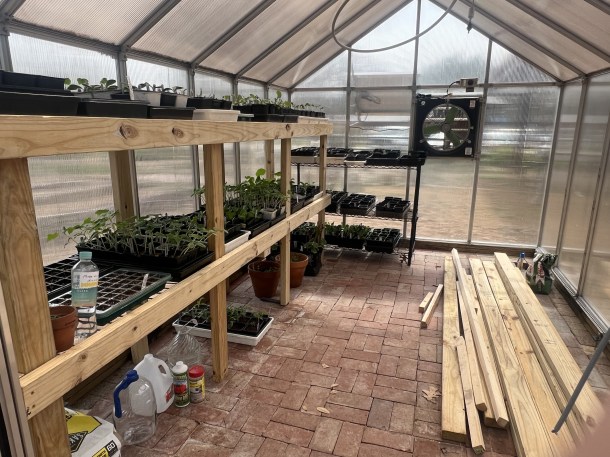
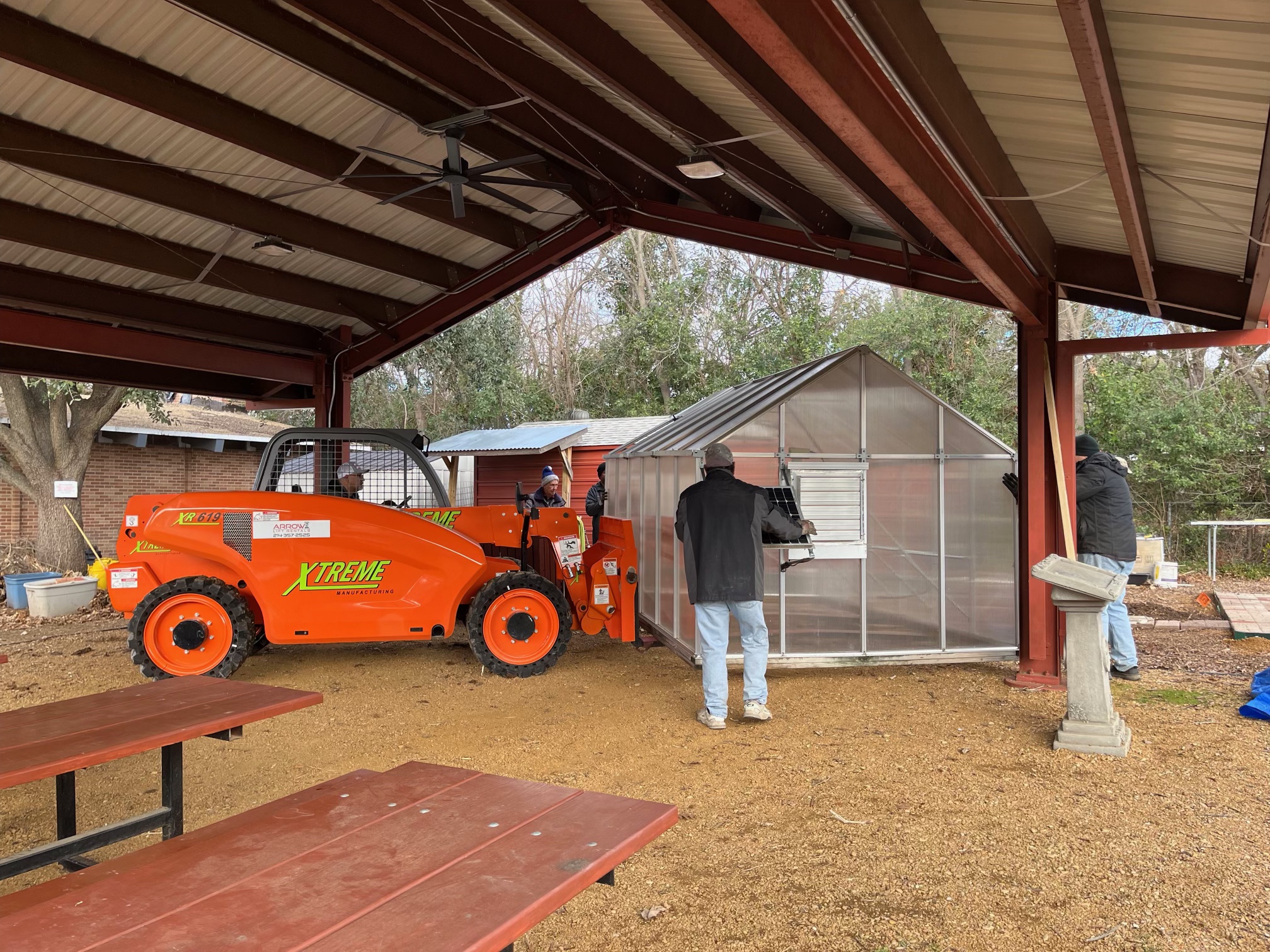
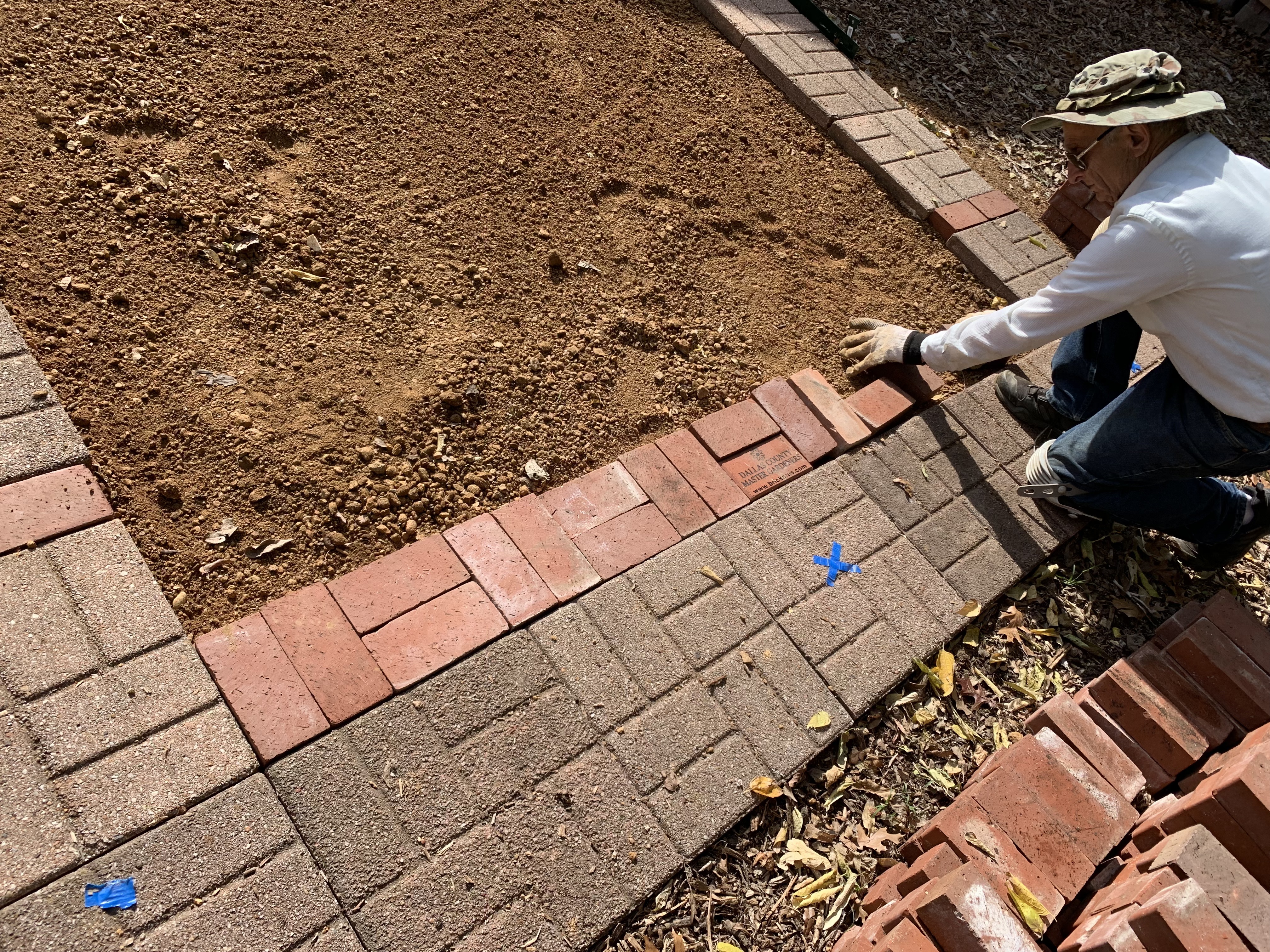
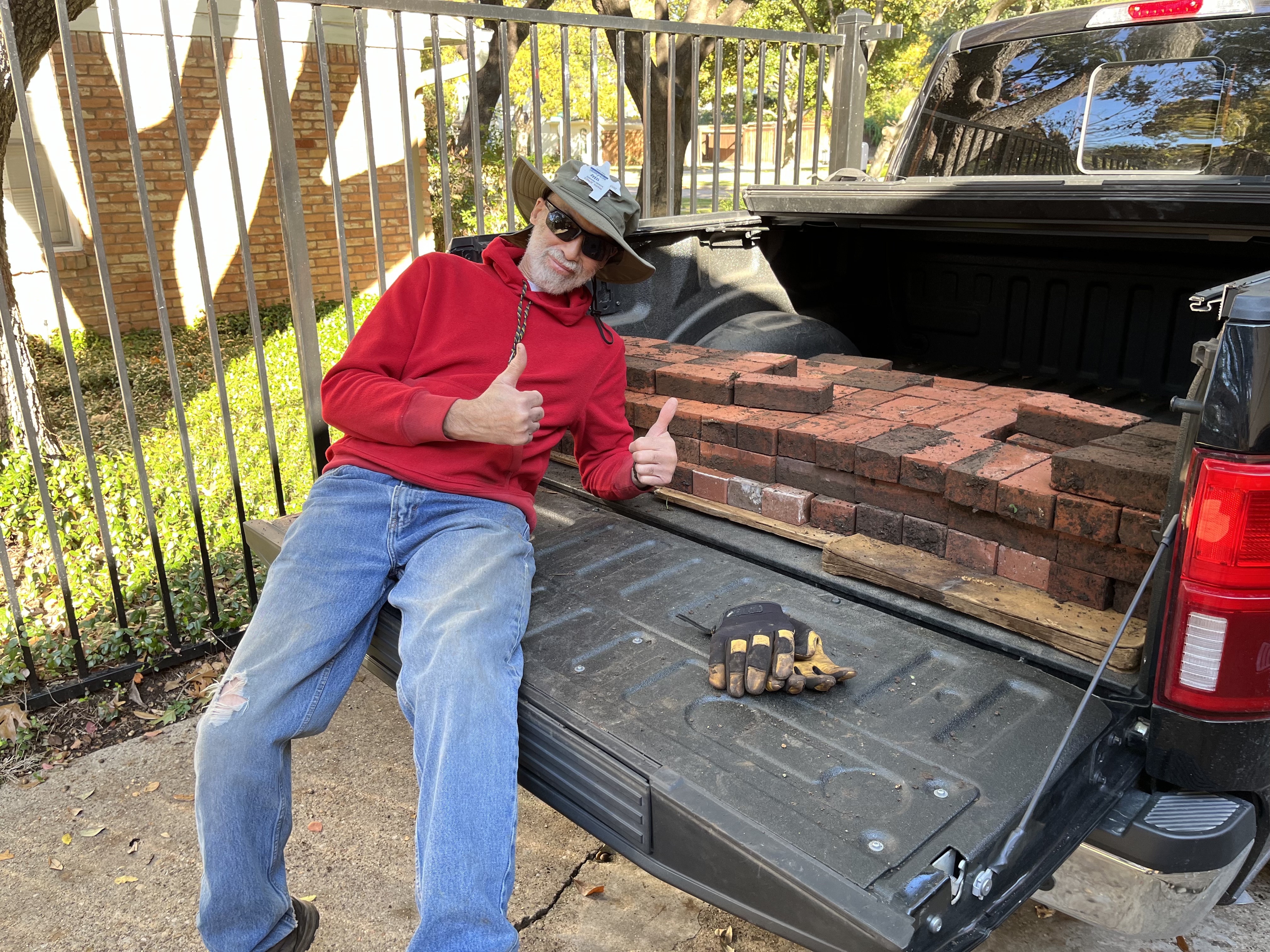
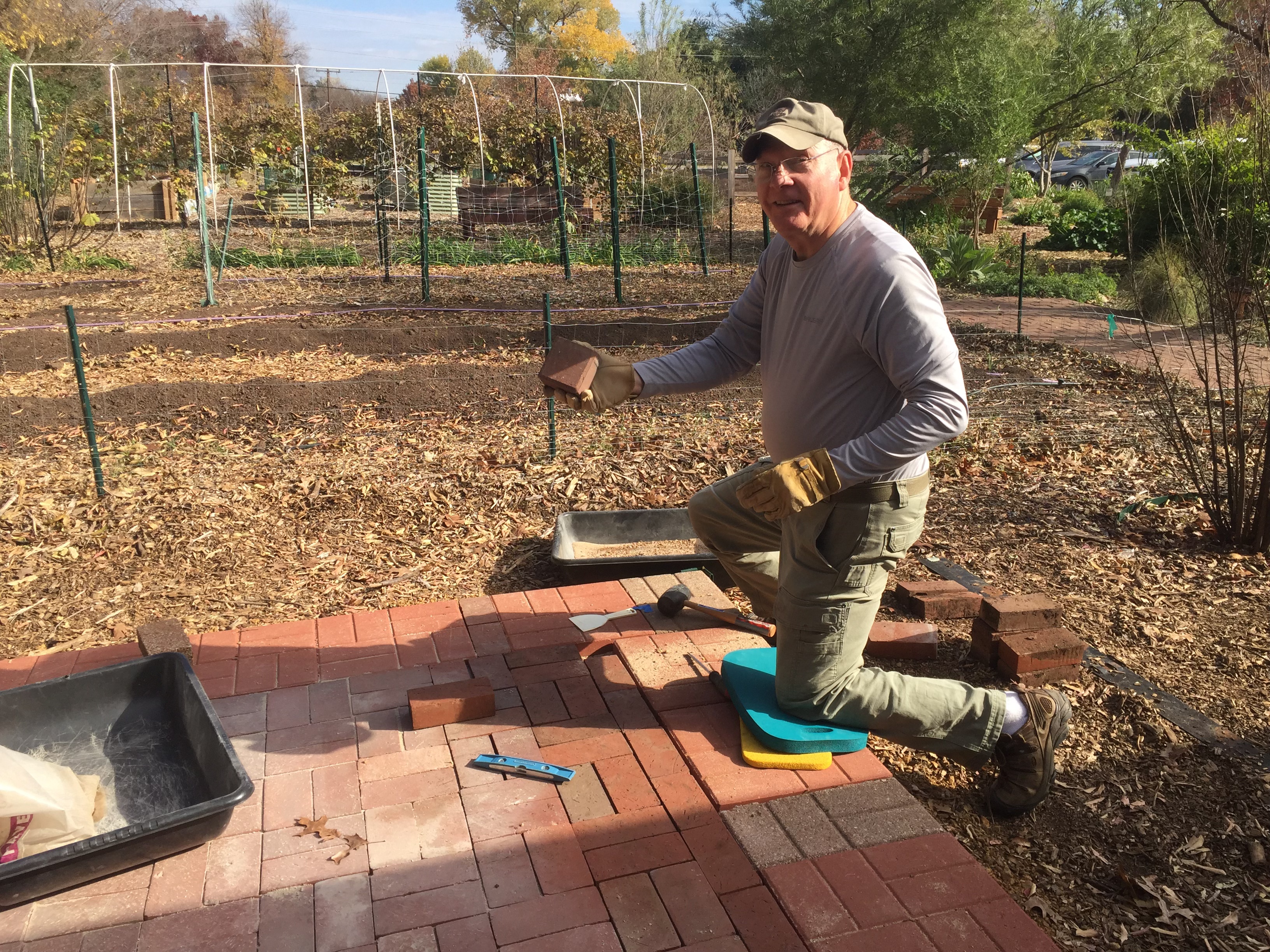
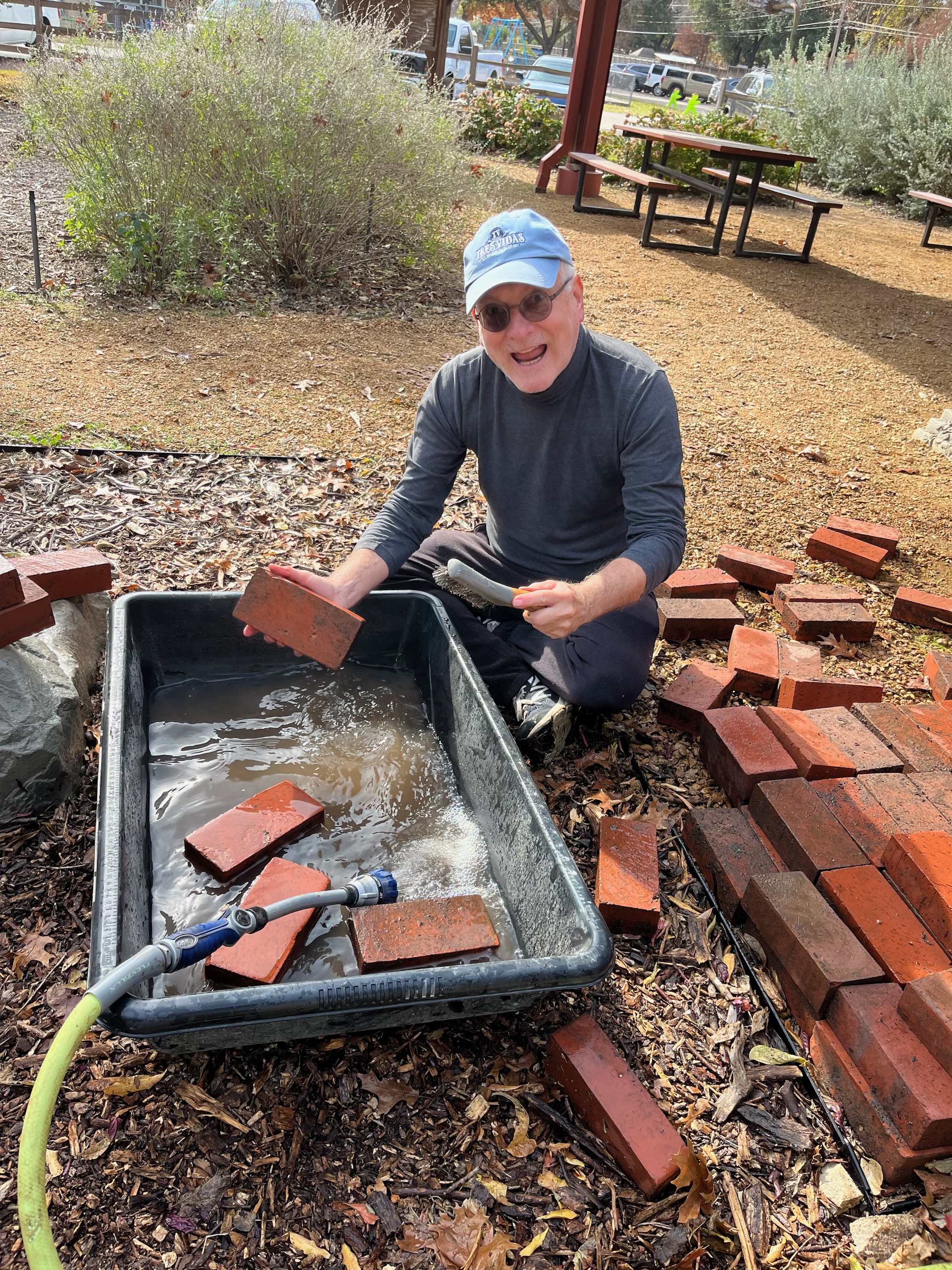
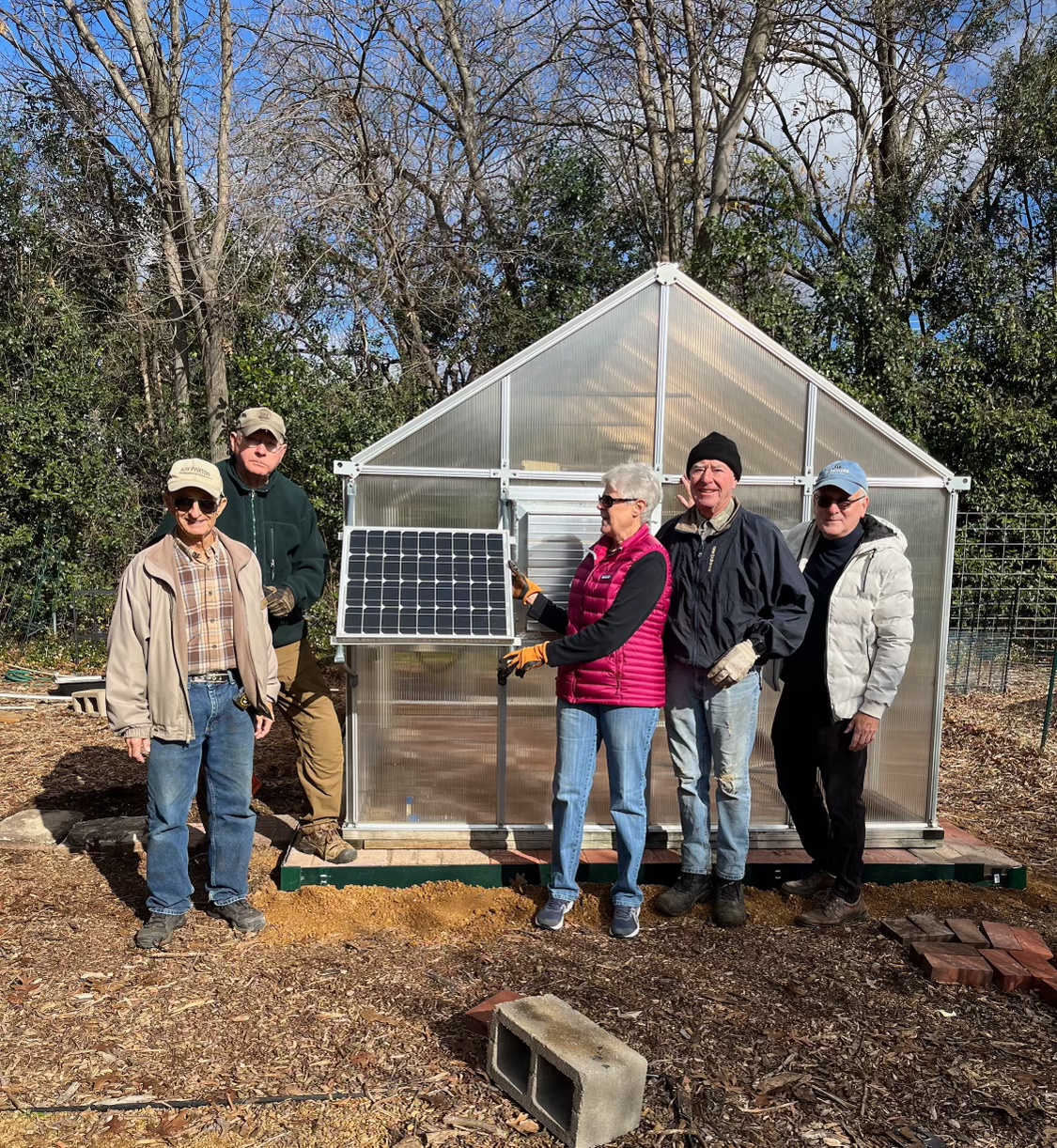
While contemplating this, Raincatchers’ acquired one that would be optimal for our North Garden. It was transported to the property and the plans for putting it into seedling production began to unfurl. It took about two months to get the “new to us” greenhouse relocated and in working order. The “team” at Raincatchers’ has spent many man hours preparing it for use, leveling the site, setting a brick floor on decomposed granite, anchoring the greenhouse against the strong Texas winds, building multiple two-tiered seedling tables, installing a solar powered cooling fan, and initiating water and electrical hookups. Maintenance will be ongoing.

Seedlings have now been started for our many vegetable beds and they appear to be very happy in their controlled environment.  Note: vegetable seedlings are started and then set out into our gardens at the proper time.

If you are thinking about  acquiring a greenhouse, either by purchase or building it yourself – the best of luck to you! Hopefully, you now have an idea of the reality of the effort to produce a functioning greenhouse and can make an informed decision  It can be very useful and an asset to your gardening efforts; whether starting vegetables, flowers or show plants, or just over wintering your houseplants or tropicals.  

A gardener’s considerations for Installing a greenhouse:

Manpower to construct the unit (most come in sections that require construction) 

$$ Cost (from a few hundred dollars to several thousands)

Overall Size and Options

Site selection –    

Sunny to mostly sunny location

Ground leveled for structure

Anchoring against the wind

Inside Flooring (Hard surface with the ability to drain) several options Shelving options (Water resistant)

Storage options (Greenhouse supplies)

Heating and Cooling Capability, i.e., a solar operated cooling fan

Electrical Considerations

Water Availability (For plant watering and seedling misting) 

Shade Capability (For the long, hot sunny days)

On-going Upkeep (several hours a week) 

Construction Permit (If required)


Starla Willis, Dallas County Master Gardener Class of 2011 with input from Jon Maxwell, Class of 2015

Two dates to remember:

Raincatcher’s plant sale-May 7th

Dallas County Master Gardener Association Garden Tour 2024-May 18th

Starting Seeds Indoors-A Contest!

Mnemonics and memory prompters are a good way for gardeners to remember important facts and dates. 

Around Valentine’s Day, February 14?  Time to prune your roses.

Do you have a better way of saying, other than “Treat Seeds With Loving Hands,” the five critical elements for growing successful transplants discussed in yesterday’s post?  If so, please let us know.

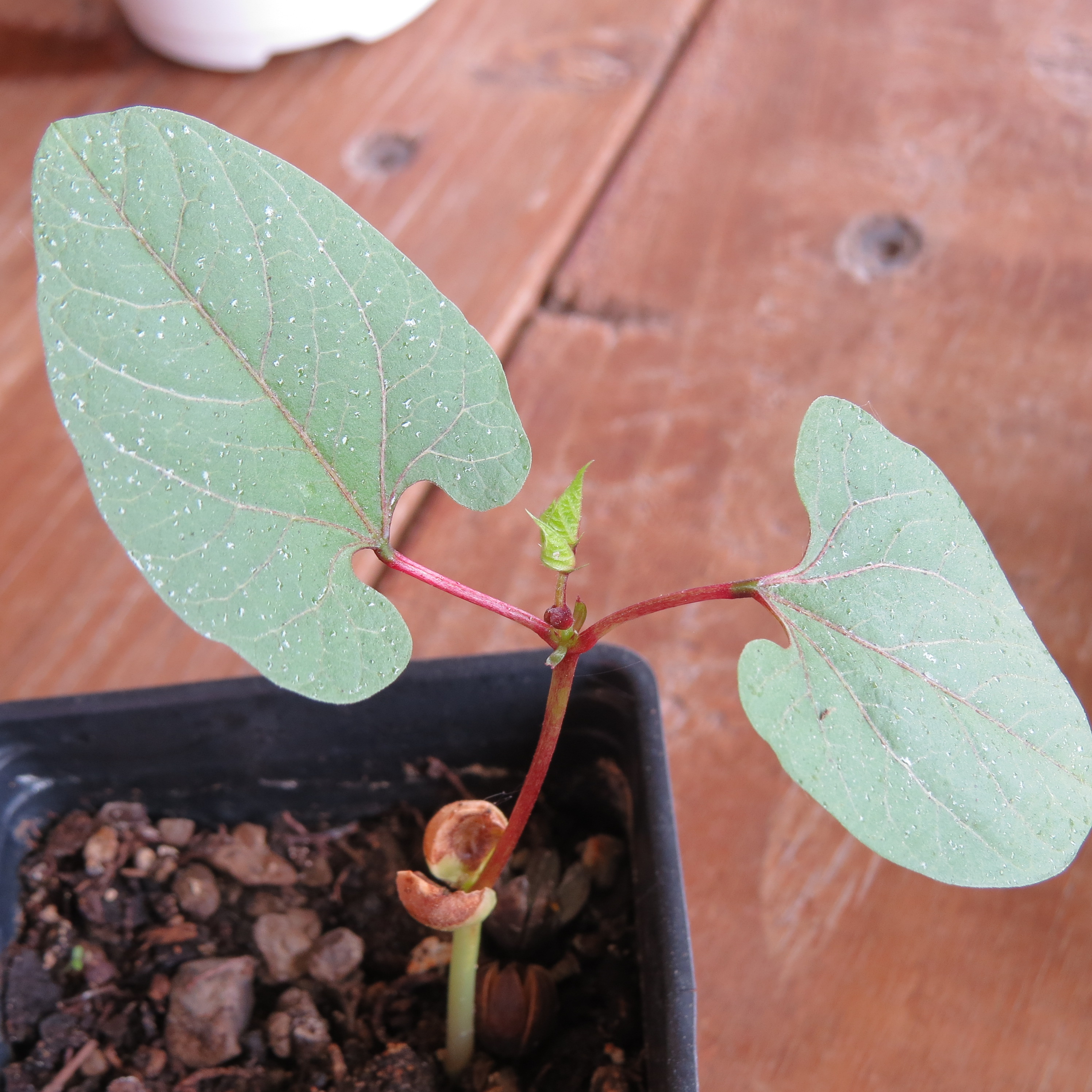
Above:Hyacinth Bean Vine Seedling Ready to be Transplanted

Above:Hyacinth Bean Vine Seedling Ready to be Transplanted

As Ann , the Demonstration Garden’s coordinator, said “There is a lot of interest in gardening but so little real depth of knowledge.  I think of some of the things I hear at the garden centers when I am shopping and feel so bad that plants and seeds are going home with very little chance of survival.  Young gardeners are so handy on the computer but not always in the dirt.  Maybe we can help with that.”

So, put on your creative gardening hat and let us know your suggestion for a way to easily remember the five  elements for successfully starting transplants from seed. The best suggestion, as judged by several of the Joe Field  gardeners, will receive  5  packets of seeds collected from our Demonstration Garden.

Help us teach the general public how to easily remember how to germinate seeds.

Carolyn

Picture by Starla