Perfecting the Pond

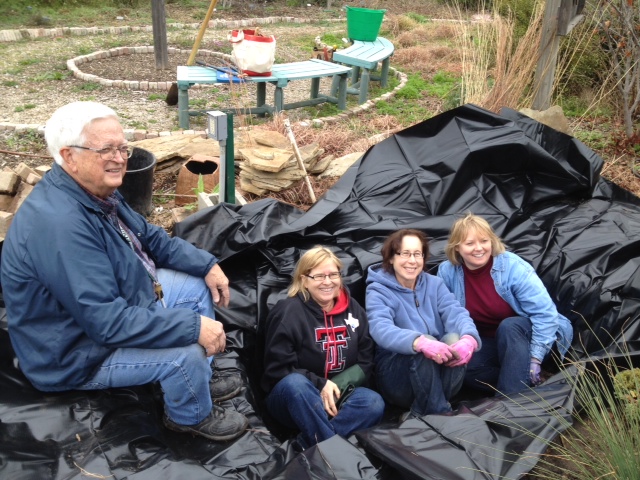
Like mud? Try enlarging the pond in the wildlife area of the Demonstration Garden on a cool Tuesday morning.  The dirt—well mud—was flying as Jim, Michelle, Sue and friends dug out the pond and added six-inch shelves for bog plants.  After adding a thick new liner, the pond is perfect for a picture for DALLAS GARDEN BUZZ! Gardeners arranged flagstones around the pond edge to hold the liner, filled the pond with water and returned aquatic plants, and installed a new pump with a fountain head.  Whew! As Jim commented, that’s a lot of work!

Dallas County Master Gardeners: Jim, Starla, Sue, and Michele  Taking A Rest After Digging the Pond

Dallas County Master Gardeners: Jim, Starla, Sue, and Michele
Taking A Rest After Digging the Pond

Vegetable updates: Radishes and lettuce planted last week are up and growing; carrots are taking their time to sprout.  Onions and leeks planted a few weeks ago are doing well; the spring potatoes have not made an appearance yet.

Master Gardeners also worked to trim back roses and grass, pull weeds, and start rose cuttings for the May plant sale.   We had a great turnout (welcome interns!) and good productive workday in the Demonstration Garden.

Elizabeth

Celebrating Ann

February birthday gardeners Kim Kirkhart and Jim Dempsey celebrate with Ann Lamb

February birthday gardeners Kim Kirkhart and Jim Dempsey celebrate with Ann Lamb

It is so fitting that one of the sweetest people we know has a birthday days removed from Valentine’s Day. The Joe Field gardeners celebrated Ann Lamb and her 60th birthday this month and thanked her for her years at the helm of the Demonstration Garden on Joe Field Road. Gardeners enjoyed Austin Cheese and Vegetarian Potato Soups; Chicken Pineapple Pecan, Mango Chutney Tuna Fish and Cucumber Tea Sandwiches, and Beatty’s Chocolate Cake for the birthday lunch. Volunteers gave Ann a sterling silver ornament decorated with roses as a gift of appreciation for her dedication to the garden. Happy Birthday, sweet friend, who inspires us in life and in the garden!

Elizabeth

Two Recipes Using Nasturtiums

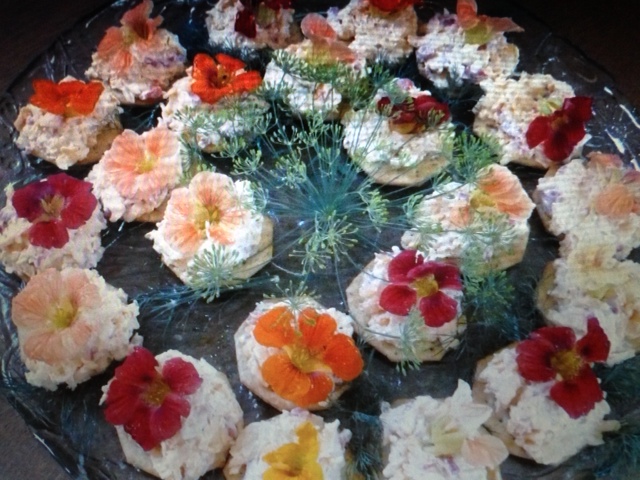
Nasturuims as garnish

Herbed Cream Cheese Appetizer

Ingredients:

1 (8-ounce) package cream cheese, softened

2 Tablespoons chopped fresh basil

2 Tablespoons chopped fresh cilantro

2 Tablespoons chopped fresh tarragon

3-4 cloves minced fresh garlic

Directions:

1.  Mix herbs with cream cheese by hand until blended.

2.  Spread mixture over your favorite crackers.

3.  Garnish each cracker with a nasturtium blossom.

Alternately:  Core a zucchini.  Fill center with cream cheese mixture.  Slice and serve on a cracker.  Garnish with a nasturtium blossom.

Nasturtium Mayonnaise

This recipe is the perfect compliment to chilled summer salmon, or any fish, fresh off the grill.  Also makes a great spread for tea sandwiches, or any sandwich needing some zip.

 Ingredients:

1 cup mayonnaise

¼ teaspoon finely minced garlic

2 teaspoons coarsely chopped capers

1/3 teaspoon grated lemon peel

2 teaspoons chopped nasturtium leaves

Directions:

Combine all ingredients.  Keep chilled until ready to use.

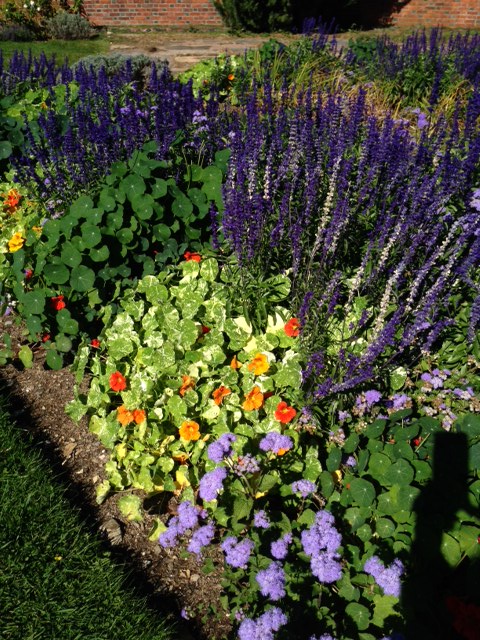
Nasturtium, Tropaeolum majus

It is said that Monet was rather fond of them and planted them in the border of the pathway that led to the front door of his home in Giverny.  With enchanting names like “Empress of India”, “Whirlybird”, “Alaska”, “Peach Melba” and “Butter Cream”, no wonder Nasturtiums are so welcomed in the garden.   They just seem to add a touch of old-fashioned charm.

Above: Beautiful fall nasturtiums at Shelburne Farm in Vermont

Above: Beautiful fall nasturtiums at Shelburne Farm in Vermont

Nothing signals spring’s arrival more dramatically than the first bunch of jeweled toned nasturtiums perched on the shelf at your local garden center. If you are looking for decorative, even water lily pad- like foliage, with a wave of brightly-colored blossoms that are tasty to boot, then head for the nasturtiums.  You may be familiar with the varieties that have deep green leaves, but there are now a number of variegated, almost speckled ones, as well.
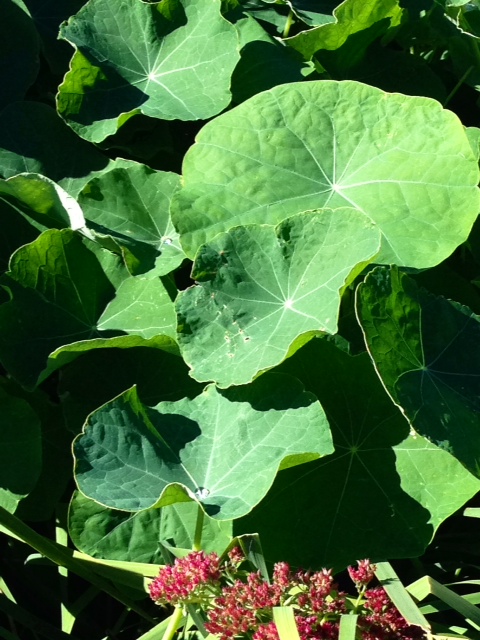
Above: Lily pads in the garden? No, more fall Nasturtiums from Vermont!

Above: Lily pads in the garden?
No, more fall Nasturtiums from Vermont!

Ideally, nasturtiums like to be in full sun, with moist, well drained soil. However, most varieties can survive when grown in partial sun. These carefree little dazzlers don’t seem to be bothered much by snails, other insects or diseases.  Enjoy them from March until sometime around late June when they succumb to our extreme Texas heat.

You’ll typically find two different kinds of nasturtiums: dwarf bush type and trailing.  The dwarf types are much more commonly available, and are useful as 10- to 12-inch tall colorful borders and for mass plantings.  The trailing variety will cascade dramatically down walls or hanging baskets.  Nasturtiums make a lovely addition to the herb garden with a multitude of culinary benefits.

There is nothing more intriguing than the tissue paper like profusion of blossoms that nasturtiums produce.   Although the blossoms appear delicate, they are actually very durable and make for vibrant and long-lasting garnishes.  Use the blossoms either whole or chopped to decorate creamy soups, salads, butters, cakes and platters.  Their sweet, peppery taste (both in the leaves and in the flowers) adds to the enjoyment.
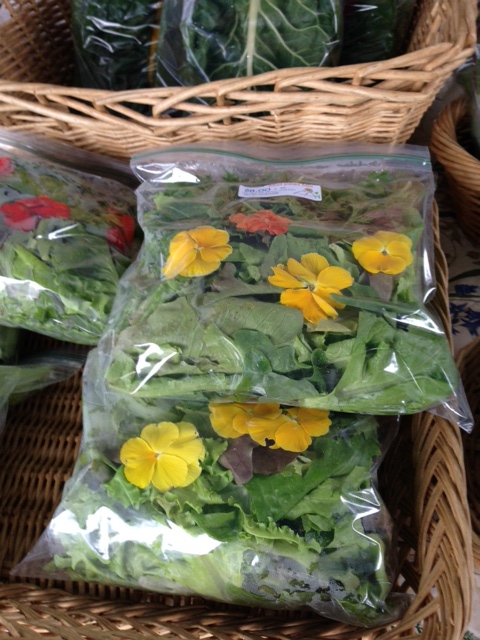
Above: Organic nasturtium blossoms bundled  up and for sale at the Aspen, Colorado Summer market

Above: Organic nasturtium blossoms bundled up and for sale at the Aspen, Colorado Summer market

Nasturtiums are natives to the cool highlands of mountains extending from Mexico to central Argentina and Chile. The conquistadors brought these brightly colored plants back to Spain in the 1500’s. The Indians of Peru used the leaves as a tea to treat coughs, colds and the flu, as well as menstrual and respiratory difficulties.   Being high in vitamin C, nasturtiums act as a natural antibiotic, once used topically as a poultice for minor cuts and scratches.


Take advantage of the many decorative ways to use nasturtium flowers for your next gathering.  However, don’t be surprised; some people will turn up their noses to a beautiful flower sitting atop a cracker spread with herb-flavored cream cheese.  Others will fully embrace the opportunity to sample such a tasty little gem.  If we could only extend our growing season nasturtiums might grace our tables more often.  Oh, dreaded Texas summers, why do you leave us so little time to enjoy this beloved plant?

Linda

Tip: Texas AgriLife Extension Service recommends planting nasturtium seeds about the time of the average last frost. They are usually planted where they can be allowed to mature, since young seedlings can be difficult to transplant.
A Very Good Day at the Garden

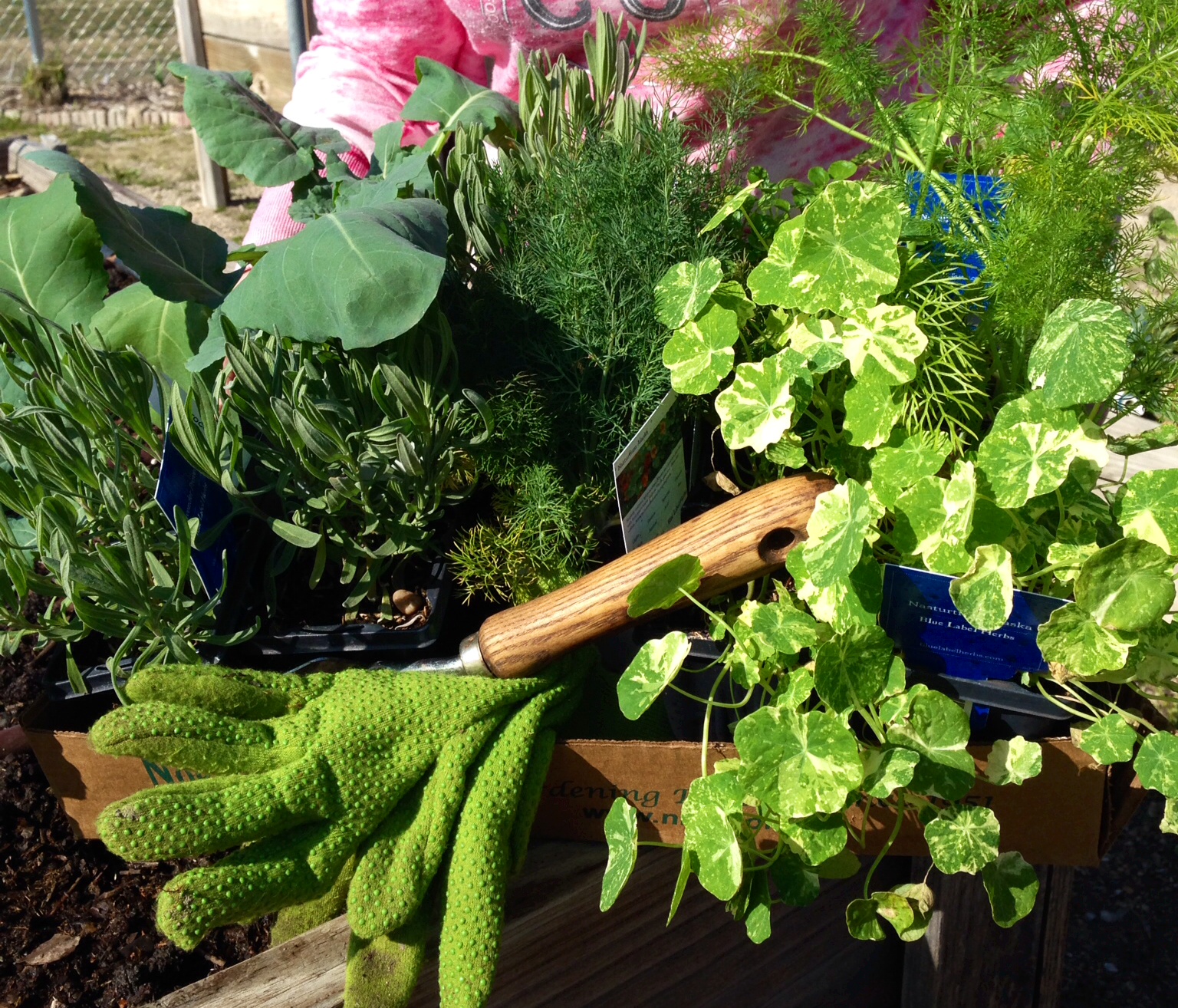
Above: Nasturtiums, Watercress, Lavender, Fennel, and Broccoli

Above: Nasturtiums, Watercress, Lavender, Fennel, and Broccoli

Thought I might give you a report .  We had a pretty day at the garden and we got a lot accomplished:

1)  roses trimmed

2)  planted radishes, carrots, lettuce, and beets

3)  cleaned up the herb beds and planted

4)  weeded

5)  removed most of the brown material in the RainCatcher Garden

6)  cleaned up the Color wheel

7)  trimmed asparagus

8)  worked the compost bins

9)  removed the ‘umbrella’ plant from pond – BIG job

10) divided and planted most of the huge papyrus plant

11) removed water lily pots, bailed nasty water from the pond and remove the damaged pond line

12) will dig pond deeper, but not bigger and will decide what type of liner to use

We had a very good day.

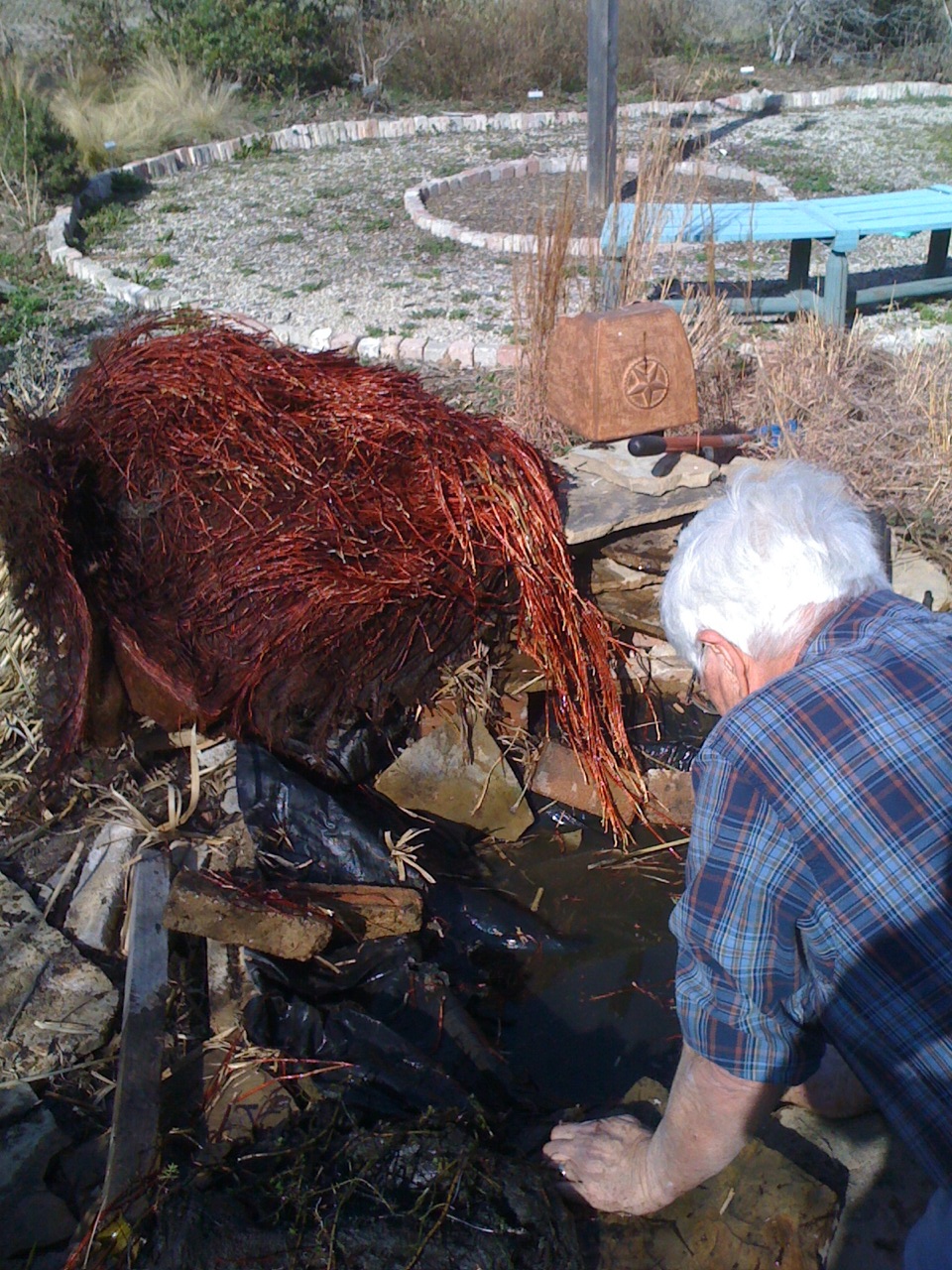
Above: Cleaning out the Pond, Red Roots Belong to our Papyrus to be Divided

Above: Cleaning out the Pond, Red Roots Belong to our Papyrus to be Divided

Jim

Pictures by Kim and Michele

For more about our pond click here.

Tomorrow: More about that lovely little plant in the box at the top of the page-Nasturtium.

Rose pruning….

It takes a fearless person to prune a rose.  Brandishing its protective thorns, the row of leafless bushes awaits us like the vicious magical Whomping Willow in the Harry Potter series, ready to throw us to the winds.

Armed with loppers, protected with elbow skimming rose gloves—the closest I’ll ever come to Mia Farrow’s favorite length—we faced the prickly branches.

Where to start thinning? Like a yoga chant, the rules started running through one’s subconscious: thinner than a pencil, rubbing, main canes…

Gradually the spindly support of last year’s blooms was cast aside, a faint memory of last May’s flush of happy blossoms.  Old rubbed canes fell to stronger green upstarts.

Eventually, a bare skeleton emerged from the entanglements, a garden star ready for its next act: its primadonna performance in the dance called Spring.

Elizabeth

Brush up on rose pruning tips here with Mariana Greene of the Dallas Morning News.

Hearts and Roses Luncheon and Lecture

Click. Click. “Oh, look at that one!”  Click. Click. “Oh, wow!” Click. Cli—Wait is this the Olympic games in Sochi?

No, it’s a bunch of lucky gardeners falling in love with roses.  Well, the first couple of rose pictures had rose expert Vicki Agee a little perturbed; seems her vibrant red roses were coming up blue on the power point.  Jim sprinkled a little fairy dust on the computer cable, and voila! The rose colors were correct, and the audience was entranced.   Vicki, who is also a Dallas County Master Gardener, spoke Tuesday at the Hearts and Roses luncheon held at the Demonstration Garden.

Above: Hearts and Roses Lunch and Lecture, 2-11-54

Above: Hearts and Roses Lunch and Lecture, 2-11-54

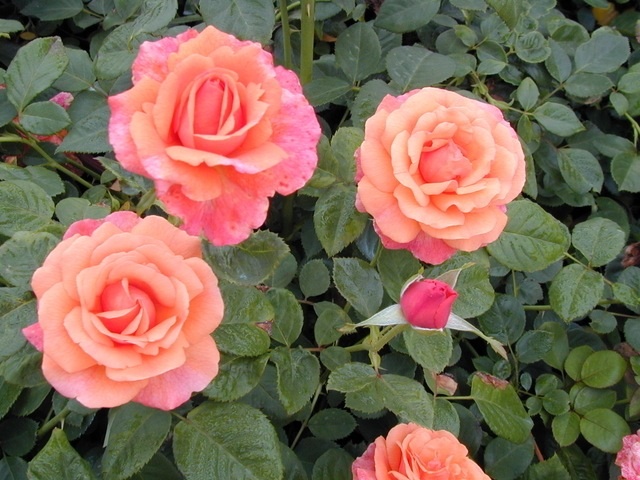
The rose world has changed dramatically, Vicki told us.  Breeders are adding many lovely, disease resistant, fragrant roses for the home market.   Look for shrub roses like floribundas and grandifloras, Vicki suggests. She recommended ‘Easy Does It,’ ‘Walking on Sunshine,’ ‘Pretty Lady,’ and ‘Lion’s Fairy Tale.’  Does anything smell better than a rose? For especially fragrant roses, choose ‘Francis Meilland,’  hot pink ‘Beverly,’ pink ‘McCartney,’ or pink ‘Deelish.’

'Easy Does It'

‘Easy Does It’

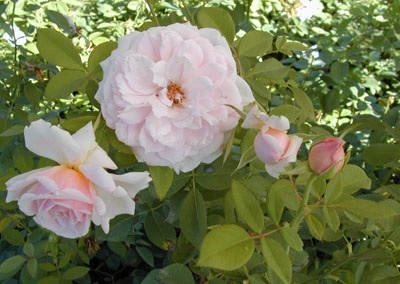
She also loves an old favorite Buck rose named ‘Quietness;’ its pale pink blooms mask its tough resistance to black spot.  Easy Elegance roses, Austin roses, Flower Carpet roses, and old favorites like ‘Mr. Lincoln’: the beautiful varieties made my head spin.  I wanted one of each.

'Quietness' Rose, a Dr. Griffith Buck Rose

‘Quietness’ Rose, a Dr. Griffith Buck Rose

Vicki also knows how to take care of her roses.  For fungal diseases like black spot use Neem oil for your first spray of the season.  Then spray spring and fall with a product like Banner Max or Honor Guard that contains Propiconazole.  Once temperatures reach into the 90s, stop spraying until fall.

Vicki suggests using Spinosad for thrips, because stronger sprays will also kill beneficial insects and butterflies.  Use a miticide like Floramite, Forbid or Avid for spider mites.  Pyrethrum takes care of cucumber beetles.  Fertilize with Texas T in the spring, and once roses have leafed out, use seaweed fertilizer every 2-3 weeks.  After late summer pruning, foliar feed your roses through October for maximum bloom.

An online bouquet of roses goes to Vicki for her wonderful talk and tips on a frosty February morning.  I know I wasn’t the only gardener who found new favorites to add to their flowerbeds.

Elizabeth

Picture of lecture by Starla

Our thanks to Chamblee’s Roses for permission to print from their website.  Click here for Chamblee’s Roses.

If You Feed Them, They Will Come

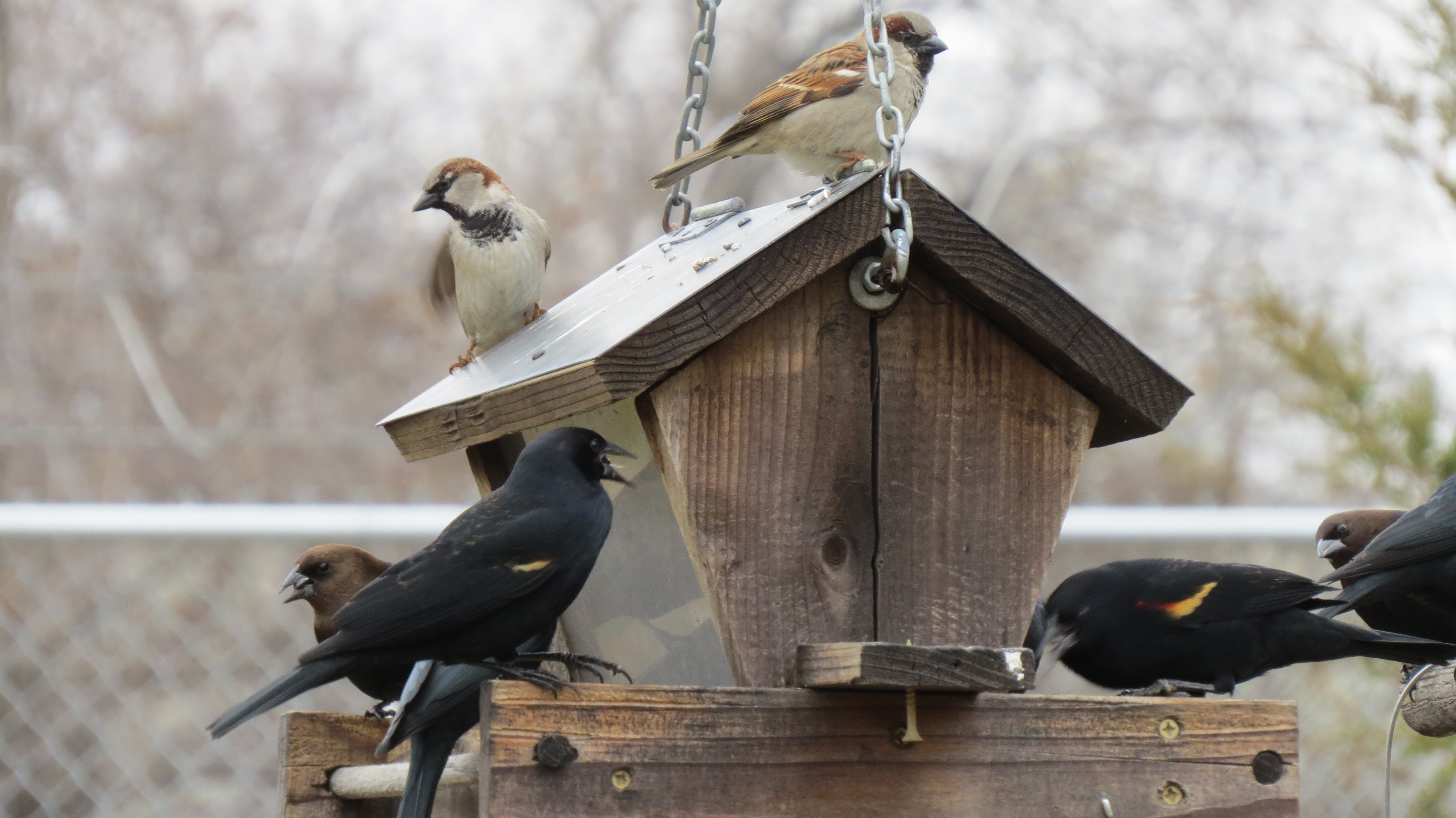
Though the Demonstration Garden doesn’t consistently put out food in our bird feeder since DCMG volunteers are not present at the Garden every day, within a very short time after the Garden’s feeder was filled, Starla, our talented Garden Buzz photographer, captured these pictures of Red-winged Blackbirds, Sparrows, and Brown-headed Cowbirds, feasting on the seeds.

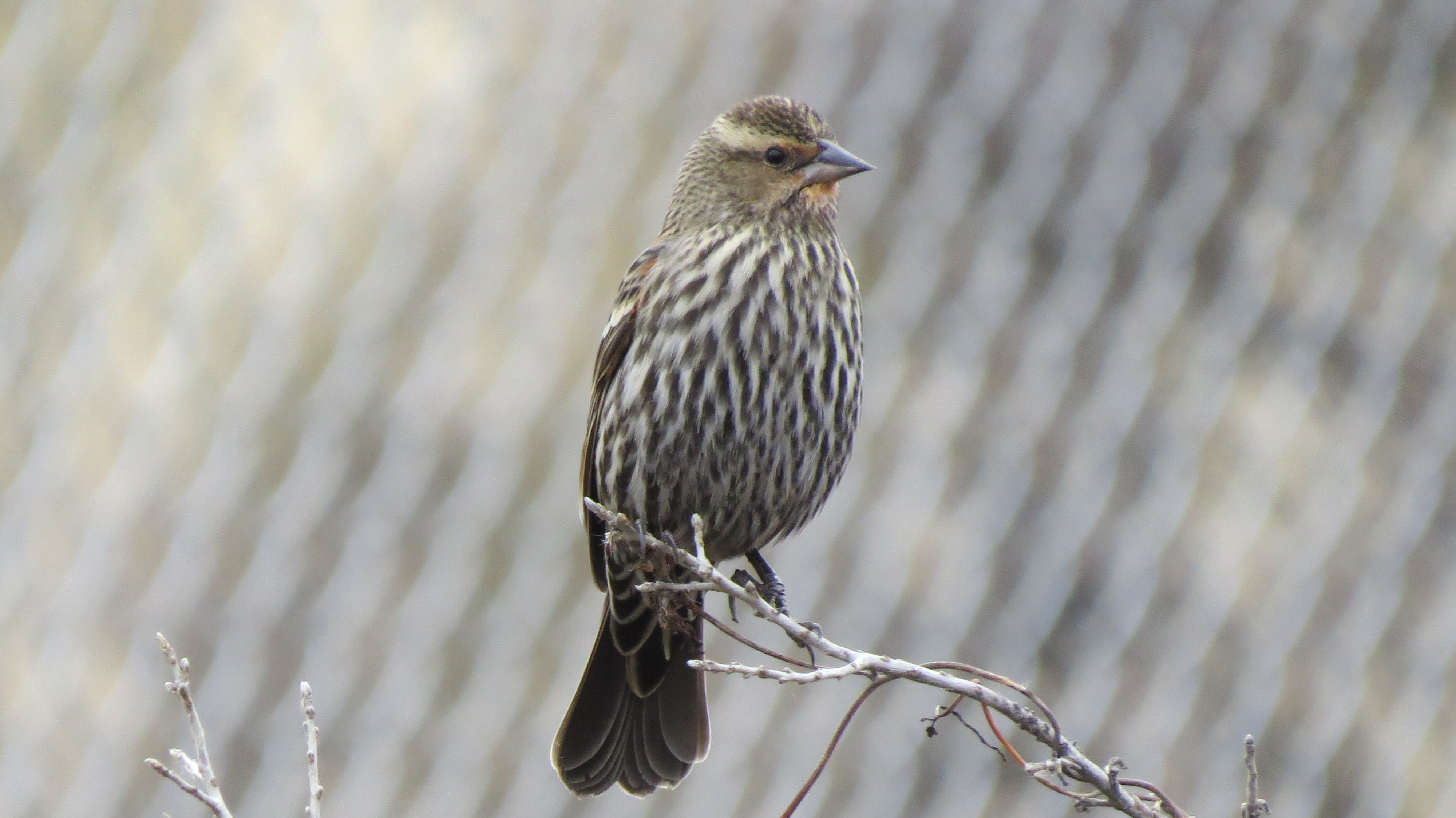
Red-winged Blackbirds are some of the most abundant birds in North America. The Red-winged’s count was estimated at 190 million in the mid-1970s. The male Red-winged Blackbird proudly displays his distinctive red shoulder patches, or “epaulets” when flying or displaying.  When resting, the black male shows a yellow wing bar.  The female Red-winged Blackbird is much drabber and has a streaked feather pattern.  Blackbirds are omnivorous and will eat both seeds and insects.  Though they tend to build their nests in fresh and saltwater marshes, in winter they can be found in fields and pastures.

Above: Female Redwing Blackbird at our Feeder

Above: Female Redwing Blackbird at our Feeder

Brown-headed Cowbirds are a species of blackbirds often found among flocks of Blackbirds and Starlings feeding on the ground.  They can be recognized by their shorter tail and thicker neck than most blackbirds.  They also have a rich brown head that sometimes looks black in poor lighting.  Females do not build nests but instead lay their eggs, sometimes as many as three dozen a year, in the nests of other birds, These foster parents will raise the cowbird chicks as their own.  However this is often at the expense of some of the parent’s natural chicks.

Above: Blackbirds, Brown Headed Cowbird, and Sparrows at The Demonstration Garden Feeder

Above: Blackbirds, Brown Headed Cowbird, and Sparrows at The Demonstration Garden Feeder

Sparrows, of course, are the most familiar of all wild birds.  They have adapted easily to the urban environment and are found throughout all of North America.  They too are omnivorous and will eat both insects and seeds.   At backyard feeders, they especially like to eat millet, corn and sunflower seeds, all of which are often found in seed mixtures.

If you are interested in learning more about birds and identifying the birds you might find at your feeder, there are many sites on the internet (the Cornell Lab of Ornithology is one) www.allaboutbirds.org that can be used as field guides for identification and behavior.  Some sites, such as the Cornell website, even have audio recordings of bird calls so you can identify a bird just by its sound.   In winter, though birds have throughout the ages managed to survive without supplemental feed from humans, as Starla said about the number of birds that quickly came to the Garden’s feeder:  “They were super appreciative of the feast.”

Carolyn

Pictures by Starla

Winter Honeysuckle

It’s nice to have something blooming in February and it’s nice to have friends like Texas Discovery Garden.

We had all gathered around our Winter honeysuckle to inhale its lovely scent and had questions about this plant.

Winter Honeysuckle Blooming Late January through February at the Demonstration Garden on Joe Field Road

Winter Honeysuckle Blooming Late January through February at the Demonstration Garden on Joe Field Road

Roger, featured in another of our posts, answered:

Ann,

Roseann had forwarded me your e-mail yesterday and I hadn’t realized until then that ours too is in bloom now!  I had gone out to check on it and never got back to respond.

As you already know it’s a non-native (E. China)so might be discouraged by some purists for planting.  Although it is listed as “invasive” by some sources, most gardeners would disagree, as it doesn’t produce many berries and only suckers for a short distance from the bush.  Perhaps in the moist woods of eastern U.S. it might escape cultivation, but doubtful here in our fairly dry habitat.  Probably it has received a bad rap from its many relatives – like the highly invasive Japanese Honeysuckle which is a VINE or Amur Honeysuckle, a bush that used to be fairly invasive in this area.

Anyone that would rather not try it, might try the native White Honeysuckle (Lonicera alba) that has very similar leaves and not quite so bush-like.  I’m not sure of its bloom time, but it probably doesn’t produce the profusion of strong scented flowers this early in the season like the Winter (or Fragrant) Honeysuckle.

As a landscape plant, it apparently is not picky as to soil type and is relatively drought tolerant.  It does have some other distinct benefits for a North Texas landscape.  The flowers this early in the season do provide a rare nectar source for bees and butterflies that venture out on warm days during the winter months (Question Marks, Goatweeds, and Mourning Cloaks are local butterflies that overwinter here as adults).  It is supposed to be an excellent bird attracting bush according to some sources for the berries.  But since ours rarely fruits, it is often the flowers that attract the birds!  They apparently eat the flowers for the nectar and spit out the petals.  One interesting comment I read is that it is sometimes referred to as “Pouting Flower” as the paired flowers face in opposite directions!

Thanks for asking about this!  I needed to write something for my weekly “In The Garden…” part of TDG’s blog, so I’ll just copy what I wrote to you!  Naturally, Roger

Roger Sanderson
Director of Horticulture

Texas Discovery Gardens
at Fair Park
3601 Martin Luther King Jr Blvd
Dallas, Texas 75210
P.O. Box 152537
Dallas, Texas 75315
P (214) 428-7476 ext. 210
F (214) 428-5338

RSanderson@TexasDiscoveryGardens.org
The butterflies are back!

Picture by Starla

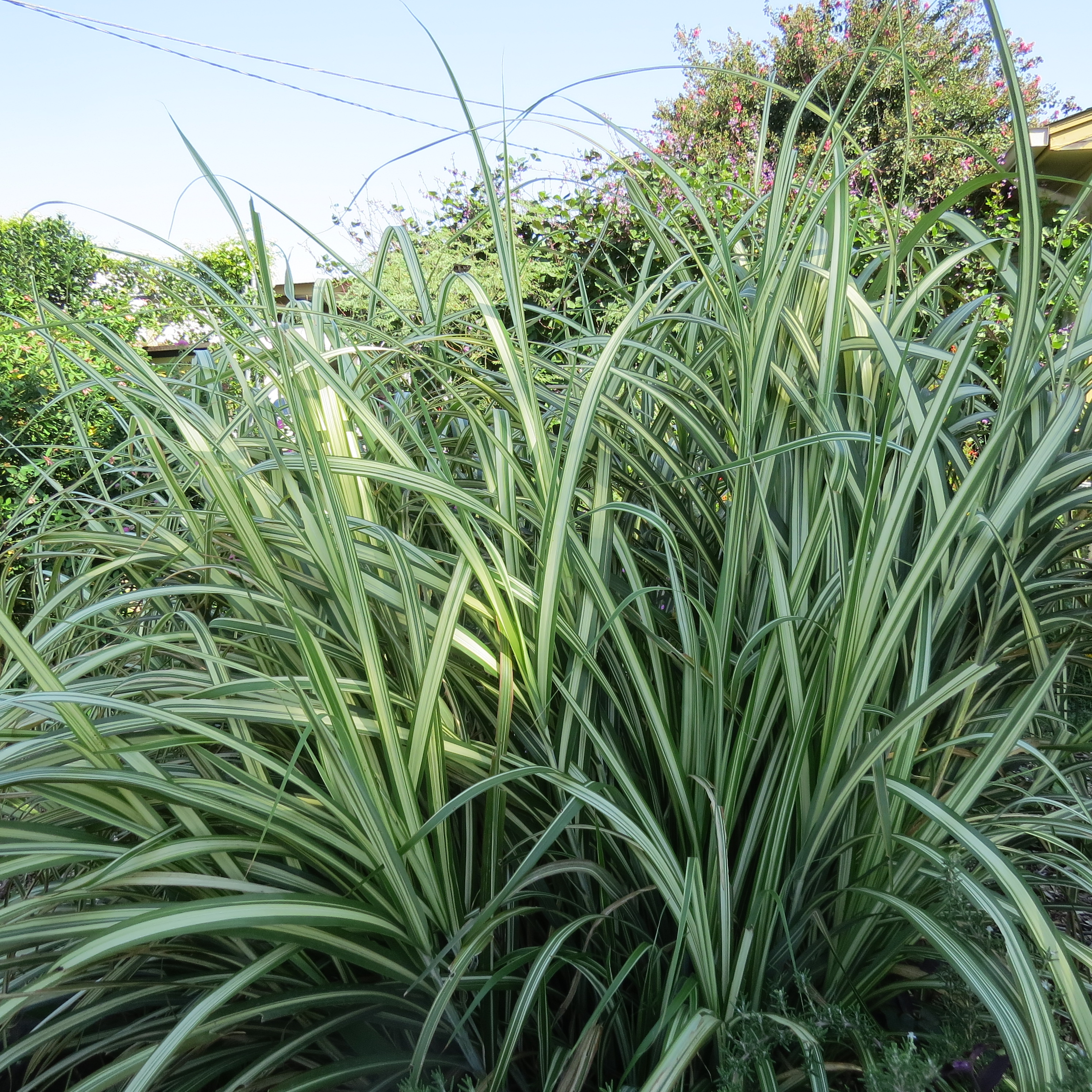
Variegated Maiden Grass – Miscanthus sinensis ‘Morning Light’

Take a look with us at one of our beautiful ornamental grasses, Miscanthus sinensis, “Morning Light’.

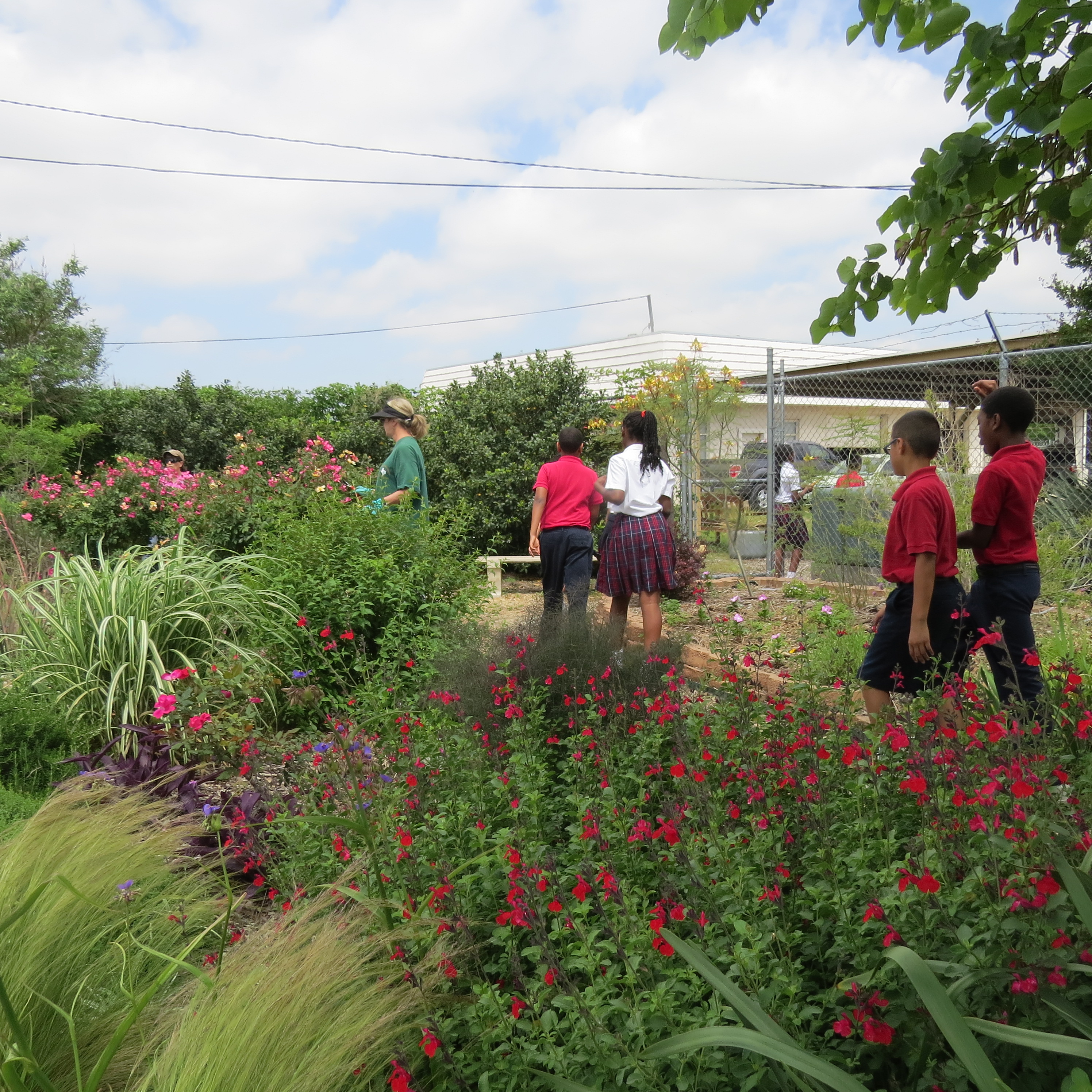
Above: Mutablis Rose, Miscanthus, Mexican Feather Grass,and Salvii gregii in our spring garden.  Don't you like the way the children's uniforms compliment the garden colors?

Above: Mutablis Rose, Miscanthus, Mexican Feather Grass,and Salvii gregii in our spring garden. Don’t you like the way the children’s uniforms compliment the garden colors?

In the summer its variegated leaves glisten.

Above: Summer time view of Miscanthus Morning Light

Above: Summer time view of Miscanthus Morning Light

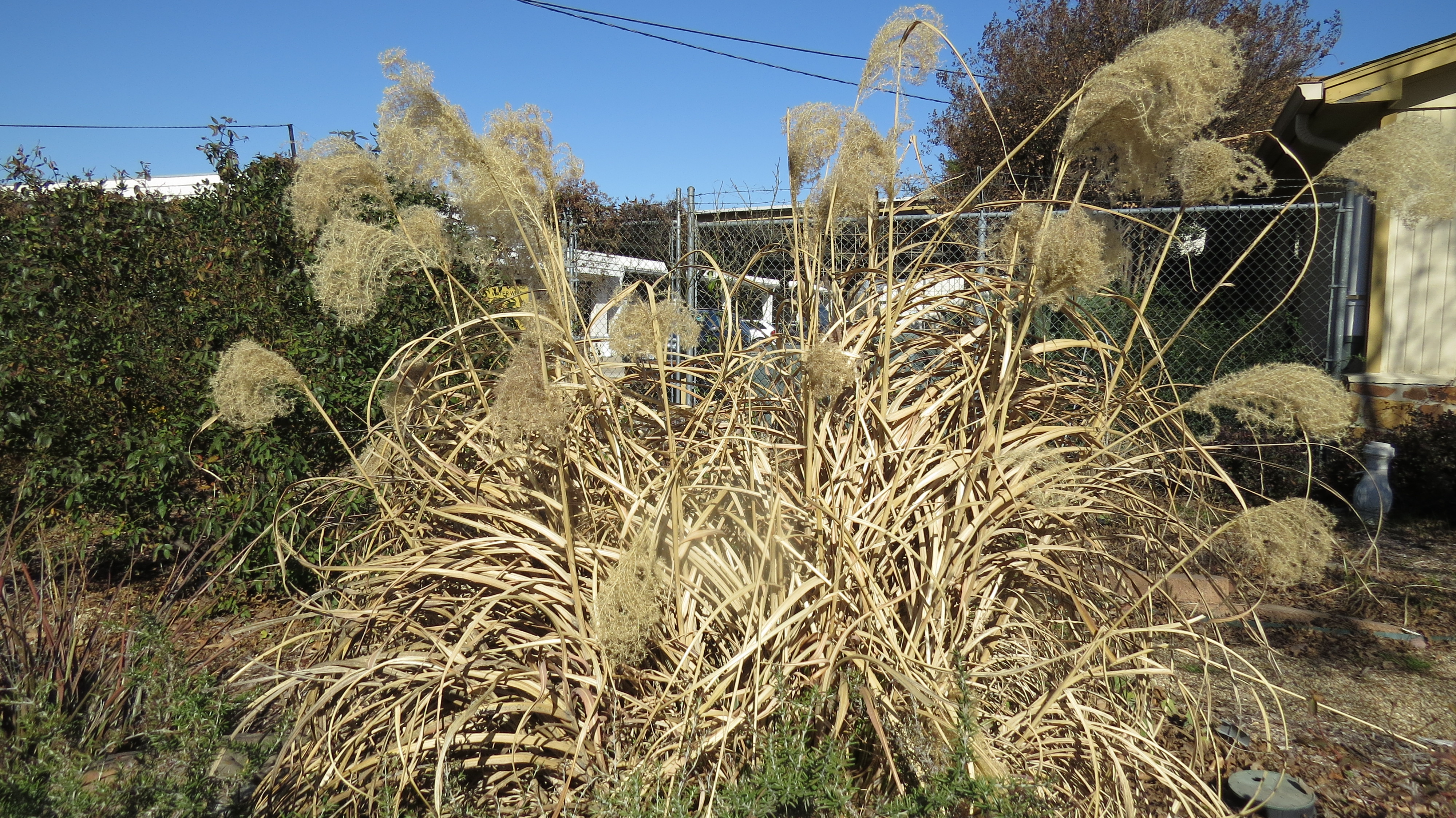
In the Winter the grass turns brown and brightens the sky with its tawny panicles.

Above: Winter Version of Miscanthus

Above: Winter Version of Miscanthus

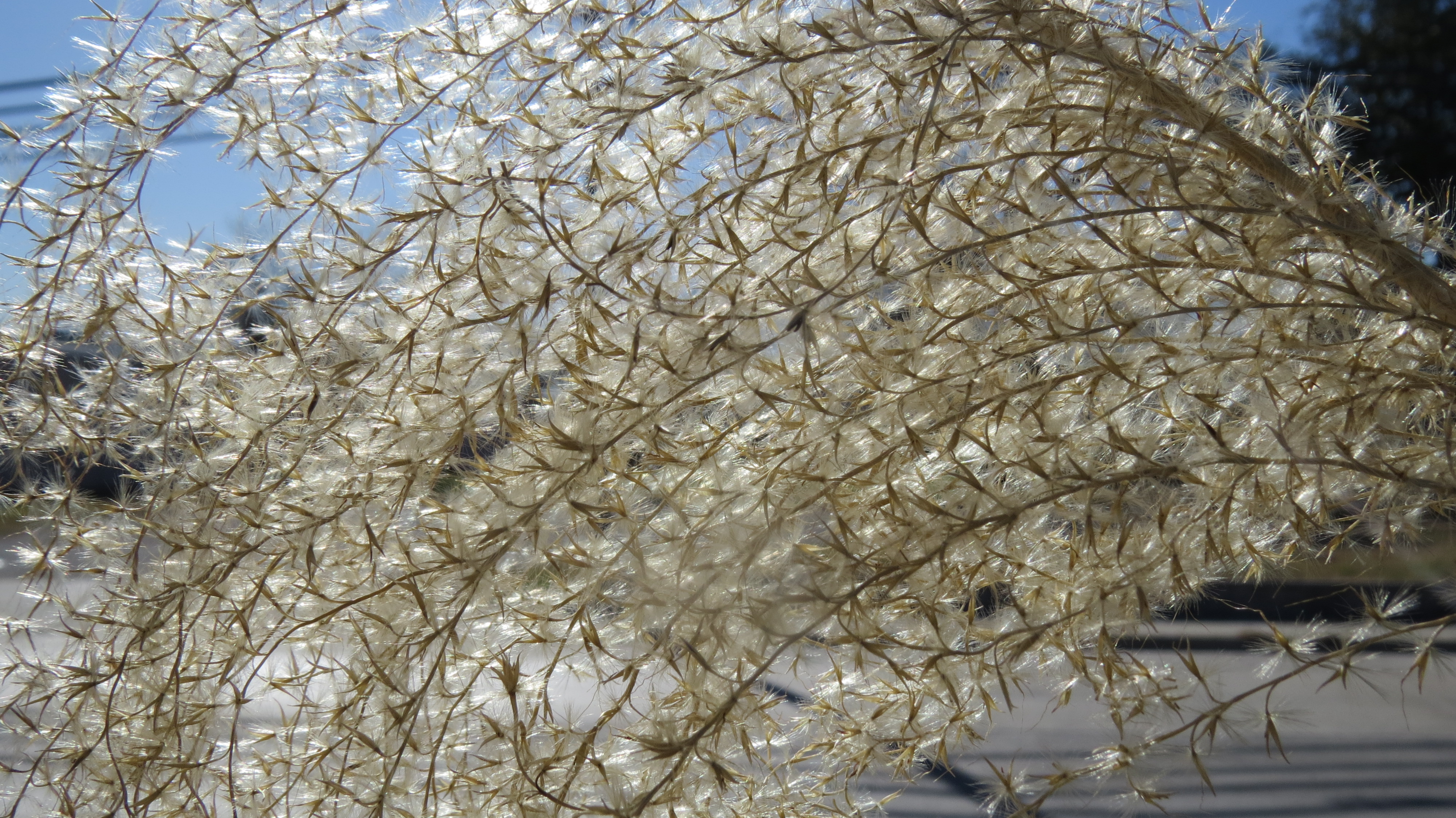
The panicles glow in morning light.

Above: Wintery Miscanthus Panicles

Above: Wintery Miscanthus Panicles

Alas, there is a season for everything and even grasses must be sheared.

To learn more about a new grass pruning method click here.

And don’t grow weary, Morning Light will come again.

Ann

Pictures by Starla