Category Archives: Perennials

Sunny Yellow Flowers For Fall Beauty From Raincatcher’s

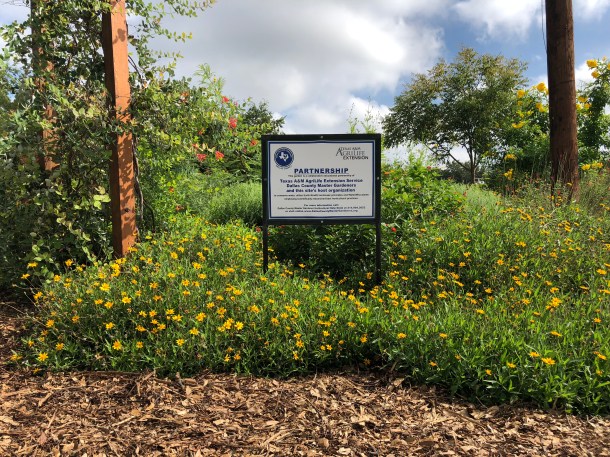
Our yellow flower tour starts as the cheerful yellow daisy like flowers of zexmenia welcomes visitors to the garden.  It is hard to go wrong with this native plant. Zexmenia asks little beyond a sunny spot with a bit of room to spread.  Butterflies and bees are frequent visitors to the lasting display of clear yellow flowers.

Zexmenia

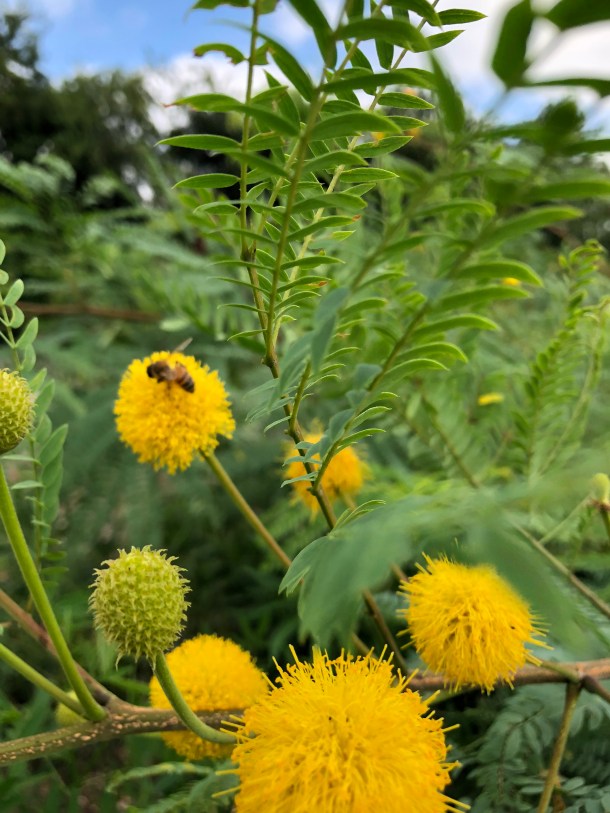
One need not go far to see the bees enjoying the fuzzy round blooms of the golden lead ball tree. This small tree, native to Texas, has been blooming for months.  The flowers are a bit out of the ordinary and always attract attention.

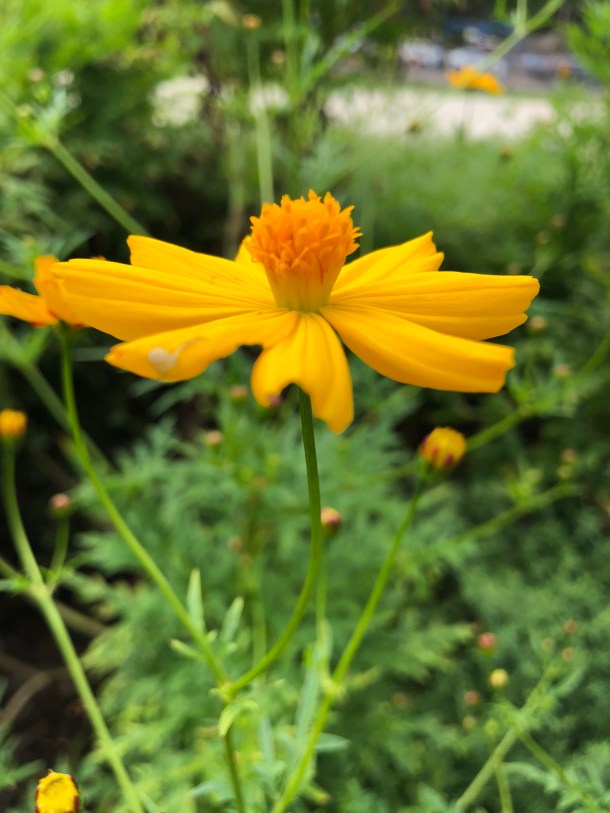
Fall is the time for the tall yellow cosmos to shine. It is true the tall plants may fall over in wind and rain and it can be over ambitious in seeding itself.  But, no plant is perfect and isn’t it a happy sight? It is well worth overlooking a few things—and bees and butterflies really do love it.

The fast growing well adapted argentine senna is literally covered in lovely yellow flowers.  Some sennas bloom for a short time and seed out to an alarming degree. This one doesn’t. The flowers last for a long time and seeding is not a problem.  If that isn’t enough to make it a favorite—it is also a host plant for those pretty yellow sulfur butterflies.

This yellow rose is part of the trials to try and find plants that resist rose rosette disease.  Let’s all think positive for this little plant with flowers in such a delicate shade of yellow.

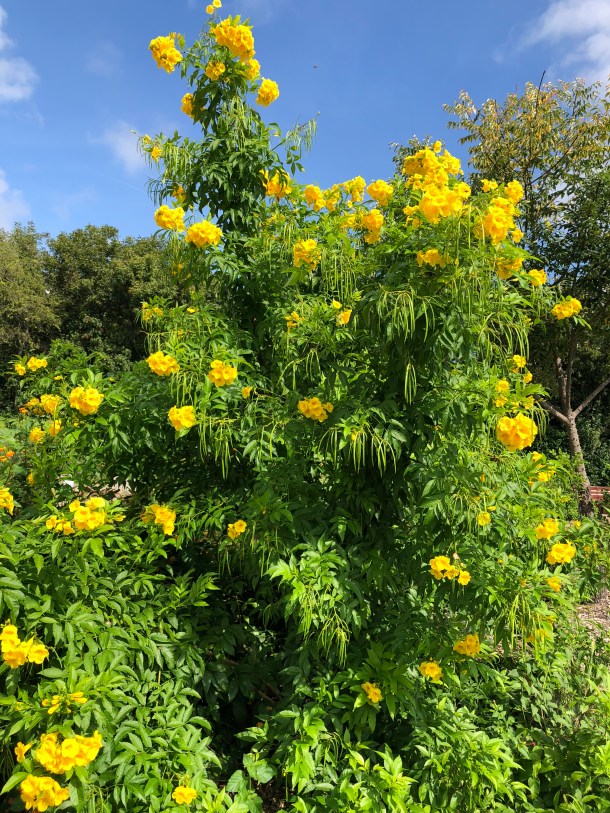
Esperanza cannot be left out of any list of favorite yellow flowers.  This plant was almost given up for lost in the Spring—what a come back it seems to have more bright yellow flowers than it has leaves.

Don’t forget that vegetables can be as pretty as they are delicious.  This yellow okra flower is a perfect example.

If your garden could use a little sparkle or if you want to do more to provide the nectar pollinators need to live,  add some , or all, of these lovely yellow and you will do both.

You can see all of these plants at Raincatcher’s garden at Midway Hills Christian Church.  Garden work is on Tuesday mornings and you are always welcome.

Susan Thornbury

Pictures by Starla Willis


Summertime!

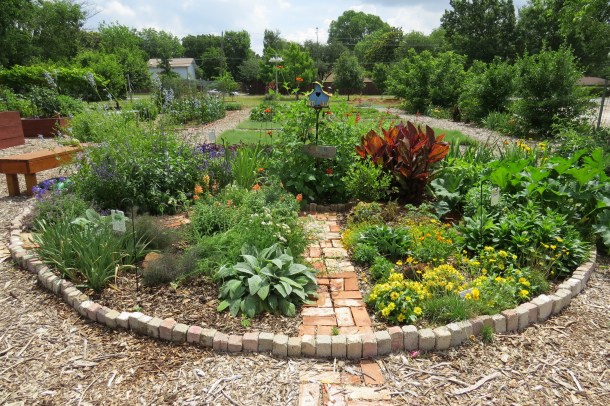
Color wheel at The Raincatcher’s Garden

Bog sage

Annette, Gail, Kathy and others have turned the color wheel into a spectacular sight. If you haven’t taken time to enjoy the wonder of the north garden, take a walk through it and check out the color wheel (love the bog sage in the blues!), the tomatoes in our tomato trial, and the beautiful flowers in the pollinator garden.

Did you know we harvested 17 pounds of red potatoes and  35 pounds of potatoes June 5th?

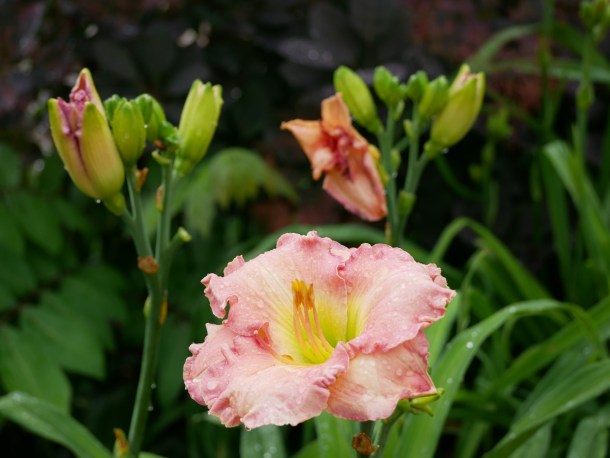
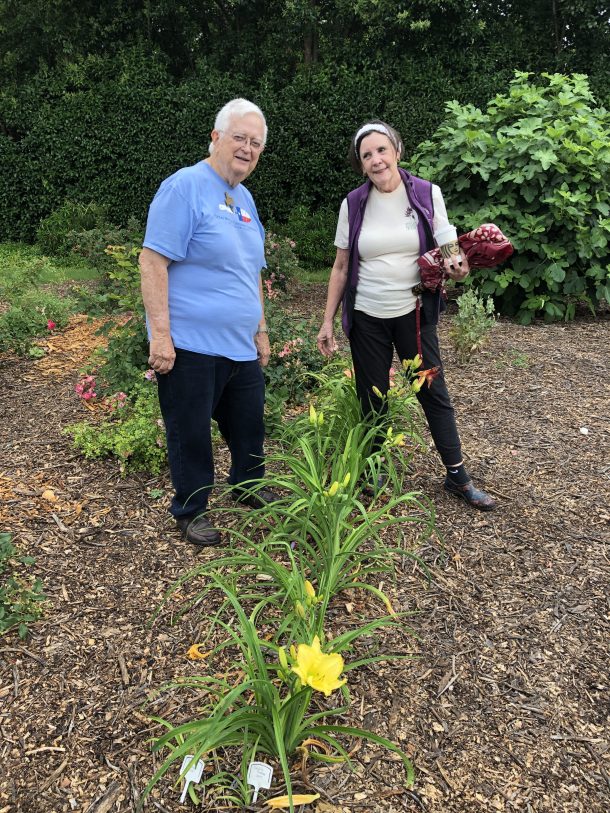
Our orchard looks wonderful this year with Champanel grapes in abundance and thriving fruit trees, and those daylilies in the mixed border are blooming like crazy.

Champanel grapes,one of our peaches and harvested potatoes!

Lisa Centala

Pictures by Starla Willis

The Frostweed, yes.

fROSTWEED

Good morning, I am sending you this article on an interesting perennial phenomenon  from a favorite blog of mine, called Portraits of Wildflowers. You can find it via this morning’s post: The Frostweed, Yes!

We also have several wonderful pictures and write ups about Frostweed on Dallas Garden Buzz. You can find them by using our search or clicking here.

Happy 2018 to all our readers!

Ann Lamb


Porterweed

How often do you get an entertainment package with a nectar source?

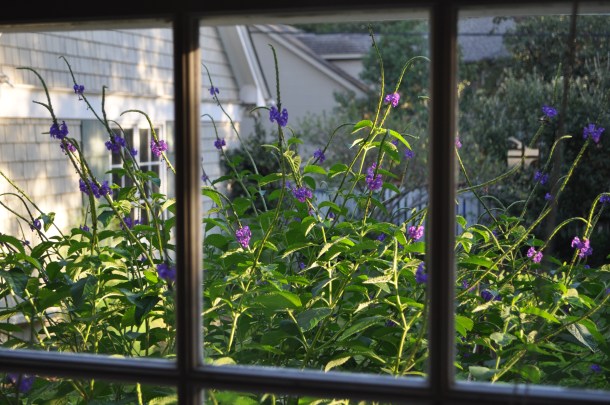
Blue Porterweed, Stachytarpheta jamaicensis

Blue Porterweed, Stachytarpheta jamaicensis

My husband has mentioned several times how entertaining the Porter weed is which can be seen through our den windows. We have watched hummingbirds, butterflies, and bees drinking from it.

Now we must say goodbye and hope that it returns from its roots next year. Proper mulch has been applied.

Porterweed comes in several colors and be careful because the names and growth habits will switch according to species or cultivar.

Raincatcher’s has Coral Porterweed, Stachytarpheta mutabilis, in our courtyard garden and Lavender Porterweed Stachytarpheta mutabilis var. violacea in our butterfly garden.

Coral Porterweed, Stachytarpheta mutabilis

Coral Porterweed, Stachytarpheta mutabilis

Make a note to look for this favorite nectar source at the Texas Discovery Garden spring plant sale in 2017.

In the meantime, Porterweed, we are going to miss you!

Ann

Hope you read yesterday’s freeze information yesterday and for further info click here.

Note: I have seen Porterweed spelled as two words and one word.


That Doesn’t Look Like Milkweed!

The milkweed section of the April Texas Discovery Garden plant sale is not for the faint of heart. Once the gate is opened, you’ve just got to get in there—elbows flying—and grab.

Turns out, this year we purchased an interloper that hitched a ride to the Raincatcher’s Garden with the native Rose, Common, Green, Green-flowered and Antelope Horns milkweed.  And this milkweed has been turning heads.

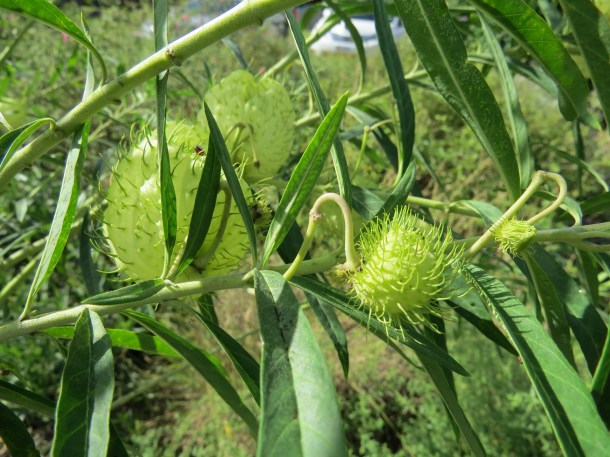
The green pods of African Milkweed

The green pods of African Milkweed

African milkweed Asclepias physocarpa or Gomphocarpus physocarpa was a mild mannered herbaceous plant with tiny white star-shaped flowers from August through September.  Then 3-inch pale green, round seedpods covered with soft hair-like spines appeared in October.  None of the Raincatcher’s volunteers had seen anything like it. The spiny pods will fade to red or brown and slowly split to release numerous oval seeds, each with a tuft of silky hairs to catch the wind.

Brown pods obviously

Brown pods with milkweed bug

African milkweed, which is also known as Balloon Plant, Swan Flower and Tennis Ball Plant, is an annual milkweed native to Africa. Its distinctive seedpods are often used in flower arrangements—or as conversation pieces in the Raincatcher’s Garden.

Elizabeth

Pictures by Starla

Texas Discovery Garden Plant Sale, November 4th  for members, November 5th for the public. Information here.

A Bright Spot in the Early Spring Garden

copper canyon daisy As with many plants, Tagetes lemmonii is known by so many common names (Copper Canyon Daisy, Mexican Bush Marigold, Mountain Marigold, Mount Lemmon Marigold, tangerine-scented marigold, and Perennial Marigold) that it is almost easier to refer to it by its Latin nomenclature.  Yet even its Latin name has a fascinating story behind it.

Tagetes lemmonii is native to the high mountain canyons of northwestern Mexico and southern Arizona.  A finely leafed plant with a very distinctive aroma often described as minty and fruity, lemon and tarragon, or (for some people) just plain “Yuck,” it can grow to a size of four to six feet tall and can spread to six to ten feet.  It can be sheared back however.  It grows best in full sun in well drained soil. It can be grown in part shade, though it may get leggy and have fewer blooms.  Once established it needs little to no supplemental watering.  If grown in an area where deer are a problem, deer will definitely avoid it.  However pollinators, including yellow sulpher butterflies and beneficial insects, are drawn to it.

T, lemmonii is considered to be photosensitive and blooms with bright yellow daisy-like flowers in the fall, winter and early spring when the daylight hours are shorter.  In mild winters, it provides a welcome bright spot in the garden since the flowers can last for quite a while.  However in colder winters, it will sometimes die back to the ground but return in the spring.

Though I always thought that its Latin name lemmonii came from its strong citrus/lemon aroma, a Google search from San Marcos Growers (smgrowers.com) reveals otherwise:  “This plant was discovered in southeastern Arizona, by the early plant collectors, self taught field botanists, and husband and wife, John (1832-1908) and Sara (1836 – 1923) Lemmon. These two incredible people met in Santa Barbara, California, where Sara Allen Plummer lived, in 1876 when she attended a lecture given by John, who at the time was the California State Board of Forestry Botanist. They married in 1880 and botanized throughout the southwest and in the process discovered over 150 new plants including an unknown species of Tagetes, from which they sent seed to Asa Gray at Harvard University, who then named the plant to honor them. Sara and John also climbed the highest mountain in the Catalina Mountains near Tucson, which is now called Mount Lemmon reportedly because Sara Lemmon was the first woman to climb it. Both authored books and articles which Sara often illustrated and she was instrumental in the efforts to name Eschscholzia californica as the official California State Flower, as it was done officially by Governor George Pardee in 1903. The Lemmons established plants of Tagetes lemmonii in their garden in Oakland, California and progeny of these plants were introduced to the nursery trade in southern California, and England by the early 1900’s.”

copper canyon daisy top downThere is one word of caution when pruning or working with Tagetes lemmonii. Some people are extremely sensitive to the oils in the leaves and can develop a painful, itchy rash when their skin is exposed to sunlight. Sometimes this rash can continue for several days. Therefore it might be best not to plant Tagetes lemmonii where it can be brushed against, be sure and wear gloves and long sleeves when working with it, or at least wash your skin well with soap and water after handling.

Carolyn

Picture by Roseann from Texas Discovery Garden.
Globemallow

Globemallow Sphaeralcea ambigua

We didn’t think it would survive in Dallas. Much less bloom. Well, the Globemallow’s exquisite pink flowers triggered gardeners’ squeals—this is a passionate bunch!—last week at the Raincatcher’s Garden.

Globemallow

We planted Globemallow on a whim last year in the Butterfly/Hummingbird Garden. Most natives from the Big Bend region fail miserably in our dense clay, but this shrubby perennial will tolerate our soil and treat gardeners to “spectacular displays in wet years” according to the Lady Bird Johnson Wildflower Center.

The combination of purplish-pink 1” cup-shaped flowers and grayish-green scalloped leaves is a show stopper. The most common bloom color, however, is an apricot-orange suggestive of spring quince. If you prefer a color, you might be wise to purchase the plant in bloom.

Steer clear of stroking the leaves. The little hairs can irritate and sometimes cause an allergic reaction.

Plant Globemallow or Desert Mallow in full sun. It will become straggly in partial shade.  It is lovely with grasses or scattered throughout natural plantings.

Elizabeth

Picture courtesy of http://www.wildflower.org

Hardy Amaryllis

Our dear friends Evelyn and the late Harold Womble, have shared Hardy Amaryllis bulbs with us at the Demonstration Garden on Joe Field Road and now at Midway Hills.  Their home is graced with a  large bed of these bulbs that have multiplied over the years and ended up in their son’s gardens and friend’s gardens. Their original bulbs came from Evelyn’s family home place in Brownwood.

Evelyn, Hardy Amaryllis and Daffodils, All Blooming!

Evelyn, Hardy Amaryllis and Daffodils, All Blooming!

Hippeastrum x johnsonii, the St. Joseph’s lily, blooms in early April in Dallas. The bright red blooms, trumpet shaped, are striped with white. The strap like foliage lasts late into the year and looks tropical.

Because the bulb perennializes so well it is often called the finest amaryllis for southern gardens.

Hardy Amaryllis and daffodils 2015

In Perennial Garden Color, Dr Bill C. Welch calls the bulbs “living antiques because they are tangible symbols of success for generations of Southern gardeners.  Many have been lovingly handed down among the families that contribute cultural diversity and richness to our gardens.”

We will now have our own supply of “living antiques” thanks to Harold and Evelyn.

Ann

Pictures by Starla

Garden Progress

“It won’t be a chore, it will be a garden.”

 Quote by Jeannie Mobley

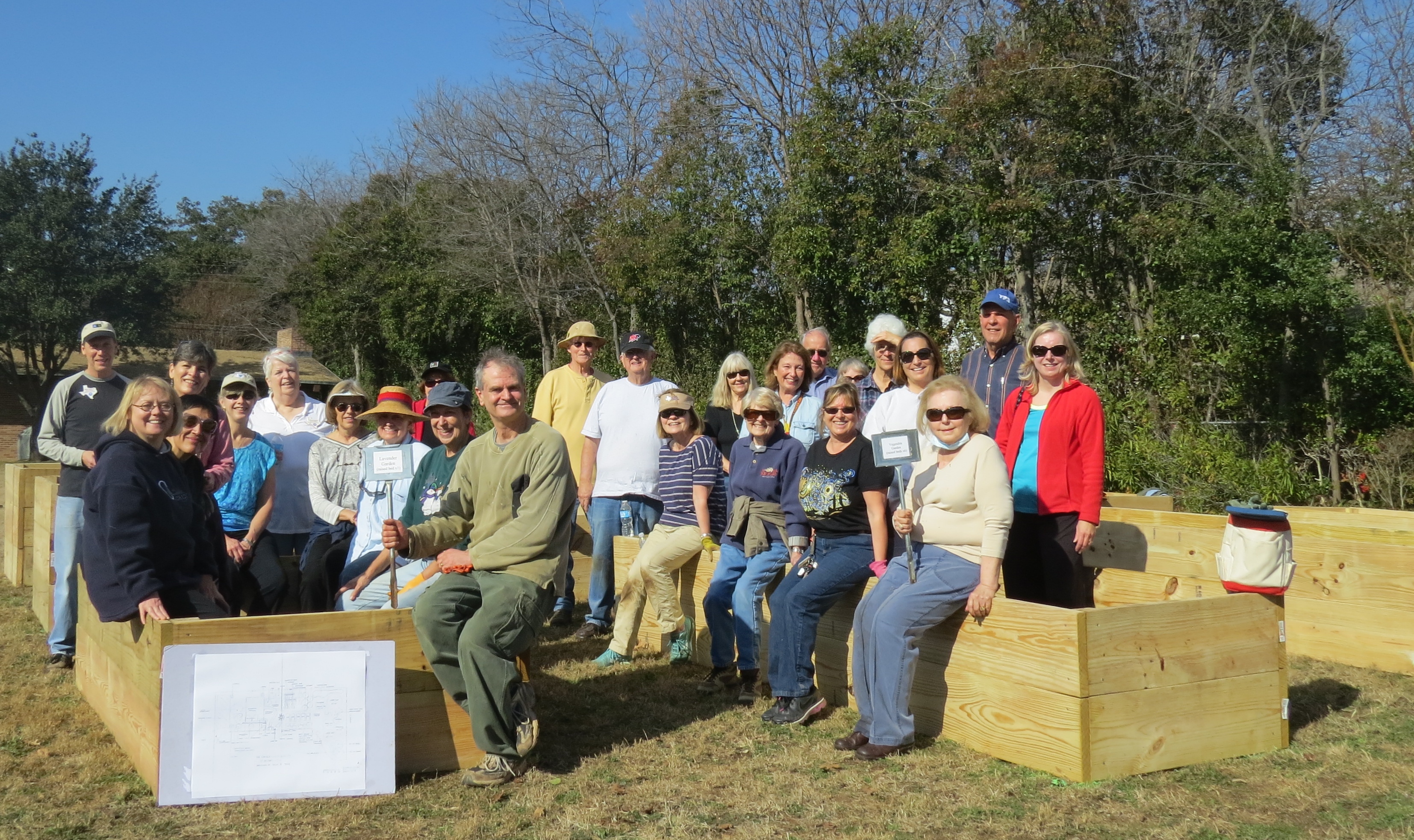
Come with us on this journey as we  build and transform our gardens at 11001 Midway Road.    “It won’t be  a chore, it will be a garden.”  You can see  from these pictures that we are enjoying the process.

Here we are beginning to build the raised beds:

Here we are, beginning to build our raised beds-Jim, Judy, Dorothy, Elizabeth

Jim, Judy, Dorothy, Elizabeth

Knowing we will be having school field trips in the spring, our first order of business was to get the vegetable garden beds built.  This was possible because of a generous donation from Loew’s on Inwood.

Vegetable Beds and our Crew of Dallas County Master Gardeners

Vegetable Beds and our Crew of Dallas County Master Gardeners

We are also working on a shade garden demonstration for the lucky people in Dallas, Texas who have shade. The courtyard at Midway Hills Christian Church is being renovated.   Asian Jasmine and Mondo Grass have been removed to make way for shade gardening with winter color in mind, WaterWise of course.

Hans and Michele, part of our Courtyard renewal team!

Hans and Michele, part of our Courtyard renewal team!

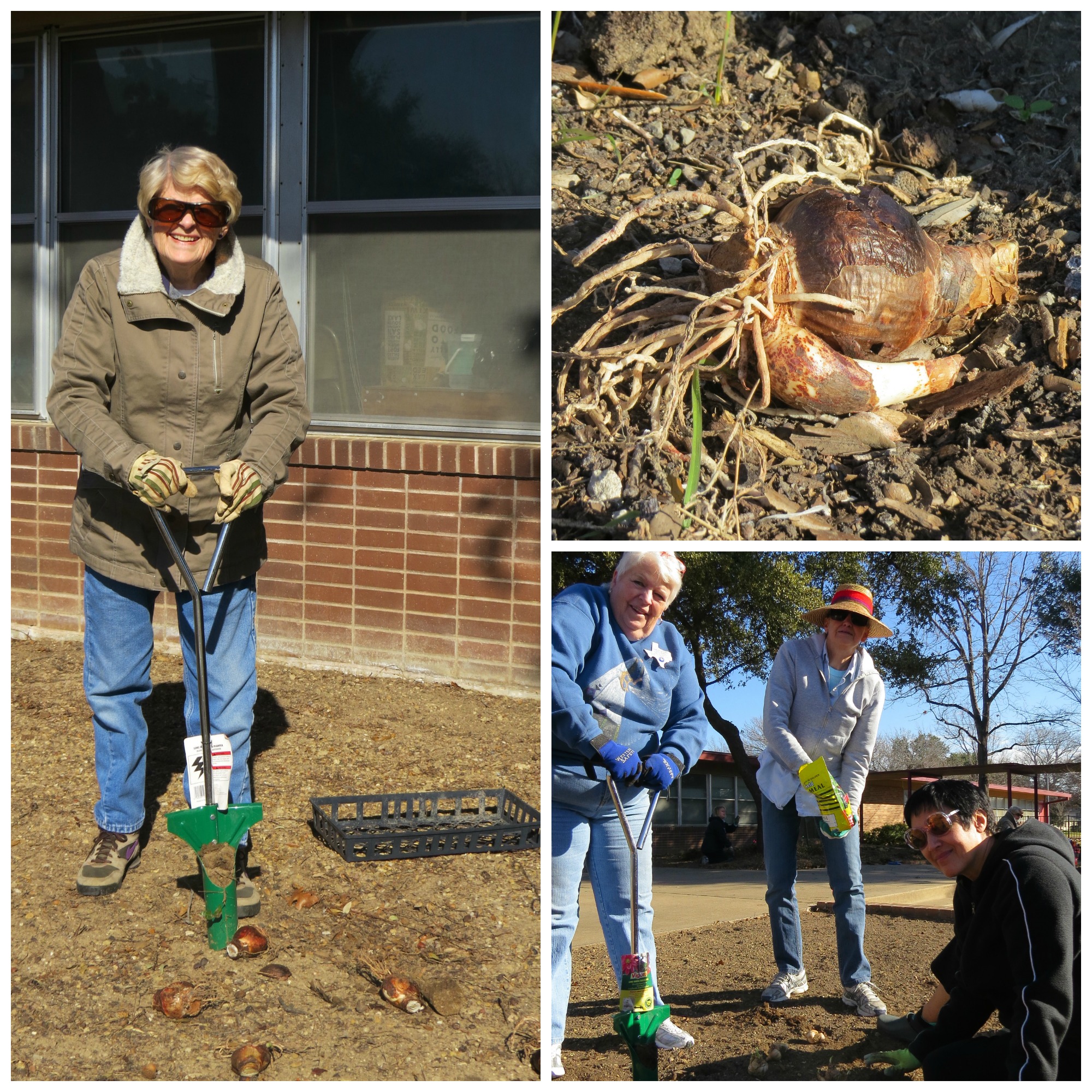
This spring you will see swaths of daffodils and Hardy Amaryllis .  The Amaryllis came with us from the old garden. You’ll see; they multiply like crazy.

Evelyn on the left, Sarah, Carolyn, and Cynthia on the right, Amaryllis top right

Evelyn on the left, Sarah, Carolyn, and Cynthia on the right, Amaryllis top right

By the way, this would be a good time to study bulb nomenclature and you can do that by clicking here.

Ann

Pictures by Starla


A Monarch Pit Stop


The first semi-cool days around October bring the annual Monarch butterfly migration through Dallas.   Some of the Monarchs, coming from the northern states, follow a corridor through Dallas as they continue on their trip to their wintering grounds in the highlands of Mexico.  These travelers need all the “fuel”/nectar they can get for their long journey.  Even an urban backyard can provide a respite for them.

Picture by Janet D. Smith

Picture by Janet D. Smith

One of the Monarch’s favorite nectar plants is frostweed, Verbesina virginica . It is such an exceptional nectar plant, drawing in not only Monarchs but also Pipevine Butterflies and Great Purple Hairstreaks, that it has been selected as monitoring plant by Monarch Watch.  Dale Clark, local butterfly rancher and founder of the Dallas County Lepidopterists’ Society, says that he has seen Monarch butterflies literally drop out of the sky when they see a patch of frostweed.

Frostweed, a perennial, is a member of the sunflower family.  It will grow in sun but prefers shade or part shade.  It requires very little water.  Because it can grow up to six feet tall, it is best to use it in the back of a border and in a more natural, rather than formal, landscape.  It has large green leaves on a straight, winged stem.  Native Americans would sometimes roll the leaves and smoke them like tobacco.  It blooms in late September through October in Dallas, making it a perfect nectar plant for the migrating Monarchs.  The blooms are large composites, dirty white, and (at least to me) rather drab, but obviously Monarchs, bees, and small wasps see beyond superficial beauty and flock to it in droves.  Even a small group of frostweed plants may be covered with four or five Monarch butterflies on each flower.  It is a sight to behold!!


Picture by Larry Waisanen

Picture by Larry Waisanen

Like many plants, especially our native plants, frostweed has several common names. Karen H. Clary in Texas Parks and Wildlife magazine’s October 2012 issue says:  “Frostweed has other names, including iceplant, white crownbeard, Indian tobacco and squawweed.  Native Americans- including the Choctaw, Chickasaw, Creek and Mikasuki Seminole- used the leaves to treat fever, chills and body aches, and they used the roots as a purgative to treat indigestion.  Mat t Turner, in Remarkable Plants of Texas, attributes the name “squawweed” to a specific use for women.  Turner notes that the Kickapoo, as late as the 1970’s, were still using hot decoctions of the plant for near-term and post-partum issues, such as cleansing the womb and stanching excessive bleeding.”

Frostweed gets its most commonly used name from the fact that with the first freeze, its stem splits and sap oozes out of the winged stem.   The sap freezes into fantastic ribbons forming mini-ice sculptures.  The Lady Bird Johnson Wildflower center says that “the ice crystals formed on the stems of this and other plant species have been given many names – among them: ice ribbons, ice flowers, ice fringes, ice fingers, ice filaments, ice leaves, frost flowers, frost ribbons, frost freaks, frost beards, frost castles (Forrest M. Mims III http://www.forrestmims.org/gallery.html), crystallofolia (coined by Bob Harms at The University of Texas), rabbit ice and rabbit butter.”

Frostweed after Frost!

Frostweed after Frost!

There is one important fact to remember if you plant frostweed in your garden.  Not only is the “frost” part of its name representative of one of its important characteristics, but the “weed” part is too.  Just be careful, it will reseed freely—and probably in amended soils will spread rapidly by underground rhizomes.  I have my frostweed growing at home in un-amended black gumbo clay soil under the shade of a huge cedar elm.  I am also very careful to immediately cut off any flowers that are going to seed, bag them, and put them in the trash (not the compost pile).  Doing this I have never had problems with frostweed’s being an uncontrollable “weed.”

So, think about doing your part to help the Monarch “fuel up” for their long journey to Mexico.  Frostweed is a great plant for the Monarchs—but just take some extra precautions so it doesn’t become a “weed.”

Carolyn