
MERRY CHRISTMAS FROM OUR GARDEN TO YOURS!
Picture by Starla
MERRY CHRISTMAS FROM OUR GARDEN TO YOURS!
Picture by Starla
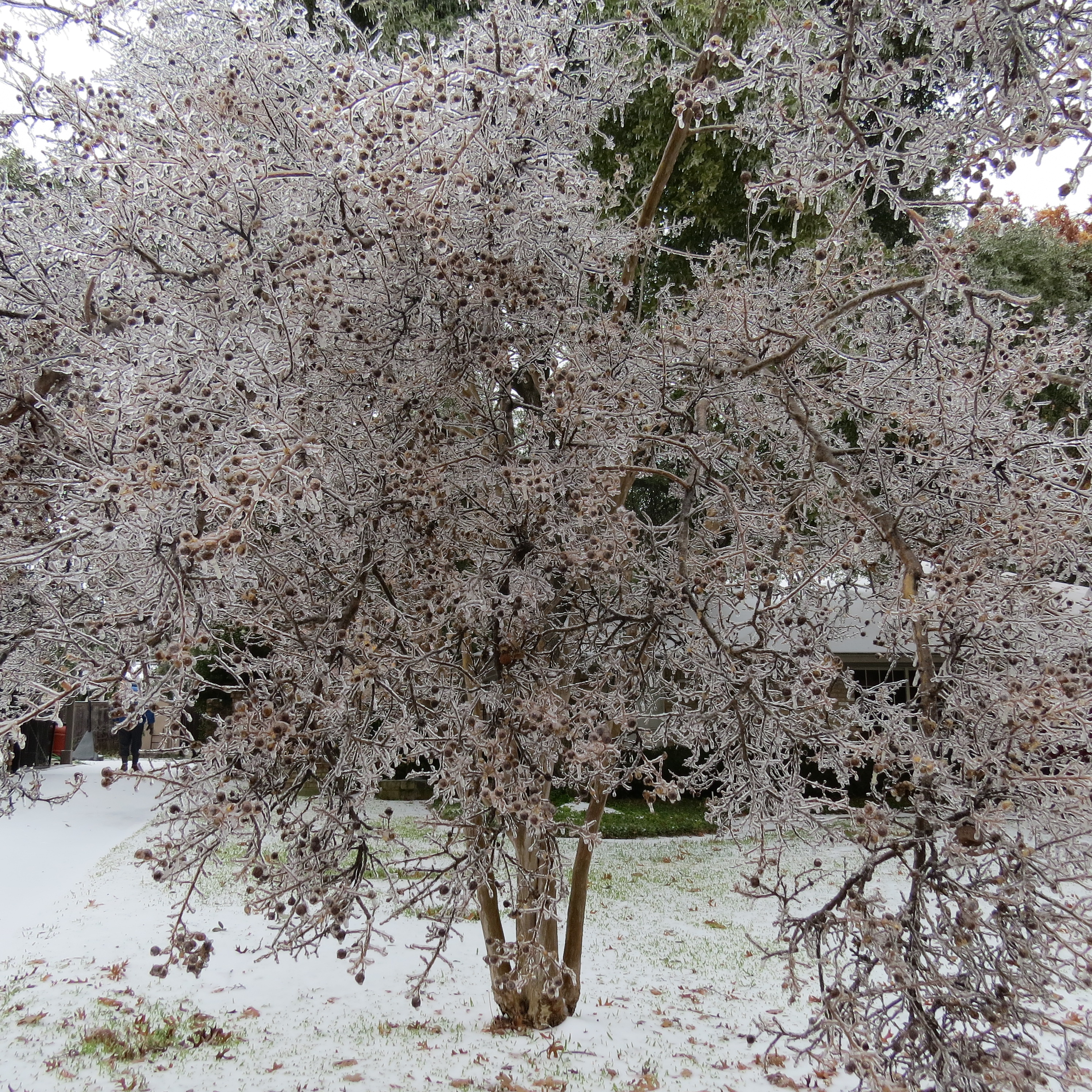
Above:Crepe Myrtle Tree Ensconced in Ice
Ice hit North Texas hard this weekend. Some of the effects were pretty, some were not.
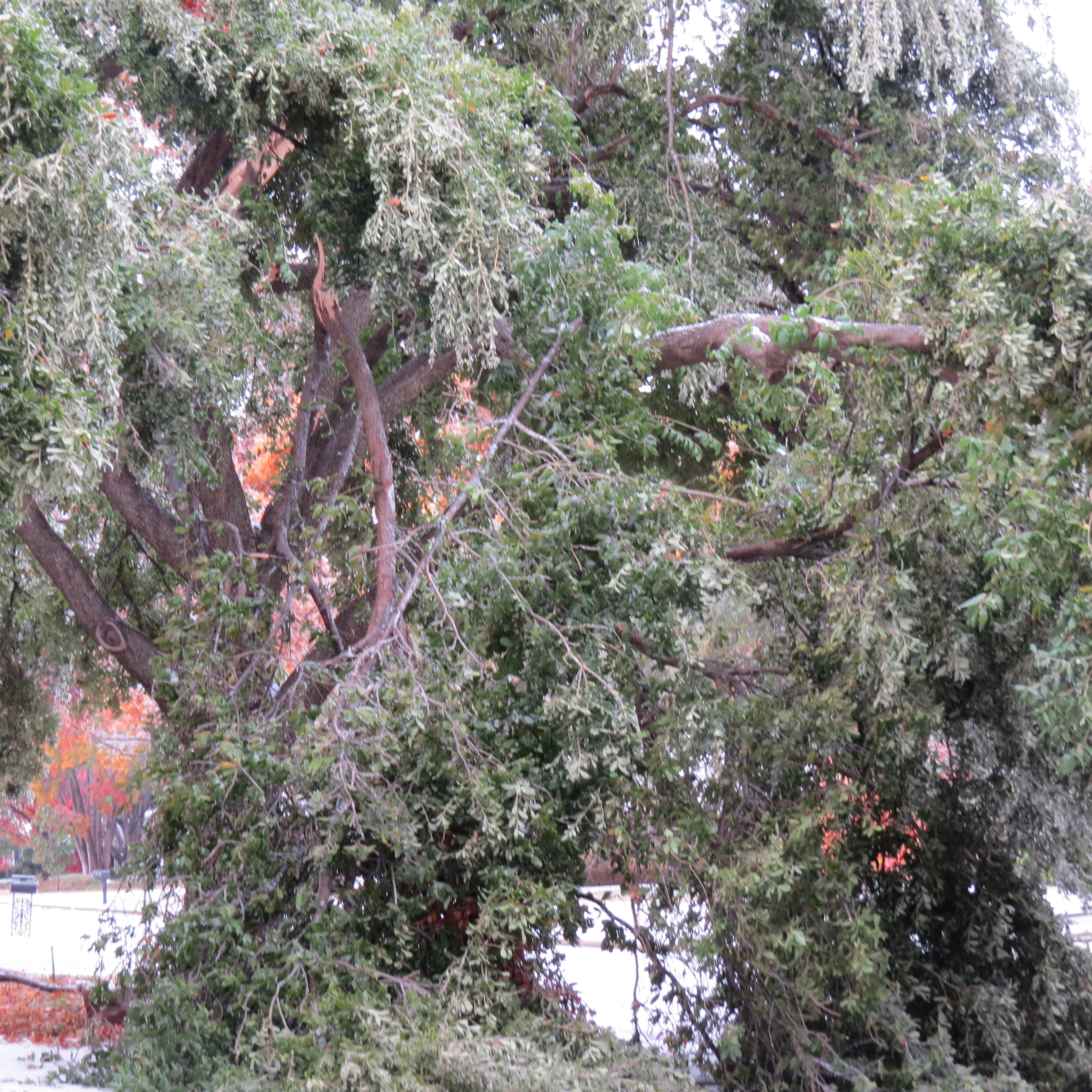
Above: Broken Tree Limbs, Ice Storm Damage
We asked our fellow Master Gardener, Eric, for advice. Driving around seeing tree limbs down all over the city is distressing. Although we can’t save every tree from ice damage, we can head off some of the damage by heeding Eric’s words:
The main damage trees sustain during ice storms are limbs that break due to the excess weight from the ice that collects on the end of the tree limbs. This is usually due to improper pruning techniques that strip all the foliage away from the limbs except for a “Lions Tail” on the very end of the limb. The ice collects on the end of the branch thus creating a very strong downward vertical cantilever force. The longer the limb, the greater chance for failure.
Having a certified Arborist prune your trees will not guarantee your trees will never suffer broken limbs during an ice storm but you will suffer far fewer broken limbs than your neighbors who hire the drive by “tree toppers”. Proper “pre-storm” tree maintenance is the key to less damage for your trees.
If your trees do suffer ice damage, be sure to contact a professional tree care company to properly access the damage and suggest the best method of treatment.
Eric
Pictures by Starla
There’s a discussion going on in our garden. How tidy do we want to be?Should we dead head and prune all our perennials and rake our leaves ? Maybe not, our fine feathered friends are looking for food all winter.
“If you’re not careful, you can yank the welcome mat right outfrom under all the birds, insects and small mammals your garden has been home to throughout the rest of the year.”
Debbie Roberts, Fall Clean Up in the Wildlife Garden.

Above: A view into our Wildlife Garden looking through Pink Muhly Grass.
Grasses provide cover for wildlife and their seed heads provide food.
Less work? I am all for it. Look at some of the blog titles written on this subject: Drop Your Rake and Look to the Skies and Fall Wildlife Garden Chores.

Above: Rudbeckia Seedheads
Looking for other ways to accomodate wildlife in your garden? Birds feast on Berries like Beauty Berry and Yaupon Holly in winter months.
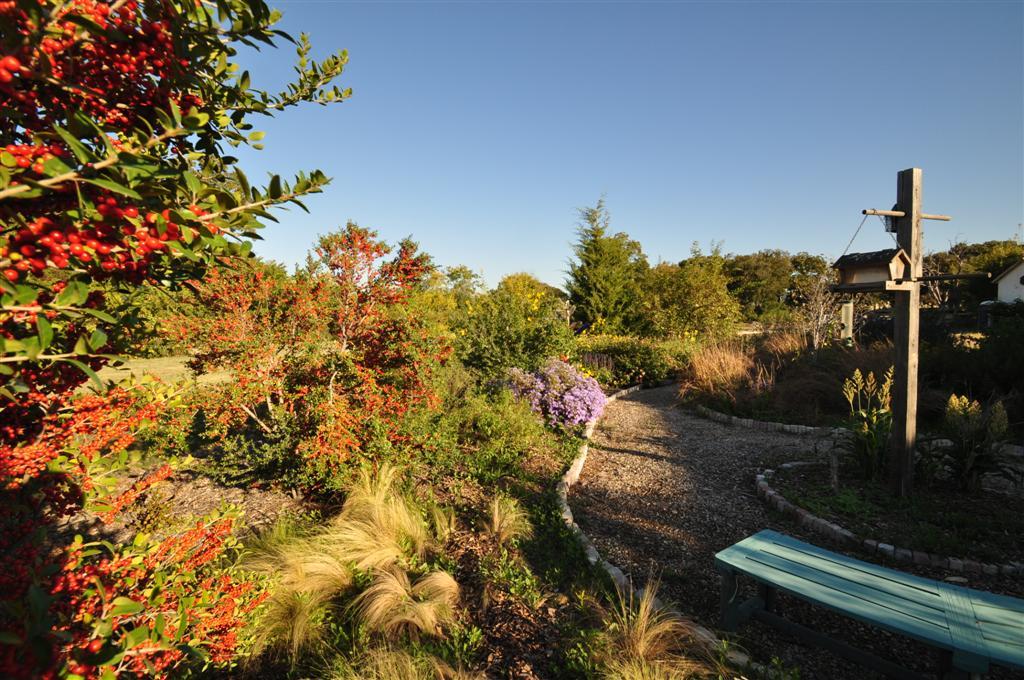
Yaupon Holly berries on the right, maize on the left under a bird feeder
So less work equals a more friendly wildlife garden; we can handle that!
Ann
Pictures by Starla and Ann
The Class of 2013, as preceding classes have, was offered the opportunity to taste volunteering at a variety of sites during the Jump Start portion of our training. With great trepidation and much innocence, I purchase some pruning tools to begin my adventure in publicly putting class learning into action.
So, one morning as scheduled, I got into my car and drove to the Joe Field Demonstration Garden.
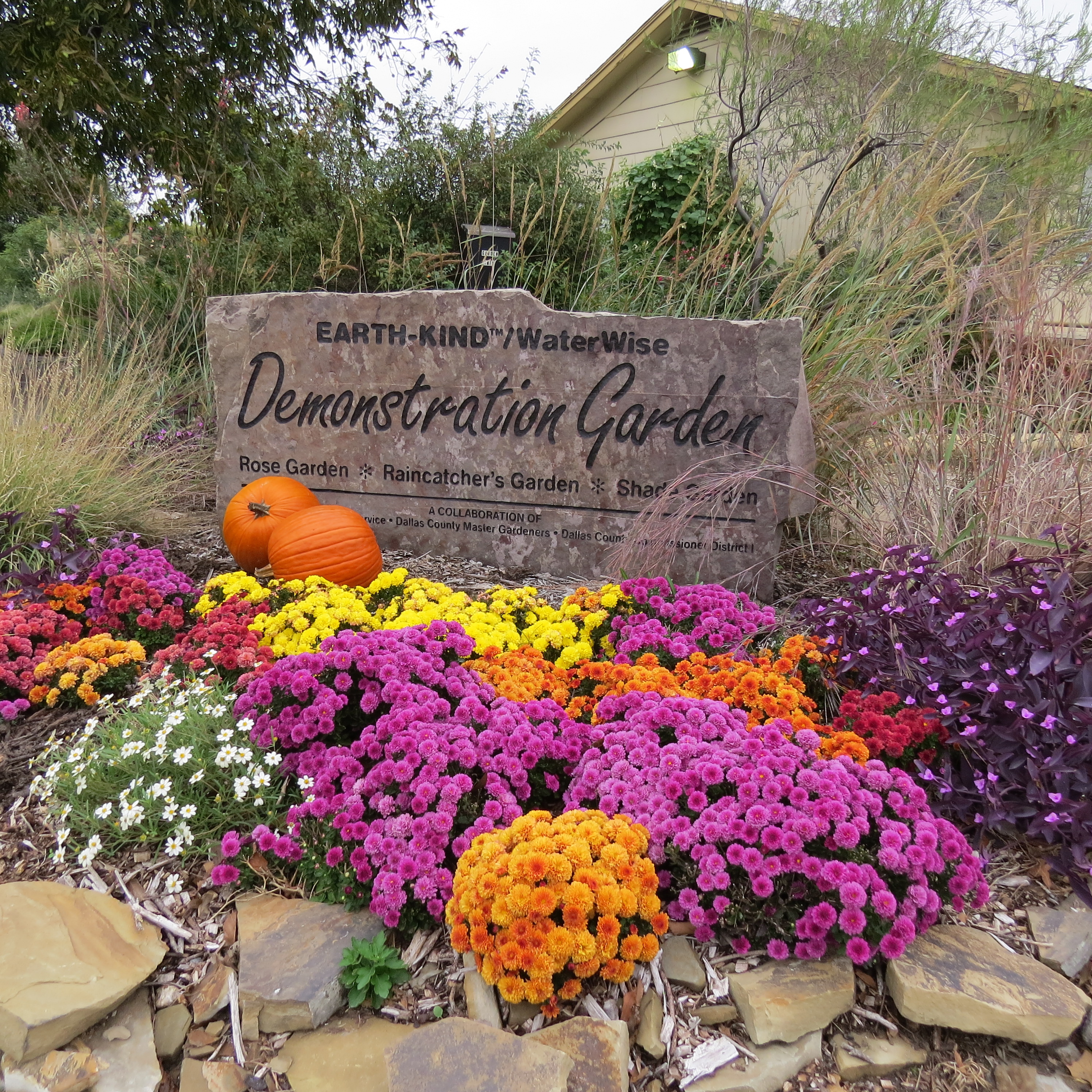
It was not difficult to locate the gardens on a map or to navigate the streets. When I got out of the car, I was greeted and welcomed by several experienced Master Gardeners who were very attached to the site and glad to see me. Is attached the correct word? Devoted to? Enamored by? In love with? I have discovered that the passion exhibited by those involved with the various sites is communicated with relish and joy. This was easily seen and felt as the Joe Field ladies divided me and my classmates into groups and took us on a tour of the variety of areas before assigning us tasks to perform.
Was I interested in composting? Did I want to learn about drip irrigation? How about pruning? (Anyone know the difference between pruning and shearing? I can now tell you what the difference is.) Mulching? Transplanting? Sun plants? Shade plants? Vegetables? Raised beds? The color wheel was amazing as were the roses. Truthfully, roses usually don’t do anything for me but even I was impressed with the variety, vibrancy, and size of the rose bushes. (Many of the bushes were the size of some trees I’ve seen. I’ve got two scrawny rose bushes in my front yard that haven’t grown much in three years so how did Joe Field do this magic with theirs?)
I recognized plants that live in my own garden but darned if I could name them. Voila! The Master Gardener leading my small group easily gave me the name of those plants and told me about their needs. I kept asking, “How’d she know that? How can she keep all this knowledge in her head and come up with it on a moment’s notice?” I wonder if I will ever be that familiar with plants.
I was very aware of the phenomenal use of space. The areas were not particularly overplanted but were, nevertheless, packed with plants and more plants and provided inspiration and ideas to take home to my own garden and beds.
There is so much going on in terms of what is growing that it is impossible to take it in with just one visit. Maybe that is a lure—come back and learn some more. Not a bad idea. Between that chance to learn (and to serve) and the camaraderie of the seasoned volunteers, Joe Field Demonstration Gardens is a smart and happy choice for Master Gardeners. I’m glad I can visit and revisit this rich site. Tuesdays are the targeted day of the week for volunteering just in case you want to try it out. Maybe we will see each other and learn together.
Zelene
Picture by Starla
Map to our gardens here.



 DALLAS GARDEN BUZZ