Tag Archives: The Raincatcher’s Garden

School Days, Time to Schedule 2015 Field Trips!

Welcome to the RAINCATCHER’S GARDEN OF MIDWAY HILLS

A One-acre Garden Designed for Students to Learn about Nature

West Dallas Community School Kids Enjoying a Field Trip to The Raincatcher's Garden

West Dallas Community School Kids Enjoying a Field Trip to The Raincatcher’s Garden

In Our Garden Classroom:

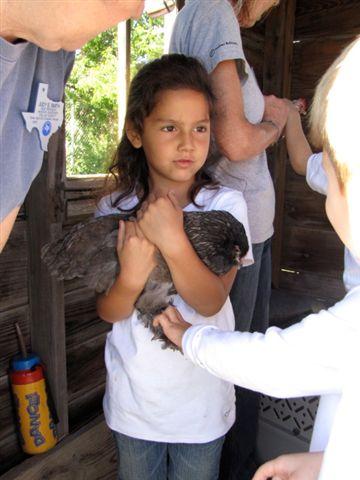
Hold a Chicken

Smell an Herb

Find a Caterpillar

Plant a Seed

Taste a Vegetable Warm from the Sun

Feed a Compost Pile

Students are taught by Dallas County Master Gardeners, Gardening Experts with Texas A&M AgriLife Extension using Junior Master Gardener ® Curriculum aligned with Texas standardized testing.


Above: Field Trip and Master Gardeners and Visiting Chickens

Above: Field Trip and Master Gardeners and Visiting Chickens


Schedule a Free Field Trip by contacting dallasgardenbuzz@gmail.com or clicking on the School Field Trip Request Form.


Location:  THE RAINCATCHER’S GARDEN OF MIDWAY HILLS

11001 Midway Road, Dallas (between Forest & Royal Lanes)


 We’ll leave the Garden Gate Open for You

 More information about our Free School Field Trips: page one, page two

Pick a New Landscape Tree

When August does its best to scald North Texas, one is always amazed at the cooling effect of shade. Full sun can be tolerated only to quickly check the mail or move the hose, but one can actually enjoy a shady backyard with temperatures in the nineties.

Gardeners have long done the Tree Shade Two-Step, a dance performed in early morning hours. The only rule is to follow the welcome shade for work in the garden as the sun climbs higher in the sky.

In planning the Raincatcher’s Garden of Midway Hills, we were blessed with the space to plant five demonstration trees. Trees can provide shade, of course, but when correctly chosen can enhance the aesthetics of your house and increase the value your home as well. We also wanted to pick trees that showed alternatives to the monoculture of red oaks and live oaks planted in Dallas.

Dallas County Master Gardener Eric Larner and I worked in January to pick a Chinquapin Oak, Mexican or Monterrey Oak, Lacey Oak, Cedar Elm, and an ‘Autumn Gold’ Ginkgo.
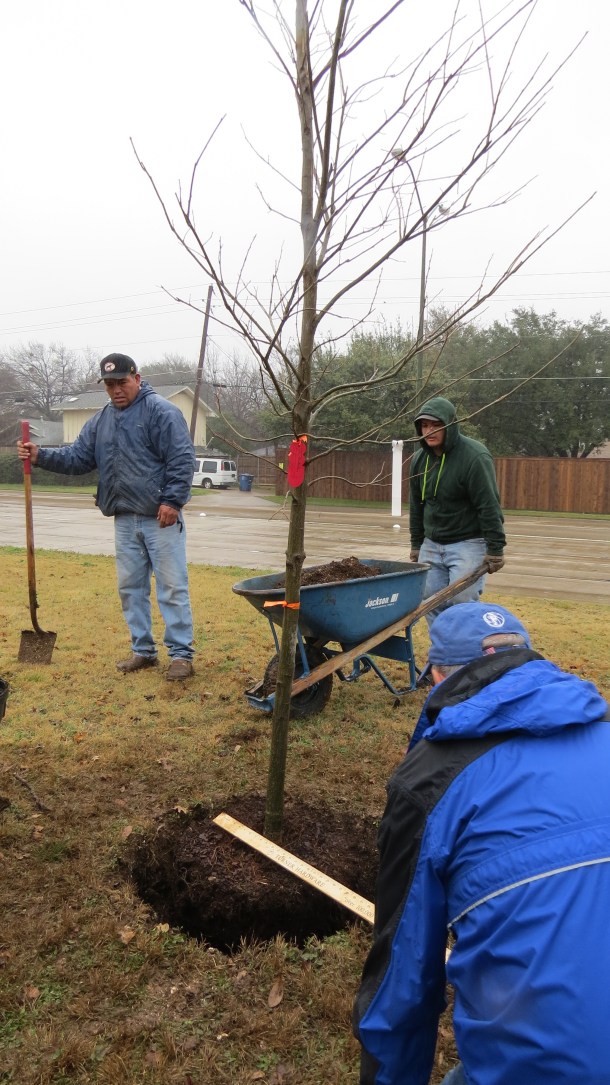
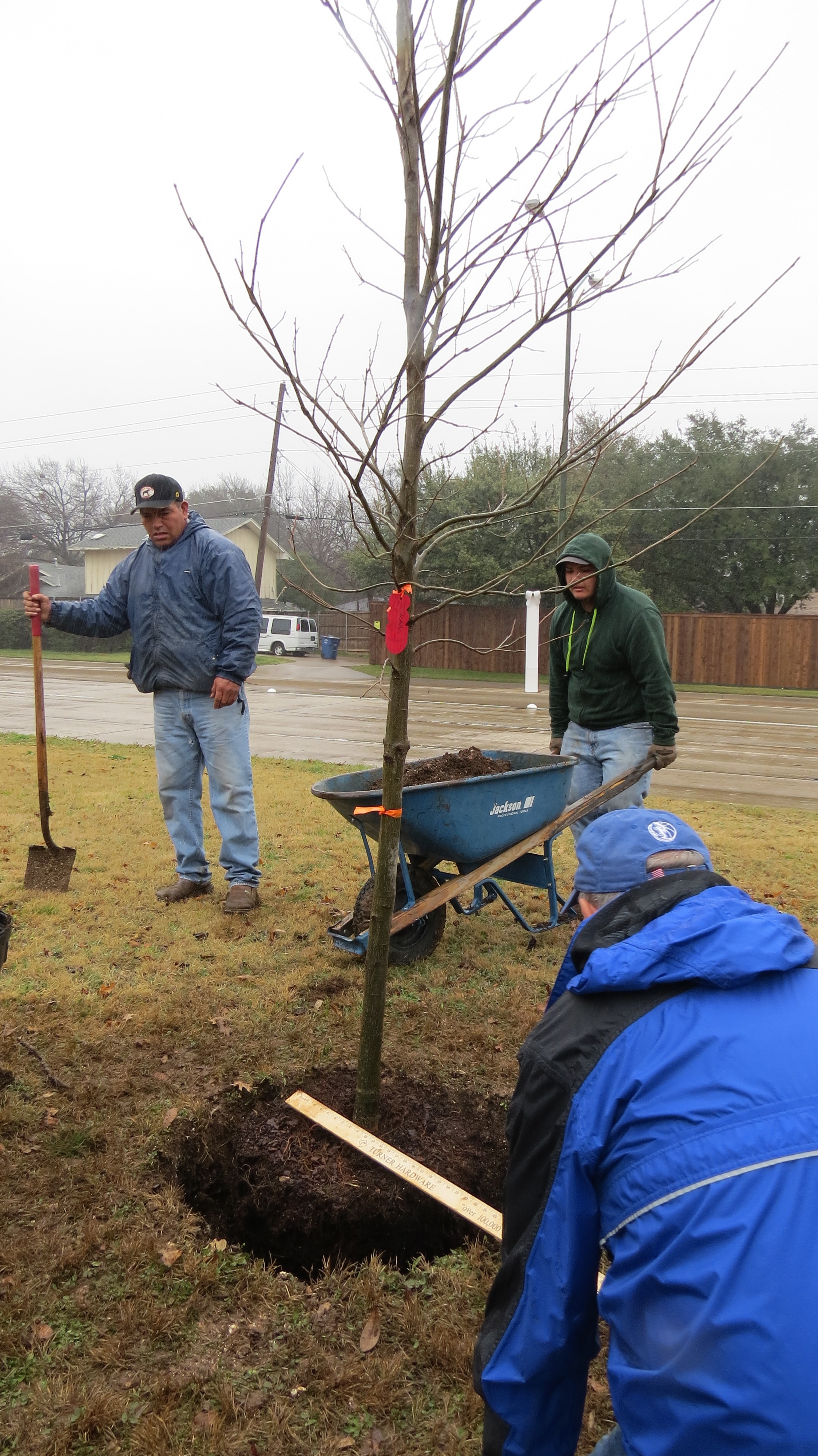
January Tree Planting

January Tree Planting

Oak wilt is a lethal fungal disease that has killed hundreds of thousands of live oaks and Texas red oaks in Texas. Red oaks and live oaks, probably the most planted trees in Dallas, are highly susceptible to oak wilt. White oaks, however are more resistant to the fungus.

Three of the new trees planted this spring fall in the white oak family: the Chinquapin, Mexican or Monterrey, and Lacey oaks.

The Chinquapin oak, sometimes spelled Chinkapin, Quercus muehlenbergii is tough enough to thrive in the neglect of a nearby post office parking lot. The Chinquapin has distinctive dark-green, saw-tooth leaves. Its narrow, rounded shape and resistance to diseases and pests endears the tree to homeowners. The Chinquapin is a Texas native and designated as a Texas Superstar by Texas A&M AgriLife Extension. The tree should be planted in full sun and will grow to 50-60 feet tall and 30-50 feet wide.
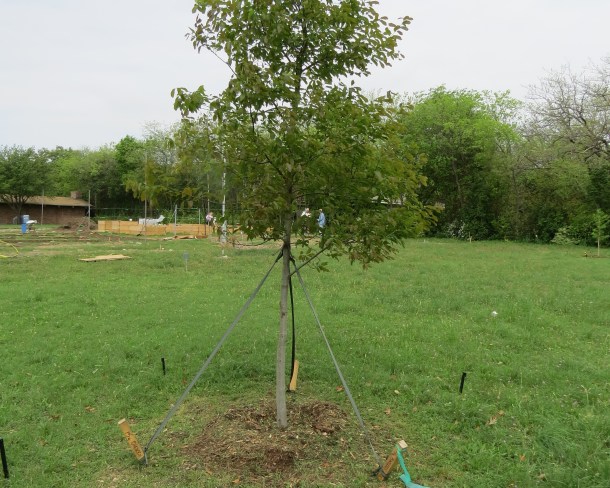
Chinquapin Oak Tree

Chinquapin Oak Tree

The Mexican white oak or Monterrey oak Q. polymorpha is another tough, drought resistant tree.   The new growth is pinky-peach color, darkening to thick, leathery blue-green leaves. If cold enough, the leaves turn bronze in the fall. (In mild winters, the tree could retain some leaves.) The Texas native grows into an open spreading shape 35-45 feet tall and 25-40 feet wide in full sun.
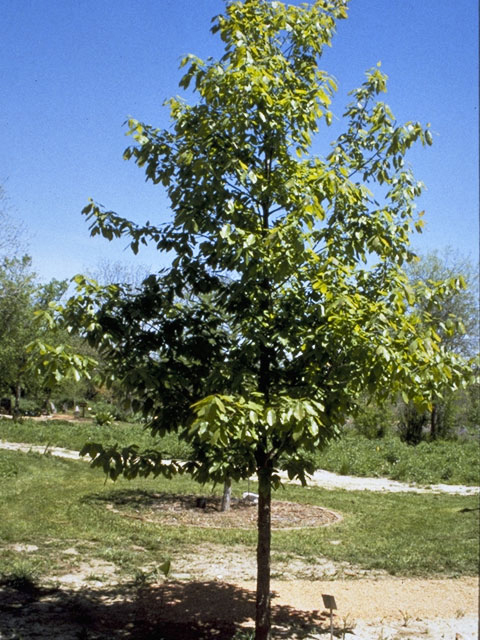
Mexican White Oak or Monterrey Oak

Mexican White Oak or Monterrey Oak

The Lacey oak Q. laceyi is a gem in the oak family. The tree matures into a small, rounded shape 20-30 feet tall and 20 feet wide. The leaves are peach-colored when young, maturing into a dusky bluish-gray (smoky) color above and a lighter color on the underside. Another Texas native, the tree is extremely drought resistant when established and gives yellow fall color.
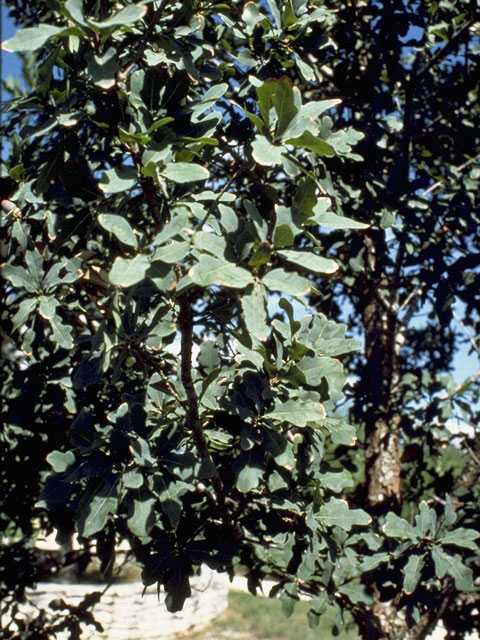
Lacey Oak

Lacey Oak

With the cedar elm Ulmus crassifolia, we wanted to include a tree outside of the oak family that is a reliable beauty in the landscape. Instead of a ruler straight leader, cedar elms are known to adopt a wonderful irregular shape. The Texas native is deciduous, its small leaves showing yellow fall color. It flowers in late summer to fall, unlike most spring blooming trees. Cedar elms tolerate our heavy clay soil and grow to be 40-70 feet tall and 30-50 feet wide in full sun.
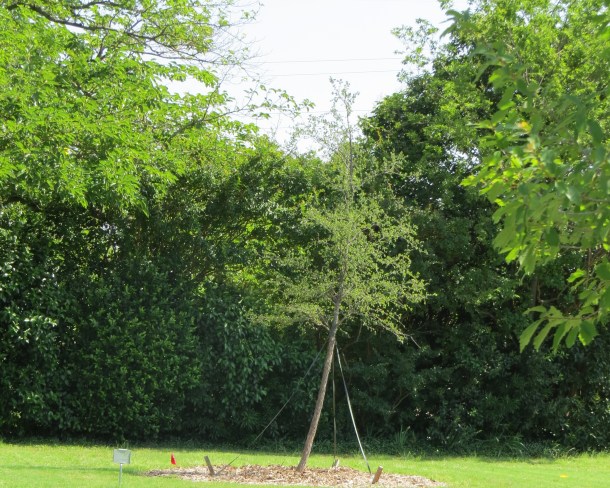
Cedar Elm Planted at The Raincatcher's Garden

Cedar Elm Planted at The Raincatcher’s Garden

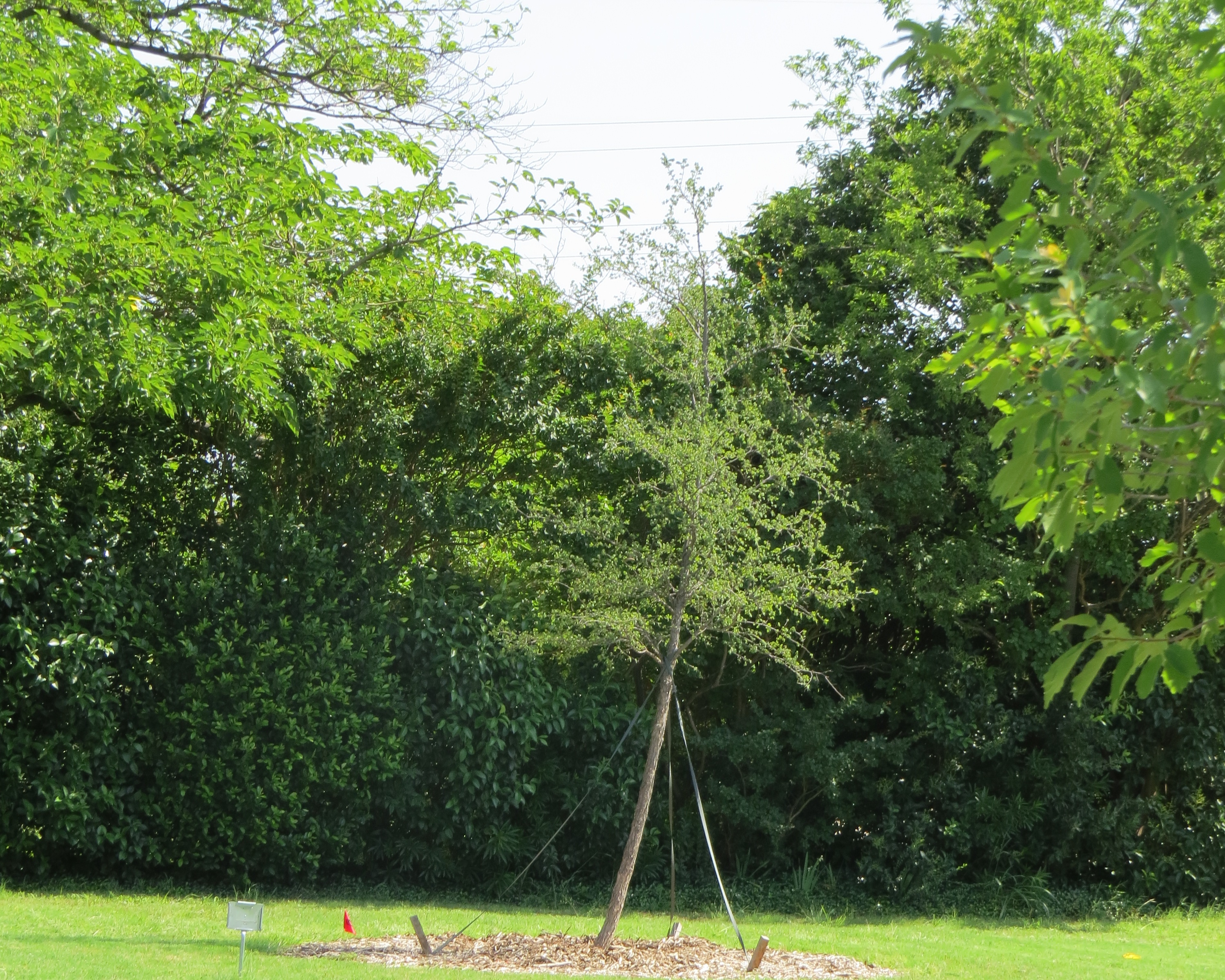
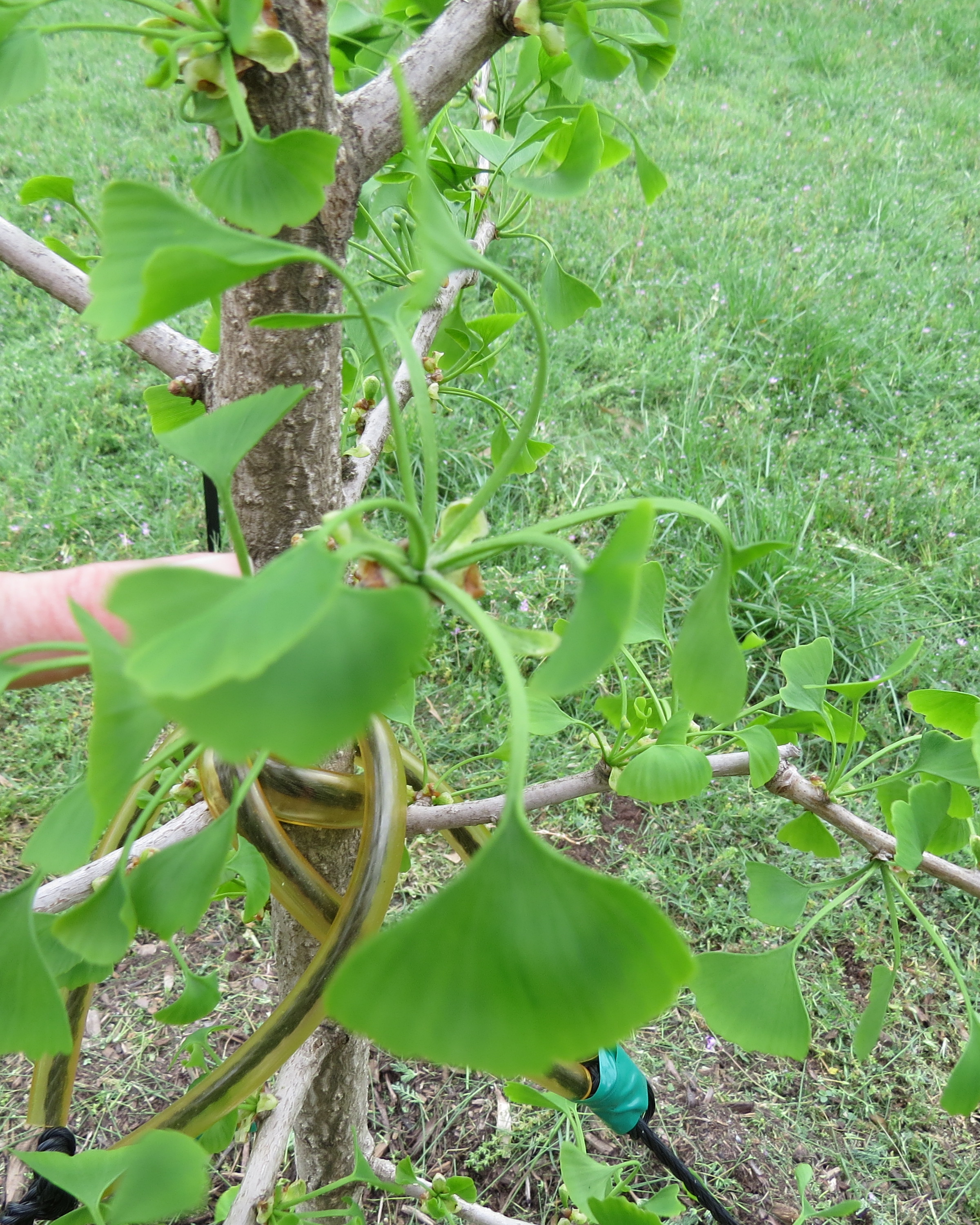
Few trees are as stunning as a ginkgo Ginkgo biloba in the fall. It shimmers with brilliant yellow leaves, then drops them all at once. We planted the aptly named ‘Autumn Gold.’ The gingko is by far the most unusual of our tree quintuplet. Its fan- shaped leaves were part of the prehistoric landscape 200 million years ago, and the tree is often referred to as a living fossil. The gingko is found only in two small areas of China, and seeds are considered a delicacy in Japan and China. Plant only male trees grown from cuttings or grafted; female trees have an offensive smell! (Named varieties are male trees.) A gingko will slowly grow into an oval shape 50 feet tall and 30 feet wide. The trees have no pest problems.

Ginkgo Tree 'Autumn Gold'

Ginkgo Tree ‘Autumn Gold’

 Come see our new trees at the Raincatcher’s Garden and pick a new favorite for your yard.

Elizabeth

Pictures by Starla

Monterrey Oak and Lacey Oak pictures by http://www.wildflower.org

The Color Purple

One of the main tasks at The Raincatcher’s Garden right now is installing drip irrigation.  Our liscensed irrigator, Doug Andrews of Double D Landscapes is at the helm.

Doug Andrews, Double D Landscapes

Doug Andrews, Double D Landscapes

The process of irrigating a large garden like The Raincatcher’s Garden is cumbersome.  Purple has become our new favorite color and the reason is that our future plans include harvesting water collected from the roof of  nearby buildings. The color purple is used to identify pumps, tanks and pipes carrying reclaimed water for reuse. Purple or what looks like a pretty shade of lavender  means non potable or non drinkable water.  At our garden on Joe Field Road we had two large 2500 gallon cisterns collecting rainwater off our large shed. We don’t have them yet for our new garden and will judiciously use city water in the meantime. Anyone want to donate rainwater cisterns?

Purple Tubing  for Drip Irrigation Installed at The Raincatcher's Garden

Purple Tubing for Drip Irrigation Installed at The Raincatcher’s Garden

In the meantime, our plant success  depends on our amended soil, heavy mulch application, and hand watering.  More rain is welcome!

Find out more about Drip Irrigation as taught by Dr. Dotty Woodson, here.

Ann


First Field Trip at The Raincatcher’s Garden of Midway Hills

West Dallas Community School fifth graders came to our new gardens last week. Composting, Butterflies, Vermiculture, and Herbs were the subjects of the day!

The Wonder of Worms, Nature's Composters in the Palm of Your Hand

The Wonder of Worms, Nature’s Composters in the Palm of Your Hand

How to “host” butterflies in your garden, how to provide nectar sources, these were some of  the topics in butterfly class.

Jane and Judy Teaching West Dallas 5th Graders

Jane and Judy Teaching West Dallas 5th Graders All About Butterflies

“Along with milk and vegetables, kids need a steady diet of rocks and worms. Rocks need skipping, holes need digging, water needs splashing, and bugs and frogs and slimy stuff need finding.”  *

Linda teaching the science of herbs!

Linda Teaching the Science of Herbs

Our free, garden field trips provide this type of outdoor learning experience.  Science is taught in a hands on, interesting way. For more information about our school field trips, please click here.

West Dallas Community School, we are so glad you are back!

Ann

Pictures by Starla

*Quote  by Go RVing!


Beautiful Things at 11001 Midway Road, The Raincatcher’s Garden

What do all these Master Gardeners have in common?

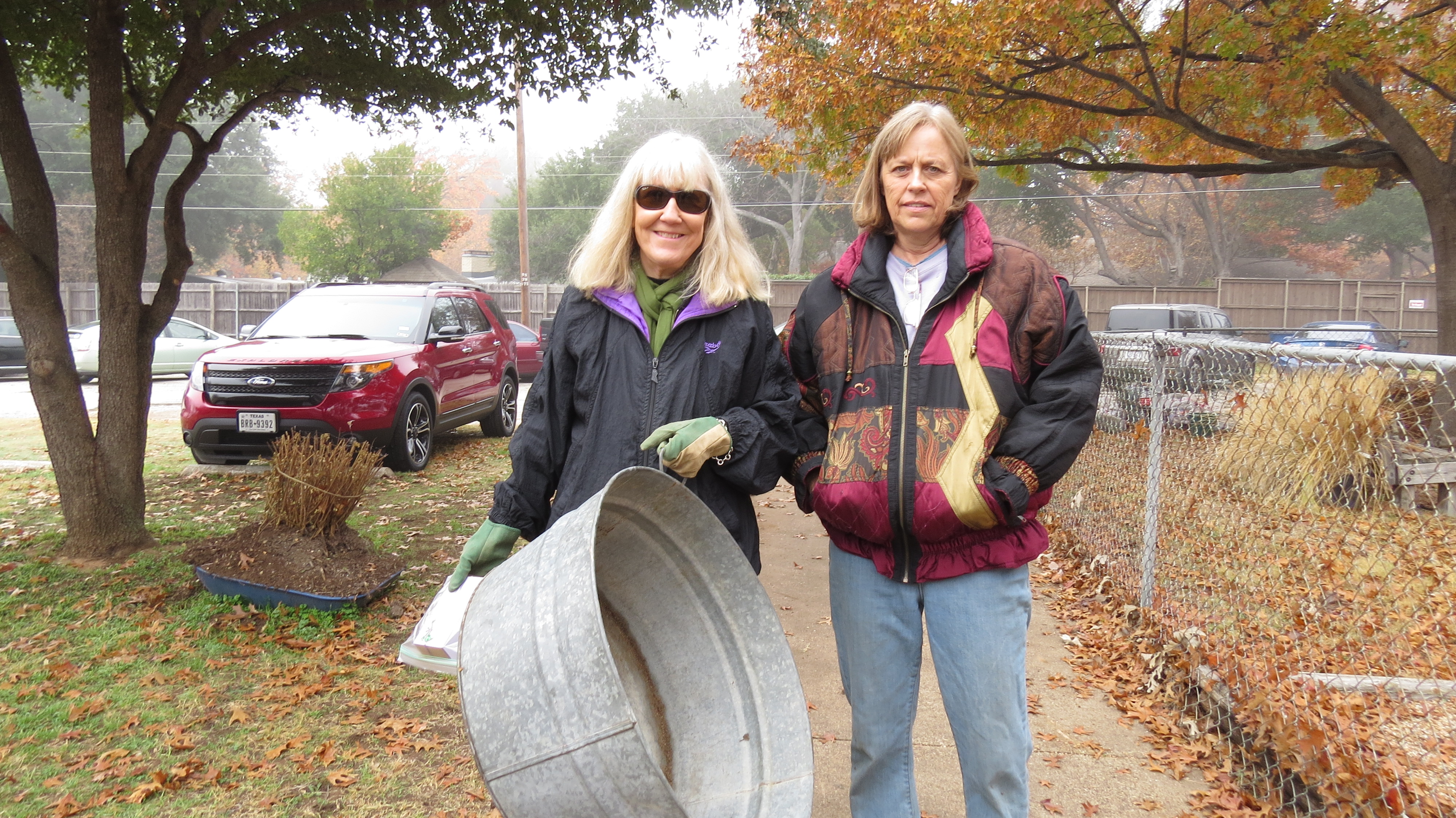
Susan and Jackie

Susan and Jackie

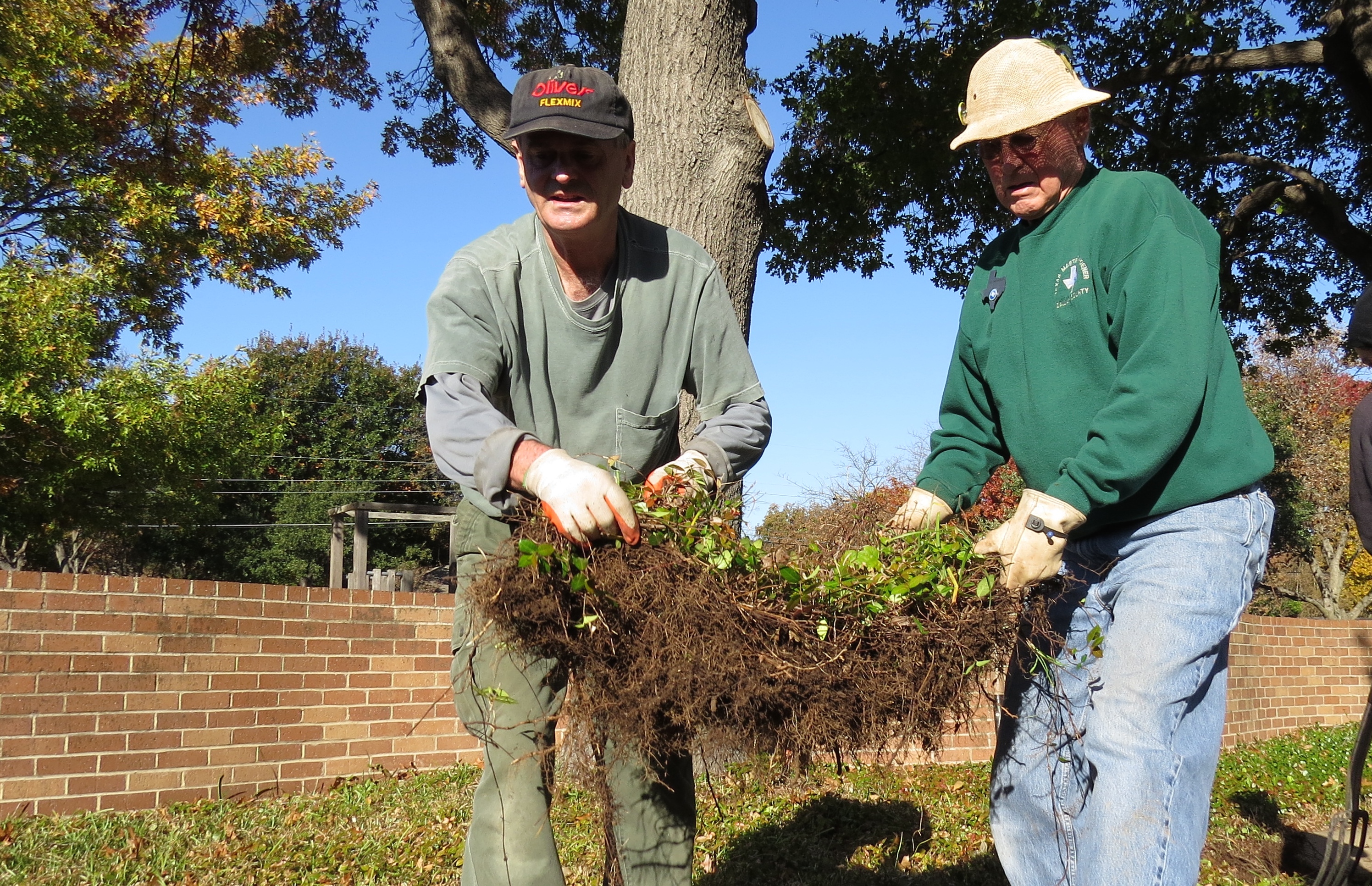
Hans and Tig

Hans and Tig

They are all working hard to bring you beautiful things!

Today we bring you the music of Gungor and a video presentation of our work at the Raincatcher’s Garden. Starla made this video for us. Click here to see the progress at our garden and enjoy the music : http://flipagram.com/f/QGnnecIIrm

Thank you, Starla!