Tag Archives: pollinator friendly

Honeybee Activity and Black Sage Honey

October 31, 2023

For the past few weeks, I’ve been spending countless hours in the garden. It didn’t take long to notice the increased level of honeybee activity occurring from early morning until evening. The bees are everywhere during daylight hours and seem to be buzzing around the flowers with a frenzy in their movements. It is truly fascinating to watch.

Why, I wondered, is fall such a busy time for the bees? One interesting explanation that I stumbled across was that honeybees have switched from needing protein to feed their young to craving carbohydrates before they die later in the season. Seems rather sad but, as we know, the lifespan of a honeybee is relatively short – a few weeks to maybe six months, at the most.

I also discovered that as long as the weather is mild, honeybees will continue to forage throughout the autumn months. During this time, worker bees spend many hours collecting enough nectar (carbohydrates) and pollen (protein) to feed and maintain the colony throughout the winter. Keeping the hive alive during the winter months is a priority. In order for this to happen, worker bees will need to be especially vigorous and healthy.  

(NOTE: In the summer months a hive can have about 60,000 bees, but only about 10,000 bees are needed to ensure a colony survives the cold winter weather. As honeybees start preparing for winter, most drones (male honeybees) are evicted from the hive. Since drones have one purpose only – to mate with a queen – when their work is over, out they go.)  

As the days grow shorter and colder, the remaining honeybees will form what is referred to as a “winter cluster”.  The queen and her brood are kept at the center of this globe-like cluster while worker bees shiver or vibrate their wing muscles, generating enough heat to keep the hive warm in even very cold temperatures. On mild winter days, as we often experience in Zone 8, bees will come out of the hive to dispose of waste products, clean the hive and forage. 

However, since there aren’t many options for foraging in the middle of winter, fall nectar and pollen gathering is critical to the hive’s continued survival. We can play an important role in supporting the honeybees during this time by taking a few steps to help them in their work. 

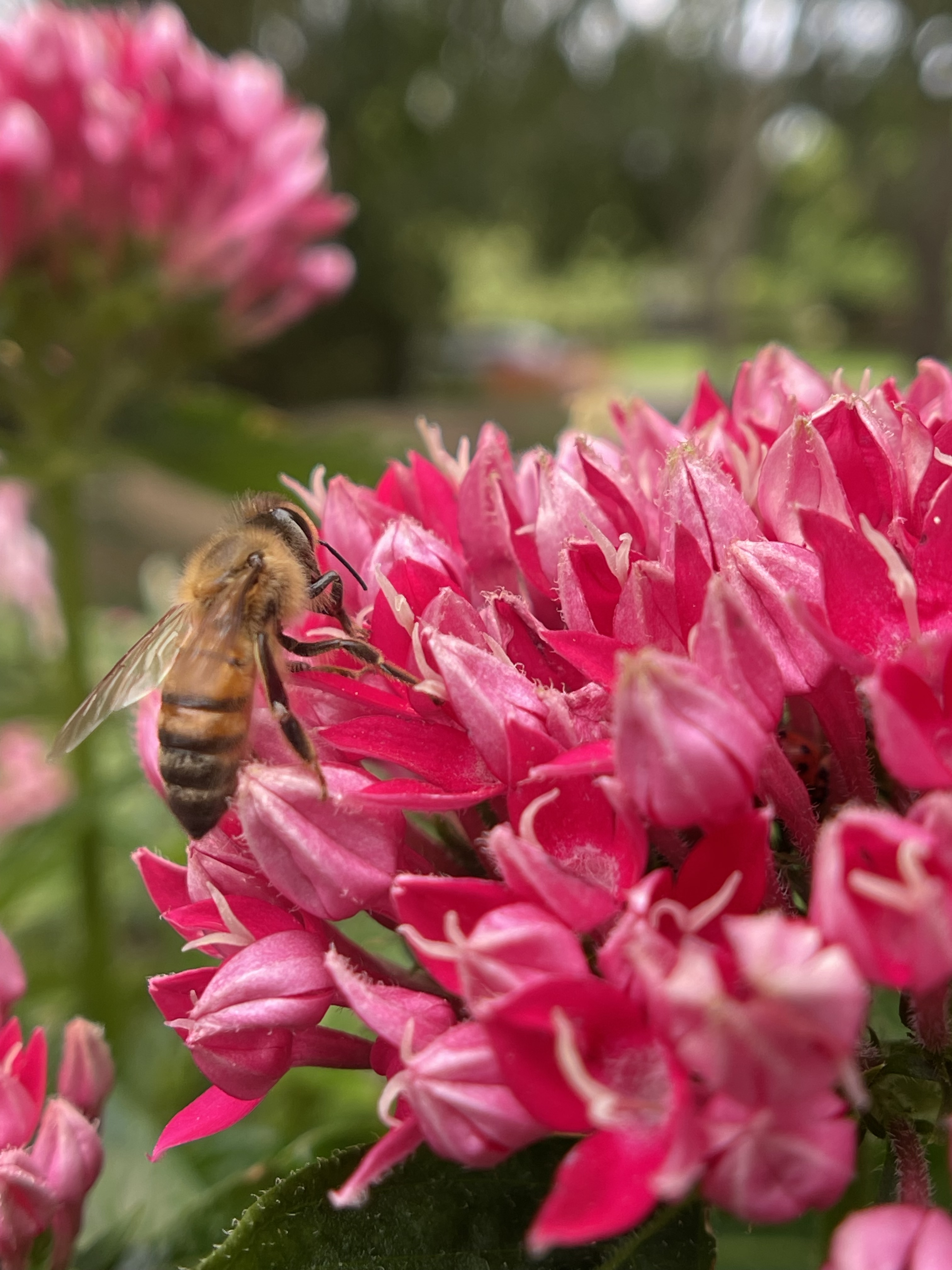
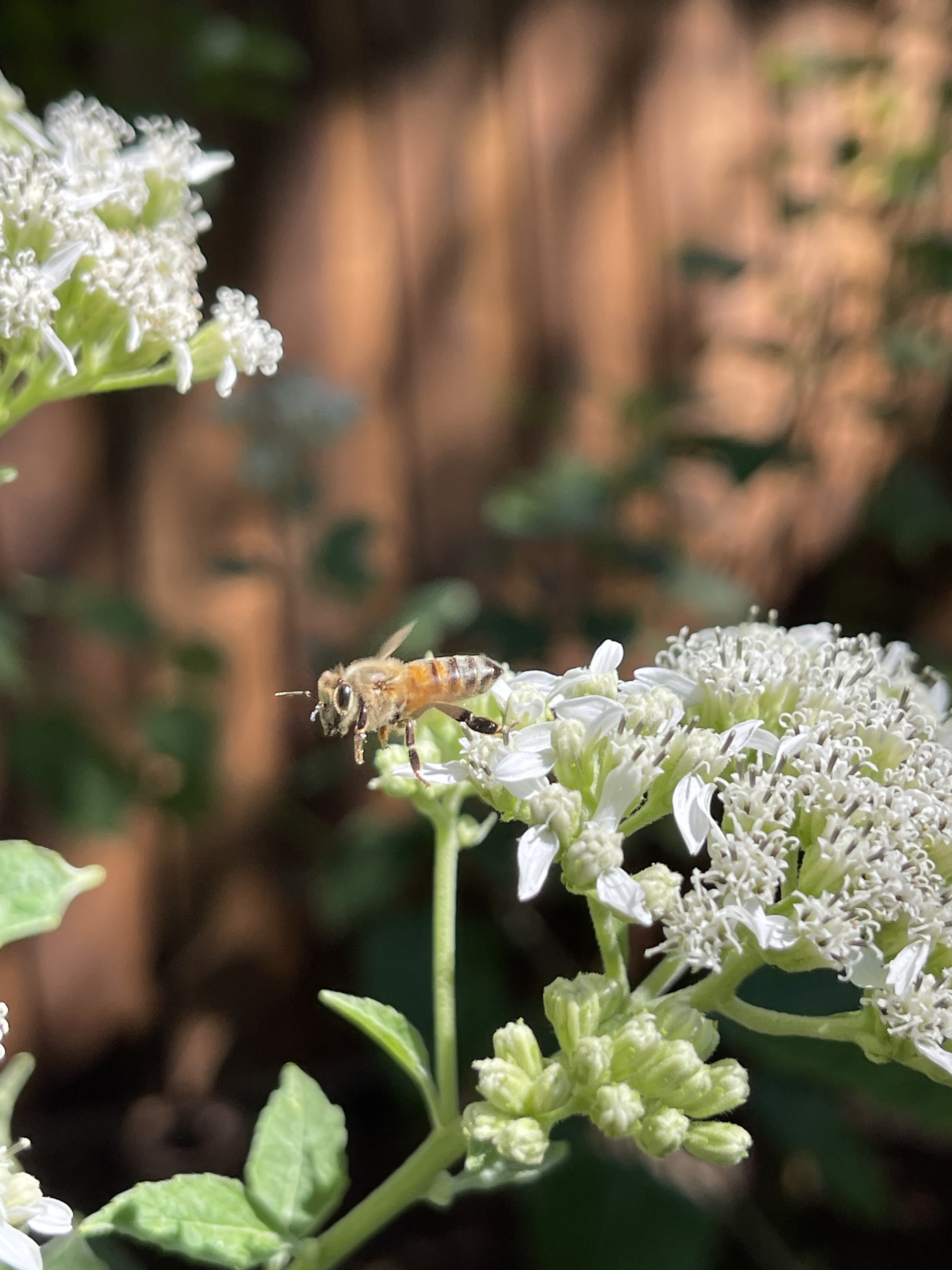
*Plant late blooming plants that provide the nectar and pollen bees need. Some examples include fall asters, borage, calendula, frostweed, goldenrod, hibiscus, pentas, salvia and zinnias. We have pictures of most of these pollinator plants above.

*Plan to leave your basil plants in the ground until the first “cold snap” or freeze. I’ve noticed more honeybees on my fall basil plants than anything else in the garden. 

*Provide a fresh water source (shallow container) and add some pebbles or twigs for the bees to land on while drinking.

Black Sage Honey, (Salvia mellifera)

Sometime around the middle of September, while visiting our youngest son and his family, we started a conversation about the different flavors of honey. He wanted to know if I had ever heard of Black Sage Honey. My answer was “yes”, but I had never tasted it. Immediately, he brought out a jar, opened it and, together, we all sampled a delicious, peppery honey that was truly unique. 

Later that evening, I did an online search to learn more about “black sage”. Here is a brief summary of what I learned about this amazing plant from Specialty Produce.

“Black Sage is a powerfully fragrant, woody shrub that quickly grows to an average of one meter in height and width. More mature plants can reach up to 1.8 meters. The plant has tiny hairs coating the stems and leaves in a sliver-green fuzz, and flowers that range from white to pale blue or lavender grow in spherical clusters known as whorls, along the square stems. The small, oval, dark-green pebbled leaves can look almost black from a distance, especially during dry conditions, and the stem and whorls harden and turn black at the end of the season – all characteristics believed to have influenced the plant’s name. Black Sage leaves produce a strong, herbal, sometimes minty scent and offer a mildly astringent, herbaceous flavor.”

After learning that black sage is recommended for USDA Zones 8-10, I began searching for a grower. Mountain Valley Growers in Squaw Valley, California had the plants in stock, so my order was quickly placed. I purchased a total of three plants. They arrived on October 20th and, after acclimating for a few days, were put into the ground this week.

New planting of Black Sage. It will receive about six hours of sun followed by dappled shade in the late afternoon.

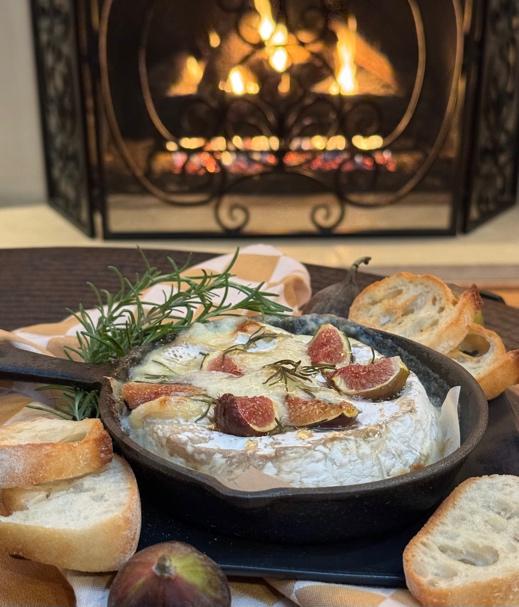
And finally, what’s all the “buzz” about Black Sage Honey? Black sage is native to Southern California and Northern Mexico. It flowers only about every three years. That translates to a very rare honey that is made only about four seasons per decade! Thankfully, I was able to find a jar from Savannah Bee Company and am happy to share this simple recipe with everyone. My recommendation is to experience the wild and earthy taste on its own then decide how you would best enjoy using it. Drizzled over brie cheese and fresh fall figs is my first choice! 
A pan of food next to a fire

Description automatically generated

Honey Baked Brie with Figs and Rosemary

Linda Alexander, Dallas County Master Gardener Class of 2008
HONESTY—IN THE GARDEN

Every so often one reads something that Is just so honest and truthful that its almost a shock.  That recently happened.

For some reason an interview with a tourist information official from Nebraska seemed to jump off the page.  He said—“To be honest it’s not for everyone”.  Oh my thatis a wonderful thing.  One expects technicolor sunsets—incredibly happy couples eating amazing food laughing children at the theme park—but not this time—“To be honest its not for everyone”

That should make anyone want to head for Nebraska—now.  Because you would know what to expect—a perfectly nice place where you might  have to make an effort to have a great time.

And then it seemed the absolutely perfect motto for the Pollinator garden at Raincatchers.

It’s a wonderful area but people who work there—well they have to work at it.  The butterflies and bees and birds—obviously appreciate it but they keep quiet—no rounds of applause or words of thanks.

Often it is said that native and adapted plants are “low maintenance –but work is required and it is repetitive –deadheading trimming weeding—necessary but it can be hard too and somehow—never quite “finished” And without a doubt not at all glamorous.

So—it’s clear now right??  Come and work in the pollinator area you get to see insects and  birds and lovely plants—yes it is work and it might not be spectacular—but isn’t that the whole point of a garden.

It’s a wonderful experience but you have to work at it.  It may not be for everyone —-but—maybe its for you!!  You will always be welcome!  And just like Nebraska—the rewards are there with just a little effort!

Susan Thornbury, Dallas County Master Gardener Class of 2008

During the hot summer days, we work early at Raincatcher’s. Monday morning and Tuesdays you will find Master Gardeners in the garden early-even before 8am.

THE POLLINATOR-FRIENDLY GARDEN—AND GARDENER

June 28, 2022

Pollinator week has passed but we will continue to celebrate pollinators all month long with pictures, stories, and garden advice. Plant with purpose, now is a great time to create a pollinator-friendly yard or garden.

Bees are Essential!

What is actually involved in being a pollinator friendly gardener?  First open your eyes to the complex world that is your garden.  Pay close attention to the plants and creatures and the interaction between them. This is how the garden will become even more useful to pollinators—and to the gardener as well.

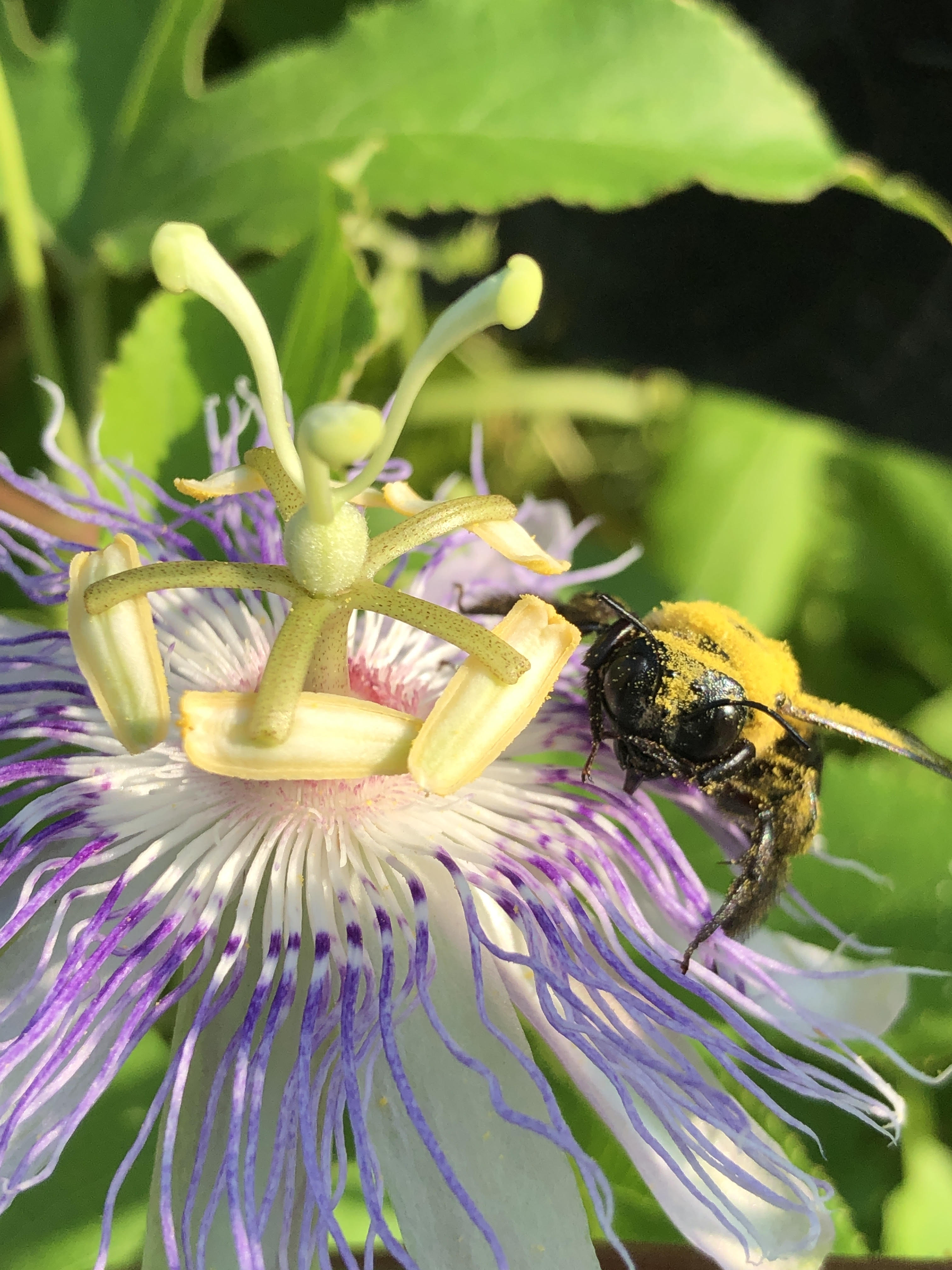
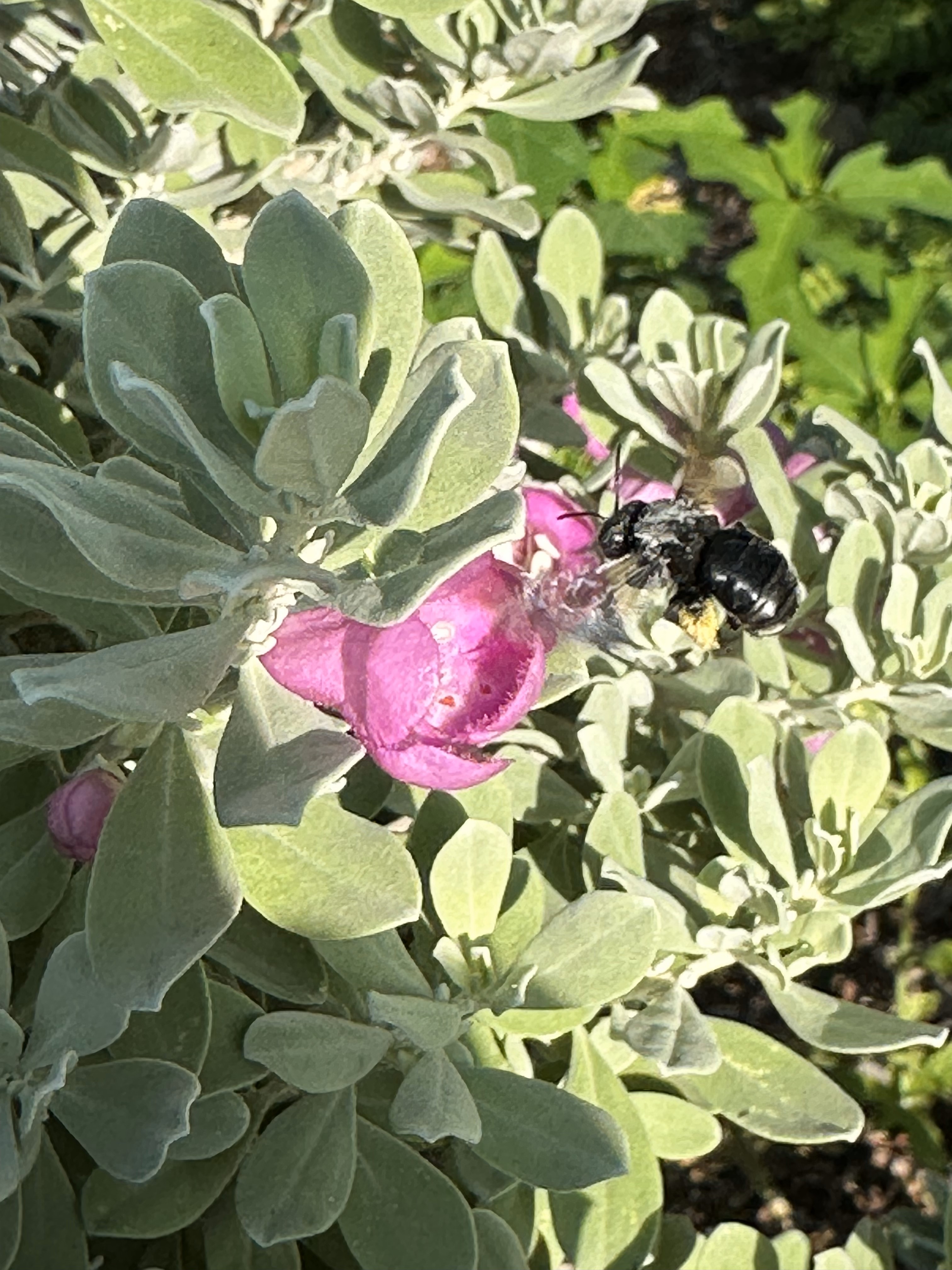
Consider that pollinator can be one of a great many creatures.  What an opportunity for learning!  These creatures have been essential to life for a very long time but they need all the help that gardeners can give.  Solitary bees make up 90% of native bees and bumble bees make up the rest. They are social but live in small groups numbering in the hundreds, not the many thousands of bees that make up honeybee hives. Now honeybees do wonderful things but your garden is not an almond orchard.  Native bees will do a great job pollinating the flowers including the flowers of herbs and vegetables.

The gardener doesn’t need to know hundreds of bee names to observe the differences between them and to begin to see how they interact with the plants in the garden. Accept that wasps, flies and beetles are also involved in pollination.  Be careful and observe them as they go about their lives. They have a place in the world so share the message.

Didn’t pollinator gardens used to be called butterfly gardens?  Well, it’s an updated designation but butterflies are an essential part of gardening.  Butterflies are delightful and this is important. They are a wonderful way to engage potential gardeners—that’s everybody!

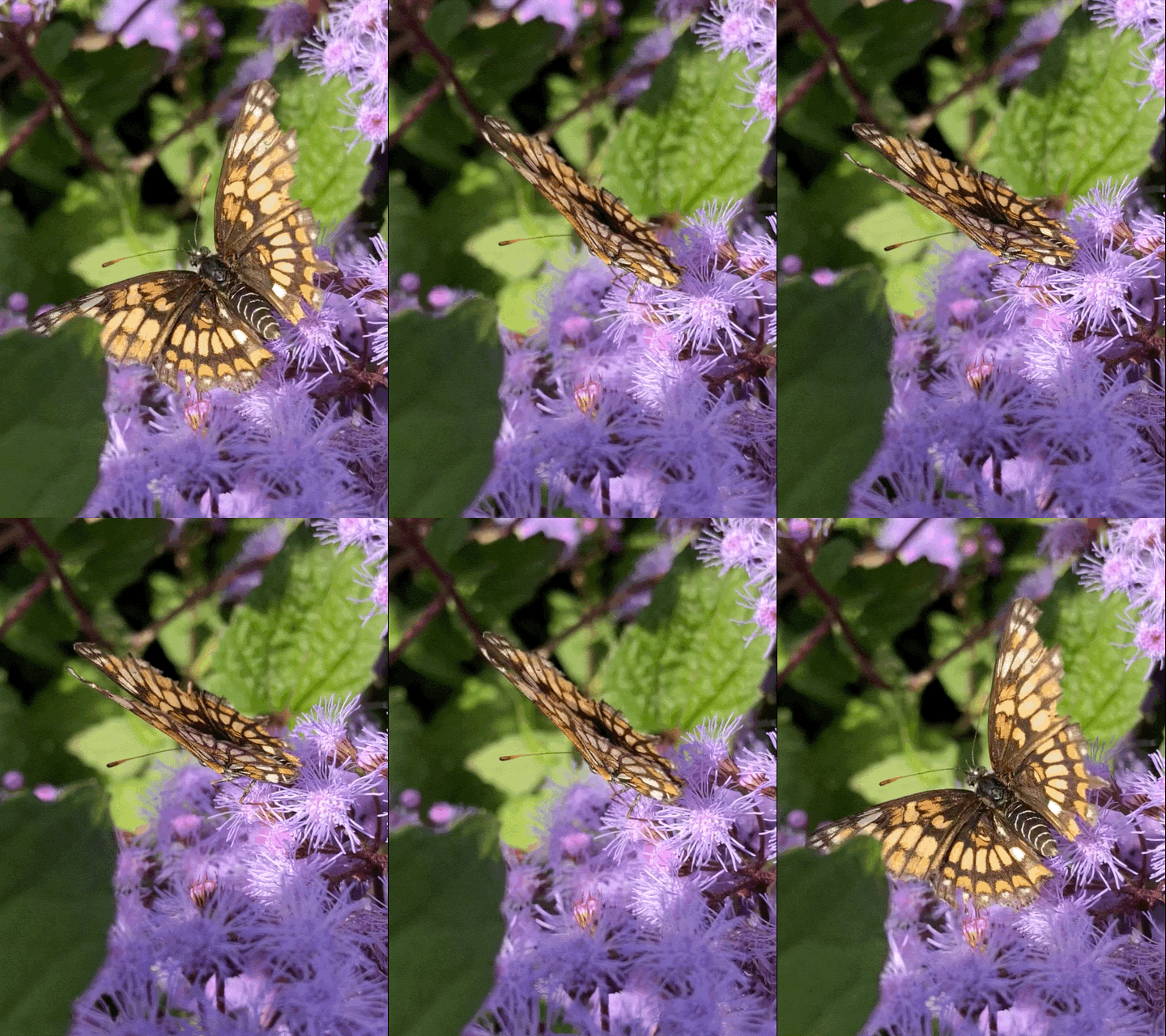
Vesta Crescent Butterfly on Hardy Ageratum

Bees are essential but butterflies win “most popular insect” every time.  Of course, the pollinator garden should attract and care for them.  Flowers are what is needed, lots of flowers. Plant as many shapes and sizes as can be grown and not just in spring but summer and fall, too. That requires planning and of course ongoing care but that’s what gardeners do.

 Everyone wants monarchs, of course they do, and that’s fine but don’t stop there.  There are so many butterflies to learn about. In this area the garden could be visited by eastern black swallowtails, pipevine swallowtails, painted ladies’, common buckeyes, lots of skippers (some people say they aren’t really butterflies) but they are lovely little creatures.  Snouts—so easy to recognize—yes they do have a snout.

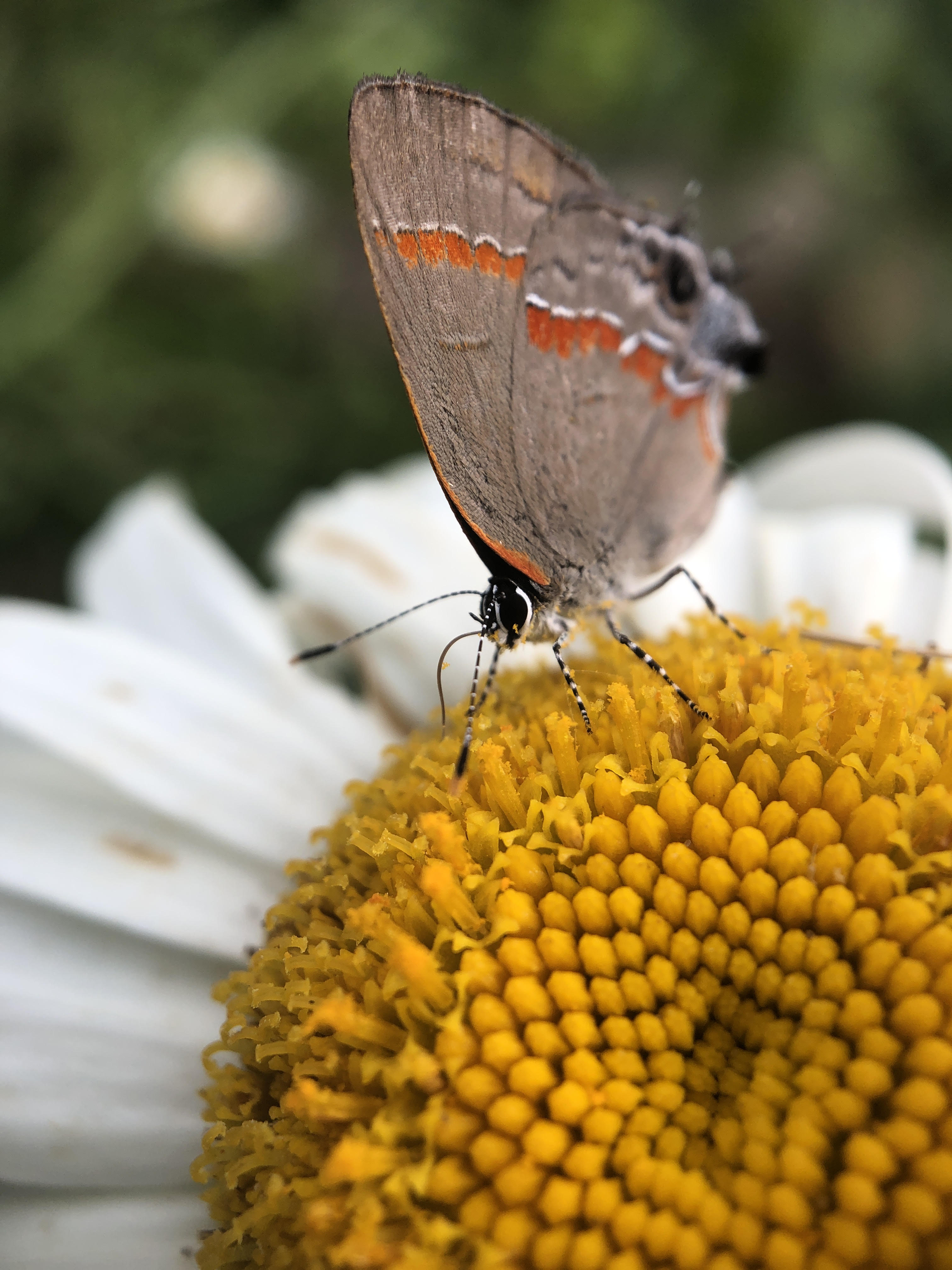
Delicate hairstreaks love tiny flowers, there are dusky wings of various sorts. Funeral is a favorite with its dark wings bordered with white.  So many and all are interesting and beautiful. Take the time to look carefully. Honestly, they are just as enchanting as monarchs.

Gardeners want butterflies—so take the next step.  Find out about their host plants and try to grow at least three different kinds if possible.  Butterflies have an amazing ability to find their host plants so eggs can be laid. Then the larvae hatch. Do they eat the plants? Yes. Do the plants then look ragged? Yes”, but without this…no butterflies.  Do not assume this is common knowledge.  It isn’t and needs a good explanation. Never use pesticides, then explain again.  Butterflies and bees are insects.  Diplomatic skill must be used! So much to learn, but that’s the great thing. There is no need for boredom!

There are many sources of information on bees, butterflies, wasps and butterfly gardening.

A great butterfly reference is “Butterflies of Oklahoma, Kansas and North Texas”

(By John M Pole, Walter B Gerard and John M Nelson from the University of Oklahoma Press) 

Look up the Xerces society for information on native bees along with gardening and conservation information also. 

Susan Thornbury, Dallas County Master Gardener Class of 2008

Pictures by Starla Willis, Dallas County Master Gardener Class of 2011