June 15, 2023
Everyone loves nature right—but then not squirrels or rabbits. Not the plants you were told were lovely natives but turn out to be so very successful that you have to carefully and quickly remove them from the neighbor’s yards. And then we can’t even think about nature films—way too often seem to feature chasing and catching and biting—oh no—a bridge too far.
Well,there is an answer its totally natural contains almost no violence and stars—BUTTERFLIES. What is best is they are pipevine swallowtails—beautiful large and showy—and actually are here.

The whole amazing life cycle can happen in your yard right before your eyes amazing really doesn’t quite cover it—and its not hard and doesn’t involve massive expense.
What to get started? Of course. Here’s how plant white veined pipe vine. It’s a ground cover type plant that loves shade or semi shade—but seems very adaptable seeding itself into sunnier areas too—but plant your starter plants in a shady place—think about this—put them where you will see them often—and put them in front of any shrubs or tall plants. Ask around—your friends may be willing to share. Its best to transplant small plants. Now natural processes take time be patient and let your plants grow and thrive.
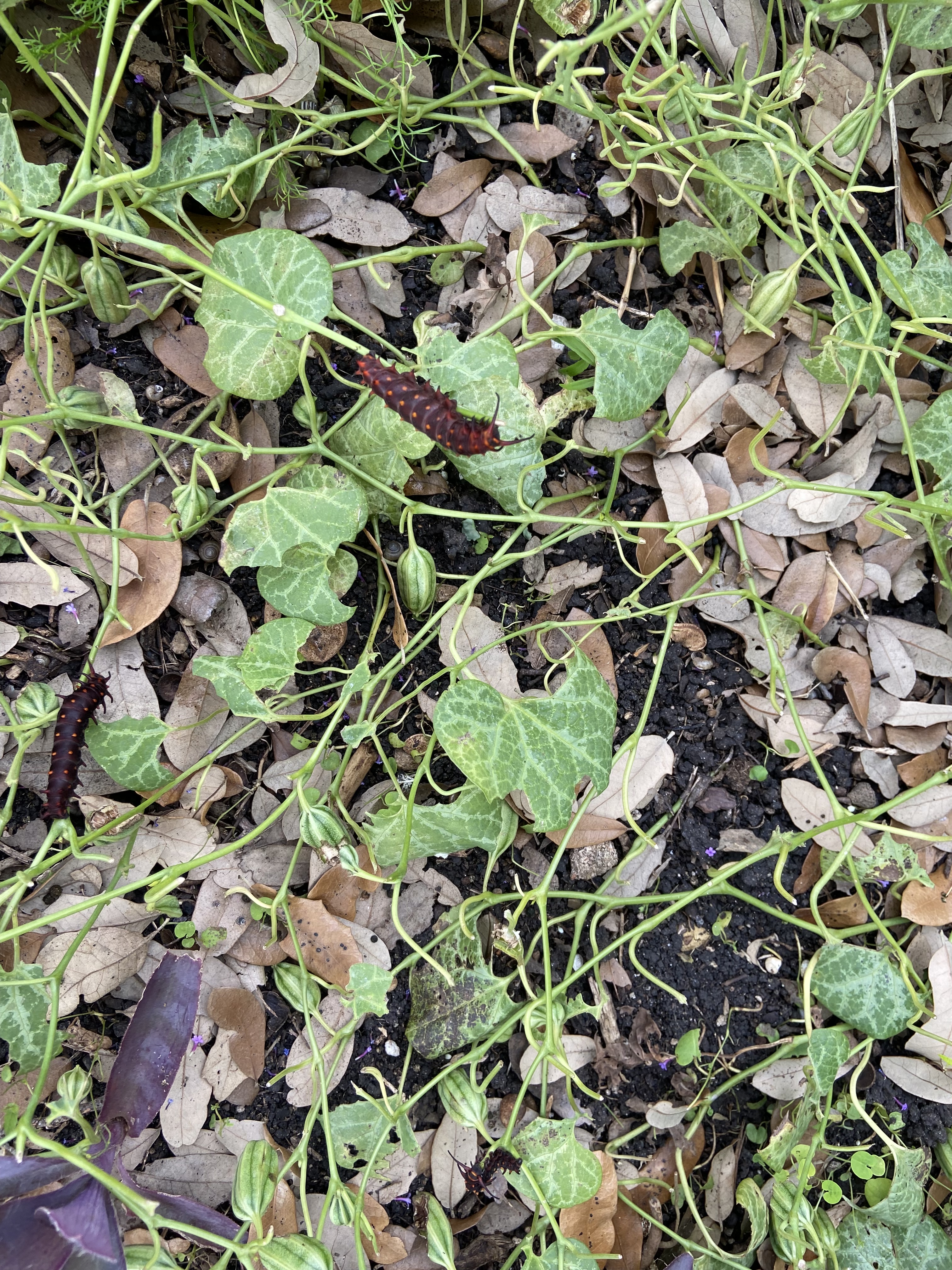
Now exactly how the lovely black butterfly with blue markings finds your plants—they smell them I believe but they also seem to be looking for them. Eggs are laid in clusters starting in late spring and early summer. Actually we live in an area that can have two full generations—more about that in a minute.
So the butterfly lays eggs and they hatch into tiny larvae—but they don’t stay tiny long the eating of the pipevine is—well I know the word amazing is being used a lot—but sometimes—you will see its totally indicated.


When the larvae have reached there final size—which is big they leave and seem to head for a high place to form a chrysalis—first they find the place—try to leave them alone they know what they want—you don’t!. They then become completely still and form a J this also lasts awhile. However when the time is right the larvae turns into a chrysalis so fast that its hard to believe—honestly about 5 minutes. The chrysalis has to harden but the change is incredibly fast. Now one thing about pipevine—it is toxic—now not to you planting or tending but when the larvae eat it they become very toxic to birds reptiles—things that might ordinarily eat it—you get the idea of this if you pick a leaf—it smells really nasty. I mention this because you actually get to see way more of these larvae actually form their chrysalis instead of being carried away by wasps or birds—just the way nature should be right?

Now the only part that may be unpleasant it the fact that the larvae eat masses of pipevine—your beautiful patch can look truly ratty when they finish—But wait there’s more! The pipevine knows very well that it will be eaten and is prepared. Underground the vine has a storage unit—very like a small sweet potato that helps the vine survive very well when all the leaves have been eaten—very very soon—it has grown back as strong as before and is ready for the next wave of larvae. That is nature at its best.
In picture above, the creatures were relocated to a better patch of pipevine. The larvae are totally harmless just be careful not to hurt them; they will not hurt you.
If you are very fortunate you will see the butterfly come out of the chrysalis dry its wings and fly away.
It just doesn’t make any sense not to plant pipe vine.
Susan Thornbury, Dallas County Master Gardener Class of 2008




 DALLAS GARDEN BUZZ