Tag Archives: honey bee

A Taste of Honey…Nectar of the Gods

In just a few weeks our year-long journey into the world of bees will come to an end. Until then, let’s explore, unarguably, the best part of experiencing honey.

In April of 2014, Joe Field (our location prior to relocating and becoming Raincatcher’s Garden on Midway Road) master gardener volunteers hosted a honey-tasting event along with a fabulous honey-themed lunch. A local beekeeper was our featured speaker. To this day, it has been one of our most successful educational programs. Not only did we learn the ‘proper’ way to taste honey, but the menu was created with those complimentary flavors in mind.


(For a quick glimpse of the menu and other photos from the event, go to the following link)


Our instructor that day shared with us that the composition of honey depends largely on which flowers are visited by the bees when collecting nectar. We should also not forget that plants produce nectar in order to attract pollinators such as honeybees, wasps, moths and bats. Another important fact is that the nectar of each plant species has a different combination of sugar and odor. Together, with the flower’s shape, design and color, this helps to guide the bee from one flower to another of the same kind.


Additionally, it was beneficial to learn that honey’s color, flavor and aroma all derive from the plants pigments and other materials secreted in the nectar. This is what makes honey from each floral source unique. Last month we shared examples of local fall blooming pollinator-friendly plants. Some of the flavor profile descriptions of those flowers can help us to imagine the taste of that particular honey.


Color and Flavor
Aster: Water-white to light amber. Spicy overtones, firm, chewy texture.
Borage: Pale yellow or water white. Herbal and floral bouquet with hints of cucumber and orange pekoe tea. Sugary aftertaste.
Goldenrod: Brilliant amber to a warm golden yellow. Bright, sharp, floral-like flavor with hints of fresh straw. Spicy aftertaste.


And a few others:
Lavender: Light amber. Strong camphor-perfumed taste with sweet tobacco notes.
Thyme: Carmel to dark, golden amber or darker. Aromatic, floral, lemony, minty and strikingly
sweet.
Here is a quick overview of how we learned to taste honey.
*Tasting honey is an exercise in comparing and contrasting flavors.


*Our taste buds can distinguish between five flavor sensations: sweet, sour/tart, salty, bitter and umami, which is a savory taste. The taste buds for each flavor are located at different areas on the tongue. This is the reason why it is recommended that you move the honey around your mouth as you taste it. Tasting more than one honey at a time gives you a reference point for comparing “tasting notes”.


*Begin with the lightest in color, moving on to medium ambers and then finishing with the darkest. Light-colored honeys typically have a mild flavor, while dark-colored honeys are usually stronger in flavor.


*Take a sip of water in between each sample to clear your palate. Also, a crusty piece of bread and a variety of cheeses can complement the tasting experience.


*To keep it simple and less confusing, start with about five to six different types of honey.


*Start by drizzling a sample of honey onto your tongue and let it melt for a few seconds.


*Spread it around your mouth and consider several questions:

Is it woody, floral, full, light, crisp, buttery, well balanced?
Does it have a long finish or an abrupt end?
Do you like it or find it unpleasant?

Finally, there is no right or wrong as we each have our own individual taste preferences and predisposition to flavors. Embrace the process of learning how to appreciate honey and celebrate the opportunity to discover the flavors you find the most enjoyable!

FYI…I was intrigued about Goldenrod honey and decided to try to find a source that sells it. That led me to Bee Friends Farm in Michigan. My two 12 oz. bottles should arrive within a few days!
Look for an update about the flavor and taste in our December article.

Linda Alexander, Dallas County Master Gardener Class of 2008
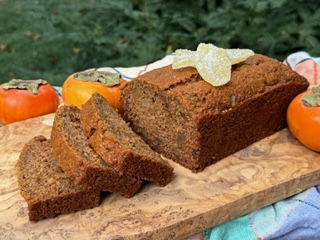
Spiced Persimmon Bread with Honey and Ginger, a Thanksgiving Recipe

Honeybee Activity and Black Sage Honey

October 31, 2023

For the past few weeks, I’ve been spending countless hours in the garden. It didn’t take long to notice the increased level of honeybee activity occurring from early morning until evening. The bees are everywhere during daylight hours and seem to be buzzing around the flowers with a frenzy in their movements. It is truly fascinating to watch.

Why, I wondered, is fall such a busy time for the bees? One interesting explanation that I stumbled across was that honeybees have switched from needing protein to feed their young to craving carbohydrates before they die later in the season. Seems rather sad but, as we know, the lifespan of a honeybee is relatively short – a few weeks to maybe six months, at the most.

I also discovered that as long as the weather is mild, honeybees will continue to forage throughout the autumn months. During this time, worker bees spend many hours collecting enough nectar (carbohydrates) and pollen (protein) to feed and maintain the colony throughout the winter. Keeping the hive alive during the winter months is a priority. In order for this to happen, worker bees will need to be especially vigorous and healthy.  

(NOTE: In the summer months a hive can have about 60,000 bees, but only about 10,000 bees are needed to ensure a colony survives the cold winter weather. As honeybees start preparing for winter, most drones (male honeybees) are evicted from the hive. Since drones have one purpose only – to mate with a queen – when their work is over, out they go.)  

As the days grow shorter and colder, the remaining honeybees will form what is referred to as a “winter cluster”.  The queen and her brood are kept at the center of this globe-like cluster while worker bees shiver or vibrate their wing muscles, generating enough heat to keep the hive warm in even very cold temperatures. On mild winter days, as we often experience in Zone 8, bees will come out of the hive to dispose of waste products, clean the hive and forage. 

However, since there aren’t many options for foraging in the middle of winter, fall nectar and pollen gathering is critical to the hive’s continued survival. We can play an important role in supporting the honeybees during this time by taking a few steps to help them in their work. 

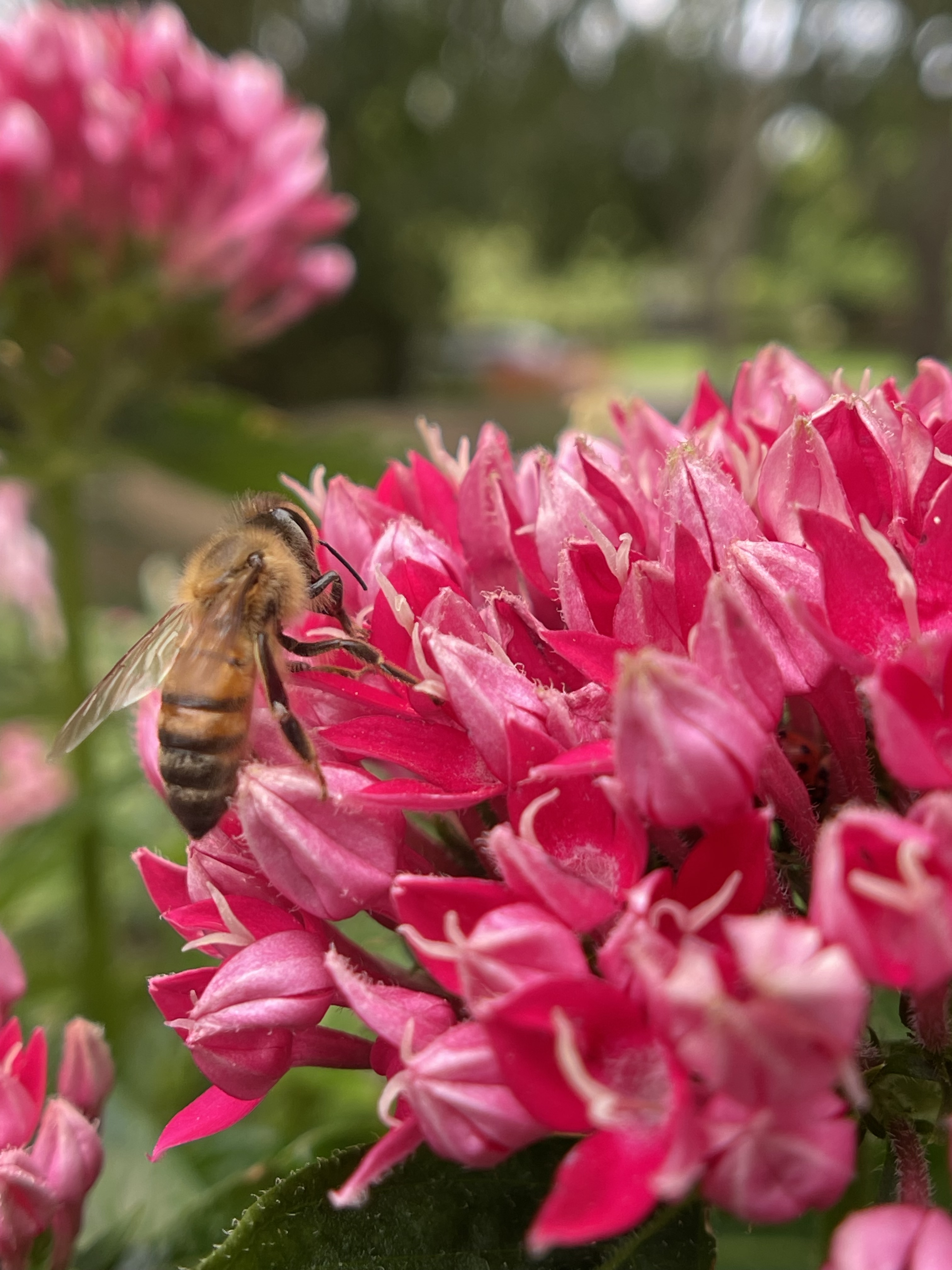
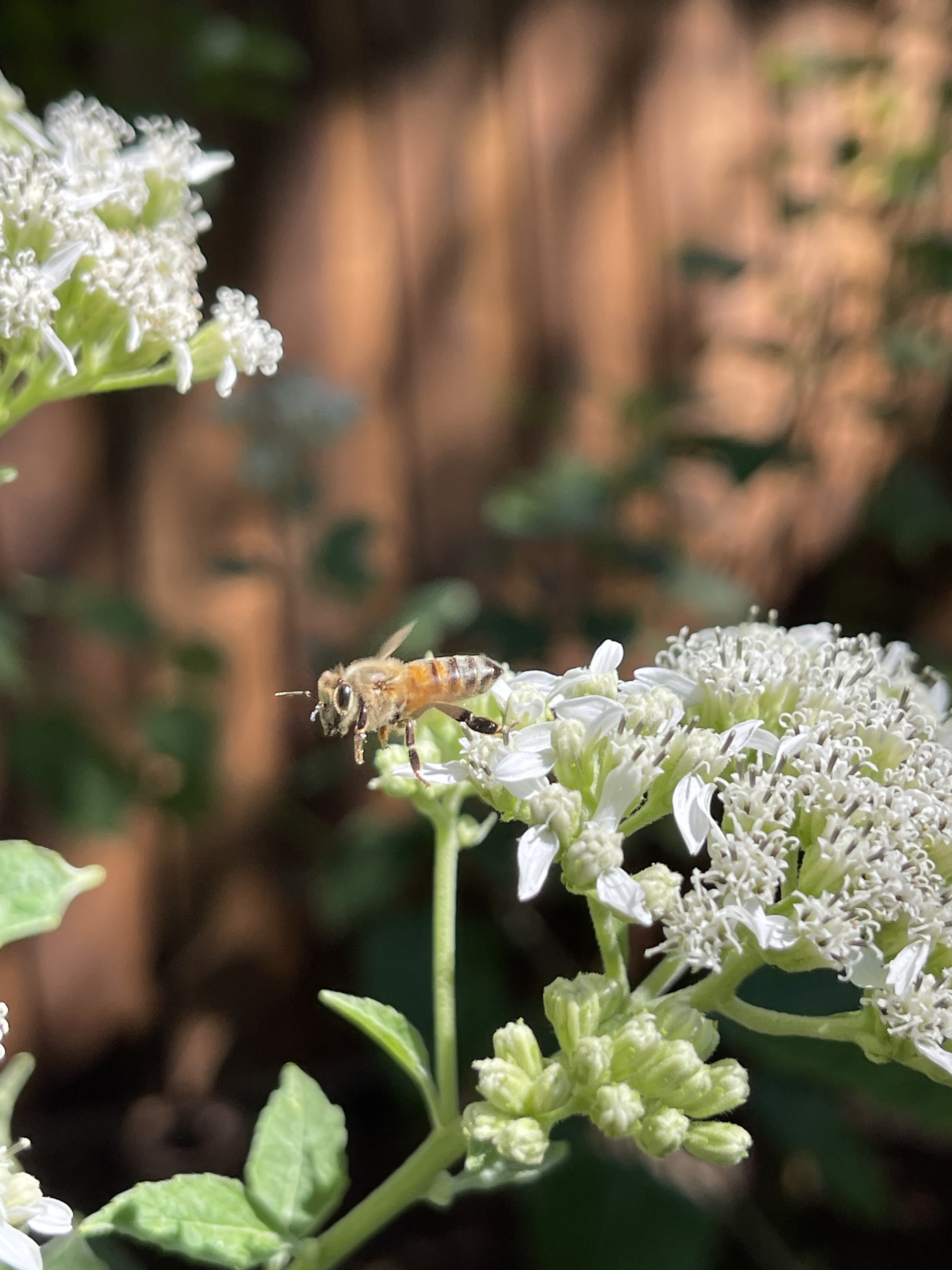
*Plant late blooming plants that provide the nectar and pollen bees need. Some examples include fall asters, borage, calendula, frostweed, goldenrod, hibiscus, pentas, salvia and zinnias. We have pictures of most of these pollinator plants above.

*Plan to leave your basil plants in the ground until the first “cold snap” or freeze. I’ve noticed more honeybees on my fall basil plants than anything else in the garden. 

*Provide a fresh water source (shallow container) and add some pebbles or twigs for the bees to land on while drinking.

Black Sage Honey, (Salvia mellifera)

Sometime around the middle of September, while visiting our youngest son and his family, we started a conversation about the different flavors of honey. He wanted to know if I had ever heard of Black Sage Honey. My answer was “yes”, but I had never tasted it. Immediately, he brought out a jar, opened it and, together, we all sampled a delicious, peppery honey that was truly unique. 

Later that evening, I did an online search to learn more about “black sage”. Here is a brief summary of what I learned about this amazing plant from Specialty Produce.

“Black Sage is a powerfully fragrant, woody shrub that quickly grows to an average of one meter in height and width. More mature plants can reach up to 1.8 meters. The plant has tiny hairs coating the stems and leaves in a sliver-green fuzz, and flowers that range from white to pale blue or lavender grow in spherical clusters known as whorls, along the square stems. The small, oval, dark-green pebbled leaves can look almost black from a distance, especially during dry conditions, and the stem and whorls harden and turn black at the end of the season – all characteristics believed to have influenced the plant’s name. Black Sage leaves produce a strong, herbal, sometimes minty scent and offer a mildly astringent, herbaceous flavor.”

After learning that black sage is recommended for USDA Zones 8-10, I began searching for a grower. Mountain Valley Growers in Squaw Valley, California had the plants in stock, so my order was quickly placed. I purchased a total of three plants. They arrived on October 20th and, after acclimating for a few days, were put into the ground this week.

New planting of Black Sage. It will receive about six hours of sun followed by dappled shade in the late afternoon.

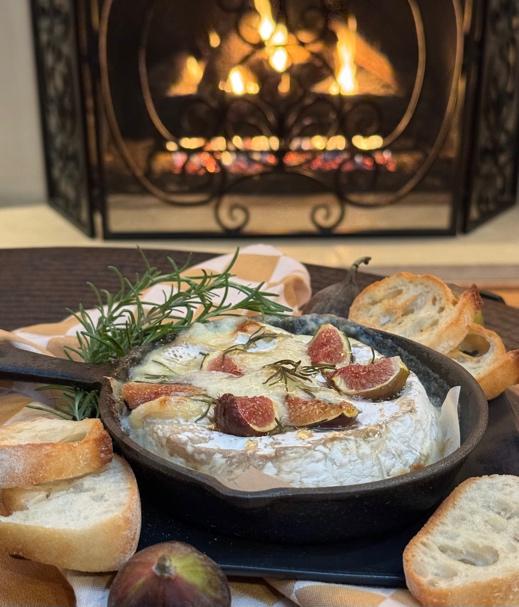
And finally, what’s all the “buzz” about Black Sage Honey? Black sage is native to Southern California and Northern Mexico. It flowers only about every three years. That translates to a very rare honey that is made only about four seasons per decade! Thankfully, I was able to find a jar from Savannah Bee Company and am happy to share this simple recipe with everyone. My recommendation is to experience the wild and earthy taste on its own then decide how you would best enjoy using it. Drizzled over brie cheese and fresh fall figs is my first choice! 

A pan of food next to a fire

Description automatically generated

Honey Baked Brie with Figs and Rosemary

Linda Alexander, Dallas County Master Gardener Class of 2008

The Colors of Honey

May 19, 2021

Take a quick look at the six jars of honey shown above. What did you notice? If the first thing that caught your eye were the different colors, then a brief description of honey’s relative visual properties might provide some insightful information. And, yes, it’s true that most of us generally choose honey based on color.

Honey Colors

The U.S. Department of Agriculture classifies commercial honey (the jars you typically find in the grocery store) into 7 color categories:

*Water White (0 mm – 8 mm) (Colorless and transparent)

*Extra White (8 mm – 17 mm) (Very light-yellow tint while remaining transparent)

*White (17 mm – 34 mm) (Slightly more yellow/very light amber, also transparent)

*Extra Light Amber (34 mm – 50 mm) (Transparent with a light orange/amber hue)

*Light Amber (50 mm – 85 mm) (Deeper orange /amber hue, not fully transparent)

*Amber (85 mm – 114mm) (Deep orange color and not transparent)

*Dark Amber (114 mm – 140 mm) (Very dark and opaque, referred to as “motor oil black”)

How Honey Color is Measured 

The color of honey is typically measured using a continuous scale known as the Pfund scale of measurement. The scale consists of a glass wedge that varies in its color from lightest to darkest amber. The honey to be evaluated is poured into another wedge-shaped container and then the color is compared with the amber scale. The place where the color of the honey matches closest to the scale is then marked as the result. The final measurement is thus given in a number ranging from 0 to 140 mm (according to the scale length where the match occurs). 

What Determines Color?

The color of honey is determined by its floral source, or blossoms of the nectar, and mineral content. Honeybees forage for both nectar and pollen. Nectar is the bee’s source of energy while pollen provides protein and other nutrients. As the bee forages, pollen grains collect on its head. The bee then uses its front legs to transfer the pollen to the pollen baskets located on its hind legs. Bees mix dry pollen with nectar to compact the pollen in the pollen basket. Honey, therefore, gets its color from the pollen that a hive gathers to make it. 

Light colored honeys like citrus, rosemary, lavender, eucalyptus and thyme contain high amounts of calcium. Darker honeys contain higher amounts of potassium, chlorine, sulfur, sodium, iron, manganese and magnesium. Iron is what gives buckwheat honey its deep brown color. 

Lighter-colored honeys generally have a milder flavor but with a pronounced floral aroma often accompanied by herbal, spice, vanilla, butterscotch or other enticing flavor notes. As the honey gets darker in color, the aroma and taste become more distinctive. All honey tends to deepen in color as it ages, but this change does not affect its flavor.

Finally, it is important to keep in mind that soil, climate, water, wind and sun all contribute to every honey’s sensory attributes, including color, aroma and flavor. This unpredictable mosaic of natural conditions is a gentle reminder of the ever-changing profile of varietal honey. Clover honey from this year may surprise your taste buds with a slightly different flavor profile in the future. 

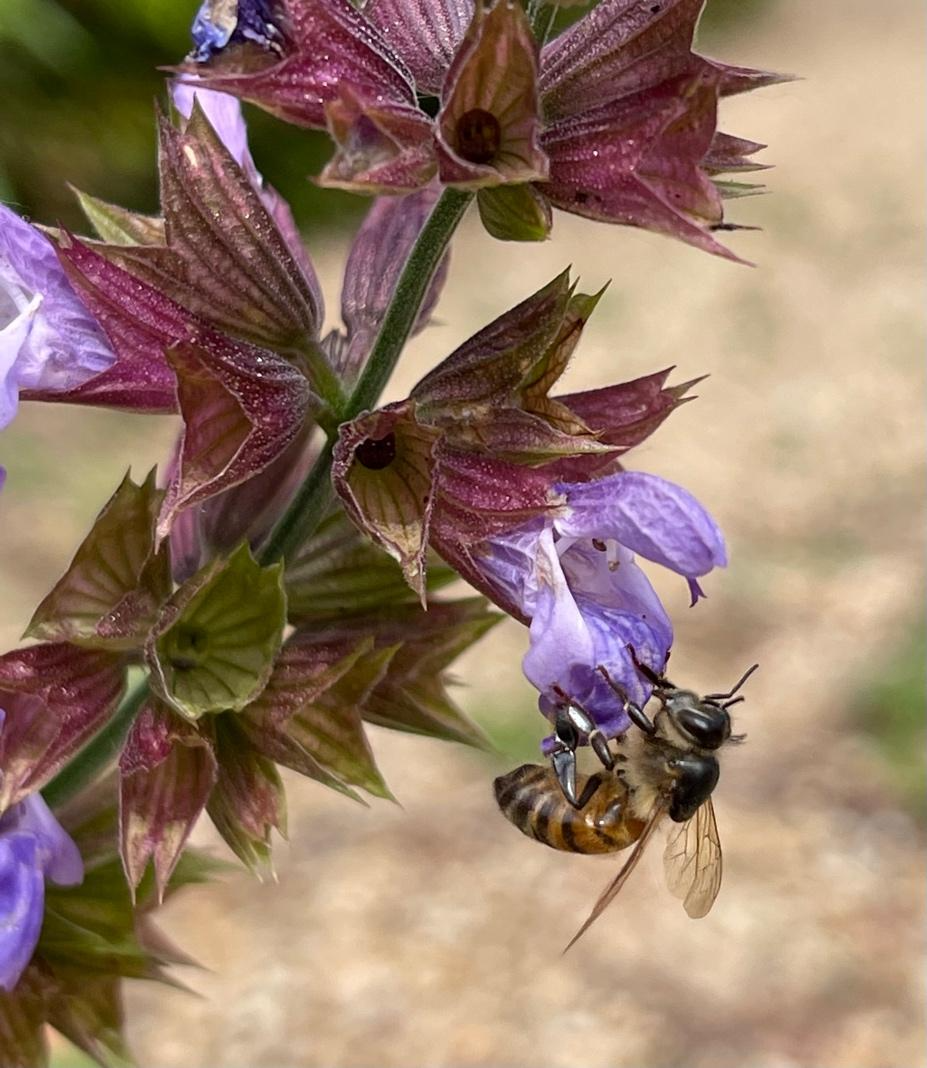
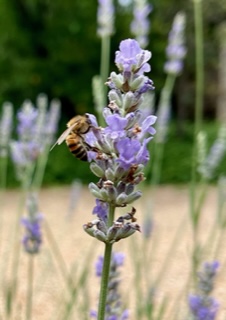
(Honeybee gathering nectar from Sage blossoms)

Examples of light honey floral sources:

*Sage

*Clover

*Fireweed

*Cotton

*Acacia

*Alfalfa

*Apple Blossom

*Blackberry

*Blueberry

*Palmetto

*Tupelo

Examples of dark honey floral sources:

*Buckwheat

*Avocado

*Chestnut

*Dandelion

*Huckleberry

*Manuka 

*Tulip

Linda Alexander, Dallas County Master Gardener Class of 2008

“Drops of Honey” …February Feature

Who can resist a heavenly chocolate experience on Valentine’s Day? Sweeten it up with Honey! Recipe below.

Understanding the Anatomy of a Honeybee

On October 19, 1909, the U.S. Department of Agriculture, Bureau of Entomology received a manuscript from Mr. R. E. Snodgrass, an agent and expert of the Bureau. It was entitled “The Anatomy of the Honeybee.” This exhaustive 150-page document was described as “embodying the results of detailed studies made by Mr. Snodgrass and should prove of value as bringing to the beekeeper reliable information concerning an insect of such great importance, and also as furnishing a sound basis in devising new and improved practical manipulations.” The brilliant work of Mr. Snodgrass is considered a valuable piece of work which has now been quoted and used continuously for over 100 years. 

In 1956, the work of Robert Snodgrass was published into book form. With over 350 pages, it is a classic work that is acclaimed as much for the author’s remarkably detailed line drawings of the various body parts and organs of his subject as his authoritative knowledge of entomology. Over the years,  it was suggested that his book should be in the library of every student of the honeybee and bee behavior. 

For the sake of brevity, and in the words of Mr. Snodgrass, here is a summary of the primary functions of the honeybee:

“It possesses mouth organs for taking up raw food, an alimentary canal to digest it, salivary glands to furnish a digestive liquid, a contractile heart to keep the blood in circulation, a respiratory system to furnish fresh oxygen and carry off waste gases, excretory organs for eliminating waste substances from the blood, a nervous system to regulate and control all the other parts, and, finally, organs to produce the reproductive elements from which new individuals are formed to take the places of those that die.”

And, just to think, this is the masterfully created tiny machine that gives us honey!

Now, let’s take a closer look at how this happens.

“Drops of Honey” …FebruaryClipart - New HeartFeature

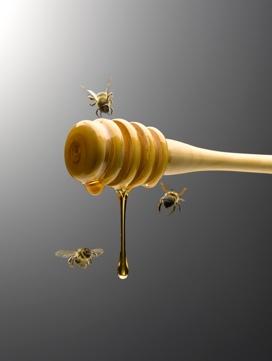
Honey dripping from spatula with honeybees around

What is honey and how is it made?

Scientifically speaking, honey is a complex carbohydrate composed of approximately 80 percent monosaccharides, or simple sugars, mostly fructose (levulose) and glucose (dextrose) in varying ratios depending on the nectar source. The remaining content, approximately 16-18 percent, is water. Fructose is slightly sweeter than glucose and, when it occurs in larger quantities than the glucose, can lead to rapid crystallization of the honey, 

Over twenty-five other disaccharides have been identified in honey along with oligosaccharides, including erlose, theanderose and panos. These are not naturally present in nectar but are formed during the honey ripening process.

One of the most important attributes of any honey is its water content. The average water content of most good-quality honeys is 17-18 percent. This happens because bees make it that way.

Yeast is also present in all honeys as a result of being in the environment in general. Proteins make up about twenty-five percent of honey composition with at least 19 different ones present. The proteins are mainly enzymes added by the bees during the ripening process. Invertase, the most significant enzyme is what sets honey apart from other sweeteners. 

Honey contains a few amino acids. The most important, of which, is proline. Some proline is derived from the plant source, and some added by the bees. Proline is the measure of honeys ripeness and is an important standard for judging quality and flavor profile. 

Gluconic acid is the most prominent acid found in honey. It adds flavor enhancing properties.

Honey contains a wide variety of minerals including potassium and trace elements. Worth noting, darker honeys are stronger in flavor due to their higher mineral content. Important also, is that these elements make it possible to identify different types of varietal honey. 

Finally, honey also contains over six hundred volatile organic compounds (VOC) or plant-based essential oils. Many originate from the plant and some are added by the bee. 

*Volatile organic compounds evaporate from honey when the honey is heated, therefore, heating honey compromises its delicate flavors.

In summary, let’s close with a few simple answers to the question, ‘what is honey’. 

*Honey is the essence of flowers. 

*Honey is a thick, golden liquid produced by industrious bees. 

*Honey is the result of a colony of bees working together to collect flower nectar and transform it into a high-energy source for the hive. 

*Honey is an organic, natural sugar alternative with no additives.

The A, Bee Cs of Honey Making

Honey production is a carefully orchestrated series of chemical processes including digestion, regurgitation, enzyme activity and evaporation. It is exclusively the creation of the female worker bees. Nectar, a sugary liquid, is extracted from flowers using a bee’s long tube-like tongue called a proboscis then stored in its stomach or “crop”. While sloshing around in the crop, the nectar mixes with the enzyme invertase which begins the transformation of its chemical composition and pH, making it more suitable for long-term storage. 

When a honeybee returns to the hive, it passes the nectar to another bee by regurgitating the liquid into the other bee’s mouth. This regurgitation process is repeated until the partially digested nectar is finally deposited into a honeycomb. 

Once in the comb, nectar is still a viscous liquid – nothing like the honey you use at home. To get all that extra water out of their honey, bees set to work fanning the honeycomb with their wings to speed up the process of evaporation. 

When most of the water has evaporated from the honeycomb, the bee seals the comb with a secretion of liquid from its abdomen, which eventually hardens into beeswax. Away from air and water, honey can be stored indefinitely, providing bees with the perfect food source for cold winter months.

Linda Alexander, Dallas County Master Gardener Class of 2008

Honey Chocolate Cake with Chocolate-Honey Icing and/or Honey Whipped Cream