My heart is beating fast just thinking back to my four hours at Chanticleer in September. The history of the garden is interesting because without philanthropic foundations like Chanticleer’s, we wouldn’t have the opportunity to visit such awe inspiring gardens. This historical information is taken from their website.
The Chanticleer estate dates from the early 20th-century, when land along the Main Line of the Pennsylvania Railroad was developed for summer homes to escape the heat of Philadelphia. Adolph Rosengarten, Sr., and his wife Christine built their country retreat in 1913, remodeling and expanding to make it a permanent residence in 1924. In 1990 following the death of Adolph Jr., the entire Chanticleer estate was set up as a foundation for the education and enjoyment of the public.
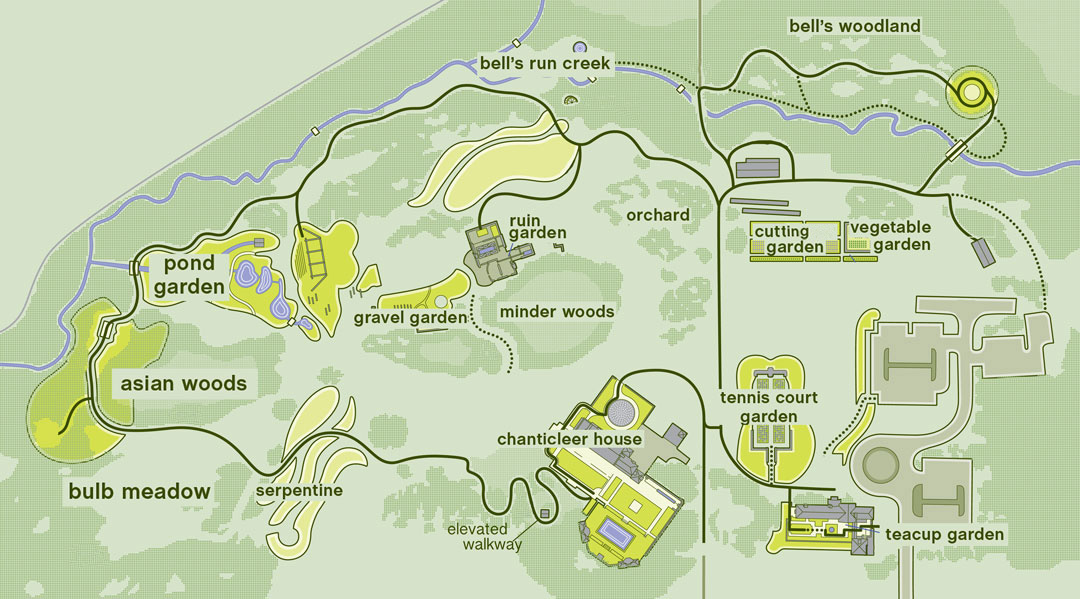
Thirty five acres are open for exploration.
Map of Chanticleer Garden
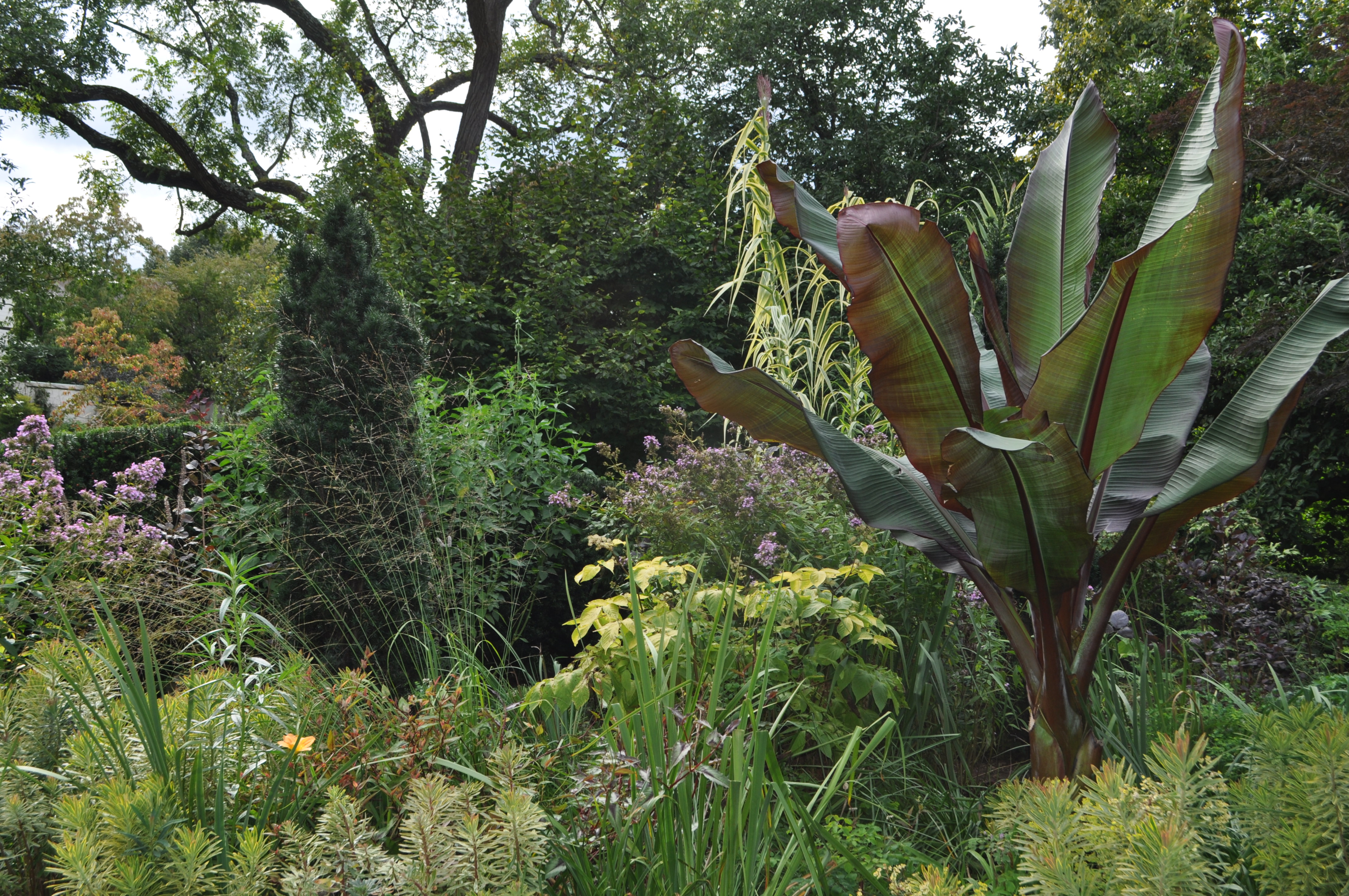
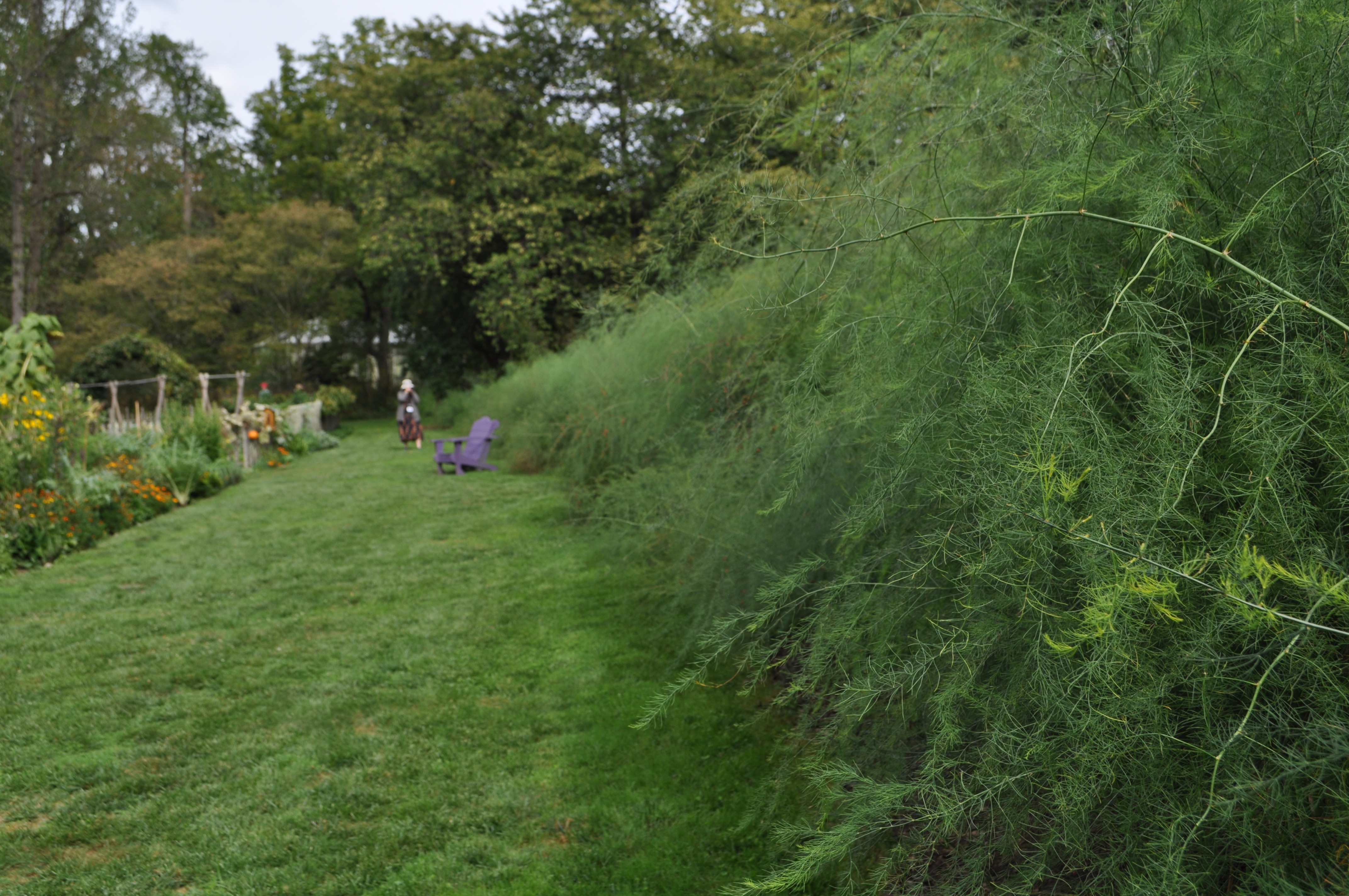
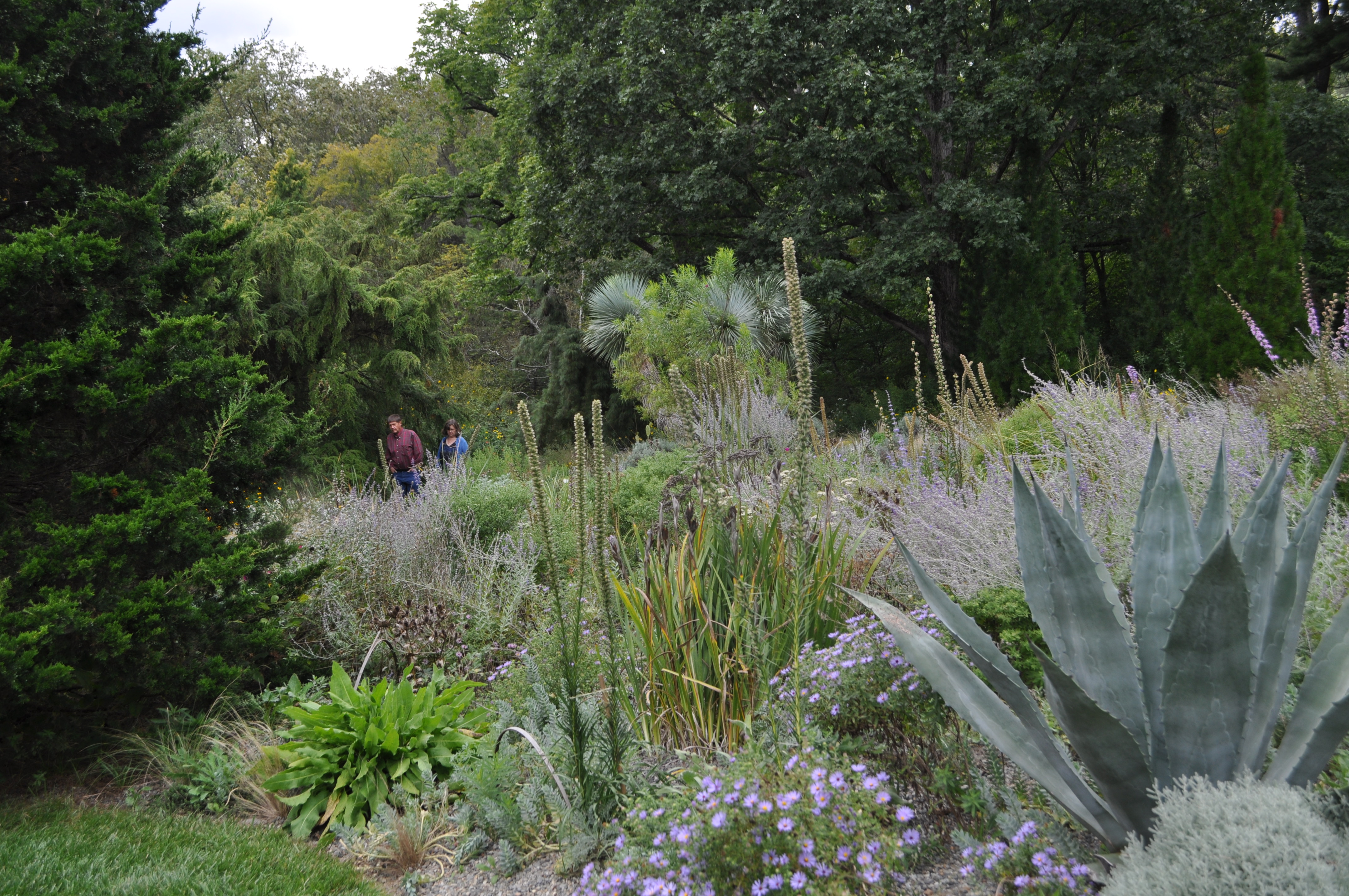
The teacup garden, named for this fountain is reinvented every year. This year’s design was taken from historic Persian gardens with silver and variegated plants. See Starla on the left in focus!I am not sure the name of this garden but loved the yellow foliage and the large leaves of the banana below. Asparagus for days!A truly inspiring asparagus border located next to the vegetable garden.The ruin garden, notice the firestick plant in front, flanked by cactus, agave and euphorbia and an espaliered magnolia holding up the wall(so to speak).The dry garden reminiscent of a Mediterranean garden and also looking very Texan. This garden of agaves and Yucca rostrata with many self -sowers, like Mexican feather grass, echinacea, poppies and asters; faces the same challenges we have at Raincatcher’s. Edit, edit for beauty.
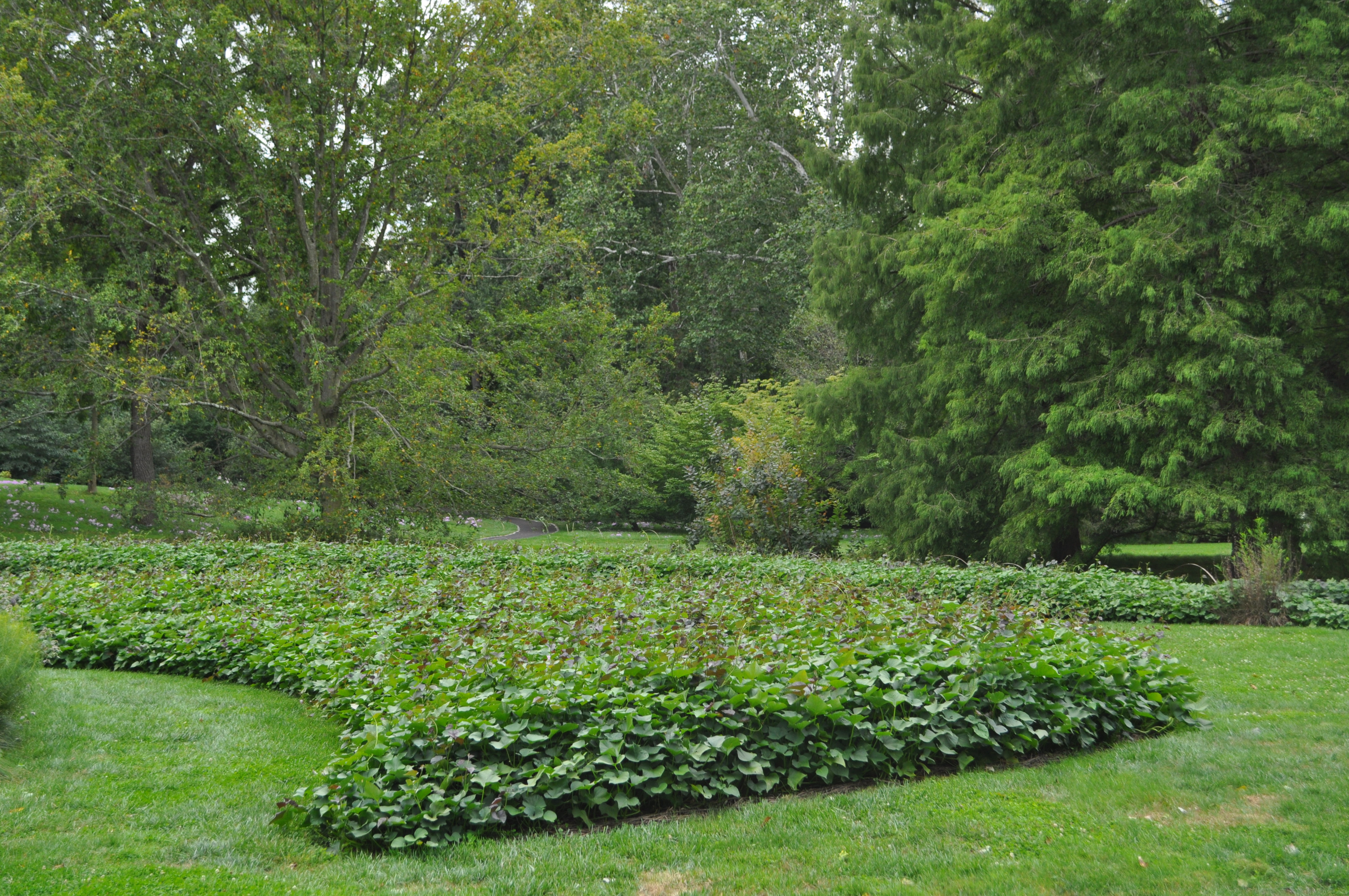
The Serpentine beds-an inventive way to celebrate agriculture. Sweet potatoes are planted in these large swaths and were recently harvested.Yes, sweet potatoes can be beautiful.
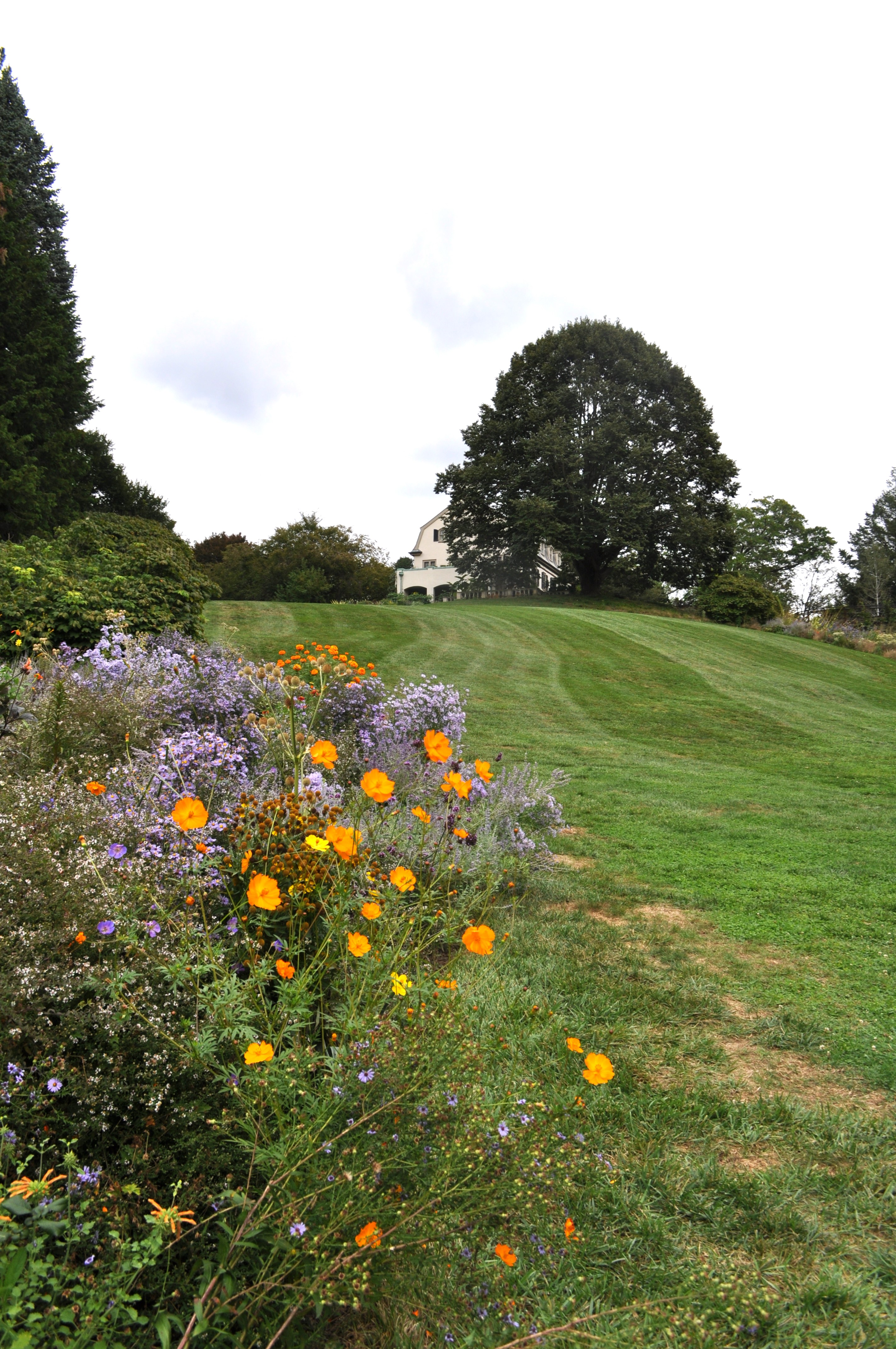
The great lawn below the main house, part of Minder woods, is planted with blue, purple and orange flowers. Cosmos, Zinnia ‘Queen Lime Orange’ and asters, Russian Sage and blue salviasalong with lusty dahlias.My favorite pot with an other-worldly bromeliad, brownish-green Hoffmannia roezlii, caladiumsand purple at its feet. I couldn’t name all the plants but plan to have this in my garden someday.
Ann Lamb, Dallas County Master Gardener Class of 2005
Last week I made one of my favorite seasonal dishes. If you imagined a multi-layered cake enrobed in a sublime chocolate frosting or a deep-dish fruit cobbler oozing with a syrupy filling and the perfect cinnamon-dusted crust, think again.
Instead, I’m especially drawn to the simplicity of a different springtime jewel. Colorful, tasty and nutritious, this one is a winner for me.
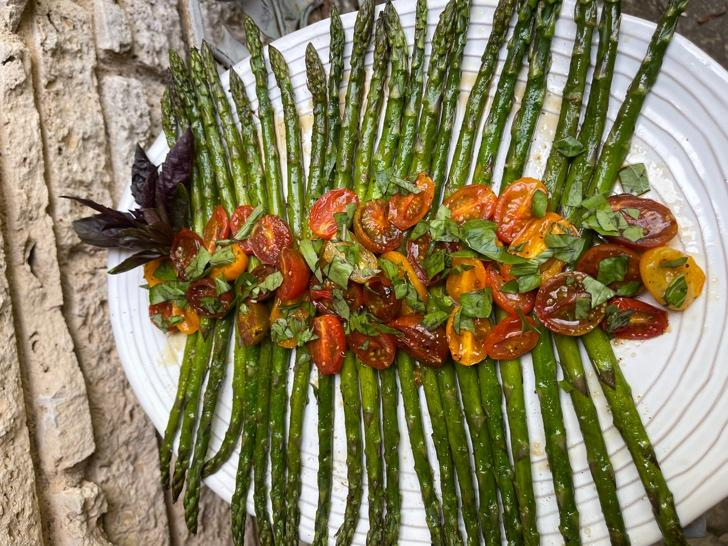
Roasted Caprese Salad is easy to prepare and lovely to serve. If you already have asparagus growing in your springtime garden, chances are the other ingredients may be found there, as well. Gather up some cherry, grape or Campari tomatoes, several sprigs of basil and head to the kitchen. For the past few years, I’ve developed a fondness for Balsamic Blooms and Cardinal basil. Both are growing in my garden now. The leaves hold up well using the chiffonade method and maintain their color nicely.
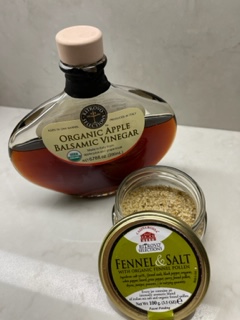
After reviewing the recipe, you might want to follow it, as is, or try my suggestions for adding a little punch to the flavor profile. Once roasted and out of the oven, I like to drizzle the tomatoes with a generous splash of Apple Balsamic Vinegar. Next comes a sprinkling of Fennel Salt with Pollen. Finish the dish with chopped basil and prepare to dazzle your family or guests.
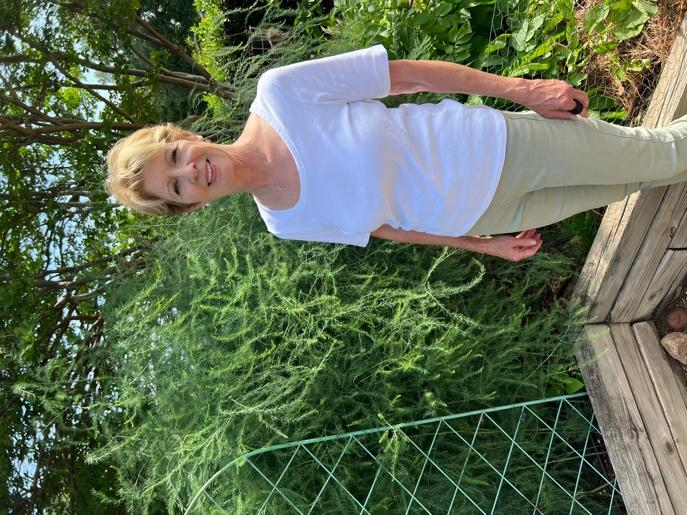
Sheila Standing in Front of her Asparagus Bed
Master Gardener, Sheila Kostelny, graciously shared her asparagus growing tips in a short Q & A.
When did you first plant asparagus in your lovely backyard garden?
“I planted 2-year crowns from Redenta’s in 2014. I believe the variety is UC 157. I lean on the wisdom of Dr. Sam Cotner, Dr. Joseph Masabni and Skip Richter for advice regarding all my vegetables.”
When do you start harvesting?
“I harvest them from about the second to third week in February for about 6 weeks. Then they present foliage that I will use for flower arrangements for the rest of the growing season.”
How long do you expect your asparagus to produce?
“In North Texas, the crowns should continue to produce for 12-15 years. That’s quite a bonus for little effort on our part.”
What do you enjoy most about having asparagus growing in your garden?
“Asparagus are a ‘no fuss’ no muss’ vegetable. They require little and reward you with a sweet, bountiful harvest. What I especially love about them is that they grace your garden in the dead of winter when there is nothing else to bring to the table.”
Happy Growing Sheila! We appreciate your asparagus “tips”.
Linda Alexander, Dallas County Master Gardener Class of 2008







 DALLAS GARDEN BUZZ