September 5, 2023
Did you know that the first Saturday in September is National Hummingbird Day? These small hovering winged creatures are from 3 -5 inches long (smallest mature birds) and are known for their long beaks and very fast beating wings.

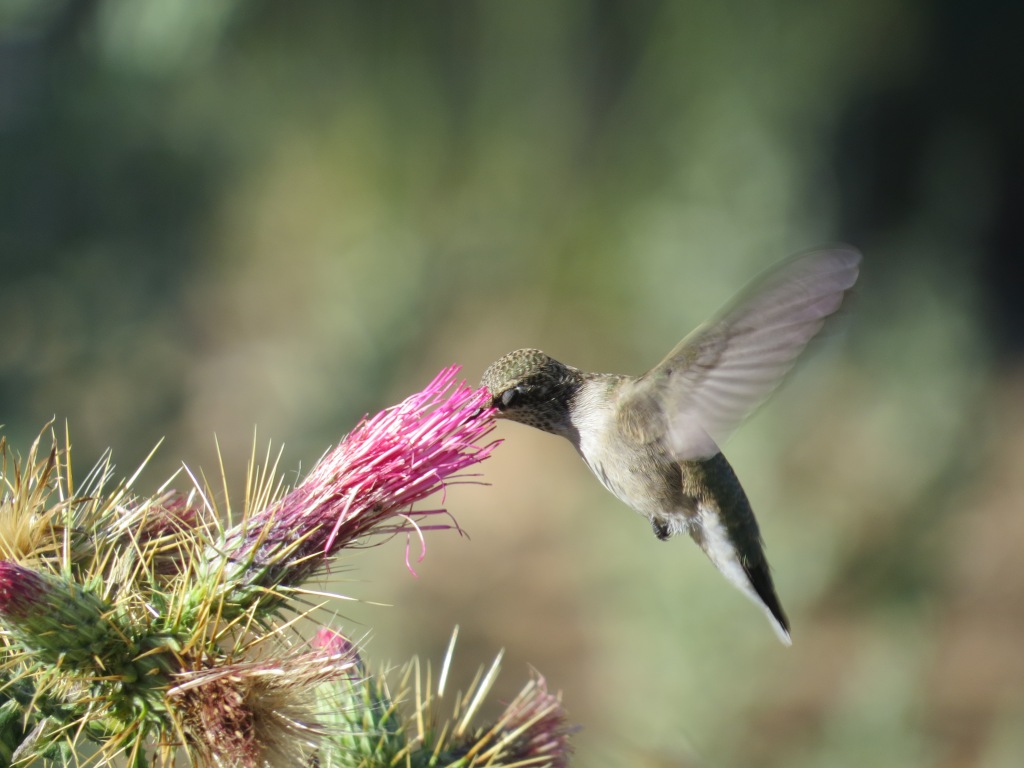
A group of hummingbirds is called a charm and charmed you will be if you have them in your yard.
Hummers are only found in the Americas today; however, they once inhabited Europe. Fossils were unearthed in Germany according to Science Magazine-May 7, 2004, but none are found today in Europe. The range is from Alaska to Tierra del Fuego in South America. The Rufous species migrates from Alaska to Mexico. The ruby throated migration is in early spring and their range is from the East coast to a line from West Texas to North Dakota . Not all migrate, and the most common in the DFW area are the black chinned and ruby throated hummingbirds.
The male birds are more colorful, but both are equally fascinating.
The Packery Channel Nature Park on Padre Island, Texas, shared these interesting facts:
Wings flap up to 200 times per second and oscillate in a figure 8 pattern.
Heart beats about 1,200 times a minute
Lungs breathe 250 times a minute
Tongue is forked and brushy and can lick nectar 10-15 times a second (and can
consume small insects).
Are you interested in having these amazing creatures in your habitat? Here are some tips to attract them.
First, think RED – Hummers see in the ultraviolet range and RED is their favorite.

Place feeders in your yard where they are easy to observe. The food is a sweet solution that can be purchased or made. One recipe is 1 cup water, ¼ cup sugar (nectar is
preferable). Change out every other day to keep it clean and ready for winged guests.
Did I mention that there should be some RED on the feeder? – that’s a must.
Note: Starla took this picture from her family’s kitchen table in Fresno, California.
Plant flowers that attract hummers – They prefer tubular flowers so their long beak can get to the nectar that other pollinators might not be able to reach. They like bright
colors and of course, red is a favorite, but not exclusive.


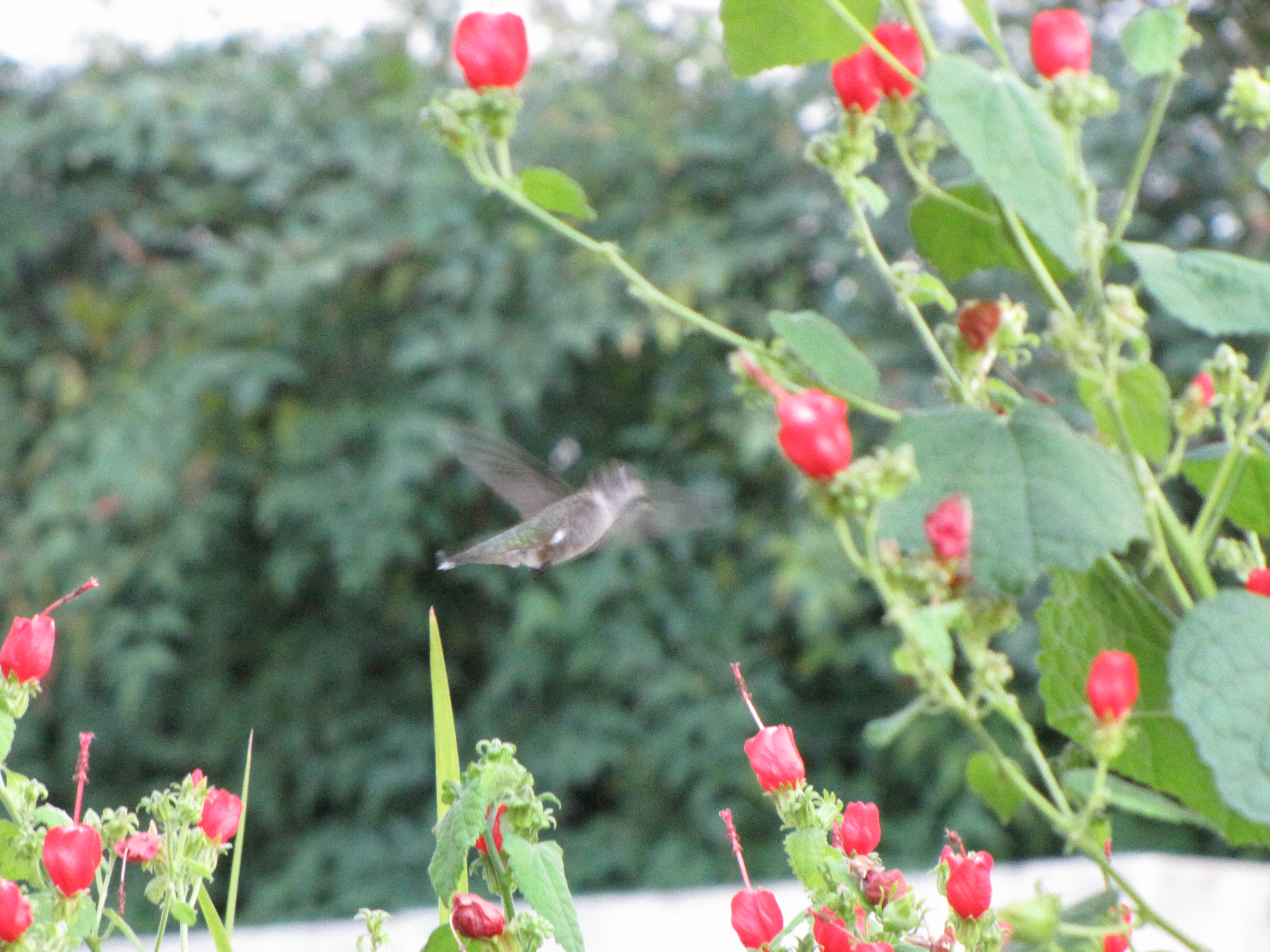
Note: Hummingbirds enjoying red Turk’s Cap and Blue Salvia Guaranitica.
In our area of Texas, zone 8a here are some options: Perennials – turks cap (red), coral honeysuckle, Texas star hibiscus(red), salvia greggi (red), columbines, standing cypress(red), day lilies, lupines.
Biennials –foxgloves and hollyhocks; Annuals – cleome, impatients, and petunias are a few to consider.
Hummingbirds are fascinating creatures that captivate and enhance our habitats and can remember where they have been and where feeders are located. These hovering
winged creatures are an asset to any yard.
Starla Willis, Dallas County Master Gardener Class of 2008



 DALLAS GARDEN BUZZ