Tag Archives: Homemade compost

IN SEARCH OF PUMPKINS

December 29, 2023

As composters for the Raincatcher’s Garden  of Midway Hills, we are continuously looking for ingredients to make compost.

During the spring through fall, we find green grass, leaves, coffee grounds, kitchen scraps, etc. to add to our compost piles.

In November we are blessed with the remains of Halloween and Thanksgiving decorations—PUMPKINS!  During bulk pick-up weeks we scrounge the neighborhoods looking for the elusive pumpkins and gourds.  Rather than allowing them to rot in the dump, we chop them up and add them as the GREEN (nitrogen source)ingredient of compost.  The BROWN (carbon source)ingredient of the recipe is, of course, are the dried leaves that are falling everywhere.  The BLUE ingredient is water.  The CLEAR ingredient is air.  The last is TIME.  

Result—BLACK GOLD—also known as compost.

This year we “harvested by the side of the road” six pickup loads of pumpkins, gourds, bags & bags of leaves, some grass, and even a bale of hay.
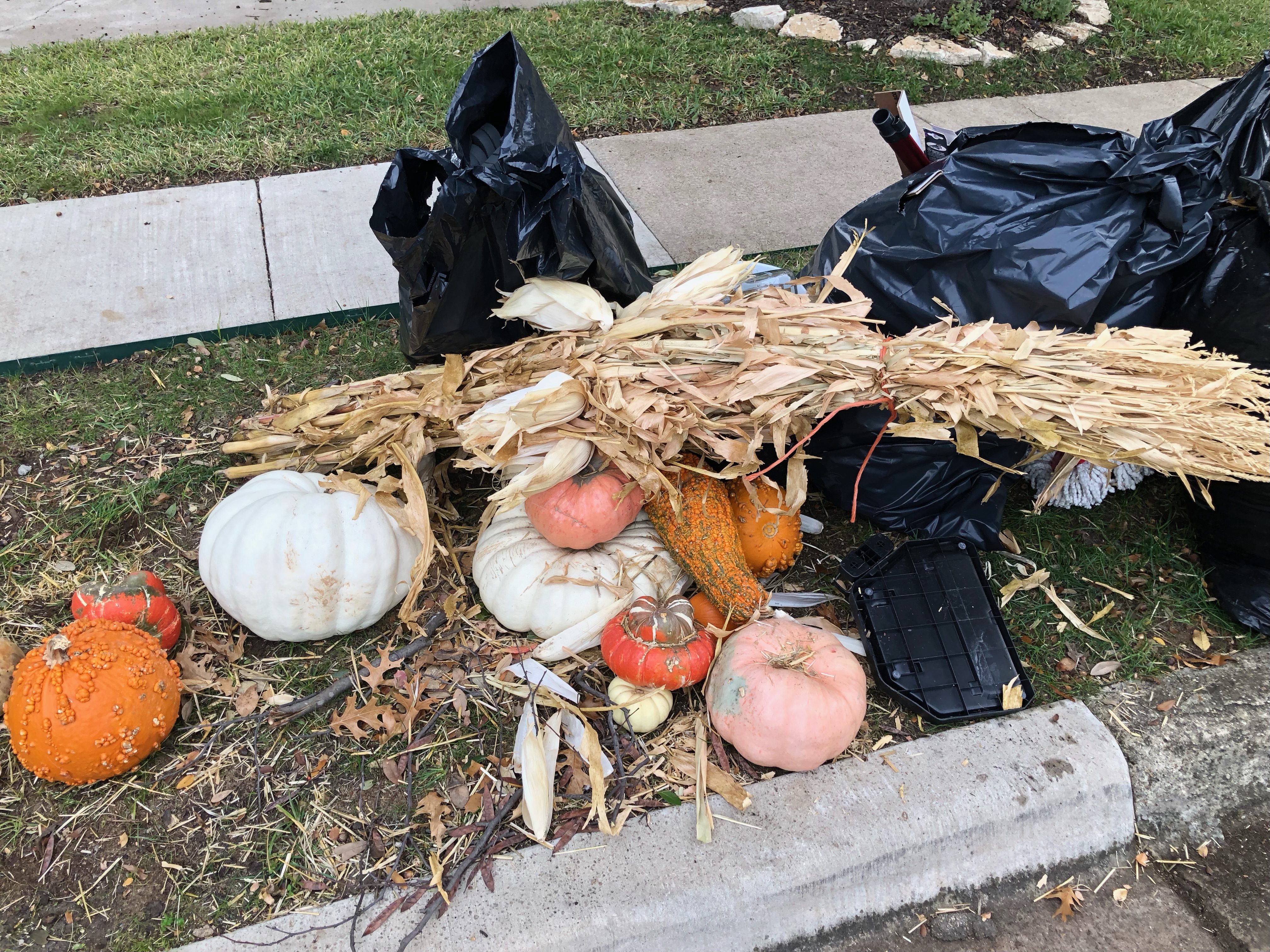
And, at our last stop—THE GREAT PUMPKIN!
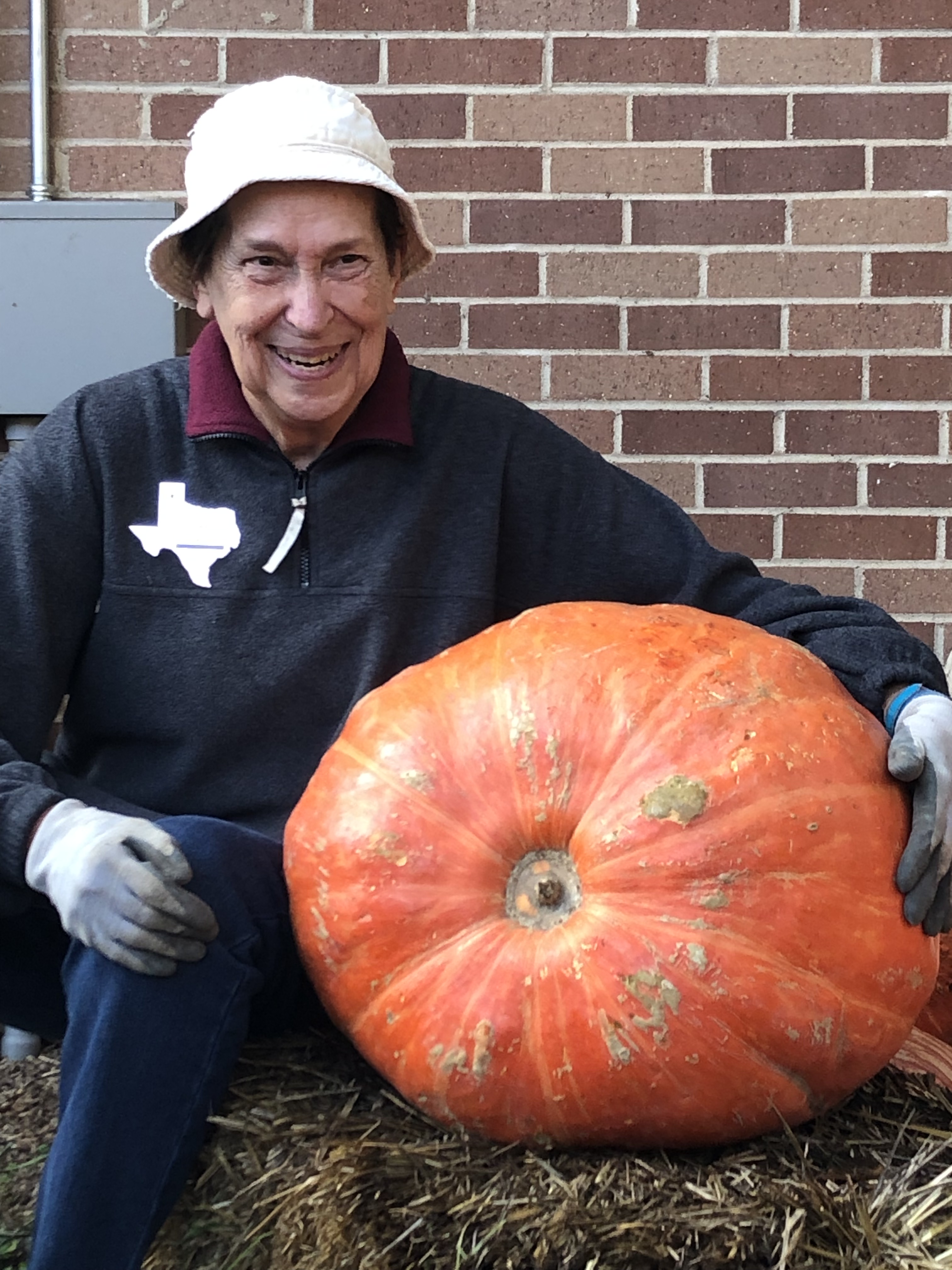
Cindy and the great pumpkin!

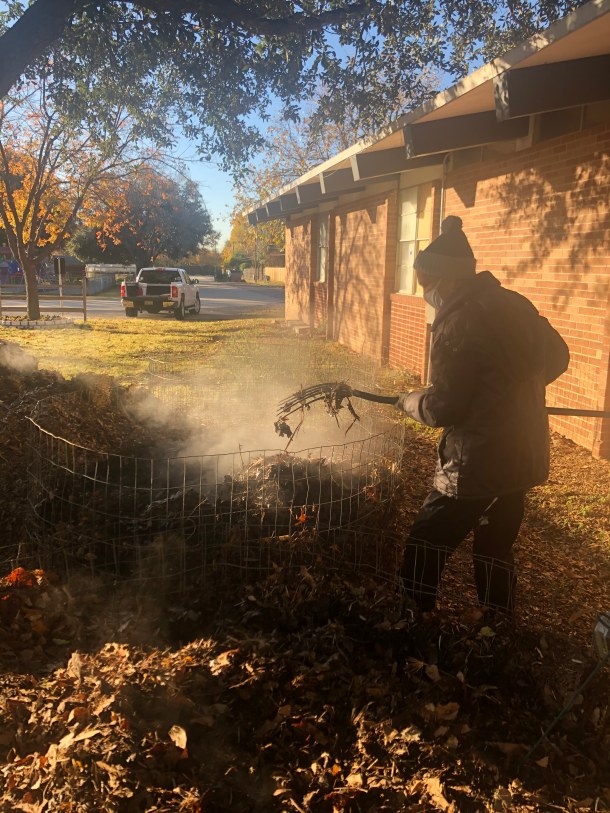
As winter progresses, we will chop, grind with the mower, mix in water, turn piles as they heat up and cool down (temperatures up as high as 160°).  As we turn the piles, the chunks begin to change shape and color.  The unseen microbes and fungi consume and break down everything making pieces smaller and smaller, and of course,darker—hence , BLACK GOLD.  This process takes time—sometimes as long as 2-4 months, depending on how energetic the humans are in turning the piles.

When we add compost to our heavy clay soil, we lighten it, allowing the plants to absorb the nutrients in the compost, allowing better drainage, thus producing more healthy plants and feeding everything.

Cindy Bicking, Dallas County Master Gardener Class of 2006
Lesson from a Compost Queen

For almost as long as I can remember, Cindy and Roger have been making compost for our garden. It supplies vital nutrients for our plants at Raincatcher’s Garden. Dig into the article below to hear what they collect to get their compost cooking in the fall. Cindy, our compost queen, also gives her “compost recipe.”

Cindy with her steamy compost!

WHERE THERE’S A WILL…


Here it is December already. Halloween and Thanksgiving are in the past, so
PUMPKINS AND GOURDS of every shape, color, and size are now on the curbside!
They are waiting for bulk pick-up by the city to be taken to the LANDFILL. What a
way to end up after being such a pretty embellishment for the holidays. What a
shame.


Since Roger and I enjoy “harvesting by the side of the road” during bulk pick-up
periods to augment our compost bins at home and especially at Raincatcher’s
Garden of Midway Hills, we have been keeping our eyes out for those jewels of
autumn.


During fall and winter bags of leaves are abundant. They are our primary
“brown/carbon” source for our compost recipe. “Green/nitrogen” sources are
becoming scarce since grass clippings and fresh vegetable/fruit scraps are dwindling
down to almost nothing. What shall we do to come up with that green ingredient?
Look for fresh items curbside? Pumpkins fit the bill, don’t they?


We put out the word, and many pumpkins and gourds magically appeared in our
compost area in the past couple of weeks. We harvested bags and bags of dried
leaves that were also waiting for pick-up. Jim and I cranked up the old mower at
Raincatcher’s and started chopping pumpkins and leaves, mixing them in our large
bins and adding shredded paper and any other compost contributions.

Today we filled a third new bin to the top. The pumpkins are juicy enough that we didn’t have to
add any water this week. If we don’t get the forecasted rain on Friday, we’ll add some
water next week—the “blue” ingredient in our compost recipe. The temperature in the
bins today ranged from 130° to 160°—great cooking temperature for compost piles.
Some of our fellow gardeners said that they had more pumpkins if we wanted them.
Silly question—of course we want them!

After leaving the garden, we went “harvesting,” filling the bed of our pickup almost to overflowing. We dropped by the garden and off-loaded our bounty.

Pumpkin pile ready for compost

Now we have a supply of “green” material available when we need it during the winter to balance our compost recipe. By next spring, as we turn the bins to add air and moisture when needed, our
compost mixture will have changed from piles of leaves and clippings to BLACK
GOLD—also known as COMPOST!


…THERE’S A WAY!


Cindy Bicking, “Compost Queen”


RECIPE FOR “BLACK GOLD”

GREEN—nitrogen sources, such as green grass, fresh fruit & vegetable scraps, coffee grounds

BROWN—carbon source, such as dried leaves, shredded paper, hay

BLUE—water

CLEAR—air

WHITE—time