January 20, 2026
Have you noticed an absence of honeybees in your winter garden? If so, maybe it’s time to add a few flowers that will survive our seasonally cooler temperatures. When other food sources seem to dwindle, consider providing some late-season fuel for bees to build a winter supply of honey for the hive. FYI…Honeybees need about 50 -100 pounds of honey to last the entire winter!
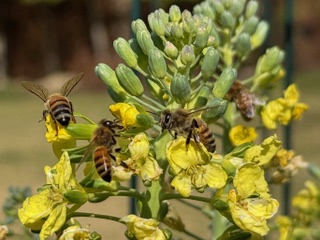
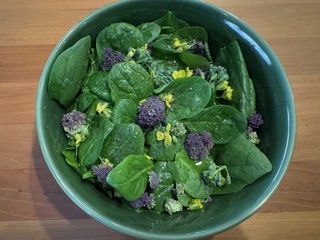
Look closely and will you see four honeybees just on this one bunch of broccoli blossoms. It was amazing to observe literally dozens of honeybees at a time working nonstop to gather nectar for the hive. The benefits of letting one of the broccoli plants in my raised bed flower was to provide a food source for the bees. Also, the open flowers and leaves are still edible and can be used in salads or for sauteing. (Spinach salad topped with purple broccoli florets and blossoms.)
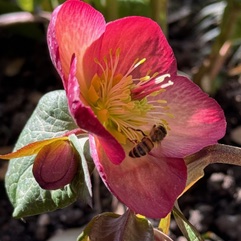
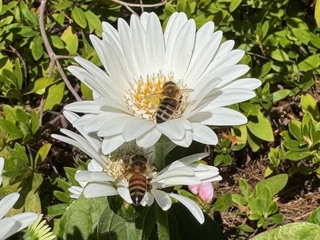
Hellebores provide sweet nectar for energy and protein-rich pollen to honeybees during the winter months. Honeybees visit daisies because they offer lots of pollen. This helps to feed developing larvae.
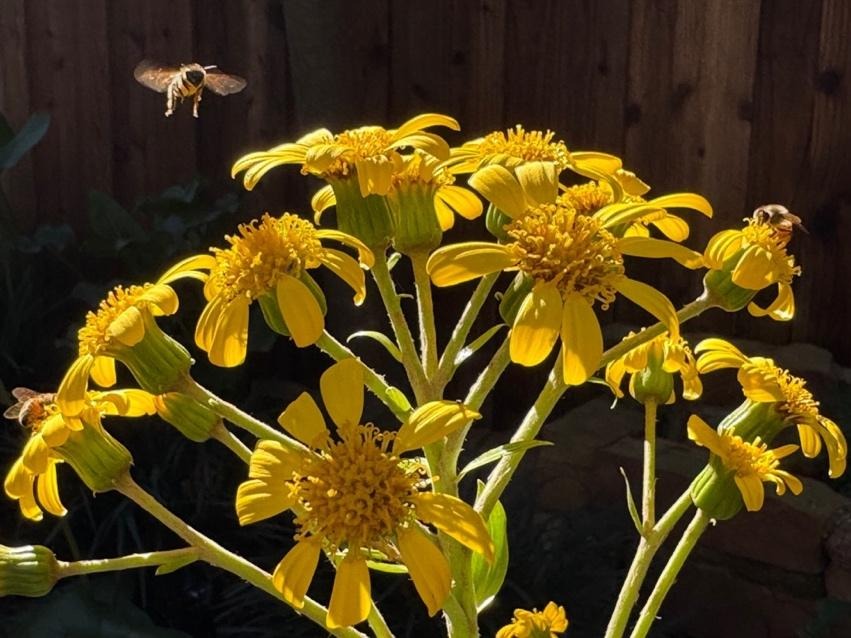
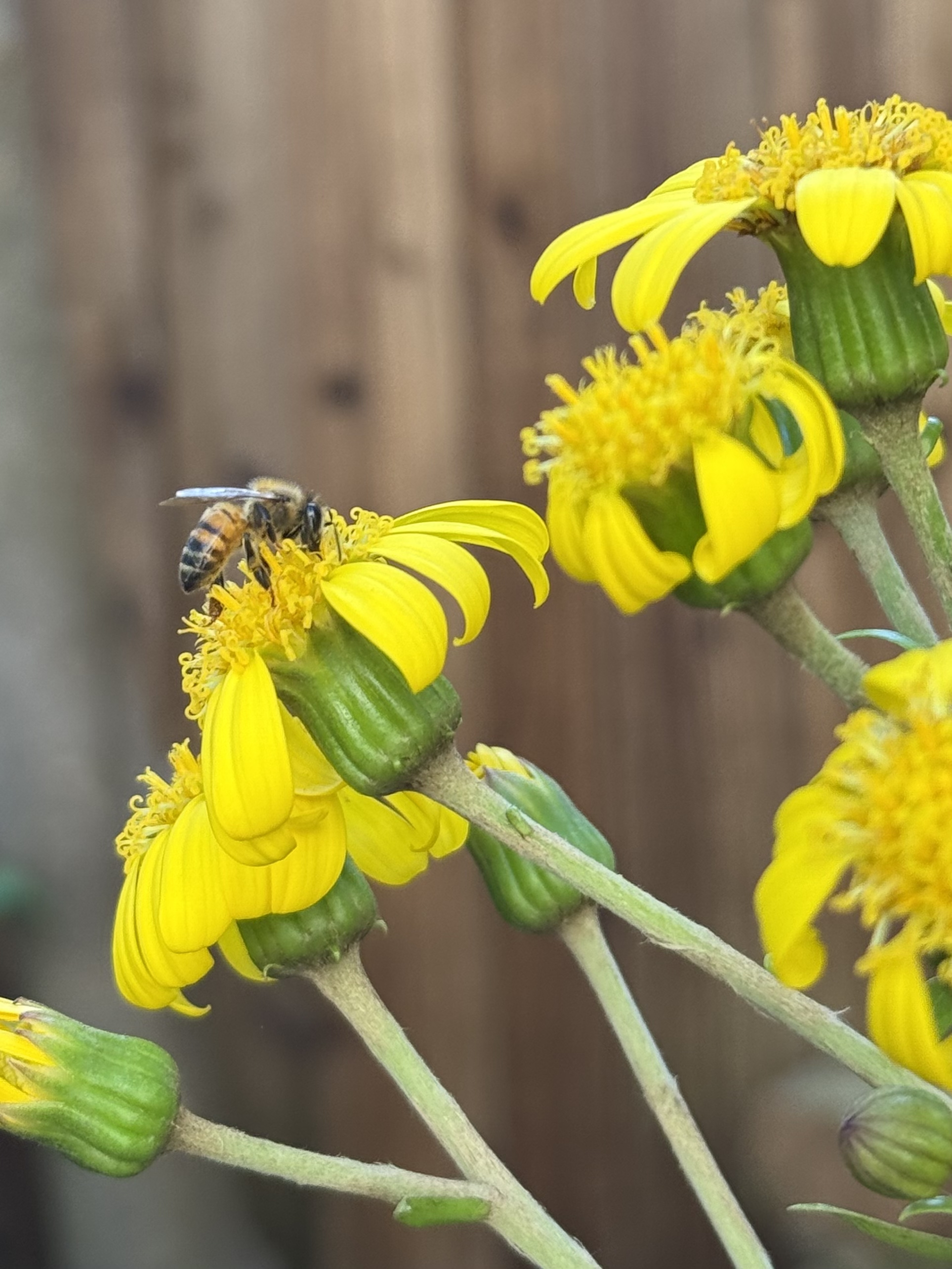
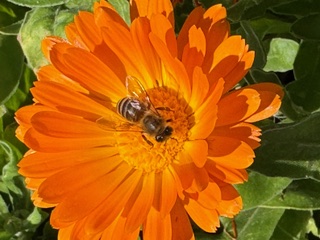
Starting in late fall and early winter, honeybees spend hours foraging for both nectar and pollen from the Farfugiums around our Koi pond. Every morning and continuing until late afternoon honeybees can be found buzzing among the Farfugiums bright yellow flowers when other blooms are scarce. Calendula flowers contain a significant amount of pollen and nectar per flower, making it a great plant for attracting pollinators.
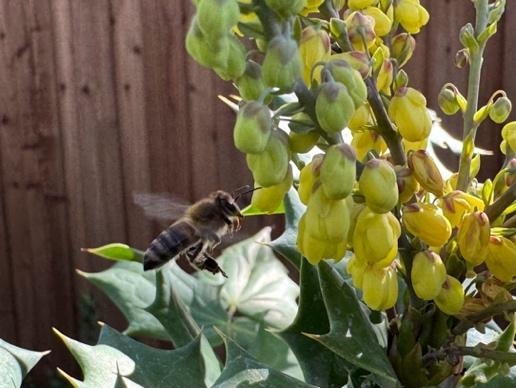
As blossoms started appearing on our Leatherleaf Mahonia in early January, honeybees began actively foraging for both nectar and pollen on the fragrant clusters of yellow flowers.
We would love to hear from our readers about other ideas and ways you are helping the honeybees during wintertime. Let’s do our part to provide blooms that ensure bees can gather enough food to sustain themselves while increasing their chances of surviving winter and thriving into spring. Here are some important reasons why winter blooms are essential:
*Food Scarcity: Winter and early spring are lean times for honeybees; most flowers are dormant, leaving bees without food.
*Energy and Protein: Nectar provides carbohydrates for energy, while pollen offers essential protein; both are needed for colony health and growth, even in winter.
*Colony Survival: Adequate food stores are critical for bees to survive the cold months, making fall and winter foraging vital for building reserves.
Enjoy this short video illustrating how tirelessly honeybees work to maintain a healthy hive!
Linda Alexander, Dallas County Master Gardener Class of 2008



 DALLAS GARDEN BUZZ