October 31, 2023
For the past few weeks, I’ve been spending countless hours in the garden. It didn’t take long to notice the increased level of honeybee activity occurring from early morning until evening. The bees are everywhere during daylight hours and seem to be buzzing around the flowers with a frenzy in their movements. It is truly fascinating to watch.
Why, I wondered, is fall such a busy time for the bees? One interesting explanation that I stumbled across was that honeybees have switched from needing protein to feed their young to craving carbohydrates before they die later in the season. Seems rather sad but, as we know, the lifespan of a honeybee is relatively short – a few weeks to maybe six months, at the most.
I also discovered that as long as the weather is mild, honeybees will continue to forage throughout the autumn months. During this time, worker bees spend many hours collecting enough nectar (carbohydrates) and pollen (protein) to feed and maintain the colony throughout the winter. Keeping the hive alive during the winter months is a priority. In order for this to happen, worker bees will need to be especially vigorous and healthy.
(NOTE: In the summer months a hive can have about 60,000 bees, but only about 10,000 bees are needed to ensure a colony survives the cold winter weather. As honeybees start preparing for winter, most drones (male honeybees) are evicted from the hive. Since drones have one purpose only – to mate with a queen – when their work is over, out they go.)
As the days grow shorter and colder, the remaining honeybees will form what is referred to as a “winter cluster”. The queen and her brood are kept at the center of this globe-like cluster while worker bees shiver or vibrate their wing muscles, generating enough heat to keep the hive warm in even very cold temperatures. On mild winter days, as we often experience in Zone 8, bees will come out of the hive to dispose of waste products, clean the hive and forage.
However, since there aren’t many options for foraging in the middle of winter, fall nectar and pollen gathering is critical to the hive’s continued survival. We can play an important role in supporting the honeybees during this time by taking a few steps to help them in their work.


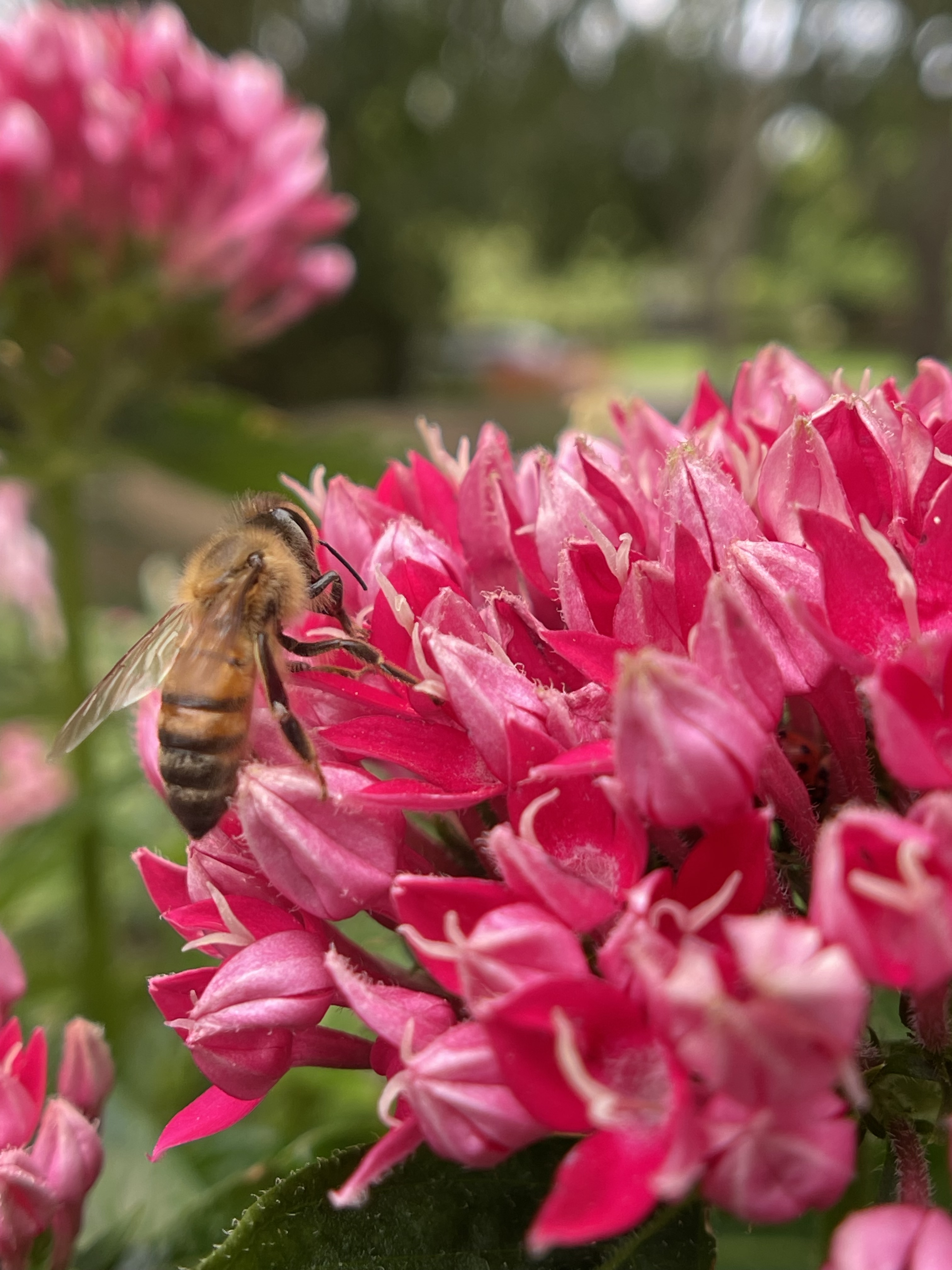

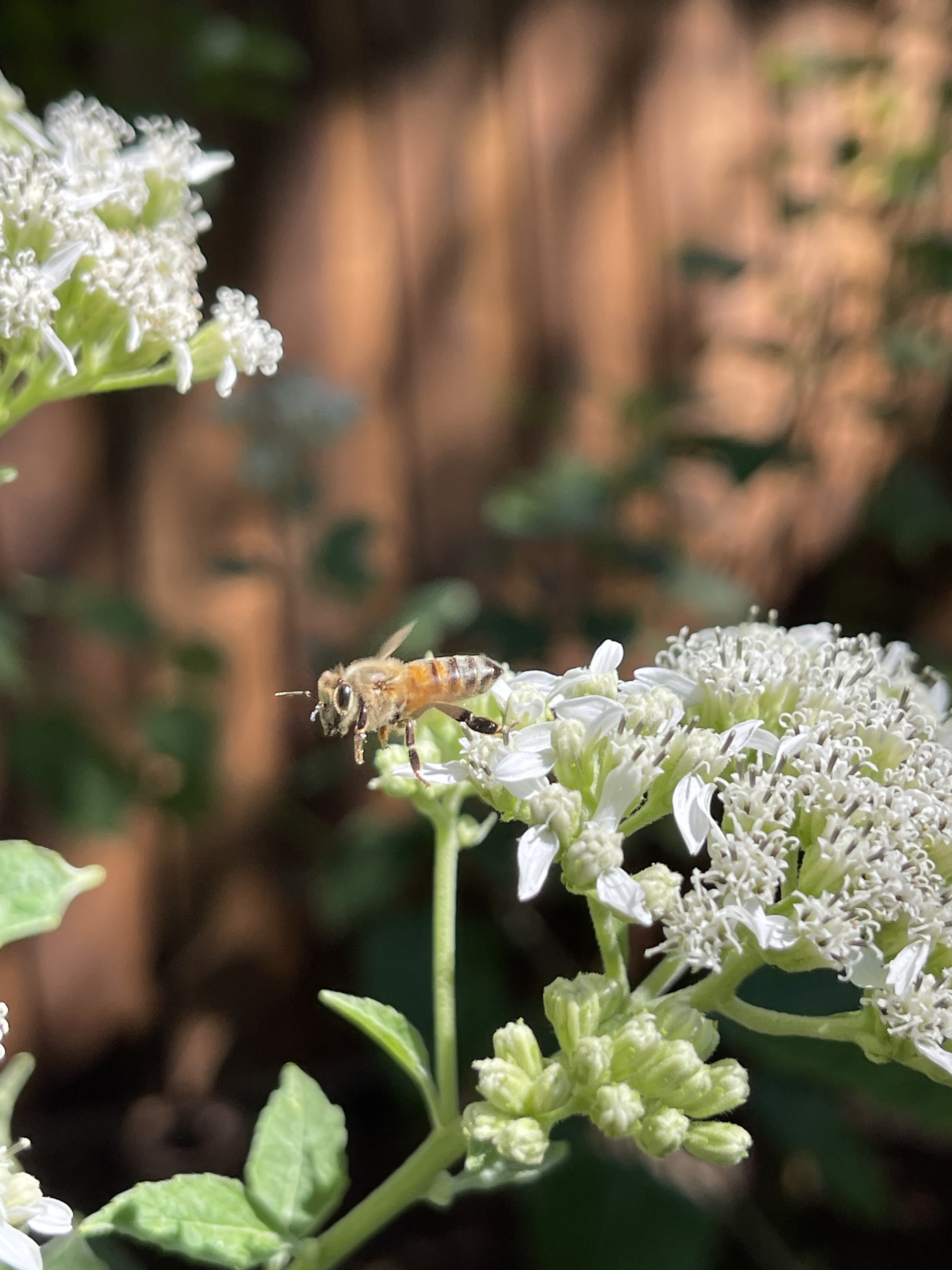


*Plant late blooming plants that provide the nectar and pollen bees need. Some examples include fall asters, borage, calendula, frostweed, goldenrod, hibiscus, pentas, salvia and zinnias. We have pictures of most of these pollinator plants above.
*Plan to leave your basil plants in the ground until the first “cold snap” or freeze. I’ve noticed more honeybees on my fall basil plants than anything else in the garden.
*Provide a fresh water source (shallow container) and add some pebbles or twigs for the bees to land on while drinking.
Black Sage Honey, (Salvia mellifera)
Sometime around the middle of September, while visiting our youngest son and his family, we started a conversation about the different flavors of honey. He wanted to know if I had ever heard of Black Sage Honey. My answer was “yes”, but I had never tasted it. Immediately, he brought out a jar, opened it and, together, we all sampled a delicious, peppery honey that was truly unique.
Later that evening, I did an online search to learn more about “black sage”. Here is a brief summary of what I learned about this amazing plant from Specialty Produce.
“Black Sage is a powerfully fragrant, woody shrub that quickly grows to an average of one meter in height and width. More mature plants can reach up to 1.8 meters. The plant has tiny hairs coating the stems and leaves in a sliver-green fuzz, and flowers that range from white to pale blue or lavender grow in spherical clusters known as whorls, along the square stems. The small, oval, dark-green pebbled leaves can look almost black from a distance, especially during dry conditions, and the stem and whorls harden and turn black at the end of the season – all characteristics believed to have influenced the plant’s name. Black Sage leaves produce a strong, herbal, sometimes minty scent and offer a mildly astringent, herbaceous flavor.”
After learning that black sage is recommended for USDA Zones 8-10, I began searching for a grower. Mountain Valley Growers in Squaw Valley, California had the plants in stock, so my order was quickly placed. I purchased a total of three plants. They arrived on October 20th and, after acclimating for a few days, were put into the ground this week.


And finally, what’s all the “buzz” about Black Sage Honey? Black sage is native to Southern California and Northern Mexico. It flowers only about every three years. That translates to a very rare honey that is made only about four seasons per decade! Thankfully, I was able to find a jar from Savannah Bee Company and am happy to share this simple recipe with everyone. My recommendation is to experience the wild and earthy taste on its own then decide how you would best enjoy using it. Drizzled over brie cheese and fresh fall figs is my first choice!
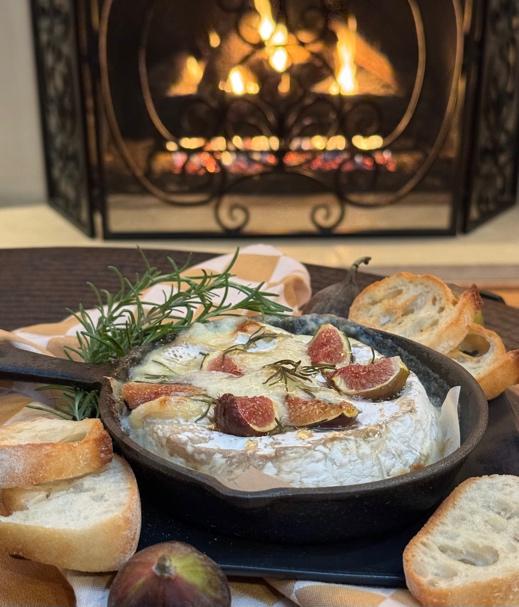
Honey Baked Brie with Figs and Rosemary
Linda Alexander, Dallas County Master Gardener Class of 2008



 DALLAS GARDEN BUZZ