Category Archives: Insects

Friend or Foe?

Being a master gardener means –sharing   gardening wisdom—sometimes thats easy:”No you really should not order grass seed from the Sunday supplement magazine.”

But other times  its not so easy.  And that brings up the question of the moment:  “Is this bug good or bad”  Or worse,  “friend or foe”?

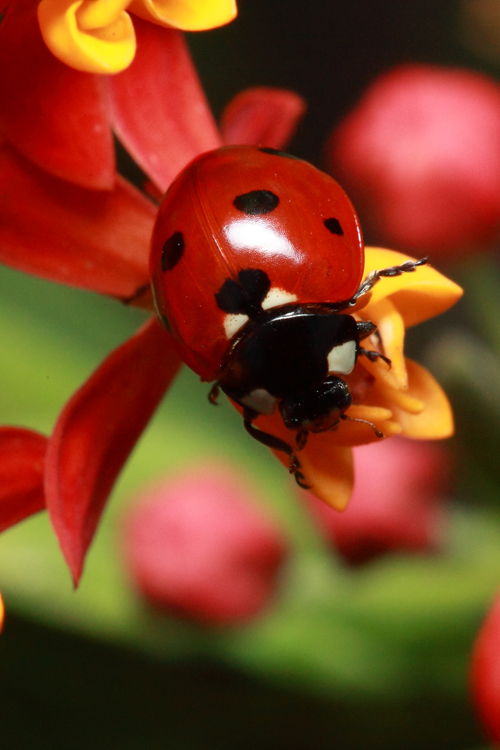
Ladybug, The Gardener's Friend, Known for Eating Aphids

Ladybug, The Gardener’s Friend, Known for Eating Aphids


First ask your questioner “what makes a bug ‘good?”  Of course–they eat “bad” bugs–everyone knows that.  But this is the thing  insects are most often specialized  in is their eating.  You, for example, might have a great wish to eat ice cream–but if there is no ice cream–carrot sticks or even–chocolate cake–might do.  Most insects are not like that.  They eat what they have, over a very long time period,   been designed to eat.

So, that means if you want the so-called good bugs in you garden–what do you also need in your garden??  Oh no–its bad bugs!!!  Yes its true  and its the only way.  You really must rethink the whole situation.

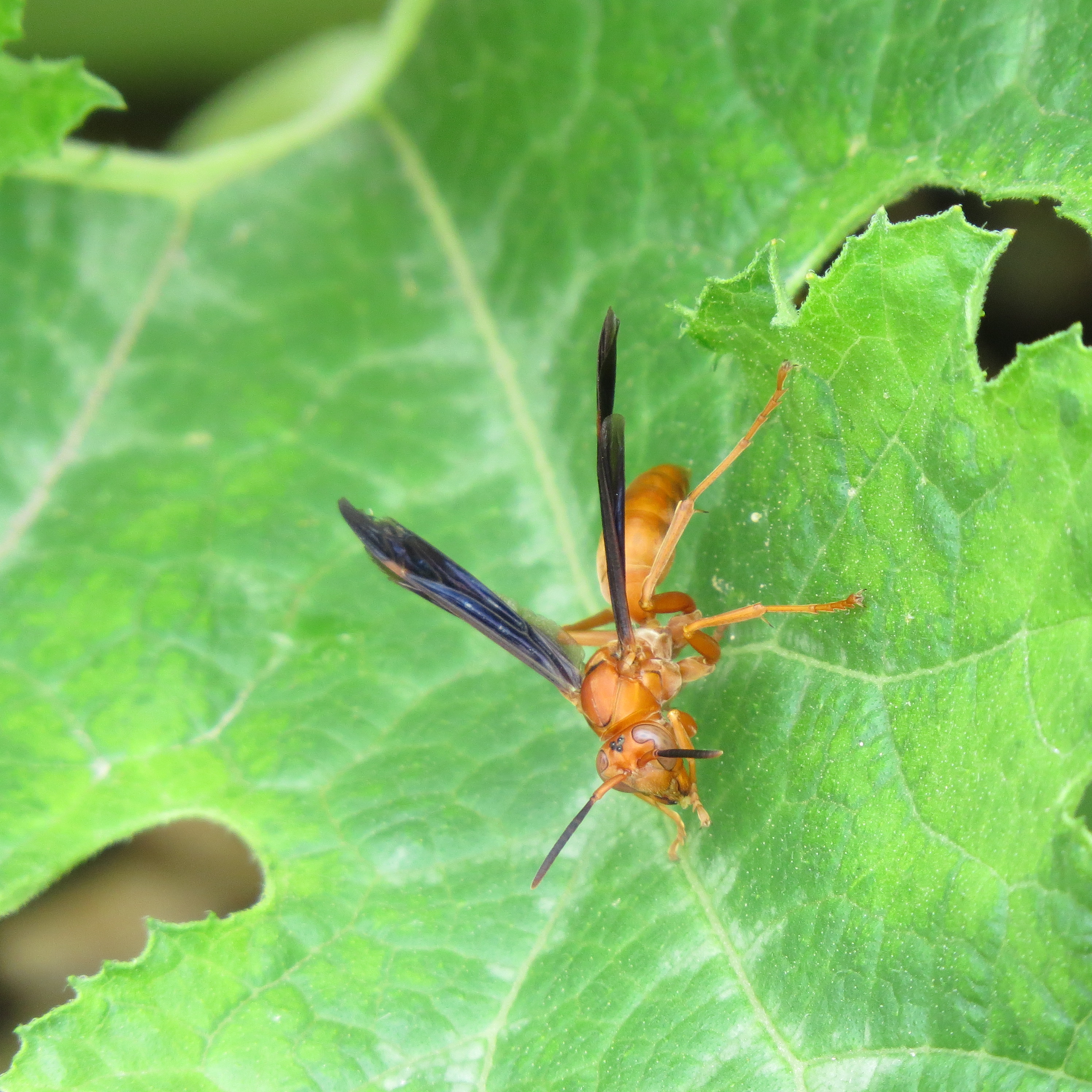
Red Wasp, a Beneficial Insect, Not a Foe

Red Wasp, a Beneficial Insect, Not a Foe


Balance is what the garden needs. That isn’t something that happens overnight or even stays that way once its achieved.  Remember playing on a seesaw?  It took awhile to get the perfect balance–and then someone jumped  off!!  Thats how it can seem.

But with healthy soil,  a diversity of plants, as many native as possible, and reasonable maintenance  you will have some amazing experiences of natures ability to make  what first seem like problems into beauty.  Oh yes–watching ladybug larvae eating aphids –well its beautiful in its on way.  The wasps that eat some monarch larvae also eat those caterpillars that love the broccoli.


So, When you are asked “friend or foe?”  Well ask you questioner to pull up a chair–it may take awhile.

Susan

Pictures by Starla


Honey Selections for Tasting and Cooking

Hello Honey! Like a fine wine…..

the color and flavor of every nectar reflects

a particular time and place

 IMG_9854


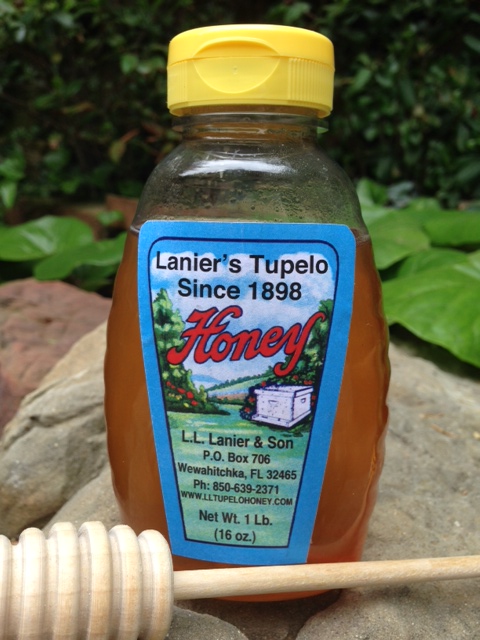
Tupelo The Gold Standard of Honey

Tupelo, the Gold Standard of Honey

Tupelo Honey:

Bright citrus and summer berries, buttery undertones

Savannah Bee Company describes Tupelo as the “gold standard” of honeys, like a “slow moving river of sunshine.” L.L. Lanier and Son’s Tupelo Honey Co. has harvested honey from the tupelo-gum tree since 1898 in swamps along the Chipola and Apalachicola rivers of northwest Florida. Bees are placed on elevated platforms along the river’s edge, free to search out the fragrant nectar in April and May. As the white Tupelo bloom begins, beekeepers clean the combs of other honey to be sure to collect the just new crop. Then the new crop of honey is removed after bloom, to keep the honey pure. Tupelo honey is a light golden amber color with a slight greenish cast. Because of its unusually high fructose content, tupelo honey will not granulate. (A granulated honey indicates an impure Tupelo honey.) Be careful when purchasing Tupelo honey, as it can be mixed with Gall berry, which blooms right after the Tupelo tree, or cut with wildflower honey. Fun fact: Tupelo Honey by the band Van Morrison was a song and album released in 1971.

 L.L. Lanier & Son’s, Wewahitchka, Florida  www.lltupelohoney.com

???????????????????????????????

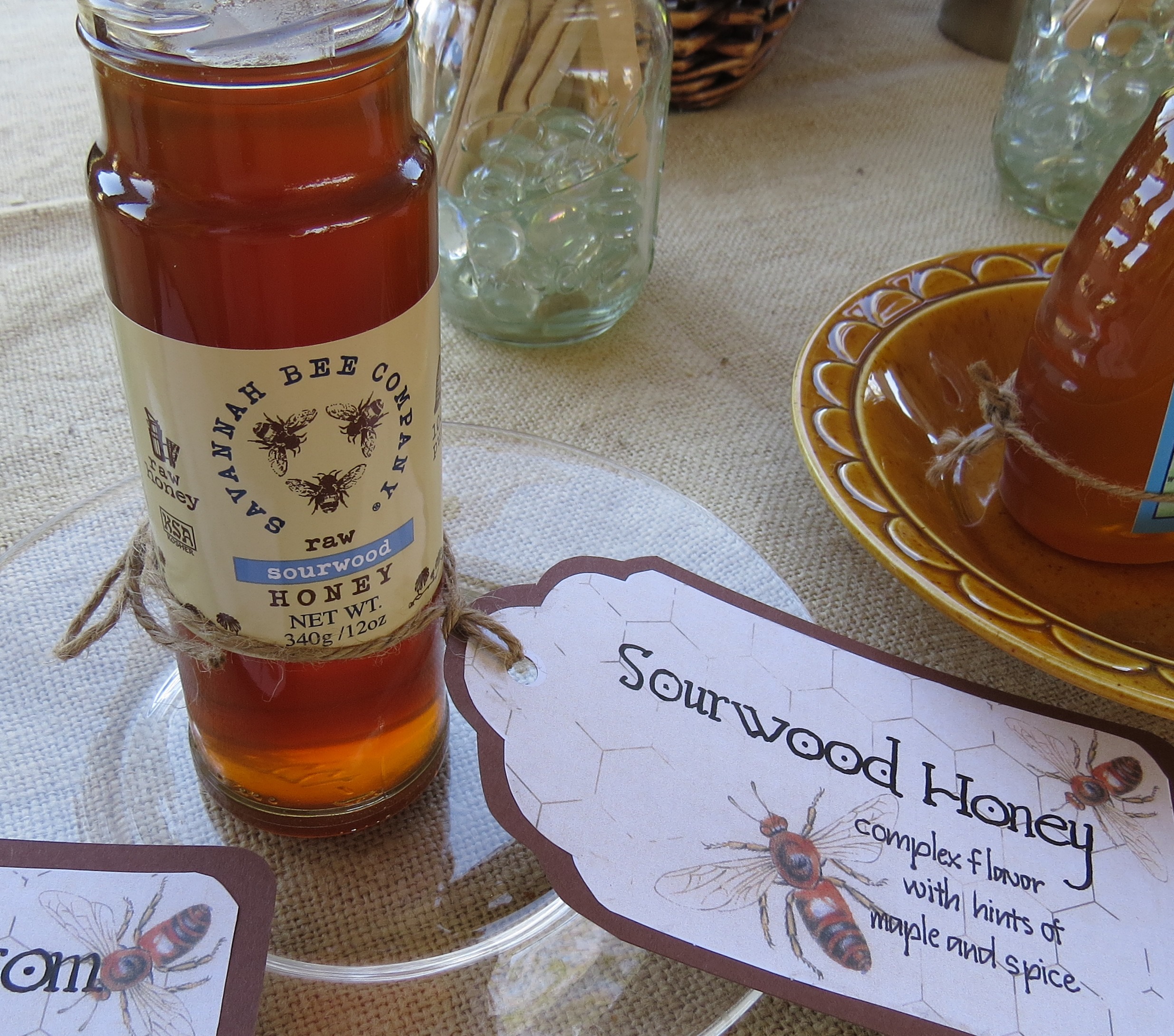
Sourwood, Angelic!

Sourwood honey:

Most honey is made by bees. But sourwood is made by bees and angels.”

Sourwood honey requires just the right timing: the sourwood trees bloom late in June through August and must have enough sunshine and rain to produce enough flowers to yield a honey crop. If the understory trees don’t receive enough rain, the producer cannot make honey that year. Like fine wines, this honey from southern Appalachia is only available during those perfect “vintage” years. Sourwood honey is so rare that a good crop sometimes only surfaces once every decade. Like Tupelo honey, the beekeepers are careful to restrict the bees’ nectar gathering to the sourwood blossoms. If the honey has even a small percentage of other varietals, it cannot be sold as sourwood. Sourwood honey won the 2005 World Honey Tasting Competition for its flavors of molasses, maple, and mocha. The color ranges from pure white to light amber with a slightly grey or purple tint. Sourwood trees are also called “Lilly of the Valley Trees” because of the similar look of the blossoms.

Savannah Bee Co. Savannah, Georgia savannahbee.com


???????????????????????????????

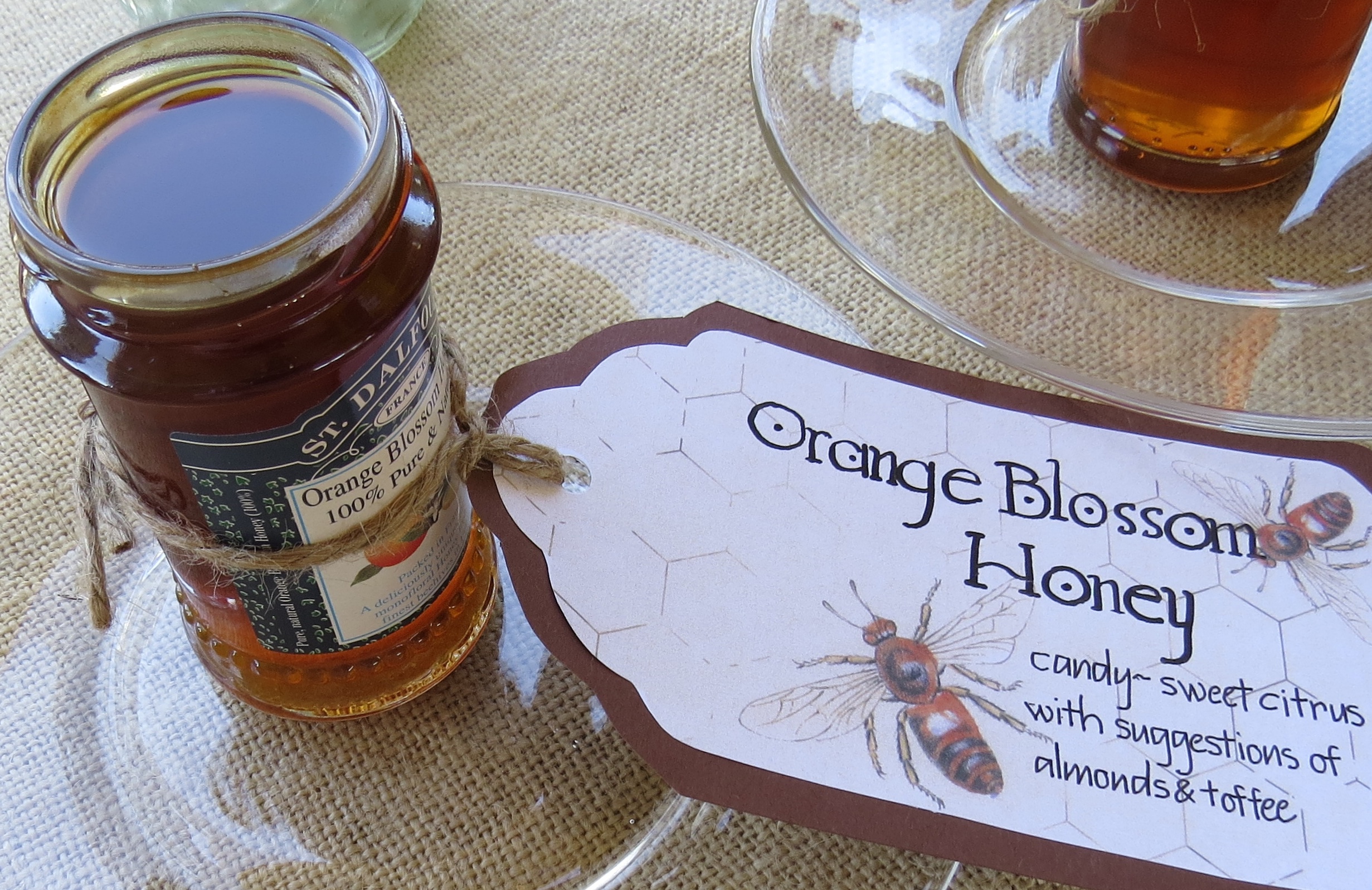
Orange Blossom, Sweet Citrus

Orange blossom honey:

Candy-sweet explosion of citrus flavor

Orange Blossom honey comes from sunny southern Florida and is one of the earliest honeys harvested in the year. The orange blossoms are a classic flower for bridal bouquets because they symbolize purity and have a lovely fragrance. Use this floral and fruity honey for Baklava or to drizzle over French toast. Orange Blossom is also perfect as a dip for figs, strawberries, and melon.

www.savannahbee.com

Wildflower honey:

Inspired by a field of Texas wildflowers

Unlike a varietal honey drawn from a specific nectar plant, Wildflower honey depends on the whimsy of bees let loose in fields of flowers. The bright golden honey is rich and luscious: a taste of Texas in a jar. Enjoy Wildflower honey on a classic peanut butter and honey sandwich or twirled on a steamy latte.

Warne Bee Farm, Anna TX 972-924-3928 www.warneshoneybees.com


???????????????????????????????

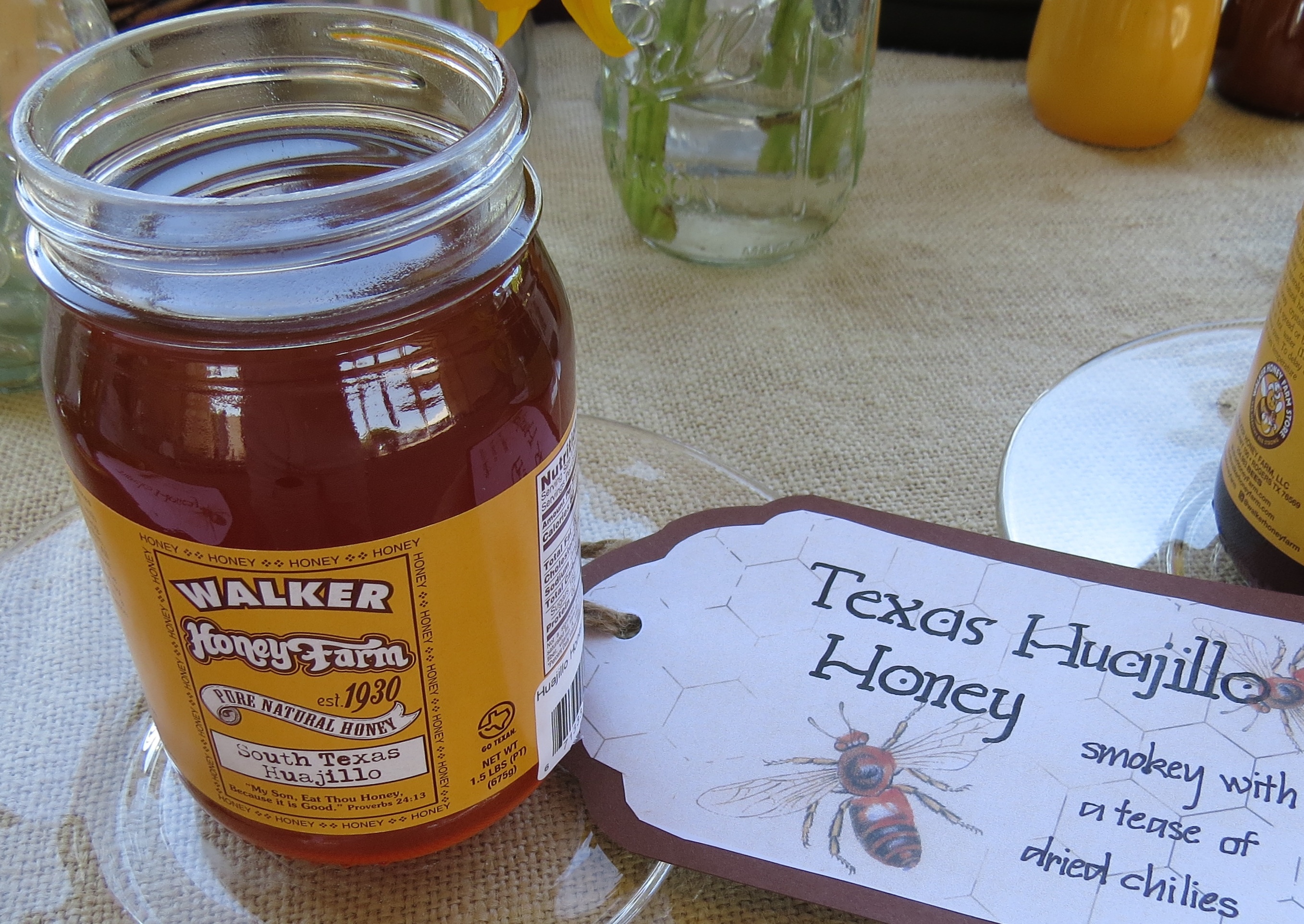
Huajillo, Smoky and Spicy

Texas Huajillo Honey:

Smoky with a tease of dried chilies

Texas Huajillo honey springs from the brush country of Southwestern Texas and Northern Mexico along the Rio Grande River. Bees feast on the fragrant white blooms of native Guajillo Acacia berlandieri in March and early April. (Guajillo is also known as Huajillo, Berlandier Acadia, and various Catclaws.) The large, multi-trunked shrub can be pruned to a small specimen tree for use on patios or around pools. Guajillo has an open airy form, fern-like lacy foliage, and prefers full sun. Walker Honey Farms Huajillo honey is harvested in Frio County, Texas, southwest of San Antonio.

Walker Honey Farm, Rogers, TX http://www.walkerhoneyfarm.com


???????????????????????????????

Buckwheat, Malty and Earthy

Buckwheat honey:

Malty and earthy

Buckwheat honey is unusual for its deep brown color, thick rich texture, and a taste that reminds one of mild molasses. Honeybees are drawn to the irresistible fragrance of the profuse white buckwheat flowers, a plant related to rhubarb and sorrel. Buckwheat honey is the perfect sweetener for Jewish Honey Cake or gingerbread, delicious on sweet potatoes and a distinctive topping for pancakes. Local honey producers rely on beekeeper friends in states like North Dakota and New York to provide honey from this northern crop.

http://www.warneshoneybees.com or Weeks Honey Farm http://www.weekshoneyfarm.com

More reading: National Honey Board http://www.honey.com

Elizabeth

Pictures by Starla and Linda

HELLO, HONEY! LUNCHEON AND LECTURE

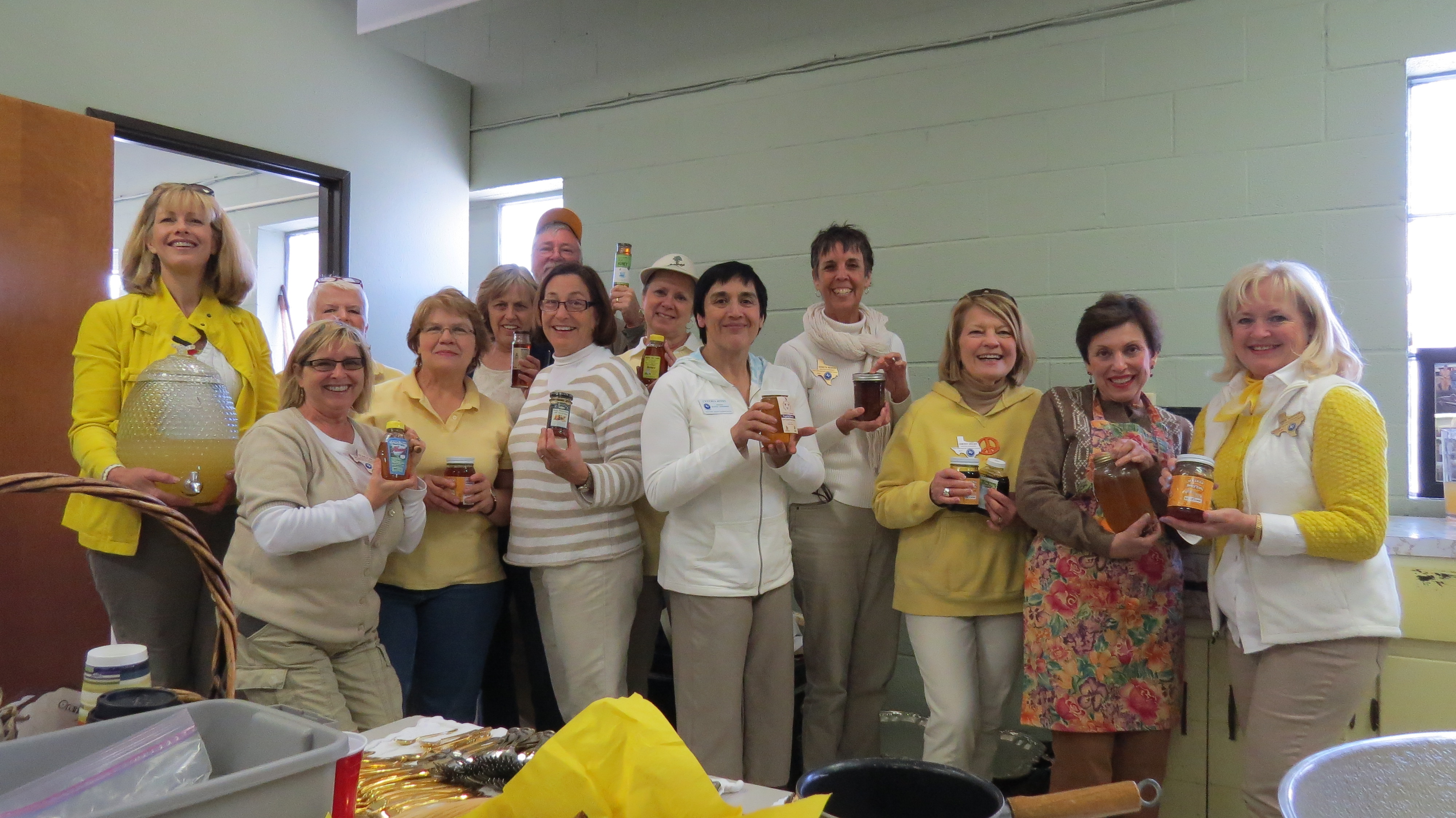
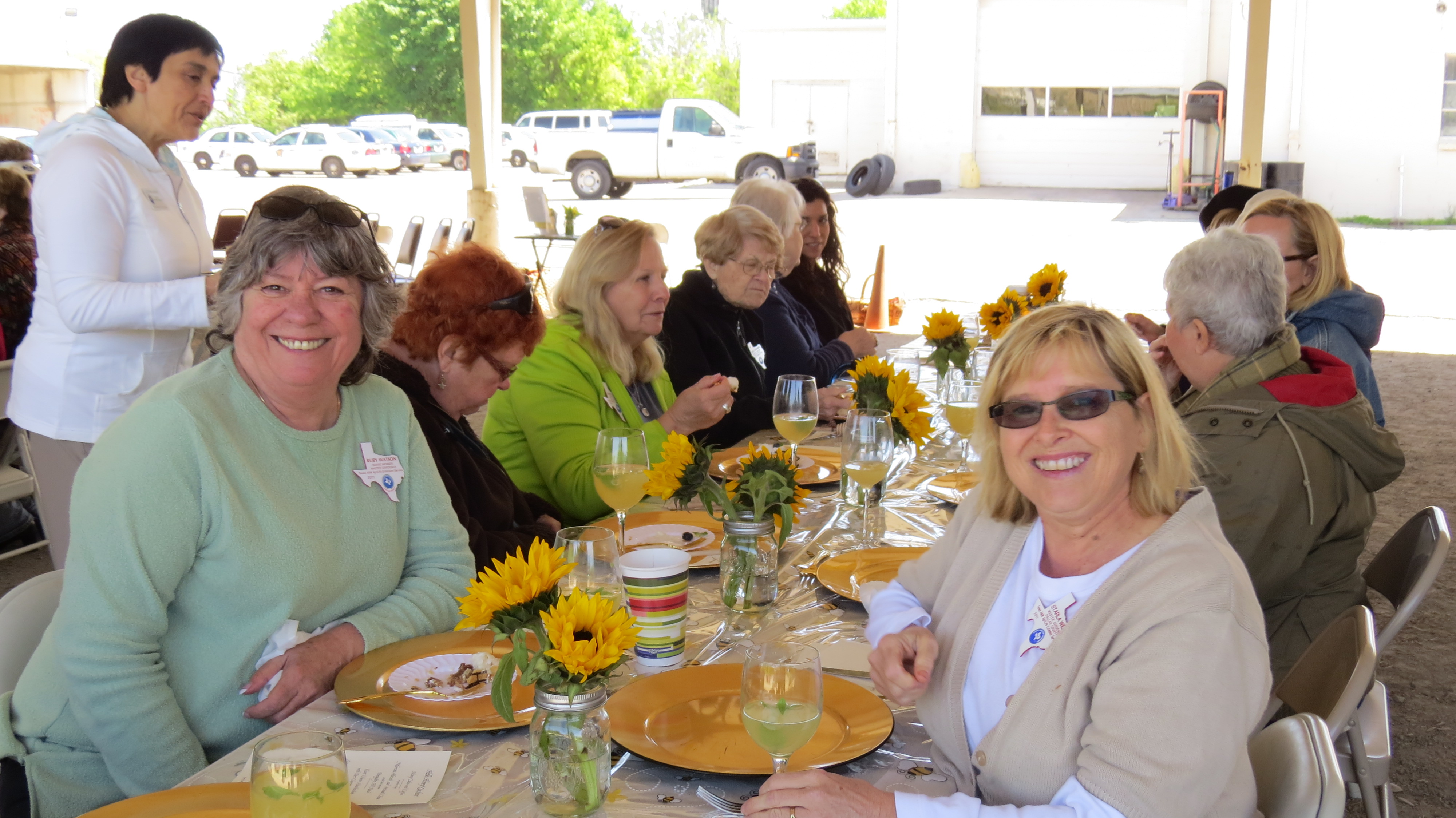
Why spend April 15 with a calculator, a pile of receipts, and a deadline? The Demonstration Garden was buzzing on tax day with more than 30 guests enjoying a packed morning learning all about bees and honey.

IMG_9962


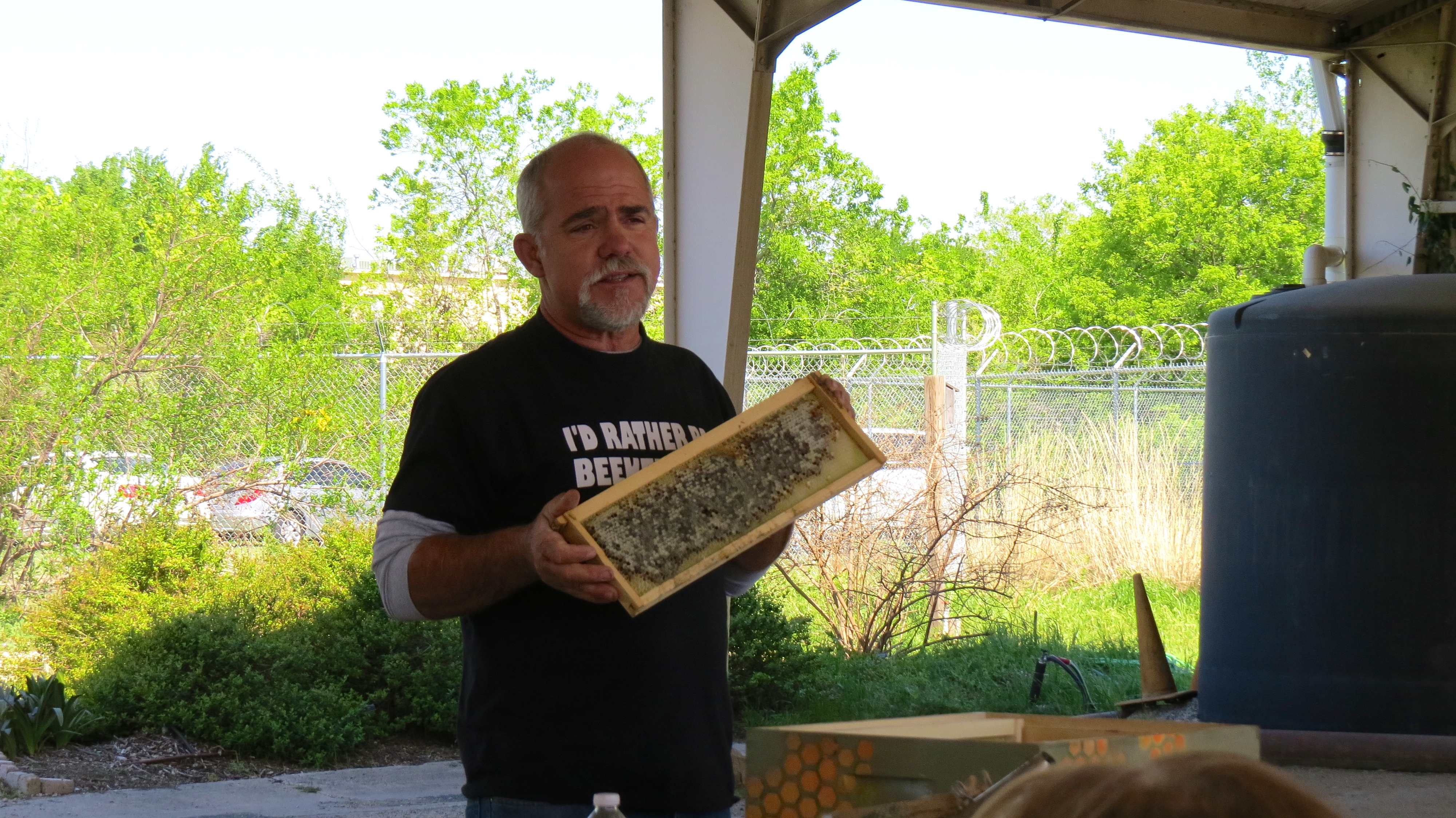
Jewish Honey Cake, a traditional favorite for the Jewish New Year, and coffee helped take the chill off the brisk morning. In his talk, beekeeper David McCarty encouraged guests to purchase local honey. David noted that honey tastes of the nectar from particular flowers visited by bees, and honey from the same hive can have dramatically different flavors. Commercially produced grocery store honey is often so processed that all pollen is destroyed, he said, and may even contain fillers like corn syrup and fructose. (In the worst cases, generic honey may be little more than corn syrup.)

Honey cake was delicious with hot coffee.

David harvests honey, of course, but his passion is the small insects that make it. He works to rescue bees from exterminators and to keep hives healthy. David shares information with other North Texan bee enthusiasts on the Facebook open group, CrossTimbers Beekeepers. (https://www.facebook.com/groups/CTBees/).

Honey Lunch Lecture with bee frame

Joe Field gardener (and beekeeper) Tim helped guests try different honeys with popsicle sticks. It’s hard to pick a favorite when testing Tupelo honey from Florida swamps, Sourwood from southern Appalachia, Orange Blossom from southern Florida, Wildflower from Texas fields, Huajillo from the brush country in Southwestern Texas, and Buckwheat from New York and North Dakota.

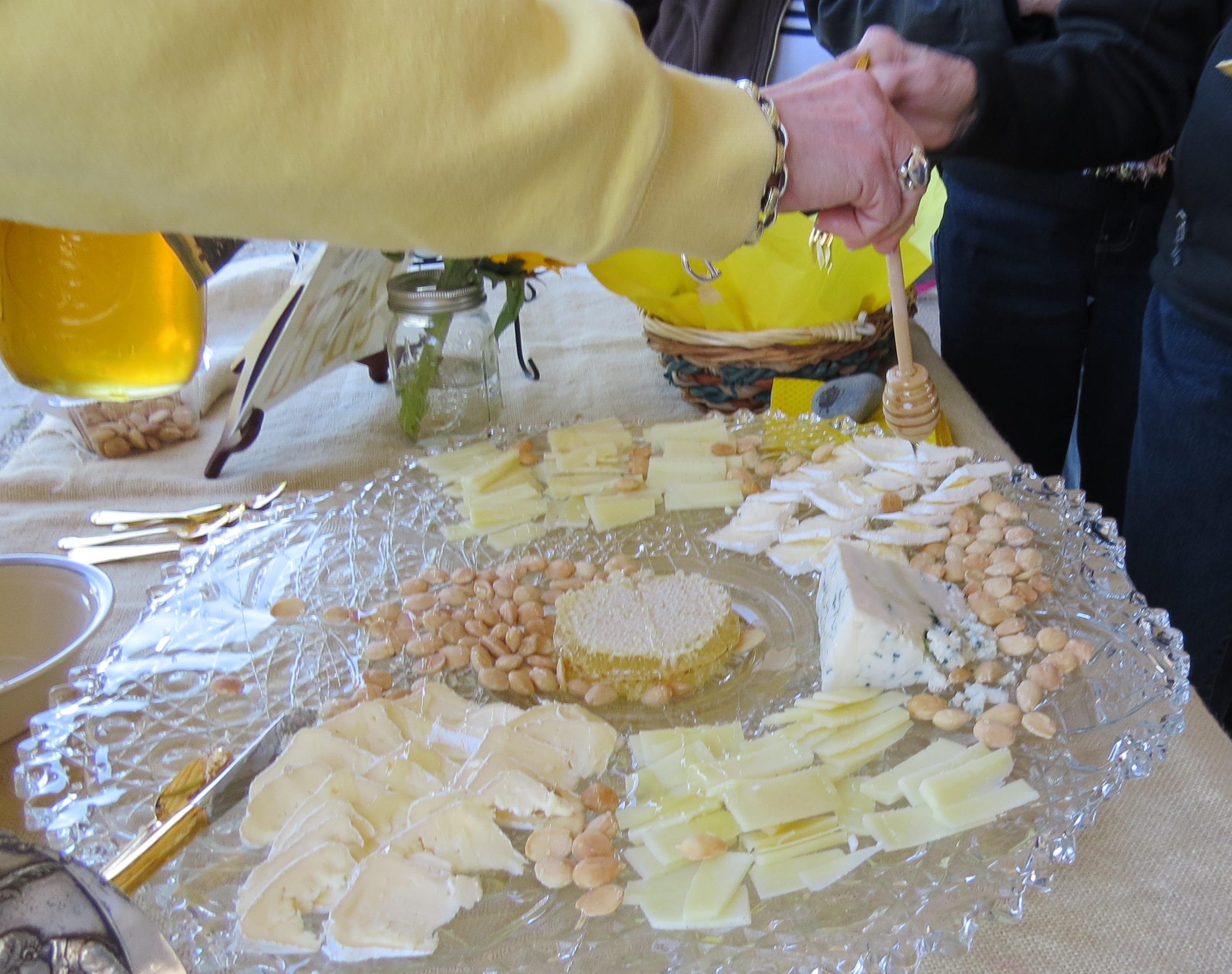
Linda dazzled guests with an appetizer tray of Brie, Manchego, and Point Reyes Blue Cheese from Scardello, an artisan cheese store at 3511 Oak Lawn, scardellocheese.com. She sprinkled the cheese slices and honeycomb with Spanish Marcona Almonds, then drizzled the tray with honey from Master Gardener Jan Ramsey’s Tranquility Hill Ranch.
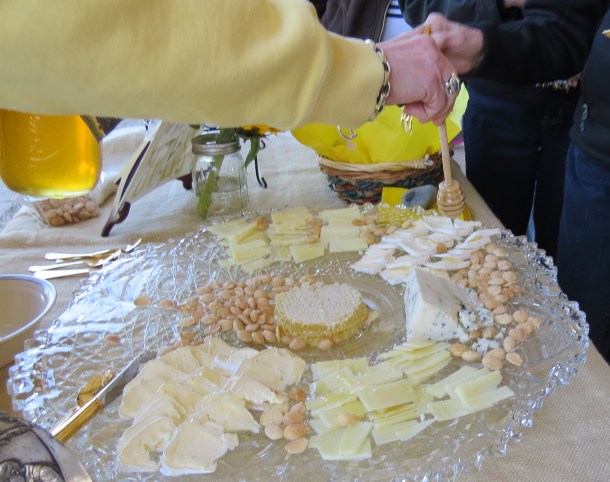
Cheese Tray Drizzled With Honey

Cheese Tray Drizzled With Honey


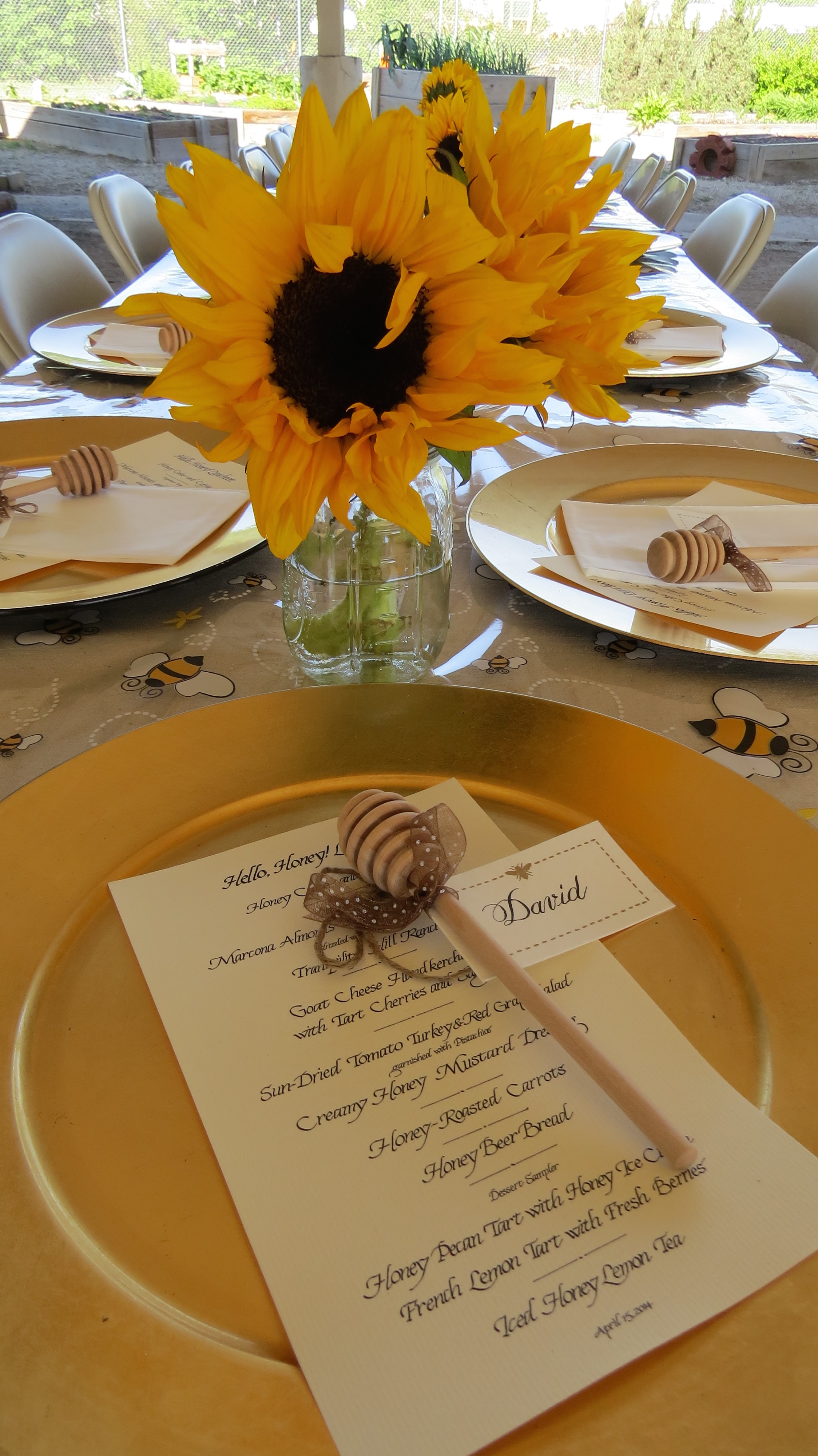
The table featured plates with tiny bees around the rim, bee-friendly bouquets of sunflowers, gold chargers, hand-lettered menus, and neutral tablecloths with a bee-themed runner. A place card with Elizabeth’s calligraphy tied to a honey dipper marked each guest’s place.
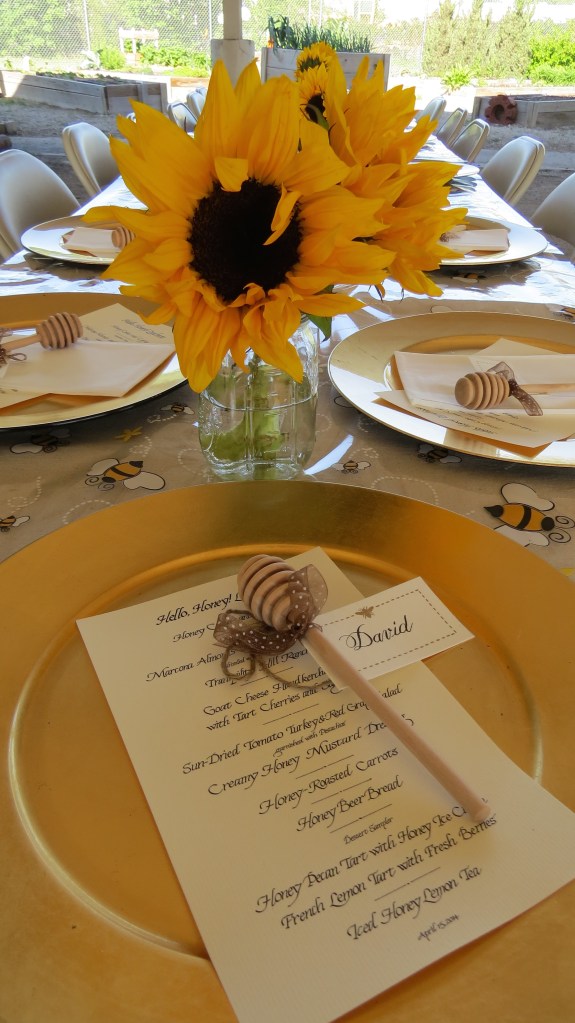
IMG_9739

Oh, did we mention lunch?

The menu, of course, featured items with a honey twist: turkey and grape salad with honey-Dijon dressing, pasta handkerchiefs with tart cherry, sage (and honey) sauce, honey beer bread, honey-roasted carrots, and honey lemon tea. A dessert sampler tempted guests with a square of honey pecan tart, honey vanilla ice cream, and a French lemon tart topped with an abundance of whipped cream, a mint leaf, and fresh blueberry.

Information from the national Honey Board, a list of bee-friendly flowers, and in-depth information and sources for each honey were given to each guest.

As we planned the event, we were amazed at the intricate and amazing world of bees and honey. We learned the difference between varietal (one source of nectar) and local honey (Texas Wildflower). One thing led to another, and soon we were ordering honey from across the South, visiting our local beekeeper at the farmers market, and purchasing honey on college visitation trips.

Lisa purchased the Huajillo and Buckwheat honey from Walker Honey Farm, which has a retail store about 10 miles from I-35 in Rogers, Texas, near Belton and Temple. She also found a good selection of local honey at Ruibal’s Rosemeade Market in Carrollton, the HEB grocery stores in Georgetown and Temple, and the farmers market behind the famous Monument Cafe in Georgetown (a must stop if only for the homemade lemonade). Elizabeth made multiple trips to the farmers market on Campbell Road (near UTD) to purchase local honey and dippers from Warne Bee Farm in Anna, Texas.

Linda explored cookbooks, magazines, and internet sources including L.L. Lanier, lltupelohoney.com, which has harvested Tupelo honey since 1898 in swamps along the Chipola and Apalachicola Rivers in Florida. She also found the Savannah Bee Co. of Savannah, Georgia, which sells the rare and wonderful Sourwood honey.

Next time you’re at Bruce Miller Nursery on Belt Line Road in Richardson, check out Fain’s Honey from Llano, Texas. Lisa says Fain’s is a family favorite and something she and her family always pick up at Cooper’s Bar-B-Que in Llano after a big platter of brisket and ribs. Turns out there’s a honey of a family connection: Lisa’s dad, after all, was Fain Gibbons.

Elizabeth

Pictures by Starla

Recipes and more buzz about honey coming up in the next few days! Keep posted!


Ladybug, Ladybug

Seed catalogs are filling our mailboxes and  thoughts begin to yearn for spring.   A little information about ladybugs may help you  forget these cold, gloomy winter days:

Certainly one of the most beloved of all insects is the ladybug, or more correctly, lady beetle.  And a new citizen science web project may be just the thing for adults and kids with an interest in lady beetles or cameras or both. The Lost Ladybug project started because of concerns about dwindling Ladybug _smnumbers of one kind of lady beetle, the nine-spotted lady beetle, in New York state.  It appears to have evolved into a bigger project where people from any part of the country can participate.  Find a lady beetle?

Photograph it and document the site, time and date of picture.  Then upload the information and contribute to science! What a great way to have fun and do something worthwhile.  In addition to recording your observation, visitors can view and print posters of different kinds of lady beetles, read interesting lady beetle facts and (teachers) can download lady beetle lesson plans.  Scientists will benefit from the photographic record, which should allow more up-to-date range records for common and rare species.

Perhaps most important, over time the project may allow scientists to document changes in range or distribution or abundance of different species.  The scientists are especially interested in rare lady beetles in out of the way locations, like state parks or little trodden trails.  But any site will do.  The thing is, you never know what’s going to happen when thousands of people are looking and clicking.

For anyone who thought a lady beetle is just a lady beetle, think again.  There are over 450 different species of lady beetles in North America, over 5,000 worldwide.  They come in all sizes and color patterns, feeding mostly on aphids and scale insects–two important pests for farmers and gardeners. Lady beetles are true beetles in the Order Coleoptera, not “bugs” in the Order Hemiptera.  Beetles have chewing mouth parts, go through a complete metamorphosis, and have the first pair of wings hardened to protect the body and the hind wings.  Bugs have sucking mouth parts, go through gradual metamorphosis, and have the first pair of wing partly hard and part transparent.

Nevertheless, despite the science, the name ladybug is likely to persist.  After all, Lady beetle, Lady beetle… Fly away home! …it just doesn’t have the same ring.

Photo and Writing by Mike Merchant, first printed on the blog Insects in the City.

If you are interested in learning more about insects and receiving occasional articles from Dr. Merchant on the latest insect pest or interesting insect facts  sign up for his blog, Insects in the City.  He is as good a writer as he is an entomology teacher.

Carolyn