By Alan Rister
This is the unlikely story of a woman whose garden was created unintentionally and who, in the process, became a gardener accidentally.
Prior to entering the Dallas County Master Gardener program in 2005 following her retirement, Janet D. Smith confesses that she was completely ignorant of any and all knowledge concerning gardening. Her attempts at home horticulture had consisted of purchasing hanging baskets of seasonal color annuals at big-box stores and “inundating them with Miracle Grow.”
Janet’s back yard had long suffered from a lack of adequately engineered drainage, which caused flooding of her garage every time there was a big rain. She therefore sought out professional help to remediate the situation, and landscape architect Carol Feldman undertook the project, which involved the removal of a large amount of soil from the yard. The drainage problem was solved, but now there was the question of what to do with the excavated soil, for which Janet did not want to incur costs for removal from her property. The solution was to use the soil for the formation of a berm in her front yard.
The unexpectedly large volume of the new berm presented an opportunity for the creation of a garden, and thus, with a planting plan prepared by the landscape architect, Janet began a life-changing voyage of discovery through everything she could learn about gardens and the pollinator insects and birds that play such important roles in sustaining them.
Previously unaware that there exist many plants that come back from their roots every year to flourish and flower (perennials), Janet was delighted to discover that she could be freed from having to replant her new garden from scratch (with annuals) year after year. And the planting plan that had been provided to her did indeed feature mostly perennials, among them many species of plants that are native to our region. From that point, it is fair to say that this neophyte gardener dived zealously into the enterprise of gardening and has never looked back.
It has been a long and great transformation from Janet’s complete lack of gardening knowledge to becoming one of the Master Gardeners’ most respected authorities on best gardening practices and one of our most in-demand public speakers. As she became more experienced as a gardener, she has pursued further education. She completed both the Master Naturalist and Native Plant Society of Texas (NPSOT) programs, and over the years she has become as active in those organizations as she has remained in the Master Gardeners. She has also continued to educate herself by studying topics that interested her most, especially all about pollinators, including local butterflies, bees, and hummingbirds.
Janet has been profoundly influenced by the principles of Douglas Tallamy, especially as elucidated in his seminal work Bringing Nature Home: How You Can Sustain Wildlife with Native Plants (2009). This work is a holistic treatment of the interplay of all members of the earth’s biome and how they create its ecology. For Janet, this speaks precisely to the fascinating role of pollinators in the environment, which draws her continuously to study and teach about them through her speaking and writing.
Her evident passion about good horticulture and her enthusiasm for sharing her knowledge with the public has led her to becoming a well-known speaker in the Master Gardeners Speakers Bureau. Since she began her public speaking in 2006, she has given hundreds and hundreds of presentations to garden clubs, community organizations, school groups, and others, not to mention her continual involvement with Dallas County Master Gardeners, North Texas Master Naturalists, and NPSOT programs and projects. She has become so renowned for her particular love and knowledge of butterflies that all she now lacks is a coronation to be known as the “Queen of Butterflies” in Dallas County.
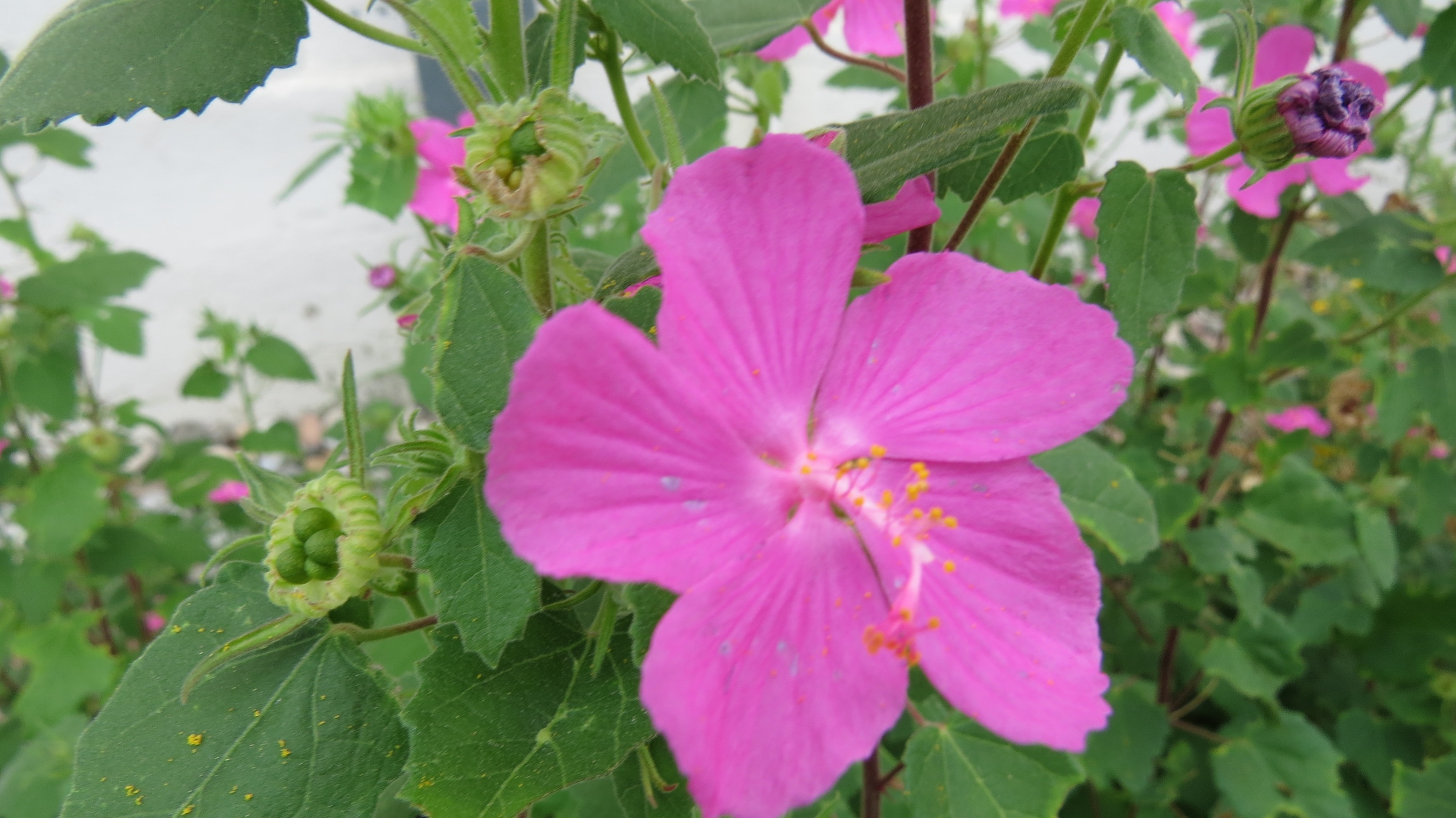
Today, Janet’s beautiful berm garden stands out as an exemplary showcase of smart gardening: the “right plants” (varieties chosen for their optimal adaptation to local climate and soil types) in the “right places” (growing environments best suited for plants’ needs for sun exposure, moisture, drainage, and soil fertility). The notably modest size of the garden and its conversion to an all-perennial palette of plants (with the exception of larkspurs, which self seed) make it inherently easier and more realistic to maintain.

Standing in her colorful garden, Janet says that what she most enjoys about it is observing “the complexity of nature and how it provides us the life we have.” She muses that “this berm changed the direction of my life.” Thus, this pile of dirt has provided Janet with inspiration and purpose. Come to Peavy Road to see where it all began under the hand of a true Master gardener.
Alan Rister, Dallas County Master Gardener Class of 2005
Click here for ticket information about the garden tour taking place on Saturday, May 18th rain or shine.





 DALLAS GARDEN BUZZ