Tag Archives: nectar plant

Winter Foraging for Honeybees

January 20, 2026

Have you noticed an absence of honeybees in your winter garden? If so, maybe it’s time to add a few flowers that will survive our seasonally cooler temperatures. When other food sources seem to dwindle, consider providing some late-season fuel for bees to build a winter supply of honey for the hive. FYI…Honeybees need about 50 -100 pounds of honey to last the entire winter!

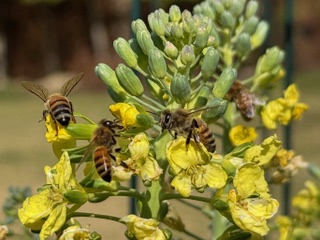
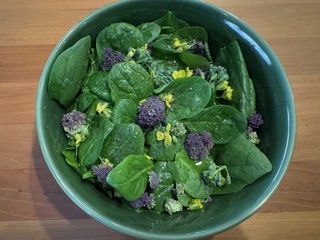
Look closely and will you see four honeybees just on this one bunch of broccoli blossoms. It was amazing to observe literally dozens of honeybees at a time working nonstop to gather nectar for the hive. The benefits of letting one of the broccoli plants in my raised bed flower was to provide a food source for the bees. Also, the open flowers and leaves are still edible and can be used in salads or for sauteing. (Spinach salad topped with purple broccoli florets and blossoms.)
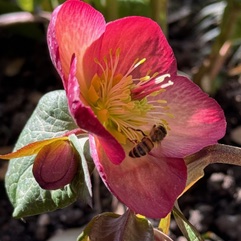
Hellebores provide sweet nectar for energy and protein-rich pollen to honeybees during the winter months. Honeybees visit daisies because they offer lots of pollen. This helps to feed developing larvae.
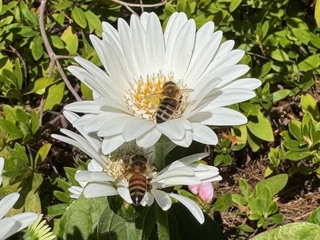
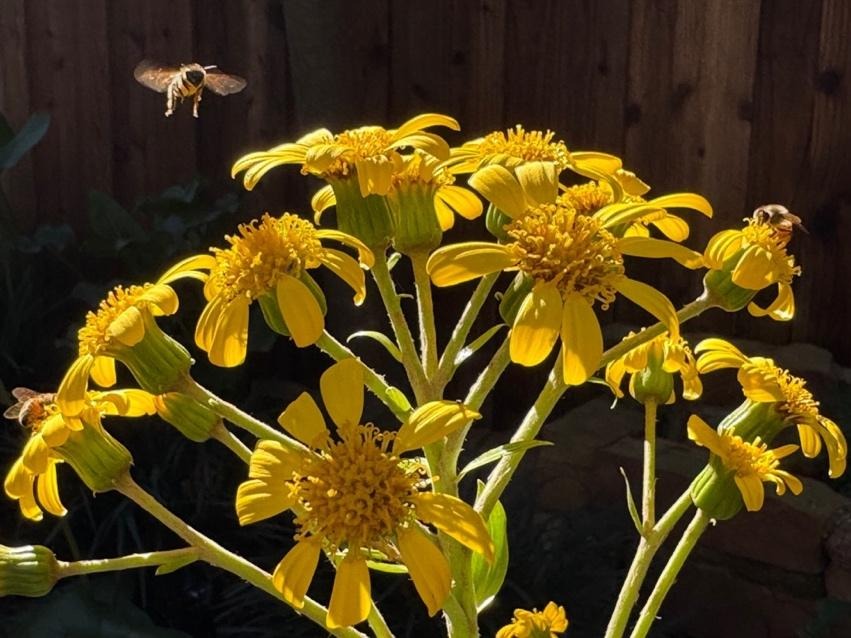
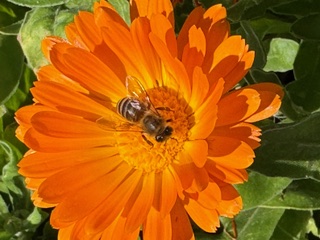
Starting in late fall and early winter, honeybees spend hours foraging for both nectar and pollen from the Farfugiums around our Koi pond. Every morning and continuing until late afternoon honeybees can be found buzzing among the Farfugiums bright yellow flowers when other blooms are scarce. Calendula flowers contain a significant amount of pollen and nectar per flower, making it a great plant for attracting pollinators.
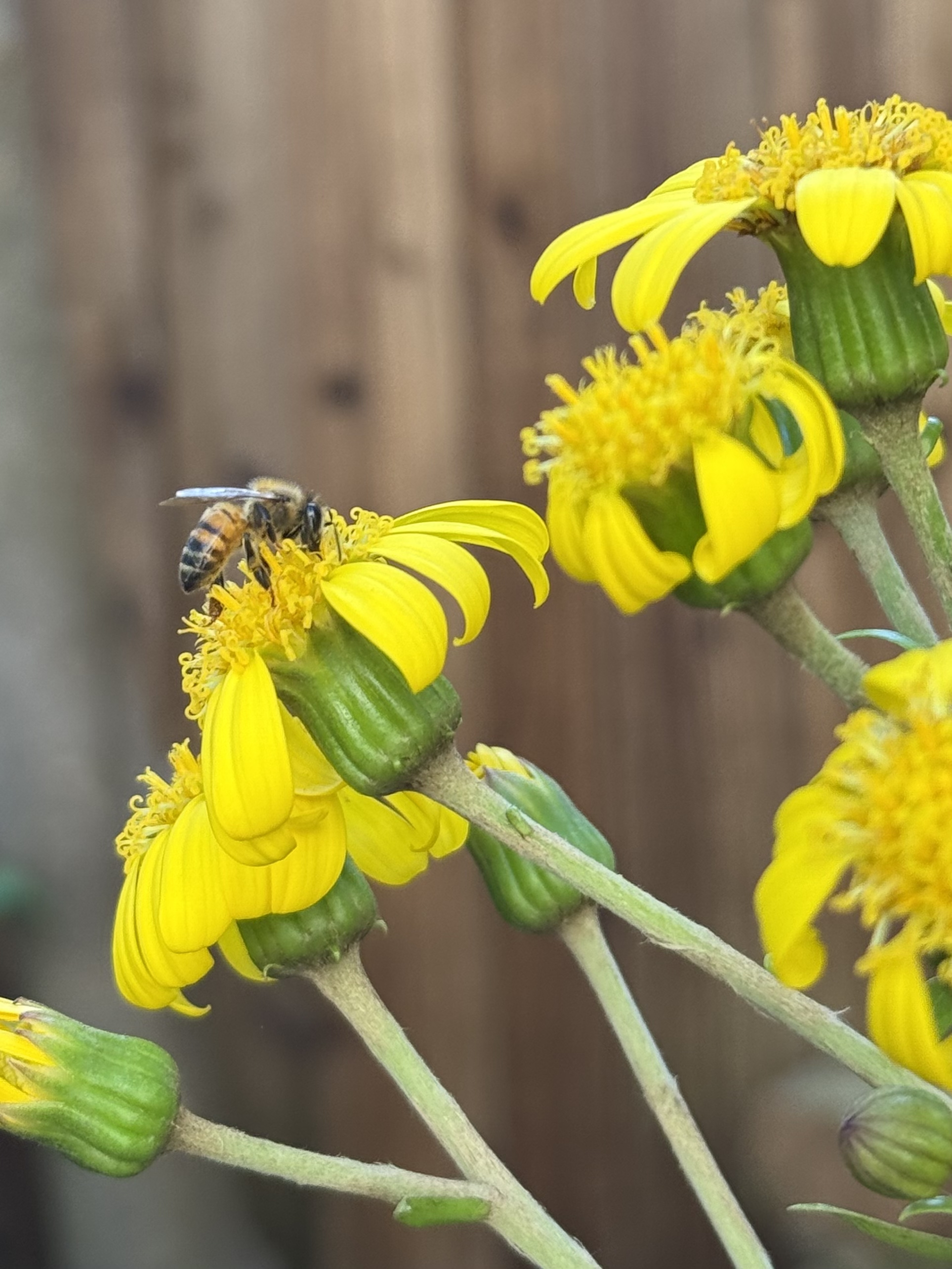
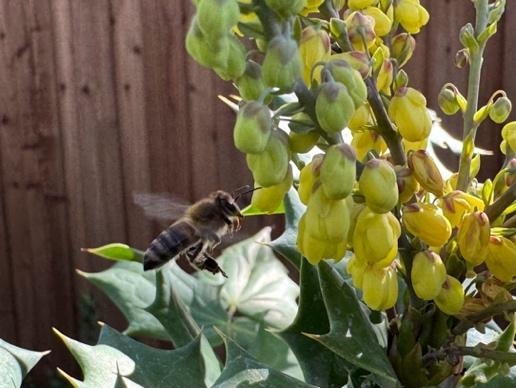
As blossoms started appearing on our Leatherleaf Mahonia in early January, honeybees began actively foraging for both nectar and pollen on the fragrant clusters of yellow flowers.
We would love to hear from our readers about other ideas and ways you are helping the honeybees during wintertime. Let’s do our part to provide blooms that ensure bees can gather enough food to sustain themselves while increasing their chances of surviving winter and thriving into spring. Here are some important reasons why winter blooms are essential:

*Food Scarcity: Winter and early spring are lean times for honeybees; most flowers are dormant, leaving bees without food.

*Energy and Protein: Nectar provides carbohydrates for energy, while pollen offers essential protein; both are needed for colony health and growth, even in winter.

*Colony Survival: Adequate food stores are critical for bees to survive the cold months, making fall and winter foraging vital for building reserves.

Enjoy this short video illustrating how tirelessly honeybees work to maintain a healthy hive!

Linda Alexander, Dallas County Master Gardener Class of 2008

Separating the Seeds from the Chaff

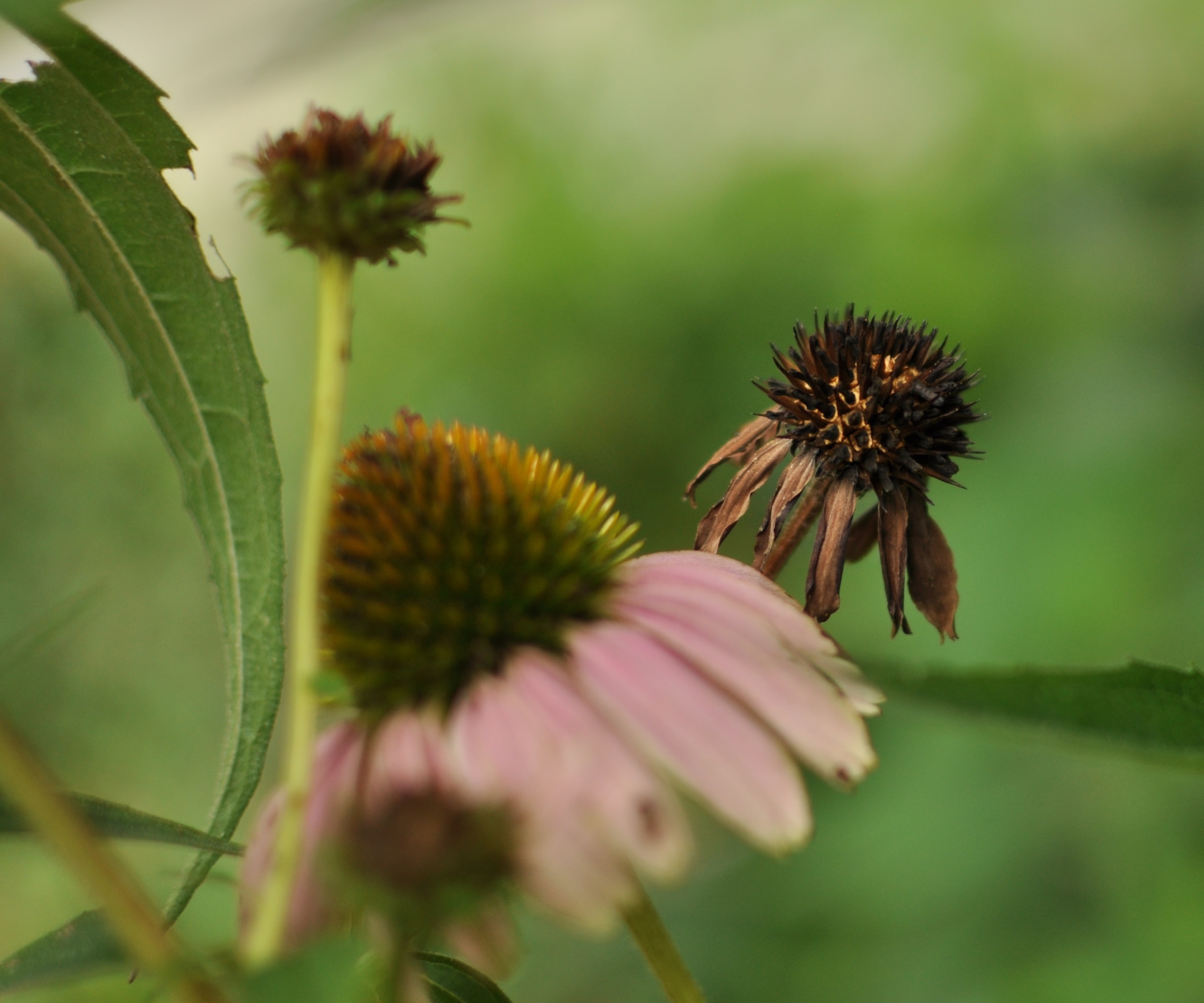
It is a common mistake made by those gardeners who wish to save their own seeds.  Just what part of a seed pod is actually the seed and what is the chaff, that part of a seed head that can be separated and thrown away.  Sounds easy to tell?  It is, if you are saving squash, tomato, sunflower and other easily distinguishable seeds.  However, if you have ever gone to a seed exchange, perhaps you have excitedly brought home a small zip lock bag full of handpicked, thin, sharp, dark brown “seeds” from the Purple Coneflower (Echinacea purpurea).  After carefully planting and watering these “seeds” in your garden, you find that not even one grows.   Unfortunately at this point you have now joined the ranks of many gardeners in confusing the seeds from the chaff.

Coneflower, a native perennial, is one of the prettiest and easiest plants to grow in both full sun and even partial shade.  Though they prefer good, fertile soil, being a native plant, they will adapt to less hospitable areas and are hardy in USDA Zones 3-9.  Long-lived and drought tolerant once established, they are impervious to most insects and diseases.  A butterfly nectar plant, their seed filled cones are a favorite of song birds such as Goldfinches.

Purple Coneflower in Bloom

Hybrid Coneflowers now come in a wide variety of colors including pink, white, yellow, and orange.  Unfortunately for the seed saver, these hybrid varieties may not always reproduce true to their parent plant.  However the native Purple Coneflower is an easy plant from which to save seed, once you know the secret of distinguishing the seed from the chaff.

image

To save the seed, wait until late summer or fall when the coneflowers begin to fade and the seed heads develop.  At this point, begin to keep an eye on the plant, so the seeds can be harvested at the right time: after the seeds have matured, but before they drop off or the birds eat them.

imageUsually the seed pod will turn from dark brown to black and the stem will begin to wilt.  At this point, if you inspect the seed pod, you can easily see small, light brown, bullet shaped seeds nestled in the spiky, woody seed pod.

To save the seed, one of the easiest methods is to cut the seed pod off, leaving a little stem, tie a paper bag around the stems and dry upside down, letting the seeds fall off themselves.  Another method is to manually separate the seeds from the spiky pod by crushing the pod.  Be sure and wear gloves when doing this as the needle-sharp dried spikes can be painful.  After the pod has been crushed, it is easy to pick out the plump, hard seeds.  They can be stored in a cool, dry place in a paper envelope or in an airtight container in the refrigerator.  The addition of a silica gel pack, found at craft stores, to the container will help keep the seeds dry.

So next time you are at a seed exchange and see a packet of sharp, brown, skinny spikes labeled Purple Coneflower seeds, remember that, just as in life, it is necessary to distinguish “the wheat from the chaff,”  Do not take that which is unnecessary but look instead for those light brown, plump seeds.  They are the ones to save.

Carolyn

Pictures by Ann

More about seed saving?  Click here.